
JP Morgan (Trading Losses), Barclays (LIBOR fixing) and now HSBC (Money-Laundering) — Better Enforcement Needed — You Think?

What is the recent story with multinational banks? First, JP Morgan (unsupervised trading losses). Next, Barclays (LIBOR fixing). And now  HSBC (money-laundering).

HSBC faces about $1 billion in fines for violating U.S. anti-money laundering controls intended to restrict financing of terrorism and other criminal activities. ING recently agreed to pay $619 million to settle claims for violating U.S. trade sanctions with Cuba and Iran.

U.S. financial regulation reaches not only U.S. financial institutions but also foreign banks impacting the U.S. as well as those relying upon the U.S. financial system.

These inexplicable bank transgressions have all occurred after the 2008 financial crisis and during this long and painful road to national and global economic recovery. These actions surely do not inspire much  confidence in the financial institutions and to a lesser extent in the regulatory oversight here and abroad.

 They seem to be hindering the recovery to a significant extent. How many of us, individuals and corporations, are paying higher interest rates for loans because of the LIBOR debacle.

It is about time we get more serious about managing the very large, global financial institutions. It does not seem that corporate leadership has learned  much over the last few years.

 Better national and foreign regulation is needed, for both economic and national security. Sooner the better.

 

Posted in Global Trade Relations | Tagged , , , , , , , , | Leave a comment

U.S. files yet another case against China in the WTO — Election year politics and U.S. trade policy issue — Litigation or Negotiation?

The U.S. has filed yet another case against China in the WTO / DSU. This one concerns China’s antidumping and countervailing duties on automobiles from the U.S. Is this election year politics by the administration?

This case raises again the issue of litigation versus negotiation — which is the best means to remove trade restrictions?  This choice has become a major trade policy issue for the United States. And actions against China in the WTO has become a hot topic in presidential politics today. (It’s also a hot topic in the EU, Brazil and elsewhere.)

President Obama’s more aggressive enforcement of trade obligations has become a hallmark of his trade policy along with a renewed emphasis on export promotion and encouragement of greater foreign direct investment into the United States.

 “U.S. Files Dispute against China.” WTO News (July 5, 2012).

Posted in Global Trade Relations | Tagged , , , , , , , , , , , , | 1 Comment

Airbus and Alabama — New Foreign Investment into States — Should this be a top priority for economic development and jobs in the U.S., You think?

Airbus has just announced the building of a $600 million plant in Alabama for production of the A320. This will generate 1,000 new jobs. This doesn’t counter sub-contractors and vendors rushing to supply the new facility.
Here’s a few interesting points:
…. Airbus finally realized through its litigation against Boeing in the WTO the lucrative nature of state and county incentives in the U.S.
…. Airbus will be in a better position to compete to sell to American carriers and to compete for U.S. government contracts (mainly military).
… The workforce and right-to-work laws throughout the South are huge competitive advantages. (Didn’t Boeing just relocate one of its plants to the region?)
…. New foreign direct investment and expansion of existing foreign operations is a great multiplier for economic development and job creation. It increases employment by the new facility and even newer ones relocate to supply it, without any state incentives. (Of course, all the new workers coming into the state and the newly employed ones buy everything from cars to homes.)
…. New foreign direct investment avoids the counter-argument against state incentives that they only rob one state to the advantage of another. (The “Beggar-thy-Neighbor counter- argument.)
My conclusion, given the globalized world, the slowdown in Europe, the need for European and Asian multinationals and manufacturers to engage in the largest economy in the world (the U.S.), and the ability to avoid any existing or new U.S. trade restrictions, it make good sense for the federal government and state governments to aggressively target foreign investment as a potential silver bullet to get us out of our mess.
Seems like a good argument.
Posted in Global Trade Relations | Tagged , , , , , , , , , , , | Leave a comment

Global Banking and Gaming LIBOR – Joint Cross-Border Enforcement, Finally.

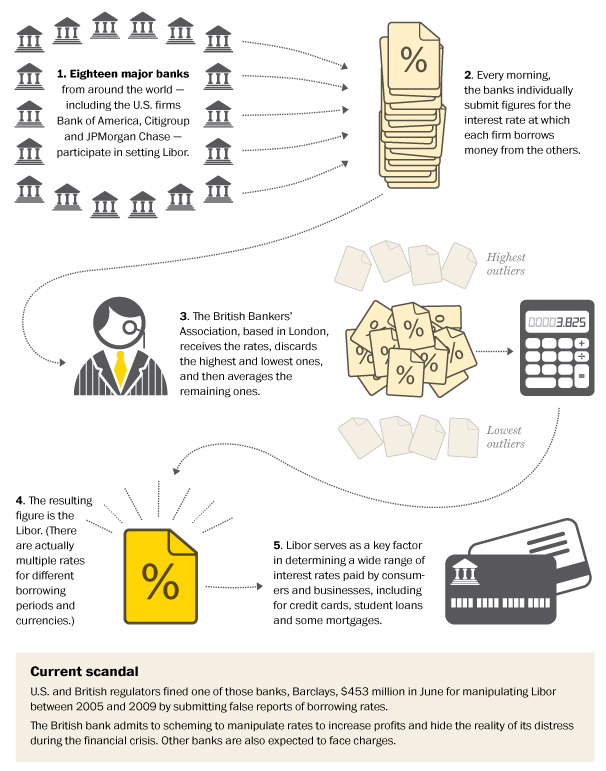
Joint cross-border investigations by the U.S. (Commodity Futures Trading Commission , the U.S. Dept. of Justice) and the U.K. (Serious Fraud Office) have resulted in an agreement by Barclays PLC to pay $453 million in fines for illegally manipulating the inter-bank rate, LIBOR.
These agreements may well lead to additional investigations and private litigation that could billions of dollars. It is also likely that the Bank of England and the Financial Services Authority will become much more involved in this entire process of setting inter-bank rates in the future. Other authorities may well begin investigations such as Germany and the European Union. Civil litigation by a host of other entities may well be filed, by cities, states, private institutions and class actions.
What does this say about global banking, corporate responsibility and regulation (national and international)?
To me it says to me five things.
One, global financial institutions need to be aggressively monitored by national regulators.
Two, greater extraterritorial regulation by the U.S. is fully justified as to this type of illegal activity impacting the U.S. firms and economy.
Three, these financial institutions need more effective board supervision.
Four,  management and board members involved in this should resign immediately.  The bank is going to face huge civil and derivative shareholder lawsuits and possible criminal prosecutions. (Has anyone ever heard of price-fixing — the conspiracy to fix the rate the loans are sold for or adjusted, sometimes higher and, yes, sometimes lower?)
Five, greater global and international mechanisms need to be developed to ensure transparency and legality of global financial transactions.
It is amazing to me that these types of unsavory bank actions continue.  They take place even after the financial crisis of 2008 and while the world economy continues to struggle.
Better public policies need to be developed regulating these institutions and more effective corporate governance needs to be effectuated.
Lying about LIBOR is not a good thing.

Posted in Global Trade Relations | Tagged , , , , , , , , , , , | Leave a comment

Mexico G-20 Meeting Promises Not to Use Trade Restrictions to Promote Business — How Long Will this Last? We’ll See.

The G-20  meeting recently concluded in Mexico with a  promise by countries not to protect their businesses by restricting trade (“stand-still agreement”). This is somewhat of a success in light of creeping protectionism and the declining global economy. How long observing this promise will last is to be seen. My guess is not very long, unfortunately.
This promise of the G-20 countries is viewed as somewhat beneficial especially in the context of the  recent enactment of trade restrictions by some states.  They seem no longer aimed at merely combating the temporary effects of the global financial crisis but rather at trying to stimulate recovery and promote domestic industry by discriminating against foreign companies and investors. Just look at China, Argentina and Indonesia. “An Increase in Barriers to Trade is Reported.” New York Times (June 23, 2012).
It is clear that some states, both developed and developing, are playing around on at  the margins of the WTO rules but increased litigation at the WTO has not yet happened. No serious damage has yet been detected in trade or investment flows. So far so good.
To me it’s necessary for states to focus more on promoting international transactions fairly than to restrict them by new trade barriers especially non-tariff barriers. The balance between more trade enforcement and more trade promotion is always a tough policy decision. But a more global, enlightened and proactive attitude by countries toward trade and investment is always to be encouraged. This will certainly benefit economic development and jobs globally.
Posted in Global Trade Relations | Tagged , , , , , , , | Leave a comment

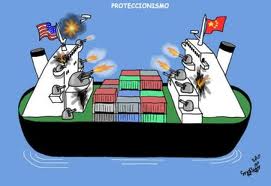
Trade Protectionism and the WTO — What do the numbers show as to WTO Litigation? It’s really not clear

Trade Protectionism and the WTO — What do the numbers show as to WTO Litigation? It’s really not clear. First, let’s look at the numbers.
Two  recent announcements by Global Trade Alert and the WTO indicate that  the number of protectionist actions introduced by countries in 2010 and 2011 were much higher than previously thought. “Economic Gloom Puts Free Trade at Risk.” Financial Times (June 14, 2012).
The new Annual Report for 2011 issued by the Appellate Body of the WTO (June 13, 2012) discloses: (i) increase in percentage of panel reports appealed in 2011 in comparison with 2010 was from 40% to 63%; (ii) the number of appeals filed during this period increased from 3 to 9; (iii) the top 7 states involved as parties or third-parties in appeals for 1995 – 2011 were the U.S. (140), the EU (123), Japan (64), India (65), China (41), Mexico (40). Appellate Body Annual Report for 2011 (WTO June 13,  2012).
The number of new disputes filed from 2010 to 2011 decreased from 17 to 8. The U.S. remains as the most litigious state (211 total cases) with the EU second (with with 155 total cases). Annual Report of the WTO 2012. 
One more statistic. The number of domestic antidumping actions initiated worldwide from 2010 to 2011 dropped from 170 to 68.    Antidumping Investigations 1995 – 2011 (WTO 2011).
To me what the above shows is while more protectionist measures have been introduced the last two years the actual number of new WTO cases filed have decreased. Yes, the number of appeals of existing cases have increased slightly. Yet, new domestic antidumping cases have not increased. (These are the cases that are often brought to the WTO.) The U.S. and the EU remain the WTO’s greatest users of the dispute resolution system.
Only time will tell if the newer trade measures will result in more litigation. I suspect they may or maybe not. It’s always good to look at the numbers.
Posted in Global Trade Relations | Tagged , , , , , , , , | Leave a comment

International Trade Program at St. Peter’s College, Oxford University, in conjunction with George Mason University 1994 – 2003.

The following is a short PowerPoint of photos of the various classes in international trade and transactions held at St. Peter’s College, Oxford University, in conjunction with George Mason University over ten years. This program included a one-week segment in Geneva, Switzerland, at the World Trade Organization (WTO) and included team assignments with various multinationals in the City of London.
Oxford – Geneva Trade Programs (1994 – 2003) — A Partnership between St. Peter’s College, Oxford University, and George Mason University.
Leave a comment

Global Business and Prosperity — Ideas for Business and Policy Leaders.


The following are quotes concerning global business and leadership from the new book BEING GLOBAL (2012), co-authored by the president-elect of George Mason University and current President of the Thunderbird School of Graduate Management, Angel  Cabrera:
.. Being global really needs to be part of an organization’s DNA.
.. International trade is not new.
.. Global business in the modern era is truly transnational.
.. Global leaders are not born but made …. It is about how you choose to focus your attention, spend your time, and engage your mind.
.. [G]lobal leaders bring together disparate parties.
.. Global leaders do not play on the edge of the law.
.. A global mindset is a core foundation of successful global leadership.
.. A global mindset is not an innate trait.
.. [E]ntrepreneurship is the process of applying resources and assuming risks in the creation of new value.
.. Global business is full of legal loopholes and ambiguities … plenty of opportunities for moral arbitrage … global leadership excludes that type of conduct ….
.. A ubiquitous problem facing global leaders operating in a transnational context is corruption …. Corruption is not just a scourge of politicians and citizens. It also does great damage to businesses.
.. Global citizenship is … about values.
.. The global economic crisis … is an example of … failed global leadership.
     To me, the above ideas are essential tenets that progressive business and policy leaders need to apply in order to compete successfully in today’s hyper-competitive and globalized world. Only this will help to ensure successful business transactions, state economic development, and jobs. We’ll see how the new president-elect of George Mason University infuses his university leadership with the above views. Check back in a few years.
Posted in Global Trade Relations | Tagged , , , , , , , , | Leave a comment

New U.S. – China Trade Disputes — Action is Seen Again in the ITC and the WTO.


Two new developments concerning U.S. – China trade litigation only highlights the growing trade friction between these two countries, unfortunately.

Yesterday the U.S. International Trade Commission imposed countervailing duties on Chinese wind-turbine towers alleging that Chinese manufacturers receive illegal subsidies from the Chinese government in this clean-energy sector.

A few days earlier China filed a new litigation against the U.S. in the WTO complaining of U.S. subsidies on various exports to China. China alleges that the reliance by the U.S. on a “rebuttable presumption” that majority government ownership is sufficient to treat enterprises as a “public body” is inconsistent with WTO trade rules.

So the trade disputes continue to mount up.

Hope this doesn’t stop Chinese FDI into the U.S. The latest U.S. employment data only highlights the need for greater foreign investment to promote economic development in the states. Federal action endangers this. There seems to be a disconnect between federal and state policies.

China’s investment into the U.S. for the first quarter this year (2012) was $8 million down from $975 million a year earlier. By the way China’s overseas investment surged to $21.4 billion globally for the first quarter.

Need more be said?

Posted in Global Trade Relations | Tagged , , , , , , | Leave a comment

Chinese Trade Disputes and Direct Investment — Don’t Let Trade Disputes Derail Foreign Investment into the U.S.

Beijing has responded to recent U.S. imposition of 31% antidumping measures on Chinese solar panels by finding that U.S. subsidizes clean-energy projects in violation of international trade law under the WTO. These U.S. and Chinese trade actions only heat up U.S.-China trade relations to a higher extent.
What is the impact of these trade disputes on private Chinese investment into the U.S.?
Chinese corporate investment into the United States expands daily. Wang Jianin’s corporation, Dalian Wanda Group LTS., has announced a corporate takeover of AMC Entertainment, the second-largest movie chain in the United States. This investment of $2.6 billion is now the largest Chinese investment into the United States.
This is particularly interesting in context of falling FDI into China this year, increased emphasis in the U.S. in attracting FDI, efforts by U.S. firms to redirect some of its foreign investments back to the U.S., and recent uptick in both global mergers and greenfield investments.
But trade disputes concerning antidumping duties and countervailing duties cannot be allowed to derail increasing Chinese investment into the United States.
Trade remedies often hurt domestic industries in the U.S. that depend upon imports to incorporate into their finished products. Of course, they also hurt the entire import industry that sells and services foreign produced goods.
Trade and exports are good for the United States but direct investment is of critically importance also.
The federal government and states are promoting exports as a means of economic development. But foreign investment holds the key to even greater economic development and jobs in the U.S. Maintaining an open-investment environment is essential.
Fostering a domestic business and investment environment that is not hostile to global  investment is of a great importance.
Just ask the Europeans why the Chinese are not helping in their debt crisis. It’s obvious that increased EU trade remedy actions against Chinese imports is one important reason. (The glossy paper case and probably a new one concerning Huawei are the most recent examples.)
Unnecessary CFIUS proceedings, merger reviews, and overly aggressive trade remedy actions in the United States are not good for promoting cross-border business and investment by Chinese or other firms. (Cash-rich Japanese firms are returning to global M&A in numbers rivaling their  forays in the 1980s.)
So while states and industries are out seeking foreign investment the federal government needs to exercise greater prudence in filing or approving trade actions with domestic and international agencies. This includes restricting politically inspired WTO actions against China that have shown increased frequency and heightened focus under the Obama administration. Increasing focus and expansive definition of state-owned enterprises (SOE) as providing illegal subsidies pushes trade law to its limits.
Prudence in trade relations is good for foreign investment. It is good for American business, economic development, and jobs in the United States.
Posted in Global Trade Relations | Tagged , , , , , , , , , | Leave a comment