RSS Feed
-
Recent Posts
- New Tariff War — Part 2 (Forced Labor & §301) — Good Luck, Mr. President
- Dr. Stuart S. Malawer — Author Profile (2026).
- Trump’s Tariffs, Refunds & Iran War — Chaos.
- The U.S. – China Summit — A Big “Nothingberger” for the U.S.?
- Even More Trump Tariff Chaos — Iran War — Ignoring US and International Law?
Archives
- June 2026
- May 2026
- April 2026
- March 2026
- February 2026
- January 2026
- December 2025
- November 2025
- October 2025
- September 2025
- August 2025
- July 2025
- June 2025
- May 2025
- April 2025
- March 2025
- February 2025
- January 2025
- December 2024
- November 2024
- October 2024
- September 2024
- August 2024
- July 2024
- June 2024
- May 2024
- April 2024
- March 2024
- February 2024
- January 2024
- December 2023
- November 2023
- September 2023
- August 2023
- June 2023
- April 2023
- March 2023
- February 2023
- January 2023
- December 2022
- November 2022
- October 2022
- September 2022
- August 2022
- July 2022
- June 2022
- May 2022
- April 2022
- March 2022
- February 2022
- December 2021
- October 2021
- August 2021
- June 2021
- May 2021
- April 2021
- February 2021
- January 2021
- December 2020
- November 2020
- September 2020
- August 2020
- July 2020
- June 2020
- May 2020
- April 2020
- March 2020
- February 2020
- January 2020
- November 2019
- September 2019
- June 2019
- April 2019
- January 2019
- November 2018
- October 2018
- September 2018
- June 2018
- May 2018
- March 2018
- February 2018
- January 2018
- December 2017
- November 2017
- October 2017
- September 2017
- August 2017
- July 2017
- June 2017
- May 2017
- April 2017
- March 2017
- February 2017
- January 2017
- December 2016
- November 2016
- October 2016
- September 2016
- August 2016
- July 2016
- May 2016
- April 2016
- March 2016
- February 2016
- January 2016
- December 2015
- November 2015
- October 2015
- September 2015
- August 2015
- July 2015
- June 2015
- May 2015
- April 2015
- March 2015
- February 2015
- January 2015
- December 2014
- November 2014
- October 2014
- September 2014
- August 2014
- July 2014
- June 2014
- May 2014
- April 2014
- March 2014
- February 2014
- January 2014
- December 2013
- November 2013
- October 2013
- September 2013
- August 2013
- July 2013
- June 2013
- May 2013
- April 2013
- March 2013
- February 2013
- January 2013
- December 2012
- November 2012
- October 2012
- September 2012
- August 2012
- July 2012
- June 2012
- May 2012
- April 2012
- March 2012
- February 2012
- January 2012
- December 2011
- November 2011
- October 2011
- September 2011
Categories
Meta
-
Trade Protectionism and the WTO — What do the numbers show as to WTO Litigation? It’s really not clear
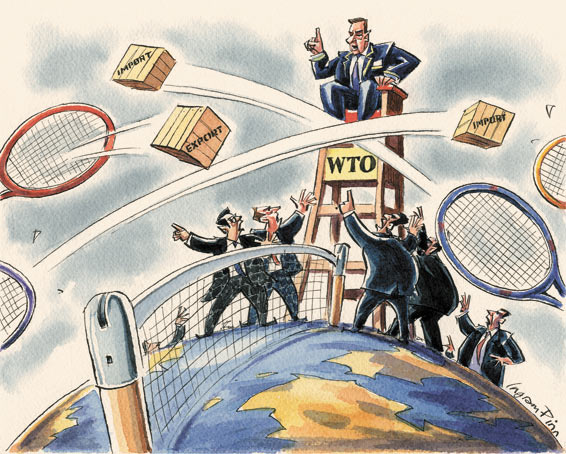
Trade Protectionism and the WTO — What do the numbers show as to WTO Litigation? It’s really not clear. First, let’s look at the numbers.
Two recent announcements by Global Trade Alert and the WTO indicate that the number of protectionist actions introduced by countries in 2010 and 2011 were much higher than previously thought. “Economic Gloom Puts Free Trade at Risk.” Financial Times (June 14, 2012).
The new Annual Report for 2011 issued by the Appellate Body of the WTO (June 13, 2012) discloses: (i) increase in percentage of panel reports appealed in 2011 in comparison with 2010 was from 40% to 63%; (ii) the number of appeals filed during this period increased from 3 to 9; (iii) the top 7 states involved as parties or third-parties in appeals for 1995 – 2011 were the U.S. (140), the EU (123), Japan (64), India (65), China (41), Mexico (40). Appellate Body Annual Report for 2011 (WTO June 13, 2012).
The number of new disputes filed from 2010 to 2011 decreased from 17 to 8. The U.S. remains as the most litigious state (211 total cases) with the EU second (with with 155 total cases). Annual Report of the WTO 2012.
One more statistic. The number of domestic antidumping actions initiated worldwide from 2010 to 2011 dropped from 170 to 68. Antidumping Investigations 1995 – 2011 (WTO 2011).
To me what the above shows is while more protectionist measures have been introduced the last two years the actual number of new WTO cases filed have decreased. Yes, the number of appeals of existing cases have increased slightly. Yet, new domestic antidumping cases have not increased. (These are the cases that are often brought to the WTO.) The U.S. and the EU remain the WTO’s greatest users of the dispute resolution system.
Only time will tell if the newer trade measures will result in more litigation. I suspect they may or maybe not. It’s always good to look at the numbers.
International Trade Program at St. Peter’s College, Oxford University, in conjunction with George Mason University 1994 – 2003.
The following is a short PowerPoint of photos of the various classes in international trade and transactions held at St. Peter’s College, Oxford University, in conjunction with George Mason University over ten years. This program included a one-week segment in Geneva, Switzerland, at the World Trade Organization (WTO) and included team assignments with various multinationals in the City of London.
Oxford – Geneva Trade Programs (1994 – 2003) — A Partnership between St. Peter’s College, Oxford University, and George Mason University.
Global Business and Prosperity — Ideas for Business and Policy Leaders.
The following are quotes concerning global business and leadership from the new book BEING GLOBAL (2012), co-authored by the president-elect of George Mason University and current President of the Thunderbird School of Graduate Management, Angel Cabrera:
.. Being global really needs to be part of an organization’s DNA.
.. International trade is not new.
.. Global business in the modern era is truly transnational.
.. Global leaders are not born but made …. It is about how you choose to focus your attention, spend your time, and engage your mind.
.. [G]lobal leaders bring together disparate parties.
.. Global leaders do not play on the edge of the law.
.. A global mindset is a core foundation of successful global leadership.
.. A global mindset is not an innate trait.
.. [E]ntrepreneurship is the process of applying resources and assuming risks in the creation of new value.
.. Global business is full of legal loopholes and ambiguities … plenty of opportunities for moral arbitrage … global leadership excludes that type of conduct ….
.. A ubiquitous problem facing global leaders operating in a transnational context is corruption …. Corruption is not just a scourge of politicians and citizens. It also does great damage to businesses.
.. Global citizenship is … about values.
.. The global economic crisis … is an example of … failed global leadership.
To me, the above ideas are essential tenets that progressive business and policy leaders need to apply in order to compete successfully in today’s hyper-competitive and globalized world. Only this will help to ensure successful business transactions, state economic development, and jobs. We’ll see how the new president-elect of George Mason University infuses his university leadership with the above views. Check back in a few years.
Posted in Global Trade Relations
Tagged Angel Cabrera, Being Global, corporate responsibility and social value, corruption. global leadership. global mindset, global business, global citizenship and values, global financial crisis, public policy and business, state economic development
Leave a comment
New U.S. – China Trade Disputes — Action is Seen Again in the ITC and the WTO.
Two new developments concerning U.S. – China trade litigation only highlights the growing trade friction between these two countries, unfortunately.
Yesterday the U.S. International Trade Commission imposed countervailing duties on Chinese wind-turbine towers alleging that Chinese manufacturers receive illegal subsidies from the Chinese government in this clean-energy sector.
A few days earlier China filed a new litigation against the U.S. in the WTO complaining of U.S. subsidies on various exports to China. China alleges that the reliance by the U.S. on a “rebuttable presumption” that majority government ownership is sufficient to treat enterprises as a “public body” is inconsistent with WTO trade rules.
So the trade disputes continue to mount up.
Hope this doesn’t stop Chinese FDI into the U.S. The latest U.S. employment data only highlights the need for greater foreign investment to promote economic development in the states. Federal action endangers this. There seems to be a disconnect between federal and state policies.
China’s investment into the U.S. for the first quarter this year (2012) was $8 million down from $975 million a year earlier. By the way China’s overseas investment surged to $21.4 billion globally for the first quarter.
Need more be said?
Chinese Trade Disputes and Direct Investment — Don’t Let Trade Disputes Derail Foreign Investment into the U.S.
Beijing has responded to recent U.S. imposition of 31% antidumping measures on Chinese solar panels by finding that U.S. subsidizes clean-energy projects in violation of international trade law under the WTO. These U.S. and Chinese trade actions only heat up U.S.-China trade relations to a higher extent.
What is the impact of these trade disputes on private Chinese investment into the U.S.?
Chinese corporate investment into the United States expands daily. Wang Jianin’s corporation, Dalian Wanda Group LTS., has announced a corporate takeover of AMC Entertainment, the second-largest movie chain in the United States. This investment of $2.6 billion is now the largest Chinese investment into the United States.
This is particularly interesting in context of falling FDI into China this year, increased emphasis in the U.S. in attracting FDI, efforts by U.S. firms to redirect some of its foreign investments back to the U.S., and recent uptick in both global mergers and greenfield investments.
But trade disputes concerning antidumping duties and countervailing duties cannot be allowed to derail increasing Chinese investment into the United States.
Trade remedies often hurt domestic industries in the U.S. that depend upon imports to incorporate into their finished products. Of course, they also hurt the entire import industry that sells and services foreign produced goods.
Trade and exports are good for the United States but direct investment is of critically importance also.
The federal government and states are promoting exports as a means of economic development. But foreign investment holds the key to even greater economic development and jobs in the U.S. Maintaining an open-investment environment is essential.
Fostering a domestic business and investment environment that is not hostile to global investment is of a great importance.
Just ask the Europeans why the Chinese are not helping in their debt crisis. It’s obvious that increased EU trade remedy actions against Chinese imports is one important reason. (The glossy paper case and probably a new one concerning Huawei are the most recent examples.)
Unnecessary CFIUS proceedings, merger reviews, and overly aggressive trade remedy actions in the United States are not good for promoting cross-border business and investment by Chinese or other firms. (Cash-rich Japanese firms are returning to global M&A in numbers rivaling their forays in the 1980s.)
So while states and industries are out seeking foreign investment the federal government needs to exercise greater prudence in filing or approving trade actions with domestic and international agencies. This includes restricting politically inspired WTO actions against China that have shown increased frequency and heightened focus under the Obama administration. Increasing focus and expansive definition of state-owned enterprises (SOE) as providing illegal subsidies pushes trade law to its limits.
Prudence in trade relations is good for foreign investment. It is good for American business, economic development, and jobs in the United States.
Posted in Global Trade Relations
Tagged AMC corporation, CFIUS, Chinese FDI into U.S., Chinese investment and U.S. jobs and economic develoment, Chinese investment into U.S., clean-energy subsidies, economic development and FDI, merger review, solar panel antidumping duties, U.S. - China trade disputes
Leave a comment
Trade, National Security and Cyber Espionage — Any U.S. Response under the WTO Rules? Maybe ………….
Is commercial and economic cyber espionage by China subject to valid counter-measures by the U.S. under the WTO — specifically under GATT Article XXI that allows trade restrictions to protect national security? What about more limited responses under the TRIPS agreement to protect intellectual property rights?
These are intriguing questions. They may be the next big trade questions involving cybersecurity and economic espionage for commercial gain.
The annual report by the Office of the Counterintelligence Executive (November 2011) entitled “Foreign Spies Stealing U.S. Economic Secrets in Cyberspace” declares “Foreign economic collection and industrial espionage against the United States represent significant and growing threats to the nation’s prosperity and security.”
Article XXI of the GATT 1947 governing “security exceptions” provides that nothing in the WTO rules “prevent any contracting party from taking any action which it considers necessary for the protection of its essential security interests.“
Does Article XXI mean that the U.S. can impose restrictions on Chinese trade and investment that it considers necessary to restrict Chinese government-sponsored cyber espionage which it deems harmful to the national security of the U.S.? Maybe so.
But when cyber espionage does not rise to the level of endangering national security a U.S. trade response may still be valid, to enforce the obligations of the TRIPS Agreement. Which agreement obviously did not envision an active government role to violate the intellectual property rights of foreign companies for the gain of domestic firms.
TRIPS requires as a general obligation under the “national treatment principle” (Article III) that a country “shall accord to the nationals of other Members treatment no less favourable than it accords to its own nationals ….” Providing government-sponsored commercial intelligence to it own firms amounts to giving its own nationals a more favorable treatment, to say the least.
The U.S. Economic Espionage Act of 1996 is a major player in this discussion. This predates Chinese and Russian commercial espionage. This probably needs to be updated somewhat.
We may be seeing a whole new era of trade relations and WTO dispute resolution emerging and just over the horizon. One involving national security and cyber espionage. And not just involving China. Welcome to the 21st century.
Renunciation of citizenship to save future capital gain taxes — A mere ingratitude or a call for public debate & better policies?
Let’s see. You come to America to go to a university paid for by your parents. You invest a bit of your parent’s money in a pre-startup. You get American citizenship. You make huge money by no fault of your own. You renounce your American citizenship and leave. You save taxes and laugh all the way to your private and secret offshore accounts in an authoritarian tax haven, without ever looking back.
What does this say about individual responsibility and U.S. international tax policy?
To say that Saverin’s renunciation of his citizenship to save on future capital gain taxes is mere ingratitude is a vast understatement. This action represents such an outrageous act of tax avoidance (evasion?) that the Congress should promptly remedy.
The solution is easy. You make money in the United States. This is U.S. source income. Your assets (your stock) are U.S. issued and registered. They are transferred to you in the U.S. for your investment and services in the U.S. Therefore, wherever you go and whenever you sell it, profits should be subject to the same taxation if you had not renounced your citizenship. Isn’t this an equitable and honorable way of doing business?
Whatever happened to corporate responsibility and individual citizenship? This form of global rootlessness to evade taxes calls for rethinking existing global governance. A better national and international architecture is needed.
This grievous tax avoidance by a co-founder of Facebook is another nail in the coffin of those denying the dire need for corporate tax reform especially when it comes to international taxation.
By the way this is not really even an issue of international taxation. Here you have an American citizen scheming to do away with taxes to both the federal government and state government during the Great Recession, by moving to a small authoritarian state with a predatory tax system that scoops up capital from countries worldwide.
The lack of transparency and bank secrecy of Singapore is notorious. For the U.S. to allow this to happen further promotes a dysfunctional international tax arrangement that distorts global and domestic business development. The U.S. is already combating secret offshore accounts and tax havens. Just ask the Swiss government and UBS.
It’s about time the United States addresses its own laws and administrative actions more forcefully to reign in a global system harmful to all countries and their peoples. The I.R.S. and Congress need to look at this closely and take aggressive action. More effective tax and banking agreements need to be negotiated. Domestic laws need to be better enforced and updated.
This situation accompanying Facebook’s IPO is indeed a moment in time where a personal choice should spark a public debate. Hopefully, this debate and an effective public policy response will be forthcoming from the U.S. and other countries.
Resource Nationalism and Nationalization in Latin America? — Will this lead to a Trade War?
Three Questions: Is resource nationalism and nationalization back in Latin America? Will this cause a trade war? What will foreign investors do in light of these developments?
Here are some recent trade and investment items:
…. Argentina expropriated the Argentine subsidiary YPF of Spain’s Repsol.
…. Bolivia expropriated the Spanish owners of TDE (electricity transmission).
…. The EU warns Argentina that the foreign investment of European companies is fully backed by the EU and warns of a trade war over nationalization.
…. This same warning is intended implicitly to go to Bolivia also, obviously.
…. Yet, Brazil is welcoming Sovereign Wealth Fund investment from Abu Dhabi (Mubadala Development Company) into its leading commodity and shipping conglomerate (EBX).
What are the lesson here? Very easy …………..
…. Nationalization is coming back into style in some Latin American countries where economic development has lagged.
…. This may lead to serious global trade disputes.
…. These disputes may eventually be heard by the WTO and the World Bank (ICSID).
…. This is the obviously linkage between financial investments and the trade system.
…. Unfortunately, the WTO does not have juridical competence over international financial disputes.
…. But still foreign investors persist in a market that is dynamic and growing.
…. Brazil is growing. Bolivia and Argentina are basket cases.
…. Bad economies make for bad investment environments.
…. This general situation in Latin America needs to be closely monitored as the global economy increasingly struggles. Hopefully, this will not be the start of a global trend.
Posted in Global Trade Relations
Tagged Abu Dhabi, Argentina, Bolivia, Brazil, EBX, EU trade war, foreign investors, ICSID, nationalization, resouce nationalism, resource nationalisn, Respol, Spain, SWF, World Bank, WTO, YPF
Leave a comment
Tax Havens, Foreign Corruption and Bank Secrecy — One Big Global Problem — Better U.S. Corporate Oversight Needed.
Recent developments concerning disclosure of Apple’s alleged sheltering of $7 trillion dollars in offshore tax havens and Wal-Mart’s foreign bribery scandal in Mexico raise three inter-related issues: tax havens, foreign corruption, and offshore banking secrecy.
Together these issues feed into grave global problems concerning illegal financial transactions, funneling funds to outlaw states and non state actors, providing cover for massive investor fraud, and financing transactions impacting fiscal stability of the global financial system.
What is the solution? In part the solution is to adopt more aggressive U.S. legislation applicable to U.S. and foreign firms in their conduct of international transactions.
This legislation should provide for more corporate financial transparency and general disclosure. This would assist in the greater enforceability of corporate law and corporate responsibility globally. This more stringent U.S. legislation is in the economic and national security interests of the United States as well as in the interests of U.S. investors and corporations.
This national approach does not rule out global and multilateral efforts by the OECD, G-20, G-8 or others, but those take time. Unilateral actions by the United States in this economic and business spere are warranted.
The global community will follow our lead, eventually. Just look at the way U.S. policies (the enactment of the Foreign Corruption Practices Act) toward global corporate corruption in the late 1970s led to international action by the OECD in the late 1990s. The same is happening to a limited degree now concerning the tough U.S. financial and tax policies toward Switzerland, UBS and Credit Suisse.
Enron, Bernie Madoff, the Great Recession and now Apple and Wal-Mart make tax havens, foreign corporate corruption and global bank secrecy simply intolerable in this ever-globalizing world. Not only do they distort global trade flows they also negatively impact the U.S. domestic system and those of other countries.
It’s good policy and good law for the United States to legislate good corporate behavior and to enforce vigorously corporate responsibility globally.
Posted in Global Trade Relations
Tagged bank secrecy, corporate responsibility, Enron, FCPA, foreign corruption, G-20, G-8, global transaction, Great recession, impact of global actions on domestic systems, international transactions, nonstate actors, OECD, outlaw states, tax havens, UBS
Leave a comment


You must be logged in to post a comment.