A third wave of trade litigation against the Trump administration has now begun in the Court of International Trade (focusing on mass application of Section 301, rather than on individual countries.) The CIT recently certified a class action lawsuit against Trump asking for full IEEPA tariff refunds.
The tariff war is increasingly becoming an all-out trade war –– with many nations including our closest allies. Reliance now on Section 338 is outrageous as well as claims of forced labor. Section 338 has never been relied upon over the almost last 100 years (since its inception in 1930’s). Trump’s reliance on Section 301 “Retaliation’ is even worse.
Trump’s ever-changing legal rationales on a broad range of tariff actions are ludicrous.
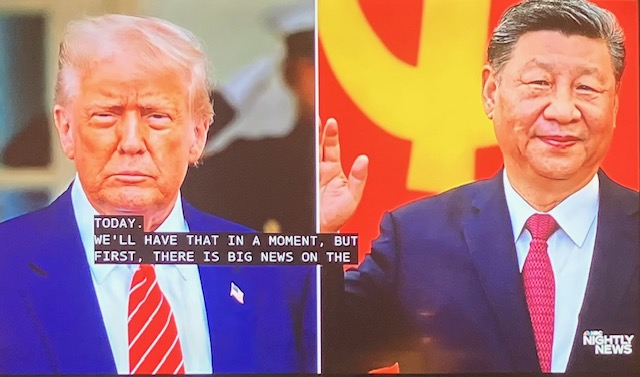
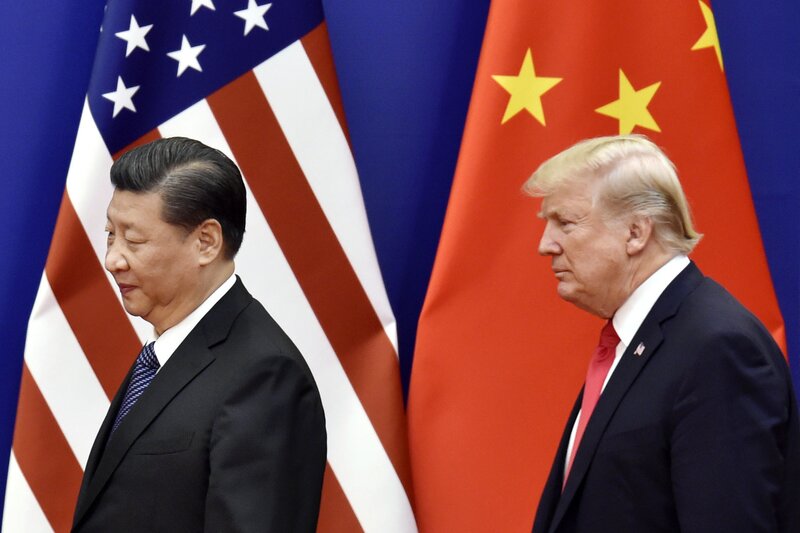
Now he is making a push for even broader tariff powers (unrelated to Russia) that are included needlessly in the new Russian sanction legislation. His make a mockery out of the law. The recent summit with Xi achieved nothing (just photo ops) — despite some vague statements concerning a trade truce, maybe in the fuure.
Trump’s economic and military threats are no longer bearing much fruit. Just look at the recent Iranian and Canadian threats, tariff actions and broader trade actions.
Trump’s tariffs have endangered U.S. foreign policy and drove away our closest allies. emboldened our adversaries and endangered our national security. They have also turned away many of his former domestic supporters, especially farmers and auto manufacturers.
Trump’s tariffs have simply not increased U.S. manufacturing. This is clear from the data. They have only increased the wealth-wage divide in the U.S. The cost of many everyday items would have declined without Trump’s legally fraught tariff policy, according to a report from the New York Federal Reserve.
Courts and Congress need to be more aggressive in their overview. Politicians and the broad range of individuals, consumers, farmers and firms — large and small — need to immediately raise their voices of confrontation. ‘Enough.’ Unfortunately, the Congress seems to be abetting Trump.
The federal courts and the Supreme Court need to get back into this constitutional fray. Needless to say, the midterms may well be a very real corrective mechanism, hopefully. The Republicans are going to pay for not standing up against Trump’s threats.
………………………………………….
“The cost of many everyday items would have declined without Trump’s legally fraught tariff policy, according to a report from the New York Federal Reserve. Shoppers saw a 2.9 percentage point increase in inflation on a sample of 67 types of goods as of February due to tariffs imposed in 2025 and early 2026. Without the tariffs, the team found that prices for goods would have pulled back in that period …. The New York Fed’s report offers the clearest evidence yet of the impact of Trump’s tariffs — a core policy of his most recent campaign and second term in — on consumers’ wallets. Economists had widely expected his levies to push up prices, though the precise effects had been hard to estimate due to the changing nature of the policy and the lack of transparency on how companies set their prices.” “Tariffs Causes Inflation.” CNBC (Oct. 8, 2026).
| “The U.S. Court of International Trade on recently granted a broad class certification for importers subjected to Trump’s now-invalidated global tariff regime in a move the judge said he hopes will ensure all such tariffs are refunded. “Trade Court Certifies Broad IEEPA Tariff Refund Class.” Law 360 (Oct. 11, 2026). |
“For the third time in less than two years, the Trump administration returned to court to defend its power to wage a punishing global trade war …. The latest phase of Trump’s ever-evolving trade war rests in the familiar hands of a panel of federal judges, who heard the third major case in less than two years challenging the president’s ability to tax imports from around the world …. This time, the legal wrangling concerned the use of Section 301 of the Trade Act of 1974, which allows the administration to investigate unfair trade practices and impose tariffs if it finds that American businesses were harmed. The government relied on the statute to impose tariffs on 86 countries at once, claiming that they had failed to stamp out “forced labor” and had put U.S. firms that better protect workers at a competitive disadvantage. …. The expansive nature of the tariffs prompted state officials and small businesses to file a series of lawsuits, arguing that the Trump administration had failed to marshal the evidence required under law to justify the duties … judges on that specialized circuit have twice ruled against the president in major tariff cases. Another defeat could once again thrust his trade agenda into chaos …. In fact, presidents of both parties successfully invoked Section 301 in the past to target trade practices by individual countries, including China. But the expansive and expeditious way in which Trump applied the law this summer triggered swift lawsuits from those that had been involved in those past fights against the president’s earlier duties.” “New Attack on Trump’s Tariffs.” New York Times (Oct. 1, 2026).
“Trump’s lavish summit with Chinese leader Xi Jinping bought the White House time — and little else. Shortly after Xi touched down in Washington Treasury Secretary Scott Bessent announced he and his Chinese counterpart had agreed to a short-term extension of the two countries’ trade truce, ensuring the world’s most consequential economic relationship will remain stable until well after the U.S. midterms …. More than a year into a fragile trade truce with China, American exasperation with high prices has undercut the administration’s hand in its economic rivalry with Beijing. Republicans across the country are breaking with Trump weeks ahead of a midterm election, rejecting his trade policies and calling for an end to the Iran War as they seek to show voters they feel their economic pain. The result is a chastened Trump, with a hampered ability to threaten the economic pain necessary to secure real commitments from Xi to release China’s grip on critical minerals flows, which Beijing continues to restrict, help secure AI technologies or buy more U.S. products — let alone some of the bigger structural changes to the economic relationship that the White House had once envisioned. “Nothing Much at Xi Summit.” Politico (Sept. 26, 2026).
“Tariffs and high prices for diesel, gas and fertilizer because of the war in Iran, along with Trump’s plans to import more beef, have soured the moods of America’s farmers and ranchers …. Trump’s trade war with China halted soybean exports — depressing prices for last year’s crop and costing farmers billions of dollars. Tariffs have also made farm equipment more expensive …. Several massive beef processing plants and large feedlots—where cattle are fattened before slaughter. ICE’s presence delayed shifts and hampered beef production at some facilities after some employees didn’t show up for work.” “Farmers, Trump’s Trade Problems and GOP Troubles.” Wall Street Journal (9.26.26).
“Industry clamor around granting the president new tariff powers is reaching a fever pitch (in discussing the proposed Russian Sanctions Legislation) as groups intensify their lobbying efforts ahead of a potential floor vote ….. A coalition of more than 30 groups wrote to House leadership warning of higher costs to consumers and urging lawmakers to ditch the tariff language from the bill. Industry groups have also been meeting privately with lawmakers and congressional staff to vent their frustration …. The White House is pushing Johnson to jam this through because Trump is desperate for new tariff power, not because he needs new tools against Russia.” “Broad, New Trade Measures and Proposed Russian Sanction Legislation.” Politico (Sept. 14, 2026).
“The age of capitulation that defined Trump’s return to office may be starting to fade. World leaders and domestic institutions are, in some cases at least, showing less willingness to submit to Trump’s will …. Universities and law firms are rebuffing his directives rather than signing on the bottom line …. The clash with Canada brings a lot of that history to the fore. Both sides have continued to escalate in recent days.” ““Deference to Trump Turns Increasingly to Defiance.” New York Times (August 27, 2026).
“President Trump is expected to sign the legislation that gives him new authority to level tariffs …. The legislation wouldn’t only penalize certain Russian individuals and entities but also the five biggest importers of Russian oil and gas. It gives Trump the authority to issue up to 100% tariffs on the countries buying Russian energy. It also extends sanctions on Iran until 2031 …. It hands President Trump broad new tariff powers and lets him waive away the very sanctions it claims to impose …. Trump has shown during his second term that he loves the tariff tool, that he wants to constantly apply it and adjust it for coercive reasons over other countries.” “House Passes Broadened Presidential Tariff Powers.” Wall Street Journal (Sept. 17, 2026).
“Trump’s trade war with Canada is harming both countries, but it’s helping American Democrats who are using his border taxes to attack Republicans. Ground zero is Michigan, where competitive races could decide control of Congress in November. A new poll conducted for the business coalition M finds that Trump’s tariffs are overwhelmingly unpopular in the state, especially the tariffs on Canada …. Trade protectionism can sound politically appealing in the abstract and when it’s spun as “America first.” But it becomes unpopular when voters see how it leads to higher costs and price increases in practice. This is how it’s now playing out in Michigan and farm states.” “More on Tariffs – More Unpopular Today with MAGA” Wall Street Journal (Sept. 19, 2026).
“Tariffs are raising the cost of materials and goods, higher fuel prices are increasing production and transportation costs, and higher interest rates are making inventory more expensive to finance. Auto suppliers, chemical companies, and other industrial businesses are seeing margins squeezed as they struggle to absorb higher costs. Companies that can pass higher costs to customers are better positioned, while businesses facing price-sensitive consumers risk losing demand if they raise prices too much. Big corporations with substantial cash reserves and longer-term debt are less immediately exposed to higher rates than smaller, more leveraged businesses. “Tariffs are Hurting American Companies.” CNBC (Sept. 20, 2o26).
“Trump tariffs are hurting Americans. Real economic growth is slowing, consumer prices rising, and real wages stagnating. Now the Republican Party is set to pay for it. Since the founding, tariffs have proved toxic to the party that implemented them. When Trump asserted executive authority to impose the highest tariffs in 90 years, Republican congressmen, though skeptical, remained silent. If tariffs hurt Republicans in the November elections as much as they have hurt the economy, the midterms could end up igniting a Reagan revival on trade, shifting the trajectory of the party and the country. No American president was more passionate about trade liberalization than Ronald Reagan …. Americans have reaped enormous gains from the fall of protectionist barriers …. U.S. agriculture needs foreign markets, and almost all U.S. manufacturing needs foreign components. Without low-cost inputs from abroad, many manufacturers can’t export their products.” “Republican Revolt against Tariffs.” Wall Street Journal (Sept. 22, 2026).
“Countries that respond to Trump’s tariffs also know how to target Trump’s supporters in red states. Between March 2025 and February 2026, retaliatory tariffs cut U.S. agricultural exports to China by $14.9 billion, annualized, according to a May report from North Dakota State University. Nearly half of that was soybeans, though it also included beef, cotton, tree nuts and corn …. Republicans are now in political danger in Iowa, Kansas and Nebraska …. If the Administration wants farming in the U.S. to be easier, then stop the policies that make it harder.” “Farmers and Trump’s Tariffs. – Bad News.” Wall Street Journal (Sept. 24, 2026).


 Stuart Malawer

You must be logged in to post a comment.