Reaction to Trump’s Policies & Rise of the New Federalism.

[From my Op-Ed in this Sunday’s RICHMOND TIMES-DISPATCH (June (June 18, 2017) ……………………………..]


A new aggressive and proactive federalism seems to be evolving in the United States.

This newer federalism promotes global engagement and observation of international rules. This is remarkably different from the older version that supported states’ rights and segregation and was primarily based in the South.

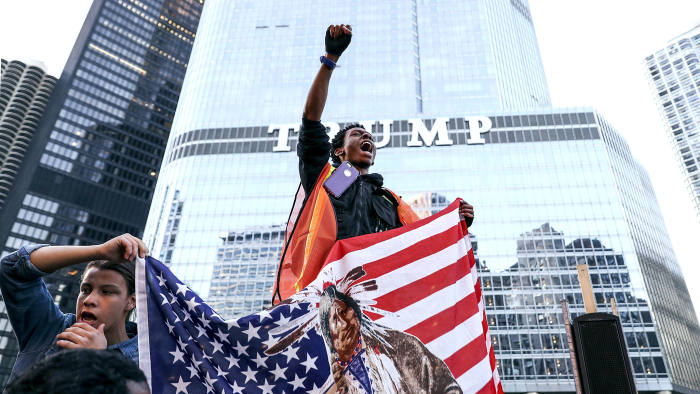
Today, we see a rapidly evolving anti-Trump resistance in the widespread movement for “sanctuary cities” and the more recent “city-state climate coalition.” Virginia is one of the most recent members of that coalition.

These local actions by cities and states are in opposition to President Trump’s national policies relating to immigration enforcement, the rejection of the Paris Climate Accord, and a general contempt for a rules-based international order.

In particular, these policies relate to trade, climate change, immigration, multilateral alliances, and almost any international agreement that restricts the United States from taking unilateral actions. These historical changes have occurred under the claim by President Trump of protecting the United States and its national sovereignty.

 What else can be said?

This incipient development on city and state levels results from President Trump’s isolationist retreat from America’s engagement in the global system. This engagement has been a hallmark of U.S. foreign policy since before 1945. This incomprehensible retreat by the world’s most powerful nation has seemingly been done with little thought and even less collaboration with Trump’s key national security, military, and foreign policy advisers. Some advisers, however, have seemingly betrayed their own competence by recently declaring there is no longer a global community.

This atavistic retreat to isolationism is a rejection of the rules and institutions that have marked U.S. engagement in international relations since the end of World War II. That engagement had its earlier grounding in the United States’ participation in World War I and then in the 1930s under President Roosevelt’s Open Door Policy and his revamping of U.S. trade policies under Secretary of State Cordell Hull.

***

Those policies espoused open trade, adhering to the most-favored-nation principle as a life-saving antidote to the competitive tariff hikes globally, which had led to the Great Depression. That principle was later multilateralised in the post-war international economic system. This system persists today, but it is under attack by the Trump administration. Most recently, this is seen in its refusal to sign the historic OECD treaty on multinational tax avoidance and bilateral tax treaties signed by 70 other countries recently.

With only a slight knowledge of U.S. diplomatic history, one can draw a straight line from President Woodrow Wilson’s plea to Congress to stay involved in the global system after the Great War (only to see the League of Nations, the Permanent Court of International Justice, and the Versailles Treaty defeated in the U.S. Senate) to President Trump’s nihilistic foreign policies today. Of course, nothing good came from the failure of President Wilson’s efforts. Twenty years later, German troops marched across Europe.

The resurgence of the states’ and cities’ roles in foreign affairs is reminiscent of the role states had under the Articles of Confederation immediately after the Revolutionary War in the 1780s. This is seen even going back to the Middle Ages, when states and cities were the central players in international trade, as part of the Hanseatic League within the Holy Roman Empire.

Today, it is the global city and cities of all sorts that are powering international engagement, innovation, and economic development. Cities, counties, and states are taking the lead in interfacing with the global economic system to promote local economic development and jobs.

******

What we see today are unprecedented actions by the United States on the global stage causing more disorder and insecurity. Just witness the recent flare-up in relations with Qatar and growing Saudi-Iranian hostilities instigated by President Trump’s visit to Saudi Arabia. To many, these actions and policies evidence failed national leadership and bizarre foreign policies.

We are now encountering unprecedented actions on the sub-national level, among city and state governments as a reaction to failed national governance and as blowback to skewed populism. These actions have been powered by extensive and broad-based individual and corporate support.

These activities are growing in intensity. For example, state attorneys general have been energized in bringing judicial challenges to Trump’s policies, most notably to immigration. Canada has begun negotiating directly with the states and cities that are members of the new climate coalition. Cities and states are expanding their sister-city and sister-state relations abroad. Most recently Virginia, completed a memorandum of understanding with the Mexican state of Baja California to promote trade.

Whether the Trump administration and its Justice Department will attempt to block these grassroots political actions by resorting to the federal courts is another question. Of course, these courts have not been very favorable to the administration’s actions and its reliance on national security and the president’s foreign policy powers, under either the principles of the separation of powers or federalism.

Thus, the growing opposition of cities and states to President Trump’s failed foreign policies are spawning a new proactive federalism focusing on locally generated foreign policies. This is setting up a legally and politically historic battle over the new federalism.


Stuart S. Malawer, J.D., Ph.D., is the Distinguished Service Professor of Law and International Trade at George Mason University’s Schar School of Policy and Government. He is a former member of the board of directors of the Virginia Economic Development Partnership. He can be contacted at StuartMalawer@msn.com. His website is www.GlobalTradeRelations.net
Leave a comment

JUSTICE GORSUCH & INTERNATIONAL LAW — Not Clear.


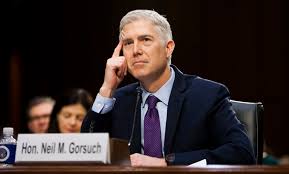
JUSTICE GORSUCH, INTERNATIONAL LAW AND U.S. LAW — Justice Gorsuch displayed a somewhat confused & restricted approach to international & foreign law during his Senate confirmation.

There is a critical distinction between international law and foreign law. International law (both conventional and customary) are incorporated into US law as the supreme law of the land under Article VI of the U.S. Constitution. Judges need to know this (judicial notice).

Foreign law, considered a fact issue in the U.S., belongs to the world of comparative and conflict of law. This often needs expert testimony.

The big issue today is will the Supreme Court look at legal solutions by foreign courts as a means of understanding today’s global problems. Not in interpreting the Constitution itself but helping the court to fully assess the dimensions of the problem under consideration.

Justice Breyer is a leading advocate of this approach. A detailed assessment of Justice Gorsuch’s prior decisions would probably lead to a better understanding of his views in this contentious area. http://us-global-law.net/images/Article.Gorsuch_and_IL_Blog._May_23,_2017_.pdf … …

Leave a comment

New US-China Trade Understanding — Not Much Substance. Better than Nothing?


     The new understanding between China and the US on trade is very welcomed. Even though it is very minor and a seeming betrayal of Trump’s campaign promises to the white working class.  Here are a few thoughts:

  • The linkage between security and trade is important. As long as this provides for growing trade ties and better political relations between the U.S. and China.
  • The actual provisions of this new understanding, dealing with US beef imports to China, electronic payment systems in China, and LNG exports to China,  have been in the works before the Trump administration. For example, the WTO already ruled on EPS.  China had previously committed to implement that decision. And these matters in general have only been minor annoyances or friction in US-China trade.
  • China has no obligation to purchase LNG. The lifting of restrictions on US beef imports relate to a very outdated response to health issues of US cattle last decade.
  • The provision allowing for cooked-chicken into the US from China is very problematical. Food safety and security in China is widely considered by the Chinese themselves as very poor throughout China. That’s why Chinese agricultural firms have been buying and investing in US agricultural and food companies, for among other reasons, to secure better technology.
  • The Trump administration’s threat to the WTO, by reliance of Section 232 ‘National Security Provision’ to impose additional tariffs on imported steel, can explode in the faces of the U.S., the WTO and the global trading system. There has never been a WTO decision on Article XXI of the GATT that governs the security exception.

     My conclusion — This understanding, not binding legal obligations, is not unexpected. They do not address the main issues. May just be window dressing. Hope not. We’ll see. Probably pretty shortly.

Leave a comment

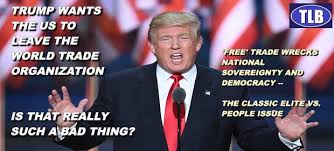
Trump’s New Attack on the WTO ……….. Is Trump’s Trade Policy Becoming More Dysfunctional & Dangerous?


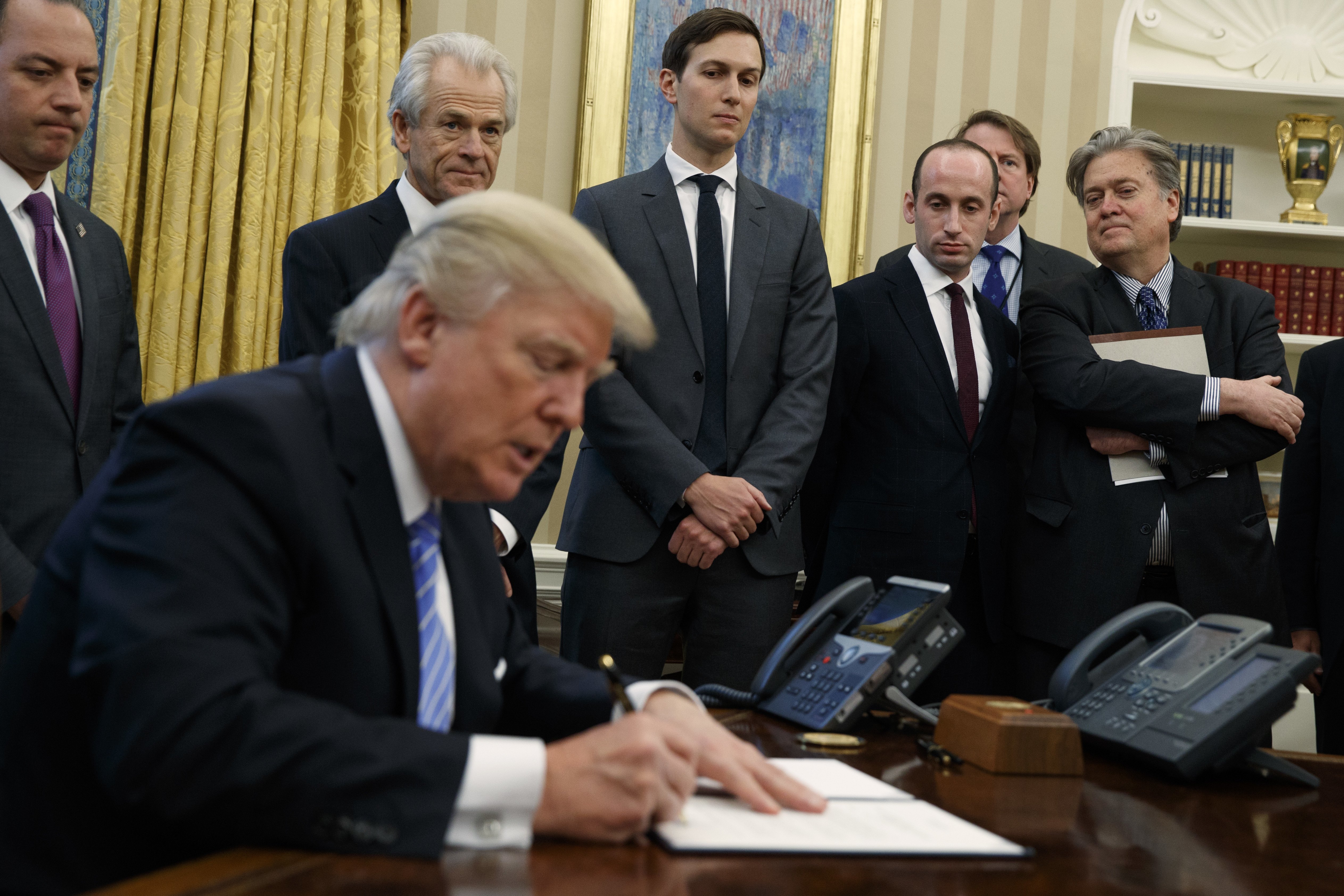
     On day 100 Trump signed an EO critical of the WTO. This follows 100 days of complaints. This is really unfortunate.

     Trump’s recent trade complaints target China, Canada, Mexico, South Korea, Japan, the EU and now to the entire rules-based system of treaties, institutions, and dispute resolution.

      The remarks accompanying this recent Executive Order by Wilbur Ross were totally unfounded. The Trump / Ross attack on the dispute resolution system is totally baffling.

    The US was the primary architect of the dispute resolution system and the primary user of it. The US has brought more cases and won more cases than any other country. Why condemn the dispute resolution system? It has succeeded better than anyone could have imagined. This is the way to resolve disputes. The US has been really successful.

What’s the point? Attacking the entire system? Yes. Trump’s trade policy gets dumber and more dangerous by the day, more inconsistent and more dysfunctional.

Leave a comment

100 Days & Trump’s Trade Policies — Disarray, Dysfunctional but Not Much Damage, Yet.


What can be said of Trump’s trade policies in the first 100 days? Here are some of my thoughts in outline form.

Recent trade actions ……………

  • Threatening withdrawal from both NAFTA and the WTO.
  • Subsidy duties on Canadian softwood lumber (to counter provincial subsidies).
  • Threatening Canadian dairy industry over import restrictions.
  • § 232(b) national-security investigation of steel (principally from China).
  • Withdrawing from TPP.

Recent failure to react ……………

  • Not declaring China a currency manipulator.
  • Not tearing up NAFTA (wanting some minor renegotiation).
  • Backing off the border adjustment tax.
  • Concluding only a 100-day study period for US-China trade relations.
  • No cases filed in the WTO.

Pending …………………………

  • Possible new domestic trade remedy actions concerning aluminum, semi-conductors and shipbuilding.
  • Supporting possible new bilateral negotiations.
  • Constant concerns over the WTO’s dispute resolution system and the issue of US sovereignty.

What to make of this? ……………..

  • Trump has not given into his extreme campaign rhetoric.
  • Trump relies upon older trade remedy laws to address older trade issues (steel, lumber …)
  • Neglected addressing the issues of the 21st century, for example cybertheft and digital commerce as well as newer issues of global taxation, global finance and growth of foreign antitrust regulations.
  • The disorder and disarray in his White House and administration is being mirrored in his disarray in international economic and trade policy 

Conclusions ……………………….

  • Good he has so far averted trade wars.
  • But by focusing on older issues he is looking backward.
  • Need to move beyond trade remedy laws that go back to the early 1900s as well as focusing on trade deficits in merchandise trade and focus on trade issues of the day.
  • Reliance on older trade remedy laws is not helpful. They focus on producers and not domestic consumers and real issues of competitiveness and innovation.

General Observations …………………

  • Not much has happened. There has been a disconnect in his actions and campaign rhetoric. But there is no coherent trade policy, whatsoever. Focusing on Trump’s failure to appreciate the strengths of the existing international trade and multilateral system is a grave error.
  • Focusing on  §232(b) national-security investigations is totally unfounded. We can import steel from a host of our friends during any sort of emergency. There’s a world glut.
  • He needs to transcend his earlier restrictive protectionist, transactional, and mercantilist views and more fully appreciate the global trends and the need for effective national and multilateral actions under thoughtful American leadership.
  • The US needs to once again reassert its traditional leadership in global trade relations. It’s in our national interest.
Leave a comment

President Trump returned to his attack on global trade — Is This a Good Trade Policy?

     After failing to declare China a currency manipulator this week President Trump returned to his attack on global trade.
     Relying upon rarely utilized “national security” arguments and questioning the well-known restrictions on domestic content requirements and the principle of non-discrimination for private and public contracts.
      The following two executive orders are highly questionable under global trade rules of the WTO and its Government Procurement Agreement — the new executive order requesting Section 232 review of steel imports on national security grounds and the new executive Order on “Buy American” as to steel for construction contracts.
     Most importantly these executive orders indicate the still unresolved civil war within the administration between the ‘nationalists’ and the ‘globalists.’
      What is required for a sane American trade policy is a return to a firm acceptance of the trading order that emerged during the last few decades. In which the United States was the primary architect. We’ll see how this plays out.
Leave a comment

Trump’s 100-Day Trade Plan — Really?

     What emerged from the Xi – Trump summit on the most crucial issue of trade wasn’t very much. Not even a real plan. Just a vague undertaking to review some trade issues.  So after all these weeks we now have a committee to conduct a vague review of some sort. 
     This stands in stark contrast with Trump’s promise to take swift and decisive action — on currency manipulations, tariffs, and a host  of other items.
      This “plan” also stands in stark contrast to the administration’s threats against the WTO and in particular its dispute resolution system.
     For example, Wilbur Ross declared this week that a cause of US trade deficits is the “asymmetrical World Trade Organization rules and interpretations.” I have no idea what he is talking about. Maybe it’s the string of defeats we have had concerning trade remedies. Most of these cases were brought by  Canada, the EU and a range of other countries including ,for example, Vietnam and Thailand.
     Most recently this week a number of global economic institutions have come to the defense of the WTO and in particular the dispute resolution system — including the World Bank, the IMF, the OECD and the ILO. They forcefully proclaim that the WTO is essential to fostering global trade and avoiding trade wars.
     At this point what is the bottom line?
     The upside is that the Trump administration, by its failure to take any meaningful trade action, is now coming around to hopefully a more conventional policy. This reflects that the more experienced players in the administration  are now beginning to take charge of trade policy.
    The next 100 days and counting will tell us a lot more. My guess is not much action will be taken. And that’s good for all of us.


“Trump — Growing Trade Gap in Action.” New York Times (April 1, 2017).
“Trade Fair Again (Wilbur Ross — Asymmetrical WTO Rules).” Financial Times (April 5, 2017).
“China – US 100-Day Plan for Trade.” World Trade Online (April 9, 2017).
“Trade War Averted — 100-Day Plan.” Financial Times (April 10, 2017).
“Global Institutions Defend World Trade and WTO.” Financial Times (April 11, 2017).
Leave a comment

Trump & Trade — What Trade Policy?

Disarray in the Trump trade team has failed to produce disruptive trade policies that were promised. Indeed, Trump’s trade agenda is going down to defeat as did his attack on Obamacare and his Muslim travel ban.

This disarray in trade reflects a broader disarray throughout the Trump administration. But it is worthwhile to quickly review Trump’s trade actions thus far.

Most recently the Trump administration released its first two Executive Orders on trade on March 31st, 2017. One called for a plan to address the technical issue of bonding requirements in antidumping and countervailing duty cases. The other requested a joint report on trade deficits.

President Trump did withdraw from TPP negotiations.  He has yet to start renegotiations of NAFTA. But his indications so far, by examining his correspondence with Congress, is that they will address only minor aspects of the trade arrangement. His tax proposals for tax on imports and subsidies for exports are not going anywhere. They clearly violate WTO rules.

Of course, nothing has yet been done concerning the WTO itself or China. The administration is still reviewing the question of the Yuan valuation. The first meeting with President Xi is still a few days away. My bet is that not much will happen. We may even be surprised on the upside.

My conclusions — What has been produced is very minimalistic.  In fact, no policies at all have been enunciated let alone implemented. His USTR hasn’t even been confirmed.

My take — trade is deeply embedded in the economy throughout the United States, in its states, counties, and cities. The constraints in the U.S. political system — legal, political, judicial, and business — are now belatedly creating a reality check that is blowing away demagogic tweets.


New Article ………….. Stuart Malawer, “Trump’s China Trade Policies — Threats and Constraints.” 3 CHINA AND WTO REVIEW 109 (No. 1) (March 2017).

Leave a comment

U.S. Sovereignty and the WTO Dispute System — Misleading USTR Report? — Most Certainly.

wto-litigation


      By omitting this language, “provided in the covered agreements,” the report suggests that nothing can be decided against the United States since the United States had never been committed to anything. Therefore, whatever was decided or may be decided concerning the United States was per se in violation of U.S. rights and sovereignty. This is grossly misleading and incorrect.

    Simply put, Article 3 and Article 19 recognize that the United States contracted, in agreeing to the whole range of WTO agreements, to a broad range of rights and obligations. “Covered agreements” refer to the family of WTO agreements that all members adopted.

      Article 3 states that the purpose of the DSU is to bring about a “prompt settlement of situations” and “the maintenance of a proper balance between rights and obligations of Members.” The principal purpose of the dispute resolution system is not to deter future actions but to lift trade restrictions not consistent with WTO agreements.

      As part of these agreements, the dispute settlement system is authorized to interpret such rights and obligations assumed under the WTO agreements and then recommend to the United States to bring inconsistent actions into conformity with those agreements. It does not award money judgments. The jurisdiction of the WTO is indeed compulsory. A member cannot opt out of it. This is the crux of developing a global trading system based on the rule of law and its adjudication.

    By the way, the DSU does not invalidate national legislation nor declare illegal any contested action. Article 19 merely recommends bringing them “into conformity” with WTO obligations and leaves it up to the United States to best determine how to do this.

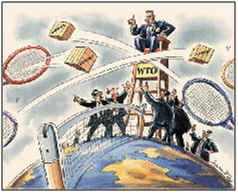
      This process is simply the core basis of the rules-based system that benefits everyone and promotes global trade. It provides for the peaceful settlement of concrete trade disputes. It provides a mechanism for applying trade rules already negotiated by the parties. What’s the sense of negotiating trade rules if they are not enforceable? The WTO provides a neutral forum for the interpretation of such rules. The WTO has proven to be the primary enforcement mechanism of trade obligations.

      The United States was the primary architect of this system. It, along with the global community, is the beneficiary of putting global trade relations on a consensual basis that rejects power politics. The DSU has proven to be the most successful part of the WTO, especially after the failure of the DOHA Round. In fact, from 2001-2014, the United States won all seven cases filed against China. The DSU is in the global trade and national security interests of the United States.

      One last point: It’s not good policy for lawyers to draft misleading legal arguments by misstating the law, by omission of key statutory or treaty language. This is never a good idea. It’s also sanctionable by state bars.


Leave a comment

TRUMP — SLOW ON TRADE — The Wait Should be Over Soon.

                                         trump-trade-and-teriffs

    The new administration has been slow on keeping specific campaign promise about trade policy. Nothing yet on China, no renegotiation on NAFTA, and no new WTO cases. Why?

     Probably because the Senate hasn’t yet acted on the proposed Secretary of Commerce Wilbur Ross nor on the proposed USTR Robert Lighthizer. But his team should be completed soon.

     We should see soon enough.

Leave a comment