U.S. Victory in the WTO in Boeing and State Subsidies — But What is its Impact on Litigation against China?

     Earlier this week the Appellate Body of the WTO reversed a panel report and found that seven Washington state tax measures did not amount to a prohibited subsidy to Boeing.

The EU had alleged that the state tax measures were conditioned or contingent upon Boeing’s use of domestic fuselages and wings — instead of imported ones. This is considered by the USTR as a complete victory in the segment of the long-running WTO litigation concerning Airbus and Boeing. It probably is.

This case is particularly interesting because it considers the validity of state or sub-national units as being subject to the subsidy disciplines of the WTO. Applying global trade rules to US states is often overlooked.

     But more importantly my concern is that this ruling may actually be used against the U.S. in its recent action against China concerning some of its practices calling for domestic content. We’ll see.


Leave a comment

Better for the U.S. to File the New China IPR Case in the WTO … More Legitimacy?

The USTR fired a direct shot at Beijing last week as it formally started a §301 investigation into China’s intellectual property practices and entry of US firms into China, particularly in joint ventures.

The formal decision to open an investigation followed Trump’s executive memorandum earlier last week. The USTR will hold a public hearing on the subject in October at the International Trade Commission, when members of the public may testify.

The USTR will examine whether Beijing’s practices – specifically requirements that U.S. companies transfer technology in order to do business in the country. It will need to determine if this violates the statutory standards of unreasonable, discriminatory or restriction of U.S. commerce.

If the USTR determines if any one of these standards has been violated the U.S. could eventually take unilateral action. But the rules indicate that a case shall be filed first in the World Trade Organization.

The problem is much of the global trading community consider that §301 in and of itself violates the WTO rules. That states joined the WTO as a means of restraining such unilateral actions, particularly by the U.S., the principal supporter of the WTO and the primary architect of the dispute resolution system.

As far as U.S. – China trade relations this may be viewed as only a very mild trade action — the filing of an administrative action within the U.S. Yet, even though Bannon is gone from the White House staff the USTR Lighthizer still represents his nationalistic – protectionist- China hawk sentiments. U.S.-China trade relations are still precarious.

The best practice for the U.S. is it should just go ahead and file an action with the WTO directly. That’s the proper forum. We have litigated many cases with China as both a complaining party and a responding party. That’s the normal and customary way of doing things in global commerce.

Why choose this unilateral and domestic action. A somewhat discredited  and nationalistic approach. This is not clear. But the answer in part is probably because the Obama administration did not. We’ll see …………….

  • ….. “USTR Initiates Section 301 Investigation of China.” USTR News Release (August 18, 2017).
  • ….. “Lighthizer’s Economic Deficit.” Wall Street Journal (August 22, 2017).
  • …..”Bannon Exit Highlights China’s Success in ‘Containing Trump’.” Financial Times (August 22, 2017).
Leave a comment

US China Trade Action Delayed Again — What’s Up?


President Trump is going to sign a memo tomorrow Monday delaying actually filing a §301 USTR case against China for violation of U.S. intellectual property rights. By the way he has also failed to follow through on his bullying threats to declare China a ‘currency manipulator’ and to file a §232 case concerning steel from China. Needless to say we all remember his bluster on the campaign trail.

What’s going on? Hard to say. But this practice of over threatening and underperforming is basic to his business dealings forever going back to his early real estate days in New York City.

My take …………… In terms of trade policy President Trump has actually done a lot less damage so far than could have been expected. Actually almost no damage concerning China. Of course this may change. But so far that’s good for the U.S., China and the trading system.


Leave a comment

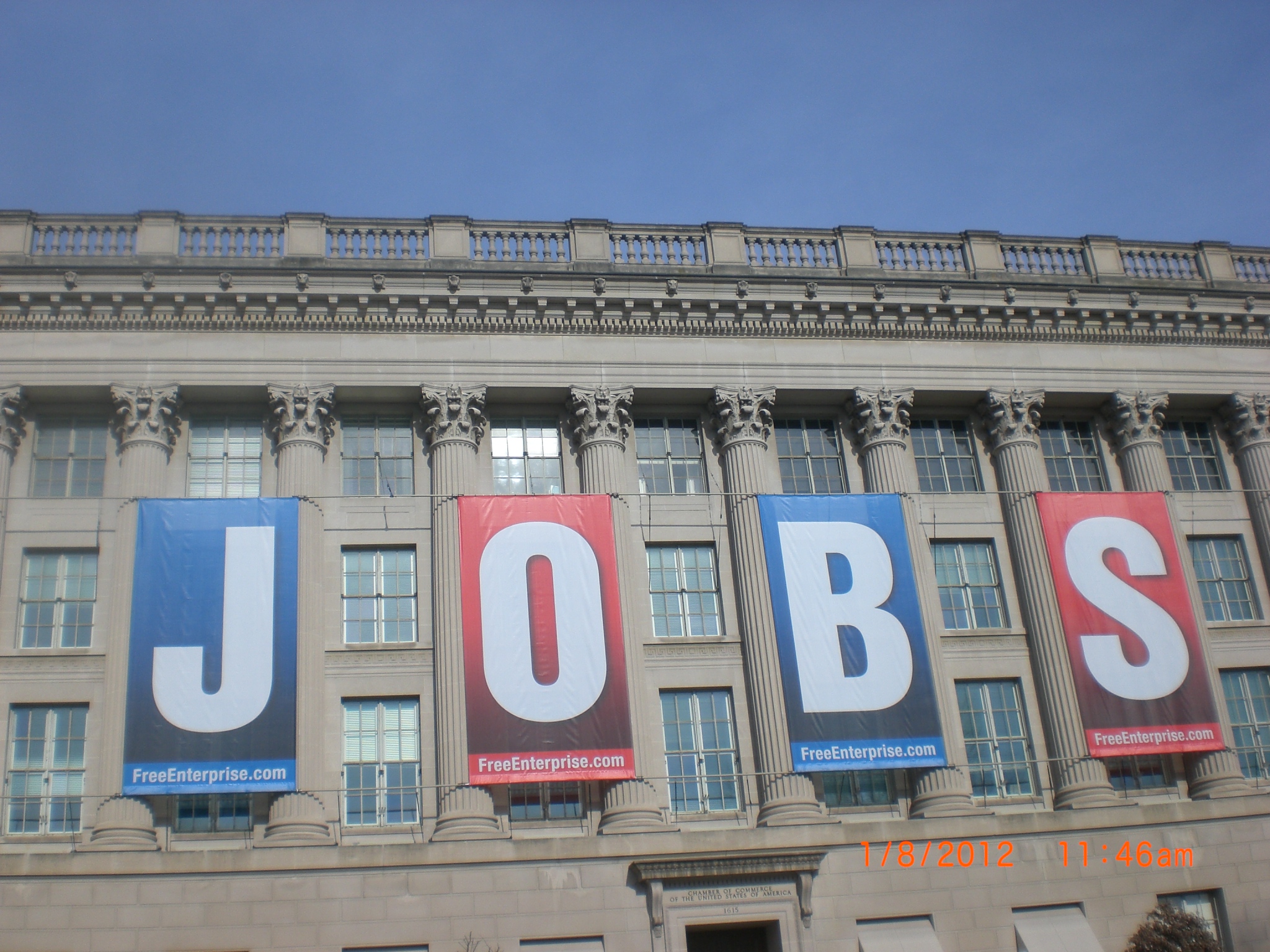
JOBS & FOREIGN INVESTMENT — States & Cities are on the Frontline.


Good piece in the New York Times today discussing foreign investment into U.S. manufacturing and the role of cities and states in promoting this – all in the name of jobs. States and cities are on the frontline.

The article also discusses the disconnect between this investment / manufacturing trend and the role of global value chains (parts are produced worldwide) with Trump’s protectionist foreign trade policies. Especially his rhetoric and claims of promoting US manufacturing by restrictive national policies (such as buy domestic products).

This article focuses on the state of Tennessee, a Southern state, as a case study. A state that has prospered in attracting foreign investment and particularly investment into the auto sector.

To me it’s clear that state economic development strategy to create jobs need to focus on promoting foreign investment in order to encourage foreign corporate strategies to place new manufacturing facilities within local U.S. communities.

This needs to be a critical part of a state’s international policies that also encourages export promotion all in the name of job creation. 

Trade and investment are intricately linked together and ought to be synchronized in a dedicate institution focusing on these two pillars of economic development. It cannot be assumed that an entity focusing also on local economic development can ever devote enough energy or know how to do this critical international piece. It never works out. A hyper focused and aggressive agency needs to do this.

The global system is different from the U.S. domestic one, but the local one can only prosper by active engagement with the global economy. It’s unfortunate the Trump trade team doesn’t understand this. At the best of times the federal government can help but it’s up to states and cities to take the lead.

…..”Foreign Investment into U.S. Manufacturing and Cities and States.” New York Times (August 6, 2017).

….”Toyota and Mazda to Build Joint U.S. Plant (and Foxconn Too).” New York Times (August 5, 2017).

Leave a comment

Two New US Trade Cases — To be filed with the USTR or the WTO?


The Trump administration is now on the verge of initiating a new trade case against China even while its prior case concerning ‘national security and steel imports has not yet been filed. The problem is the Trump administration is now putting trade back on the table concerning China. It has not lived up to its campaign threats yet.


If the Trump administration is serious about both these actions. It needs to do two things: one, do not use domestic administrative procedures (namely the USTR). This will catty no international legitimacy. Two, file an action or actions in the WTO’s dispute resolution process. If the U.S. is successful it will then be recognized as a legitimate trade action. But WTO trade rules (especially under China’s Accession agreement) may very well work in China’s favor.


My conclusion, however, is something else. Both actions to me do not seem to be based on strong empirical evidence. Better to negotiate than file a formal request for consultation. Nevertheless, filing for consultation will allow for a possible diplomatic negotiated settlement within a short time period. This type of negotiation is not otherwise available outside of this format.

Leave a comment

THE WTO — U.S. & QATAR — What’s the Future?


The U.S. Secretary of Commerce has again spuriously attacked the WTO for the way it has reviewed U.S. antidumping and countervailing duty cases. (We have lost most of our cases for years that have been reviewed by the WTO’s dispute resolution system.) Every major country has agreed that the WTO reviews were fair and our excessive reliance on trade remedy actions within the United States as protectionism. Unfortunately, the USTR is now staffed by lawyers that have litigated these ill-informed cases for decades.

On the same day Wilbur Ross was again knocking the WTO, the small country of Qatar filed a broad action against the Persian Gulf states that imposed an economic boycott on it. Potentially allowing the responding states to raise the unique ‘national security defense.’ And giving the WTO not only the opportunity to rule on the national security exception for the first time but also on the use of economic boycotts in international relations under global trade law.

Nothing can be more glaring than the largest economic and political power turning on its own creation and one of the smallest states turning to it to save itself.

My point is who is threatening the WTO and who is relying upon it? This is a very awkward situation for the United States and the global community. The role of the U.S. and the Trump administration in global trade and diplomacy is at stake as well as the role of the WTO in protecting the global rules of conduct.

That’s what is going on. We’ll see ………….


Leave a comment

Technology, Antitrust, Trade, Taxes …. Laws Need an Update?

Good piece by Steve Pearlstein of George Mason (Schar School) in the Washington Post today on tech companies and antitrust.

It’s clear to me that U.S. antitrust enforcement is behind the curve concerning global tech companies. Current economic theories of antitrust focus on price competition and protecting the consumer. Not sure how well that is working out.

The EU is clearly now in the lead on antitrust enforcement (Google case).

Two additional thoughts.

One, the impact of globalization, not only technology, on antitrust needs to be much better understood.

Two, there is a critical inconsistency in economic theory concerning antitrust and trade remedies.

Current antitrust laws emphasis is on protecting, so it says, the consumer. But trade law (antidumping and subsidies) aim at protecting U.S. producers. This goes back to the late 19th century.

My conclusion. Really need a more global and consistent assessment of U.S. economic legislation dealing with both antitrust and trade remedies (and I would add tax law) in today’s high-tech and interconnected markets.

“Is Amazon Getting too Big?” Washington Post (July 30, 2017).
“Competition Authorities Need a Digital Upgrade.” Financial Times (July 31, 2017).


Leave a comment

Reaction to Trump’s Foreign Policies & Rise of City and State Foreign Policies — More than Just Resistance , a Global Development.

Time Warner 

More on the emerging new federalism and foreign affairs as a reaction to President Trump’s foreign policies concerning such areas as trade, climate immigration, among other areas. This nascent development more than just resistance. It represents significant developments concerning newer manifestations of federalism to match the 21st century reality of an interconnected world on all levels.

The role of states and cities in the U.S. as to foreign affairs and trade is certainly not well defined in and under the U.S. Constitution. Especially in its 21st century context and in light of empirical practices over the years.

By the way this resurgence of local actors in the global system is not just limited to the United States. Subnational units worldwide are bypassing ineffective central governments to better engage the global system for the benefit of their citizens to promote better trade, investment, and economic development.

More on the emerging new federalism as a reaction to President Trump’s foreign policies as to trade, climate and immigration. This is more than just resistance. It represents significant developments concerning newer manifestations of federalism to match the 21st century reality.

By the way this resurgence of local actors in the global system is not just limited to the United States. Subnational units worldwide are bypassing ineffective central governments to better engage the globl system for the benefit of their citizens to promote better trade, investment and economic development.

Some interesting developments just the last few days:

  • Canadian and Mexican officials are meeting directly with governors of U.S. states at the National Governors Association meeting to discuss trade and NAFTA. They want to gain political allies and the governors want to gain export sales and promote economic development. 
  • More than 200 cities and states are holding meetings and local summits in support of the Paris Climate Agreement. Some here and perhaps some abroad.
  • The U.S. Dept. of Justice (Attorney General) has called for possible legal action against sanctuary cities, e.g., for failing to turn over local information concerning immigrants to the federal government.
  • The Congressional Research Service has released a surprisingly poorly drafted report questioning the authority of states to do anything in the area of international trade or foreign relations. (Failing to cite the definitive Supreme Court case addressing implied preemption and foreign trade.)

States have huge rights in the foreign affairs area. But they are limited by various powers of the federal government. These limitations are not well defined, especially not in today’s context. No Supreme Court case has broadly restricted the rights to states to engage in the global economy. Today they have trade missions, they tax international transactions, etc. For example, my home state of Virginia has recently completed MOUs concerning trade with a Baja California (a Mexican state) and Mexico City.

What can be said about these latest developments? As to the entire area of the relation of constitutional law to American foreign relations we need to go back to the writings of Louis Henkin and the more recent ones of Justice Breyer.     

New constitutional law is about to be made as a result of incoherent and isolationist polices of President Trump and reaction to it. These policies fly in the face of the real economic and national security interests of the United States and the international system. Local governments are paying the price for this folly. They and no one else can afford it. (Similar developments can be seen in countries overseas. For example, the City of London is negotiating with EU officials directly in Brussels as to financial aspects relating to London institutions under Brexit.)

Very simply this issue of national subunits engaging the global system and bypassing incompetent national leadership is evolving nationally and globally.  In the United States this will undoubtedly lead to very contentious legal and political battles over the new federalism in the courts, Congress, state houses, and city halls. Stay tuned …………….
 

Leave a comment

STEEL IMPORTS & NATIONAL SECURITY — REALLY.

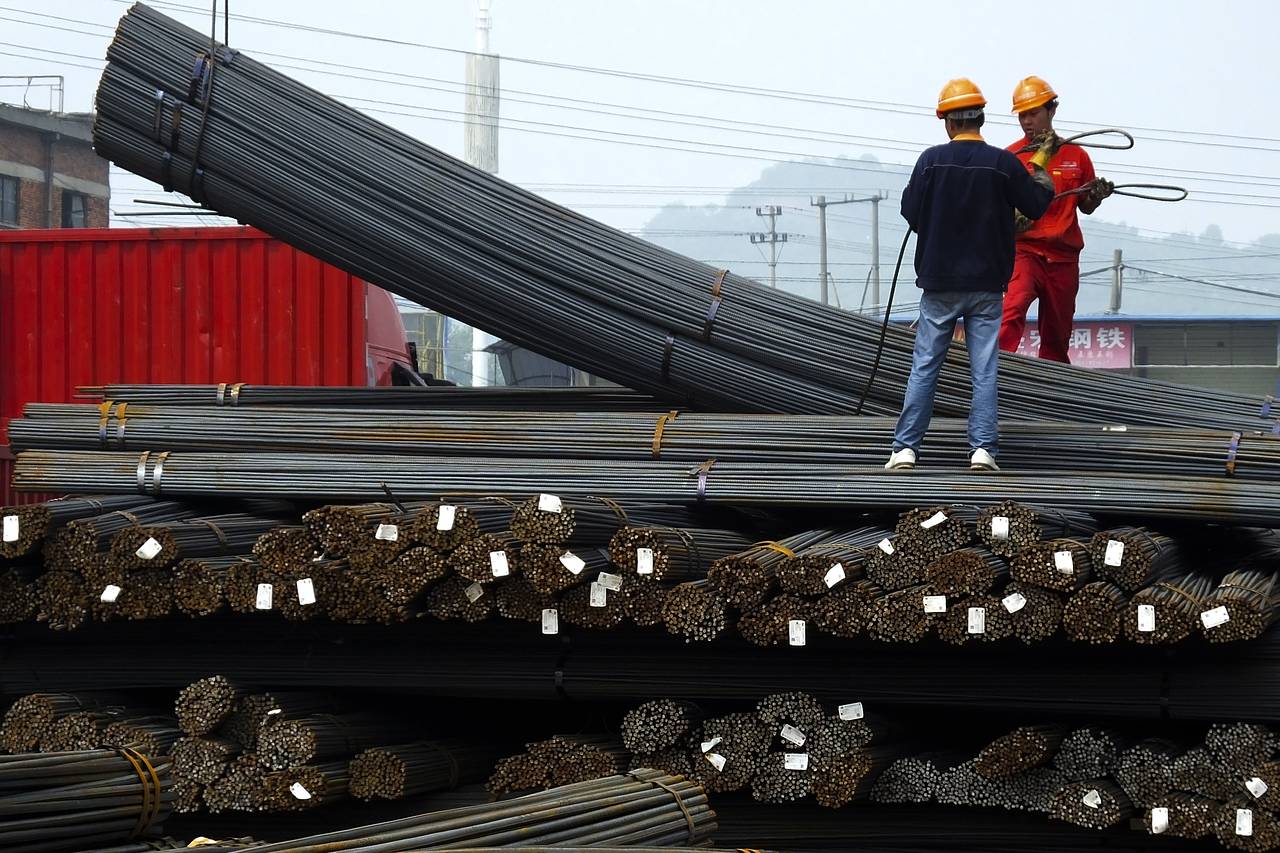
     National Security and Steel Duties — Really. Imposition by the Trump administration of these duties on steel imports is a terribly idea. These type of duties don’t work, create trade distortions, endangers the WTO, and most importantly there is no real economic justification for them. This would be purely a domestic political and protectionist measure. The administration needs to stop this, now.

Leave a comment

GLOBAL CITIES & GLOBAL TRADE.

     The latest example of global cities bypassing central governments to conduct their own foreign policy and trade policy is the case of the City of London.

     London is sending its own delegation to Brussels to negotiate directly with the EU to establish a post-Brixit financial system to ensure the role of London in global finance. This is actually with the consent of Whitehall and EU officials in Brussels.

      To me this is the only the most recent example of global cities in the world and especially in the United States to engage in global commerce more forcefully. Especially since central governments seem to be incapable of developing meaningful policies for economic development and jobs that focus on trade, finance, investment and involving meaningful engagement with the global economic system.

      In the context of national sovereignty the older concern of sovereignty slipping and going to international organizations is receding in importance. It is now being raised as to the role of states and cities as they bypass central governments to formulate and negotiate their own foreign policies and trade policies directly with foreign governments. This is true as to countries that have a federal system of government as well as non-federal ones.

      National sub-divisions are finding it crucial to interact with the global systems directly, out of necessity since central governments have not been very good at this for a long time.

     Stay tuned …………..


“London and Brussels.” Financial Times (July 3, 2017).

Leave a comment