Two New Trade Decisions — Fair Determinations for Newer Trade Issues? … Yes.

     There were two interesting developments yesterday in the U.S. pertaining to trade law and import remedies. 
     The first involved an administrative setback for Apple and the second a judicial setback for the U.S. Dept. of Commerce. Both decisions seem to be fair and accurate determinations of newer trade issues.
     The first case involved a §337 petition for patent infringement and the second case involved countervailing duties on imports from nonmarket economies.
  • The first case focused on the Android phone by HTC (Taiwan). The U.S. International Trade Commission issued a final ruling in this §337 case involving patent infringement. The case was brought by Apple against HTC. Apple claimed its patents were violated by the Android’s use of Google software and imports should be excluded. This case was a key test in the ongoing smartphone wars. The ITC found only one violation of a patent by HTC. The decision significantly limited the earlier ruling and was a very, very limited victory for Apple.
  • The second case involved the Court of Appeals for the Federal Circuit. It ruled that countervailing duties cannot be imposed on products from nonmarket economies (China). The court argued this would amount to double accounting when imposed along with an antidumping duty. This decision reaffirmed an earlier 1984 Supreme Court that came to the same conclusion. This case involved tires from China and a general subsidy. GPX Int’l Tire Corp (December 20, 2011). Of course, Congress could always change the law but that would put the U.S. in violation of a recent WTO case.
     These cases clearly indicate the following:
  • Getting trade remedy relief in the U.S. is not automatic;
  • U.S. agencies and courts give diligent consideration to difficult trade issues;
  • These issues often involve the newest areas of trade relations that have emerged over the last twenty years; 
  • These issues involve, among others, intellectual property rights and imports from nonmarket economies;
  • In the future these issues will certainly involve more imports from China and now inevitably the Russian Federation.
Posted in Global Trade Relations | Tagged , , , , , , , , , , , , , | Leave a comment

China’s Cyberwarfare and Global Trade — How Can the U.S. Control it?


     Some in the U.S. are calling for the U.S. to consider new trade sanctions against China to combat commercial cyberwarfare by Chinese government-related enterprises. Others have championed almost forever trade sanctions to force the revaluation of the Yuan.

Here we have newer non-trade issues (the Internet and monetary policy) that were never considered by the WTO as trade issues just a decade or so ago.  Of course, China’s economic prowess hardly even existed when the WTO was born in 1995.
How should the U.S. respond to these newer issues that impact U.S. and global trade? Is there a role for the WTO?
My immediate response is that both these issues are now trade issues and they are extremely important. Both impact the competitiveness of U.S. firms. But the general problem is how do you fashion a response to developments that were not initially contemplated when a rules-based system was initially adopted?
Just look at the legal challenges confronting the European Union and the European Monetary Union today in fashioning responses to new fiscal challenges.  The same is true concerning challenges to public international law posed by newer forms of warfare, communications, and the rise of non-state actors. Of course, we have the same problem applying the 18th-century U.S. Constitution to technological, cultural and global changes in the 21st century.
Getting back to the U.S.-China bilateral relations, at first I would take the most direct approach — bilateral negotiations and then keep trying. Litigation and unilateral action might be on the table, at some point.
But it actually might be easier to get to a negotiated resolution bilaterally, when mutual interests and capabilities are emphasized.
Posted in Global Trade Relations | Tagged , , , , , , , , , , | Leave a comment

New China Trade Restrictions — More Negotiations and Less Litigation? — Yes.

         
     Today China imposed antidumping and countervailing duties on the import of certain U.S. autos.  The auto sector, subject to prior WTO litigation, is a very sensitive sector of global commerce.
     This recent Chinese trade action is in context of aggressive use of trade measures and WTO litigation by the Bush and Obama administrations.
     Recent examples of U.S. actions by the Obama administration are:
  • WTO action against China concerning its clean energy policies;
  • WTO action against China’s restrictions on import of poultry from the U.S.;
  • U.S. domestic agency action (International Trade Commission) as to the import of Chinese solar panels into the U.S.  
  • Threatening new trade sanctions to combat commercial cyberwarfare by Chinese government-related enterprises.
     China generally responds confrontationally to aggressive use of trade measures and greater WTO litigation by the U.S.
     With billions to invest in both corporate and sovereign funds, Chinese investment is needed in the U.S. to promote economic development and jobs. State governors recognize this and so should those the Obama administration.
     I suggest that U.S. – China trade relations should not become a whipping boy this presidential election season. It’s not beneficial to anyone. At various times less litigation and more negotiations might be beneficial to everyone.
Posted in Global Trade Relations | Tagged , , , , , , , , | Leave a comment

Russia’s WTO Membership — Good for Trade? — Yes.

The 8th Ministerial Conference of the WTO meeting this week in Geneva is expected to accept Russia as a WTO Member. Interestingly, this follows close on the heels of China’s 10th anniversary of  joining the WTO.
China’s accession to the WTO was one of President Clinton’s greatest achievements in global trade along with getting Congress to accept NAFTA and the WTO in the mid-1990’s. I wonder if the same will be said of President Obama’s role in the Russian accession process ten years hence.
Russia has agreed to open further its trade regime and to accelerate integration in the world economy. Under the terms of the accession agreement Russia will subject trade disputes to WTO adjudication. It will apply all WTO provisions, with recourse to very few  transitional periods. This is particularly unusual.
Russia wants more trade and investment. It especially wants more foreign investment into its oil and energy sectors.
Russia’s extensive commitments include the following:
…The final tariff ceiling will be 7.8% compared to a current average of 10% for all products;
… Russia will accept specific commitments to 11 services sectors and 116 sub-sectors;
… Export duties will be fixed for over 700 tariff lines;
… Quantitative restrictions on imports that are not justified under WTO provisions will  be eliminated;
… Russia undertakes to join the Government Procurement Agreement;
…Russia will eliminate all industrial subsidies;
…Russia will observe the TRIPS Agreement without recourse to a transitional period;
…Russia will take action against websites (with servers located in Russia) that promote illegal distribution of content protected by copyright or related rights.

Russia’s membership will be finalized when it ratifies the accession agreement. This is expected to be shortly after the WTO ministerial meeting. Subjecting intellectual property rights, web abuse, and trade disputes to a rules-based system with powers to adjudicate and to impose sanctions is good for the trading system. Of course, nothing will be easy and these matters will need to be closely monitored.

Russia’s membership into the WTO enhances the centrality of the WTO in global trade governance and extends the rules of global trade, with its dispute resolution system, to the largest remaining economy outside of the WTO. This is good and should remove some unpredictability to doing business in Russia. This can only help Russia’s economic development.

Russia’s membership in the WTO is certainly a good thing for U.S. trade, global trade and international relations as nations proceed to deal with an increasingly inter-connected world of politics, trade and national security.

The U.S. Congress needs to adjust the Jackson-Vanik Amendment, but that’s another story and an over-looked problem. The pending Magnitsky Bill and its focus on human rights focuses U.S. – Russia relations more in the context of competing views of  human rights  than on promoting global trade and a stable bilateral relationship.

The potential failure of Congress to revoke Jackson-Vanik, a product of the Cold War, during this election year would put U.S. multinationals and others at a huge disadvantage.  This would preclude them from participating in a growing marketplace fueled by oil and commodity revenues and some real economic development.

The U.S. Congress should revoke the Jackson-Vanik amendment. Cooperating in trade relations does not mean condoning Russia’s domestic activities.
Posted in Global Trade Relations | Tagged , , , , , , , , , , , , , | Leave a comment

Reshoring, Corporate Strategy & Globalization — Overriding Low Wages & Low Taxes? …. Not Likely.

Over the last two years the Boston Consulting Group published two studies assessing global business strategy and leadership in the era of globalization.
Two salient conclusions jump out from these studies.
One, U.S. firms are likely to return some off-shore manufacturing jobs to the U.S.
Two, corporate leadership requires understanding the global system, setting global priorities, and getting the corporation to embrace them.
It is clear that some manufacturing and non-manufacturing jobs located in China and even India may be relocated to the U.S. The primary reason for this is because wages are increasing in those countries.
It is also clear that corporate leadership demands understanding the global system. But many throughout the U.S., its political system and corporations find reasons not to embrace globalization. They see it as a threat and a cause of economic problems.
I have three observations.
One, jobs may well locate away from China and India, but most will relocate to even less expensive foreign locations such as Vietnam, Indonesia, Bangladesh and the Philippines.
Two, corporate strategy may well default to the cheapest strategy. Keep manufacturing offshore where wages are really low and off-shore profits are not taxable.
Three, federal and state economic development efforts based on the hope of reshoring is not very promising. However, the possibility is intriguing.
 My general conclusions.
 U.S. multinationals need to take a broader view of their corporate responsibility. One that is not ruled exclusively by shareholders but one that involves acknowledging responsibilities to their home community and workers. Good corporate governance involves responsible national citizenship. It’s good for business. In the long-run this is the most meaningful global strategy for multinational corporations.
Posted in Global Trade Relations | Tagged , , , , , , , , , , , , , , , , , , | Leave a comment

Foreign Visas & Universities — Federal & State Proposals: More Proactive Policies for Economic Development?

This week Senator Mark Warner introduced bipartisan legislation that would update regulatory and tax policies to encourage entrepreneurs and innovators to launch new companies and create jobs. The Start-Up Act, introduced with Sen. Jerry Moran, includes various elements. Most importantly, it provides visa reform for foreign-born students earning advanced degrees from U.S. colleges and starting companies based on science, technology, engineering, and math.
Great idea. Another good idea is to require universities more generally to be proactive in economic development.
Specifically, new federal legislation should require foreign graduate students, applying for these new visas, to complete information annually regarding economic opportunities they may know of concerning foreign firms interested in investing in the United States. If we provide easier visas for foreign students to stay in the U.S. and to work, it is not unreasonable to request them to help assist the United States to increase foreign trade and investment between the U.S. and their home countries. This suggestion is consistent with the underlying job-creation policy of the proposed legislation.
In addition, new state laws should be enacted to require public universities to request all foreign graduate students to provide similar information as above.  This could be a condition for universities to receive greater financial support from state governments.
The aim here is for new federal and state legislation to require foreign graduate students and state universities to assist in promoting global trade and investment in order to promote jobs in the U.S.
These innovative provisions are intended to help with economic development and job creation in the U.S. The issues of jobs and economic development are the most critical issues confronting the American economy today.

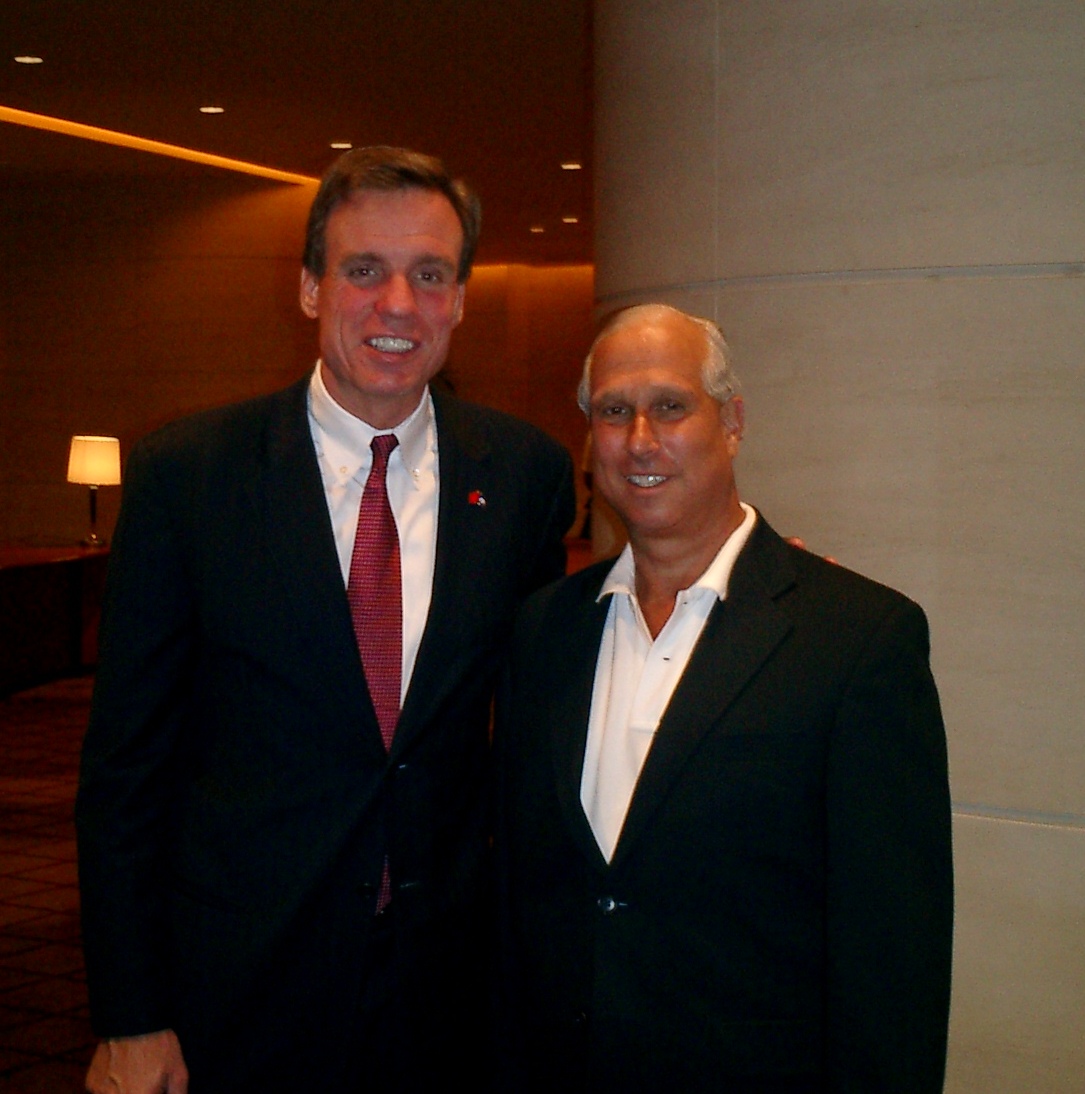
Governor Mark Warner and Stuart Malawer (in China 2004)

Posted in Global Trade Relations | Tagged , , , , , , , | Leave a comment

U.S. – China Trade Relations — Recent Developments – Good or Bad?

Here’s some recent data and developments in trade relations with China:
  • China has been the target of the most antidumping and subsidy cases globally over the last 16 years. (China Daily)
  • Since 2001 China has been the target of 602 trade remedy cases worldwide worth over $38.98 billion. (China Daily)
  • The U.S. International Trade Commission ruled last week, in the solar panel case against China alleging dumping and subsidies, that U.S. industry has been injured.
  • Last week China opened its own antidumping investigation concerning imports from the U.S. of material needed for solar-panel production in China.
  • China is considering antidumping and countervailing duties against the import of U.S. autos, a very sensitive area of global commerce.
Here are some of my observations concerning China’s U.S. – China trade relations:
  • There are few currency laws governing trade relations. If enacted the pending bill in the Congress concerning undervaluation of foreign currencies would be inconsistent with U.S. obligations under the WTO.
  • The U.S. has been aggressive under both President Bush and President Obama in pursuing litigation against China in the WTO.
  • China generally responds confrontationally to aggressive use of trade measures and greater WTO litigation by the U.S.
  • China has generally complied with most recommendations made by the WTO panels and Appellate Body against it.
  • China has prospered in the global trading system since its accession to the WTO because of its WTO membership.  
  • China has changed various internal institutions and rules to comply with its obligations under its accession agreement.
  • China has used the WTO domestically as a rationale (threat) to persuade domestic interests to reform internal practices, which would probably not have been changed without having the cover of the WTO argument.
  • For example, the adoption of various aspects of international commercial law would have been much more problematical.
  • China has also adopted rules governing competition, a bit outside of the WTO area of competence,  to provide more competition domestically. China is investigating two state-owned enterprises (China Telecom and China Unicom) in order to promote consumer choice in the Internet access market.
  • As trade increases between China and the U.S. more trade disputes will arise. There is now in place a normal process of resolving them — the WTO and its dispute resolution system.
  • It was American resolve that helped to formulate a rules-based trading system incorporating an international judicial process to resolve trade disputes.
  • The negotiation and passage of the WTO was a bipartisan success story.
  • With billions to invest in both corporate and sovereign funds, Chinese investment is needed in the U.S. to promote economic development and jobs. State governors recognize this and so should those in Congress.
     In light of recent developments and my assessment, I suggest that U.S. – China trade relations should not become a whipping boy this presidential election season. It’s not beneficial to anyone. China is participating actively in the international system and is adapting to the rules of the road. This is beneficial to everyone.
Posted in Global Trade Relations | Tagged , , , , , , , , , , , , | Leave a comment

China, Multinationals and Presidential Politics – Any Chance for Constructive Change? Not Anytime Soon.

A Chinese man talks on his phone next to a solar panel field operating in the Taiyangshan Development Zone in Wuzhong.

In the last few weeks there have been several significant developments in U.S. trade relations. The question is what are the implications of these developments for the presidential elections and formulating effective U.S. trade policy?
The four trade developments are the following:
One, China trade is moving to the center of U.S. presidential politics. Two, the U.S. Dept. of Commerce is considering new antidumping and countervailing duties on the import of Chinese solar panels. Three, Chinese industries requested parallel investigations of U.S. imports into China of raw material used in the production of  solar panels and the Chinese Ministry of Foreign Trade (MOFTEC) opened an investigation. Four, the Bureau of Economic Analysis (BEA) recently concluded that over a recent 10-year period U.S.-based multinationals cut 2.8 million workers in the U.S. and hired 2.4 million new workers overseas, with 1.5 million in India and China.
What does this mean? Two points are obvious.
One, the role of trade, in particular China trade, and that of multinationals are becoming central to the already bitter political debates in the U.S. Trade is rarely central to any presidential election. This time it’s different. This reflects changes in globalization, the rise of new trade powers, and structural stress within the U.S. economy.
Two, the possibility of managing Chinese trade relations and dealing constructively with U.S. multinational corporations are not going to happen anytime soon. Constructive actions concerning China trade relations and U.S. multinationals will have to wait until after the 2012 presidential election. Hopefully, not too much damage will be done until then.
Posted in Global Trade Relations | Tagged , , , , , , , , , , | Leave a comment

National Security, Global Competitiveness, and Rules of the Road — The Right Balance at APEC & ASEAN — Promoting A Rules-Based Foreign Policy.

At the recent APEC and ASEAN trade meetings President Obama was concerned about balancing strategic and national security with global trade and competitiveness of U.S. firms. He also set a clearer tone for U.S. foreign policy, one promoting a rules-based system. This has been an unreported story.
In announcing the Pacific century for U.S. foreign policy, the President needed to balance the increasing China-bashing in the United States, growing concern over China’s military potential, and trade relations with China.
But the President was not only interested in diplomacy, trade and security concerns, he was also mindful of the global legal system and its promise of stability.
The President cited legal rules governing trade and international relations. In particular, he wanted China to play by trade rules and law of the sea rules as they pertain to the South China Sea. (Unfortunately, the U.S had not yet ratified the long-standing Vienna Convention on the Law of the Seas, which China has done.)
President Obama focused on peacefully managing the complex inter-related trade and national security aspects of U.S. – China relations. He wanted to demonstrate to countries of the region the staying power of the U.S. as it enters the endgame in Iraq and Afghanistan. Thus, the President declared a renewed military commitment to Australia and concern over conflicting territorial claims in the South China Sea.
Tom Donilon, President Obama’s National Security Adviser, subsequently wrote, “[The U.S.] requires the rights and responsibilities of nations are upheld …. By strengthening the international rules that must be the foundation of our shared future ….”
On balance the APEC and ASEAN meetings were beneficial. They sent a message that the U.S. administration intends to reenergize itself as an active participant in the Pacific region.
However, the most important long-term development at these summits was the President’s emphasis on the rights and obligations of nations as they participate in the international system.
This emphasis is important to regional and global systems as they evolve and as new actors rise and struggle to adapt. This more pragmatic and coherent U.S. approach to reliance on legal rules provides a framework for future U.S. policies despite political and economic dysfunction at home.
This rules-oriented approach to inter-state relations, balancing national interests with a developing multilateral system and institutions, reflects the President’s legal and professorial background. It complements and mirrors the traditional U.S. reliance on rules of law and institutions, both domestically and internationally.
Competing and conflicting interests are tricky to balance, as the APEC and ASEAN summits evidence, but so far so good.
Posted in Global Trade Relations | Tagged , , , , , , , , , | Leave a comment

New Global Trade Push by U.S. — Any Impact on the Presidential Election?

There seems to be a renewed focus on global trade policy and particularly with nations across the Pacific by the United States. At the recent APEC meeting the U.S. forcefully backed the Trans-Pacific Partnership. President Obama has declared the 21st century to be the Pacific century.
The U.S. backs the trade liberalization proposed by the ASEAN nations. The U.S has been instrumental in fostering Russia’s accession to the WTO next month. Congress recently approved three bilateral trade agreements with Colombia, Panama and South Korea.
Is this good for global trade? The answer is “Yes.” The development of regional trade arrangements if done properly means more trade. The inclusion of the largest country still outside of the WTO makes the WTO more multilateral and relevant. The ratification of the bilateral trade agreements will increase U.S. trade with both East Asia and Latin America.
The question then becomes what is the impact of these trade actions on domestic politics within the U.S. during this presidential election cycle? Probably not much.
Certainly President Obama’s policies toward China need to reflect the increasing China-bashing in the United States. Thus, his public statements on the valuation of the Yuan and protection of intellectual property rights at the recent APEC meeting. He needs to balance these issues with the need for more U.S. exports to China and other trade and non-trade issues. He is highly concerned about balancing strategic and national security issues with  the need for U.S. global competitiveness.
More of the same can be expected at the forthcoming ASEAN summit. There will be more discussion of establishing a sustainable regional architecture, playing by the trade rules, and more cooperation in settling disputes. President Obama is clearly concerned about peacefully managing the various aspects of this most important bilateral relationship and encouraging greater Chinese investment into the United States. But still the domestic outcry in the U.S. is for jobs.
It is clear that the overwhelming interest in the U.S. electorate is jobs. These trade developments may have long-term implications, increase some trade and investment flows, but they have no immediate impact on unemployment. This is the central problem confronting President Obama.
Still these developments are good for the U.S., global trade, and global trade governance. They send a message that the U.S. administration is still an active participant in the global trading system, even thought there is strife between the political parties and within the political parties in the United States.
Posted in Global Trade Relations | Tagged , , , , , , , , , , , , , | Leave a comment