Courts, Congress and Trump — From Illegal Tariff Actions to Bombing Boats on the High Seas — Will the Courts Stop Him?


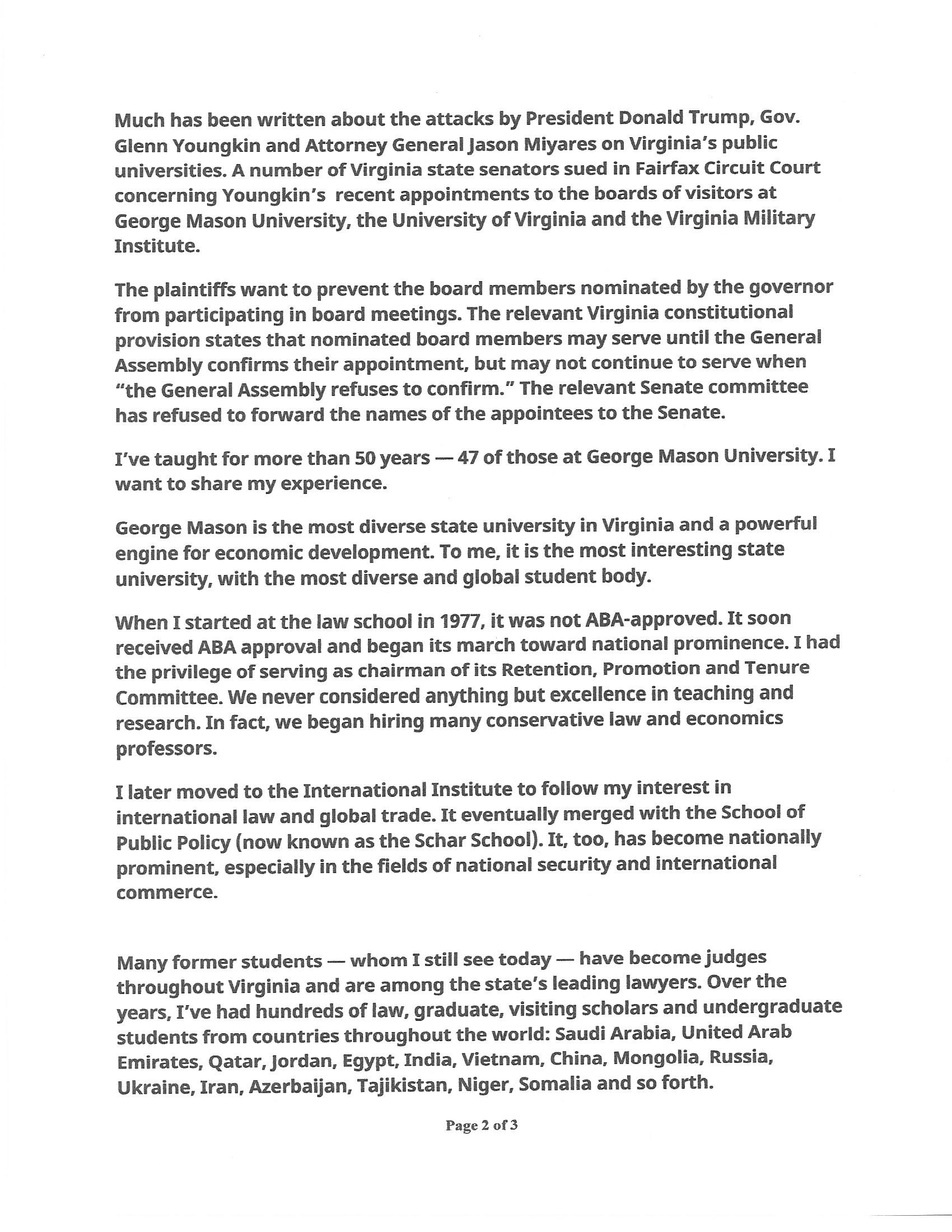
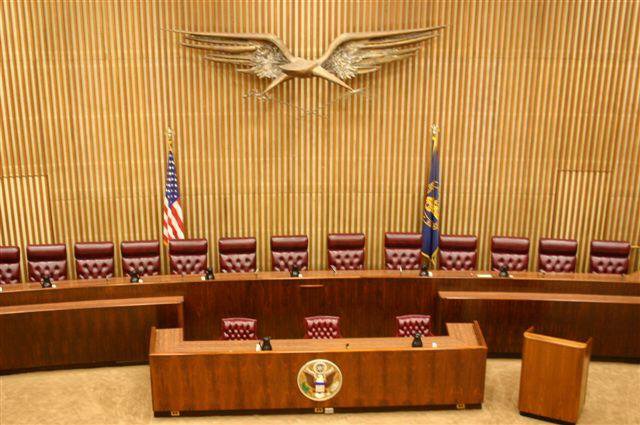
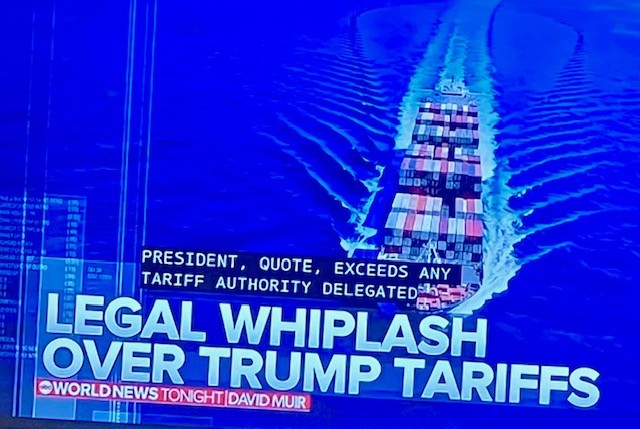
     It’s becoming clearer that it is the courts, not Congress, that is the best chance of reining in Trump’s excessive power grab — from illegal tariff actions to bombing boats on the high seas. Violating domestic law and international law.  His overt favoritism to his political allies (the crypto-tech bros) and his friends and family are in plain sight. The federal courts are the place where the action is — not the Congress, unfortunately. They are now considering a broad range of questionable executive actions. Many federal judges are already skeptical of the Depatioment of Justice. And it is the small, specialized litigation firms that are bringing the cases — not the larger law firms.

     The future is uncertain given the nature of the Supreme Court today. The final arbiter of these legal disputes. Ruling on the most important of these cases, set for argument next month, the tariff case, is uncertain. Trump’s potential attendance at the oral argument, the first for any president, is an obvious attempt at persuasion if not intimidation. We’ll see …………

……………………………………..

Dozens of sitting judges shared their concerns about risks to the courts’ legitimacy as the Supreme Court releases opaque orders about Trump administration policies …. At issue are the quick turn orders the Supreme Court has issued dictating whether Trump administration policies should be left in place while they are litigated through the lower courts. That emergency docket, a growing part of the Supreme Court’s work in recent years, has taken on greater importance amid the flood of litigation challenging President Trump’s efforts to expand executive power. While the orders are technically temporary, they have had broad practical effects …. The emergency docket is known to its critics as the shadow docket, and its rise as a flashpoint for tensions in the judiciary coincides with the Supreme Court’s increasing use of it in ways that have benefited Trump’s agenda.” Federal Judged Warn of Shadow Docket.” New York Times (10.11.25).

In most instances, Trump has justified his actions not as inherent in his Article II powers but as the appropriate use of statutes already on the books. As legal challenges to his actions multiply, it’s possible that the judiciary will determine that he has exceeded his legal authority. But the opposite is also possible: Strengthening executive authority has been an important theme of some conservative jurisprudence since the 1980s, and the Supreme Court could further bolster presidential power. If that happens, it will be up to Congress to write legal language defining clearly the limits of presidential power.“Congress Can Rein in Executive Power.” Wall Street Journal (10.15.25).

“Litigants seek a friendly venue for challenges to Trump; Massachusetts, Rhode Island, New Hampshire, Maine in focus; Judges in these states rule overwhelmingly against Trump; Supreme Court often backs Trump despite lower court rulings —–

At least 72 lawsuits challenging Trump’s policies have been filed in federal courts in those four states by plaintiffs, including Democratic state attorneys general, advocacy groups and institutions targeted by the administration. Trial court judges have made at least an initial decision in 51 of those cases, ruling against Trump in 46 of them, the analysis showed …. While nationwide the U.S. judiciary is closely divided among judges appointed by Democratic and Republican presidents, in these four states 17 of the 20 active federal trial judges are Democratic appointees. These states fall under the umbrella of the Boston-based 1st U.S. Circuit Court of Appeals, whose five active judges all were appointed by Democratic presidents while a Trump nominee awaits Senate confirmation …. The administration repeatedly has gone to the Supreme Court with emergency requests to implement policies impeded by lower courts, and the justices have almost always backed Trump. The Supreme Court already this year on seven occasions fully or partially put on hold judicial orders against Trump policies arising out of the 1st Circuit’s jurisdiction …. The idea of “forum shopping,” seeking a friendly legal venue, is nothing new, as litigants across the political spectrum long have steered cases to ideologically sympathetic judges.” “Courts have Become Battleground Against Trump.” Wall Street Journal (10.14.25).

“Trump said he might attend oral arguments on Nov. 5 at the Supreme Court for the tariffs case that could determine the fate of his protectionist trade agenda …. The case centers on whether the law that Trump used to impose his biggest country-specific tariff policies actually authorizes a president to take such trade actions …. If he goes, Trump would apparently be the first sitting U.S. president to attend Supreme Court arguments.” “Trump to Attend S. Ct. Tariff Case.” CNBC (10.16.25).

“Whether Trump’s tariffs survive or fall, one outcome is certain: the decision will redefine how executives plan in an era where law and economics collide. Even if the law is on the challengers’ side, the pragmatic economic and executive power concerns, make the case’s outcome “almost a coin toss.“ The Court’s ruling, expected by year’s end, will either restore Congress’s trade prerogatives, or confirm that the president’s emergency powers can reach deep into the heart of global commerce. “Tariff Case is a Coin Toss.” Fortune (10.16.25).

“The U.S. and China have escalated their trade conflict to the maritime sector, launching reciprocal port fees on vessels operating between the two countries. The move marks a significant expansion of the trade war, with global shipping firms now caught in the crossfire of economic and geopolitical rivalry.” “Maritime Front in US-China Trade War.” Global Trade (10.15.25).

The president’s lucrative embrace of crypto, part of a broader fusion of his business and political interests, is unprecedented in modern US history ….  Policy moves have either followed or been followed by large donations to Trump’s Super Pac …. Large tech companies including Meta, which donated to Trump’s inauguration, are still facing antitrust lawsuits and other investigations under the Trump administration. “  “Crypto-Tech Bros and Trump Favoritism.” Financial Times (10.17.25).

“Nine months into Trump’s second term, however, those cracks have spread across the glass. Judges are routinely skeptical of the Justice Department’s representations in court. They’ve called out flagrant misrepresentations, scolded prosecutors for irregular decisions and warned that the historical presumption that the executive branch acts in good faith before the court, known as the “presumption of regularity,” has been stretched to the breaking point.” “Federal Judges and the DOJ.” Politico (Oct. 17, 2025).

The Trump II reign has been characterized by repeated attacks on the rule of law and blatant power grabs. And Big law has proven… it is not up to the task. When directly confronted with unconstitutional Executive Orders targeting firms on Trump’s list for retribution, more than twice as many major law firms were willing to promise the president nearly a billion dollars in pro bono payola for conservative causes or clients as were willing to fight the EOs in court. Not a great look for the supposed best in the legal industry …. Small law and boutiques have stepped up, and these small but mighty firms are poised to take on some of the biggest cases.”  “Non-Profits and Trump Litigation.” Above the Law (10.18.25).

Trump believes national security will be on the line when the court considers a challenge to his “ambitious tariff agenda” on Nov. 5 ….. “This is national security,” he said during a Sunday appearance on Sunday Morning Futures on Fox News. “If they took away tariffs, then they’ve taken away our national security.” Trump shared a similar message last week when speaking with reporters about potentially attending oral arguments in the case. “I think it’s one of the most important cases ever brought because we will be defenseless against the world.” “Trump and S. Ct. Tariff Case.” “SCOTUS Blog (10.20.25).

US district and appeals courts are increasingly rebuking Trump’s radical moves on tackling crime, illegal immigration and other actions where administration lawyers or Trump have made sweeping claims of emergencies that judges have bluntly rejected as erroneous and undermining the rule of law in America …. Some former appeals court judges say that the district courts and courts of appeals are responding appropriately to a pattern of unlawful conduct by Trump and his top deputies …. Recent court rulings reveal a pattern of strong judicial rebukes to the Trump administration from district and appeals courts on multiple issues since Trump took office again …. But despite the growing number of strong lower court rulings against the administration, some may well get reversed by the supreme court given its 6-3 conservative majority, and its rulings that have markedly expanded presidential powers.” “US Judges Pushing Back Against Trump.” The Guardian (10.21.25).

Leave a comment

Trump’s Tariffs & Threats — Will Courts Stop Him?

                     Image result for tariffs and supreme court

     As China imposes even stricter controls over export of rare-earth minerals, new fees on U.S. ships using Chinese ports, newer antitrust investigations of U.S. firms, newer sanctions on Korean shipping subsidiaries in the U S. — Trump has now turned again to threaten China with even greater tariffs (including threatening the cancellation of the upcoming summit). This all provides even more background and need to assess the likelihood of U.S. congressional action and Supreme Court actions to deter or even roll back Trump’s tariffs — based on either IEEPA (National Emergency) or Section 232 (National Security) — involving country-specific or product-specific tariffs.

     I personally think it will be the federal courts (with the Supreme Court agreeing with the Court of International Trade and the Federal Circuit Court of Appeals) that Trump’s actions will be declared illegal — not by Congressional action. But this is certainly not guaranteed. The use of the ‘shadow docket’ has raised grave concerns even among federal judges from both parties.

     If the courts do not act, Congress needs to act. It can take various actions according to the different statutes relied upon by the Trump administration. States and their legislatures should consider putting pressure on their congressional representatives to take action and to pass necessary legislation. For example, declaring the end of declared national emergencies and amending existing trade statutes.

    It is probably an even bet that the Supreme Court will rule against Trump’s grab for power. Even given the conservative and politicized nature of the Supreme Court today such an outcome may still be possible. Hopefully. But maybe not. We’ll see ………….

……………………………………………….

“The president has free rein to impose whatever tariffs he wishes and that is likely to persist for some time.

  • The Congress will not step in, not very soon and not completely reversing US policy to adopt a no additional tariff policy, not perhaps even later,
  • the Supreme Court will, more likely than not, support the president on his tariffs,
  • the markets have not forced a change, and seem unlikely to do so soon, and
  • the key players – EU, after UK, and Japan, then Korea, went along with the US tariffs, and did not retaliate, giving permission through negotiations for the tariffs.
  • In the long run, there will be a change back to more open trade, but not for the present. The situation with Congress and the courts, and in international trade relations can and will likely change as well, but not now. Economic forces will in the end prevail …. Effective in August 2025, the U.S. implemented new reciprocal tariffs ranging from 10% to 41% on many trading partners …. As for tariffs affecting specific products, there is no end in sight to the section 232 cases, an authority relating to the nation’s security. Under section 232, the administration has levied tariffs targeting specific industries or products, regardless of the country of origin. (Note: Some have special conditions or exceptions) …. There is no end in sight to more tariffs being imposed by product under section 232 with resulting greater uncertainty for trade. There are additional back-up statutes for imposing tariffs: section 301 of the Trade Act of 1974, as well as the never used section 338 of the Trade Act of 1930 (Smoot-Hawley). Unlikely to be used is section 122 of the 1974 Act, the balance of payments authority, as it is specifically limited in The Court of international trade and the Federal Circuit Court of Appeals decisions (7-4) were decided correctly on the law as it now stands. It is likely that the Supreme Court will back the President (60-40 or better odds). It is likely that a decision for the President will be clothed in the Foreign Affairs power together with the declarations of national emergency under the International Emergency Economic Powers Act (IEEPA) enacted in 1977. The courts have never overturned an emergency under this Act, close to seventy of them before the second Trump Administration. The courts have rarely opposed the president on a major national security matter. An exception, in Youngstown Steel v US, the Supreme Court ruled against President Truman’s seizure of the steel mills in the face of a labor strike during the Korean War …. There has not been a direct consolidated response directly to the US tariffs. The UK, the EU, Japan and Korea have entered into bilateral arrangements with the US recognizing the new reality in their trading relations …. None of the disciplines that might have been expected have restrained the US President …. The US is only 13% of world imports, so much of the world’s countries for the time-being will continue to trade among themselves as they have in the past.” “Trump Tariff Policy – With No Brakes this Time.” Petersen IIE (October 9, 2025).
  • Dozens of sitting judges shared their concerns about risks to the courts’ legitimacy as the Supreme Court releases opaque orders about Trump administration policies …. At issue are the quick-turn orders the Supreme Court has issued dictating whether Trump administration policies should be left in place while they are litigated through the lower courts. That emergency docket, a growing part of the Supreme Court’s work in recent years, has taken on greater importance amid the flood of litigation challenging President Trump’s efforts to expand executive power. While the orders are technically temporary, they have had broad practical effects …. The emergency docket is known to its critics as the shadow docket, and its rise as a flashpoint for tensions in the judiciary coincides with the Supreme Court’s increasing use of it in ways that have benefited Trump’s agenda.” Federal Judged Warn of Shadow Docket.” New York Times (10.11.25).
Leave a comment

Farmers Going Bankrupt Because of Trump’s Tariffs — Why Do They Continue to Support Him? — Cultural Concerns Over Economic Interests?

    The American farmer is facing the greatest harm in the U.S. economy because of Tramp’s Tariffs and China’s retaliatory actions. The questi0n is — Why on earth do farmers continue to support the president? Is this placing cultural issues above economic interests?

      Trump’s promise of a multi-billion-dollar bailout for farmers is similar to what happened in Trump One. But many farmers will still go bankrupt. U.S. taxpayers will continue to pay huge amounts for these new farm subsidies. This may be made a lot worse if the Supreme Court orders the repayment of billion of Trump’s tariff to U.S. importers and businesses.

     To me, Trump is exploiting the resent of farmers as he is exploiting the resentments of the working class who is feeling left behind. We’ve seen this before with other presidents — exploiting domestic grievances and then some restrictive trade actions. But it seems much worse this time.

……………………………………………….

“Punishing Chinese tariffs that prompt painful retaliation. American farmers on the brink of bankruptcy. A multibillion-dollar bailout to keep farmers afloat …. The need for federal farm aid demonstrates the limits of Trump’s trade agenda …. The tariffs have pushed up costs for American farmers, who are facing higher prices for fertilizer and equipment …. We have an export-dependent industry, we’ve angered its biggest customer, and, boom, now we’re bailing out the export-dependent industry …. Farmers have long been a reliable voting bloc for Trump, making them a rich target for retaliation ….  Trump has discussed funneling tariff revenue to farmers, but it is not clear that he has the legal authority to do so without congressional authorization.” “Farmers in Peril and Trump Bailout.” New York Times (Oct. 7, 2025).

Exports of American soybeans to China have collapsed this year, with no new orders logged in recent months ahead of the prime autumn export season …. Beijing also has imposed a 23% retaliatory tariff on American soybeans in response to Trump’s tariffs on Chinese imports this year …. But the plight of America’s farmers is a reminder that the destruction of a trade war is mutually assured and not inflicted solely by one side on the other.” “Tariffs and Soybeans.” Wall Street Journal (Sept. 29, 2025).

The Trump administration is drawing up plans to use tariff revenue to fund a program to support US farmers as they head into harvest facing falling export sales …. The move follows mounting pressure from farm groups after China curbed purchases of new crop US soyabeans and as tariffs have pushed up costs for fertilizer, machinery and other imported inputs …. Trump administration is reinstating a vision of “trading America” not seen since Alexander Hamilton at the end of the 18th century …. US agrifood exports were the highest ever in dollar terms during Biden’s presidency from 2021 to 2024 …. Trump’s aggressive tariff agenda has targeted Beijing, prompting steep retaliatory duties on US products, including up to 34 per cent on American soyabeans.” “Trump’s Tariffs to Provide Bailouts for Farmers Hurt by Retaliatory Tariffs.” Financial Times (Sept. 19, 2025).

“China stopped buying soybeans from America in May, placing a retaliatory tariff on the bumper crop after President Trump increased levies on goods from China …. Soybeans are the single largest American export to China in terms of value, $12.6 billion worth last year. But as the fall harvest gets underway across the country — 9 percent of planted beans had been harvested as of last week — the country that bought 52 percent of all American soybean exports last year is completely absent.” “Soybeans to China this Year – $0 – Last ear $12.6 Billion.” New York Times (9.26.25).

“Will Donald Trump’s protectionist trade policies deliver the objectives his voters hope? The answer is: no. The most important objective of all has been to create a great number of new manufacturing jobs. This is the promise held out to former industrial workers and the ruined places in which many of them live. Unfortunately, it is fraudulent. Trump is governing in the interests of himself, but also of the plutocracy whom many of these people blame, not altogether wrongly, for their plight …. We cannot doubt that deindustrialization has created big social and political problems. Indeed, if we contrast the decline in opportunities in industry for less-educated men with the rise in the share of the population with tertiary education, we can see a driver of today’s right-wing populism. Trump and others like him are among the consequences. They have been quite brilliant at exploiting the resentments of the “left behind” …. The tragedy is that populists offer no solutions. They merely exploit the anger and frustration of the declining working classes for their own benefit and that of selfish plutocrats. “  “Trump’s Tariffs and Job Creation.” Financial Times (Oct. 8, 2025).

“It is an odd part of the modern history of international trade that US high-handedness, with its demands for unilateral concessions, is not new. Prior to the second Trump administration, the most recent US use of broad unilateral tariffs, the Nixon 10 percent ad valorem import surcharge in August 1971 and American demands for unilateral trade concessions, provoked the creation of the first multilateral round of trade negotiations, to address non-tariff trade barriers more comprehensively in the Tokyo Round. Through its use of unilateral trade measures under Section 301 of the Trade Act of 1974, in the 1980s, the US again provoked the rest of the world trading nations to found the Uruguay Round of multilateral trade negotiations, which yielded high quality trade agreements and the creation of the World Trade Organization.” “International Progressives and Global Trade.” PIIE (Oct. 8, 2025).

Farmers are on the front line of U.S. trade policy. Until the last four years, the United States regularly had a trade surplus in agriculture—not enough to offset the large deficit in manufactured goods, but a bright spot nonetheless. The fact that the surplus has turned into a deficit, and one which is growing, has become a source of consternation for farmers …. Farmers are first in line when it comes to trade retaliation. Despite the current deficit, the United States remains a major exporter of corn, wheat, soybeans, sorghum, cotton, pork, beef, poultry, and numerous fruits and vegetables. Those are easy targets for countries seeking to retaliate against U.S. tariffs or other actions they don’t like because most of those products can be found elsewhere. That is a big problem right now, thanks to China …. It appears the administration will do the same thing it did in Trump 1.0—bail out the farmers with federal cash. “Down on the Farm.” CSIS (Oct. 8, 2-25).


Leave a comment

More on Trump Tariffs — This Time It’s Section 232 National Security — Spurious Claims?

 The Trump administration has issued new tariffs based on Section 232 (National Security) as legal rationale and authorization. (This fucuses on specific sectors rather than specific countries.) This is an obvious attempt to get around the legal challenges to his earlier tariffs based on ‘national emergencies’ — under the IEEPA, which is now before the Supreme Court. It also issued new rules extending export controls under the ‘entity list’ to foreign subsidiaries (under the export administration legislation) — claiming national security and foreign policy reasons.

     I guess the administration never heard that that the president may be the commander-in-chief of the armed forces — but not commander-in-chief of the United States. Geopolitics and geoeconomics is the new core of U.S. foreign policy — focusing on all sorts of national security claims — from movies to speed boats on the high seas.  To me this is just a mirror of the increasing lawlessness of the Trump administration. We’ll see.

       By the way, US farmers (including my home state of Virginia) are losing. This is true of soybean crop and others. Farmers were only saved during Trump’s first term by massive federal government bailouts. Trump is now on the verge of doing the same this time.

      Previously, I wrote the following in 2024:

     “Geopolitical risk is now among the most important factors in the formulation of multinational corporate strategy and the US trade policy. The US has aggressively enacted national-security-based trade sanctions, which recently include export controls on semiconductor chips and restrictions on outbound and inbound investment. The US has also adopted major legislation providing historical subsidies and tax breaks. Congress and the courts have upheld the president’s use of national security as a basis of trade actions and generally supported his protectionist policies …. The growing movement by the US to rely more on national security and protectionism in formulating trade policy is a very worrisome development.http://journal.yiil.org/home/archives_v17n1_11

…………………………………………………………..

“The president’s tariffs on foreign drugs and furniture rely on national security laws outside the scope of current lawsuits …. The president expanded the use of the national security law saying he would put tariffs ranging from 25 percent to 100 percent on imports of pharmaceuticals, semi-trucks, kitchen cabinets and furniture …. The Section 232 tariffs give the president a powerful alternative to apply tariffs if the Supreme Court rules against his use of a different law to impose levies. The court cases center on the president’s use of the International Emergency Economic Powers Act.” “Trump’s New Section 232 Tariffs – Beyond Supreme Court’s Reach?” New York Times (Sept. 27, 2025).

Trump’s “unpredictable” policymaking and immigration crackdown have prompted some multinational businesses to consider relocating staff from the US or diverting activity away from the world’s largest economy …. The chaotic rollout of new rules on visas and moves against his political opponents have reignited boardroom concerns first triggered by Trump’s on-again, off-again tariffs this year …. Executives in different sectors cite different examples of unpredictable policymaking — from curbs on the use of the painkiller paracetamol despite the absence of settled science to shutting down wind farm projects that are already under construction — and say it adds up to a reduction in the attractiveness of the US market. Even a year ago we would have said the US was a safe place to be, and we were very happy to be gaining ground there …. Our vision has completely changed.” “Trump’s Chaotic Policy.|” Financial Times (Sept. 29, 2025).

Beijing, which traditionally has snapped up at least a quarter of all soybeans grown in the U.S., is in effect boycotting them in retaliation for the high tariffs President Donald Trump has imposed on Chinese goods …. A lot of cash is at stake. In 2023, Virginia farmers sold about $784 million worth of soybeans to China. That year, farmers here grew about 22 million bushels of soybeans on 570,000 acres, according to the Virginia Department of Agriculture and Consumer Services. Soybeans were Virginia’s top agricultural and forestry export in 2023 at over $1.4 billion. Pork came in second at more than $862 million …. Trump’s erratic trade policies pose a direct threat to the livelihood of Virginia’s soybean farmers …. When the first Trump administration imposed tariffs on Chinese goods in 2018, China retaliated with a 25% tariff. The U.S. Department of Agriculture estimates U.S. soybean farmers experienced $9.4 billion in annualized losses during the 2018 trade war. The year before that tariff was imposed, Virginia farmers sold $360 million in soybeans to China. In 2018, that number dropped to $58 million …. And China has been by far the largest foreign buyer. Last year, the U.S. exported nearly $24.5 billion worth of soybeans, and China accounted for more than $12.5 billion. That compared with $2.45 billion by the European Union, the second-largest buyer. This year, China hasn’t bought beans since May …. The only way most farmers survived Trump’s trade war in his first term was with tens of billions of dollars in government payments …. China turned to Brazil when Trump launched his first trade war in 2018. Last year, Brazilian beans accounted for more than 70% of China’s imports, while the U.S. share was down to 21%.” “Virginia’s Soybean Exports to China.” Virginia Business (Sept. 29, 2025).

Exports of American soybeans to China have collapsed this year, with no new orders logged in recent months ahead of the prime autumn export season …. Beijing also has imposed a 23% retaliatory tariff on American soybeans in response to Trump’s tariffs on Chinese imports this year …. But the plight of America’s farmers is a reminder that the destruction of a trade war is mutually assured, and not inflicted solely by one side on the other.” “Tariffs and Soybeans.” Wall Street Journal (Sept. 29, 2025).

“The Trump administration is clamping down on companies that pose national-security risks by adding them to a trade blacklist, a move that threatens hundreds of Chinese companies and marks the latest salvo in the U.S.-China tech race. Under the new rule, subsidiaries of companies that are on a Commerce Department blacklist known as the entity list would also be subject to trade restrictions.” “Export Controls, Entity List, Subsidiaries and China Tech.” Wall Street Journal (Sept. 30, 2025).

Washington will continue to hit its trading partners with tariffs even if some are ruled illegal by the Supreme Court later this year …. Details on the administration’s alternative plans to reimpose tariffs should the use of emergency powers be ruled illegal, but referred to other laws the US has previously used to apply duties. These include Section 301 of the US Trade Act of 1974 and Section 232 of the Trade Expansion Act of 1962, which the Trump administration has already activated to apply levies to cars, steel, aluminium, copper and lumber …. A Supreme Court rejection of the use of emergency laws underpinning Trump’s reciprocal tariffs would inject more uncertainty into US policy, following a turbulent six months for global trade.” “Will Trump Follow Supreme Court’s Ruling Against Tariffs? Financial Times (Oct. 1, 2025).

“ Now another drama looms: on November 5, the Supreme Court will start to consider whether Trump’s tariffs, introduced under the 1977 International Emergency Economic Powers Act (IEEPA), are legal — or not.  If they are ultimately deemed illegal, there is a chance the White House may have to repay billions of dollars of tariff revenue to businesses, creating trade and fiscal chaos. It could also undermine Trump’s approach to geoeconomics, the use of economic policy for statecraft, since he currently assumes he can act without asking Congress.  But if the April 2 tariffs are judged lawful, some legal scholars think that Trump’s powers will then dramatically expand, enabling him to impose taxes or capital controls in a unilateral, almost monarchical, manner without asking Congress. So November 5 could be the start of something momentous. And this creates an unintended irony. That date is also “bonfire night” in Britain, when kids burn effigies of Guy Fawkes, the 17th-century Catholic seditionary who tried to blow up the Houses of Parliament. You could not make it up …. However, a clear majority of the legal scholars think the administration could lose (unless a partisan court is cowed by Trump’s power). One key reason is that conservatives such as John Roberts, chief justice of the Supreme Court, have hitherto supported a “major-questions” doctrine, which posits that executive actions with “vast economic and political significance” must be authorized by Congress or the constitution. Indeed, the case is so wobbly that some conservatives question why the White House team ever invoked IEEPA at all, instead of section 232. The answer probably lies in political anthropology rather than jurisprudence …. Instead, it seems that the administration is racing to substitute IEEPA with other rules, including section 232 . However, section 232 is sector-specific and can only be imposed after a delay. So if IEEPA is struck down, there will be logistical upheaval at best, and policy chaos at worst.” “Bonfire and S. Ct. Trump Tariff Case.” Financial Times (10.4.25).

Trump is stretching the definition of national security to cover common products …. But the president’s assertion of a national security rationale in discouraging imports with no obvious link to the military or to defense needs …. If the Supreme Court upholds lower-court rulings that invalidated Trump’s country-specific tariffs, the administration could impose additional Section 232 levies as an alternative …. Including his first term, Trump has employed Section 232 19 times, far more than any of his predecessors. The 11 other presidents who have served since 1962 accounted for 27 investigations.” “Trump Uses National Security.” Washington Post (10.4.25).

“Afghanistan reveals that the vision of unbridled power held by the Trump administration has its roots in the lawlessness of the United States’ wars overseas. “Culture of Lawlessness – From Afghanistan to U.S. Today.” Sunday New York Times Magazine (Oct. 5, 2025).


Leave a comment

More Trump Tariffs — This Time Section 232 National Security — Really?


     The Trump administration has issued new tariffs based on Section 232 (National Security) as legal rationale and authorization. (This fucuses on specific sectors rather than specific countries.) This is an obvious attempt to get around the legal challenges to his earlier tariffs based on ‘national emergencies’ — under the IEEPA, which is now before the Supreme Court. It also issued new rules extending export controls under the ‘entity list’ to foreign subsidiaries (under the export administration legislation) — claiming national security and foreign policy reasons.

     I guess the administration never heard that that the president may be the commander-in-chief of the armed forces — but not commander-in-chief of the United States. Geopolitics and geoeconomics is the new core of U.S. foreign policy — focusing on all sorts of national security claims — from movies to speed boats on the high seas.  To me this is just a mirror of the increasing lawlessness of the Trump administration. We’ll see.

       By the way, US farmers (including my home state of Virginia) are losing. This is true of soybean crop and others. Farmers were only saved during Trump’s first term by massive federal government bailouts. Trump is now on the verge of doing the same this time.

      Previously, I wrote the following in 2024:

     “Geopolitical risk is now among the most important factors in the formulation of multinational corporate strategy and the US trade policy. The US has aggressively enacted national-security-based trade sanctions, which recently include export controls on semiconductor chips and restrictions on outbound and inbound investment. The US has also adopted major legislation providing historical subsidies and tax breaks. Congress and the courts have upheld the president’s use of national security as a basis of trade actions and generally supported his protectionist policies …. The growing movement by the US to rely more on national security and protectionism in formulating trade policy is a very worrisome development.http://journal.yiil.org/home/archives_v17n1_11

…………………………………………………………..

“The president’s tariffs on foreign drugs and furniture rely on national security laws outside the scope of current lawsuits …. The president expanded the use of the national security law saying he would put tariffs ranging from 25 percent to 100 percent on imports of pharmaceuticals, semi-trucks, kitchen cabinets and furniture …. The Section 232 tariffs give the president a powerful alternative to apply tariffs if the Supreme Court rules against his use of a different law to impose levies. The court cases center on the president’s use of the International Emergency Economic Powers Act.” “Trump’s New Section 232 Tariffs – Beyond Supreme Court’s Reach?” New York Times (Sept. 27, 2025).

Trump’s “unpredictable” policymaking and immigration crackdown have prompted some multinational businesses to consider relocating staff from the US or diverting activity away from the world’s largest economy …. The chaotic rollout of new rules on visas and moves against his political opponents have reignited boardroom concerns first triggered by Trump’s on-again, off-again tariffs this year …. Executives in different sectors cite different examples of unpredictable policymaking — from curbs on the use of the painkiller paracetamol despite the absence of settled science to shutting down wind farm projects that are already under construction — and say it adds up to a reduction in the attractiveness of the US market. Even a year ago we would have said the US was a safe place to be, and we were very happy to be gaining ground there …. Our vision has completely changed.” “Trump’s Chaotic Policy.|” Financial Times (Sept. 29, 2025).

Beijing, which traditionally has snapped up at least a quarter of all soybeans grown in the U.S., is in effect boycotting them in retaliation for the high tariffs President Donald Trump has imposed on Chinese goods …. A lot of cash is at stake. In 2023, Virginia farmers sold about $784 million worth of soybeans to China. That year, farmers here grew about 22 million bushels of soybeans on 570,000 acres, according to the Virginia Department of Agriculture and Consumer Services. Soybeans were Virginia’s top agricultural and forestry export in 2023 at over $1.4 billion. Pork came in second at more than $862 million …. Trump’s erratic trade policies pose a direct threat to the livelihood of Virginia’s soybean farmers …. When the first Trump administration imposed tariffs on Chinese goods in 2018, China retaliated with a 25% tariff. The U.S. Department of Agriculture estimates U.S. soybean farmers experienced $9.4 billion in annualized losses during the 2018 trade war. The year before that tariff was imposed, Virginia farmers sold $360 million in soybeans to China. In 2018, that number dropped to $58 million …. And China has been by far the largest foreign buyer. Last year, the U.S. exported nearly $24.5 billion worth of soybeans, and China accounted for more than $12.5 billion. That compared with $2.45 billion by the European Union, the second-largest buyer. This year, China hasn’t bought beans since May …. The only way most farmers survived Trump’s trade war in his first term was with tens of billions of dollars in government payments …. China turned to Brazil when Trump launched his first trade war in 2018. Last year, Brazilian beans accounted for more than 70% of China’s imports, while the U.S. share was down to 21%.” “Virginia’s Soybean Exports to China.” Virginia Business (Sept. 29, 2025).

Exports of American soybeans to China have collapsed this year, with no new orders logged in recent months ahead of the prime autumn export season …. Beijing also has imposed a 23% retaliatory tariff on American soybeans in response to Trump’s tariffs on Chinese imports this year …. But the plight of America’s farmers is a reminder that the destruction of a trade war is mutually assured, and not inflicted solely by one side on the other.” “Tariffs and Soybeans.” Wall Street Journal (Sept. 29, 2025).

“The Trump administration is clamping down on companies that pose national-security risks by adding them to a trade blacklist, a move that threatens hundreds of Chinese companies and marks the latest salvo in the U.S.-China tech race. Under the new rule, subsidiaries of companies that are on a Commerce Department blacklist known as the entity list would also be subject to trade restrictions.” “Export Controls, Entity List, Subsidiaries and China Tech.” Wall Street Journal (Sept. 30, 2025).

Washington will continue to hit its trading partners with tariffs even if some are ruled illegal by the Supreme Court later this year …. Details on the administration’s alternative plans to reimpose tariffs should the use of emergency powers be ruled illegal, but referred to other laws the US has previously used to apply duties. These include Section 301 of the US Trade Act of 1974 and Section 232 of the Trade Expansion Act of 1962, which the Trump administration has already activated to apply levies to cars, steel, aluminium, copper and lumber …. A Supreme Court rejection of the use of emergency laws underpinning Trump’s reciprocal tariffs would inject more uncertainty into US policy, following a turbulent six months for global trade.” “Will Trump Follow Supreme Court’s Ruling Against Tariffs? Financial Times (Oct. 1, 2025).

“ Now another drama looms: on November 5, the Supreme Court will start to consider whether Trump’s tariffs, introduced under the 1977 International Emergency Economic Powers Act (IEEPA), are legal — or not.  If they are ultimately deemed illegal, there is a chance the White House may have to repay billions of dollars of tariff revenue to businesses, creating trade and fiscal chaos. It could also undermine Trump’s approach to geoeconomics, the use of economic policy for statecraft, since he currently assumes he can act without asking Congress.  But if the April 2 tariffs are judged lawful, some legal scholars think that Trump’s powers will then dramatically expand, enabling him to impose taxes or capital controls in a unilateral, almost monarchical, manner without asking Congress. So November 5 could be the start of something momentous. And this creates an unintended irony. That date is also “bonfire night” in Britain, when kids burn effigies of Guy Fawkes, the 17th-century Catholic seditionary who tried to blow up the Houses of Parliament. You could not make it up …. However, a clear majority of the legal scholars think the administration could lose (unless a partisan court is cowed by Trump’s power). One key reason is that conservatives such as John Roberts, chief justice of the Supreme Court, have hitherto supported a “major-questions” doctrine, which posits that executive actions with “vast economic and political significance” must be authorized by Congress or the constitution. Indeed, the case is so wobbly that some conservatives question why the White House team ever invoked IEEPA at all, instead of section 232. The answer probably lies in political anthropology rather than jurisprudence …. Instead, it seems that the administration is racing to substitute IEEPA with other rules, including section 232 . However, section 232 is sector-specific and can only be imposed after a delay. So if IEEPA is struck down, there will be logistical upheaval at best, and policy chaos at worst.” “Bonfire and S. Ct. Trump Tariff Case.” Financial Times (10.4.25).

Trump is stretching the definition of national security to cover common products …. But the president’s assertion of a national security rationale in discouraging imports with no obvious link to the military or to defense needs …. If the Supreme Court upholds lower-court rulings that invalidated Trump’s country-specific tariffs, the administration could impose additional Section 232 levies as an alternative …. Including his first term, Trump has employed Section 232 19 times, far more than any of his predecessors. The 11 other presidents who have served since 1962 accounted for 27 investigations.” “Trump Uses National Security.” Washington Post (10.4.25).

“Afghanistan reveals that the vision of unbridled power held by the Trump administration has its roots in the lawlessness of the United States’ wars overseas. “Culture of Lawlessness – From Afghanistan to U.S. Today.” Sunday New York Times Magazine (Oct. 5, 2025).

                                      http://journal.yiil.org/home/archives_v17n1_11

Leave a comment

Virginia Governors ……. Mostly Outstanding.

     I’ve worked with many Virginia governors since I moved to Virginia with my family, in 1977, to join the Law School and then the Public Policy faculty at George Mason University. Went on trade missions, worked on campaigns, and served on state boards. From Baliles, Wilder, Warner, Kaine, McAuliffe, and McDonnell. They have all been generally excellent. Representing the best in Virginia and its spirit of public service.

    Never worked with Youngkin. But my assessment is that he simply does not fit in — a lightweight and an uninspiring follower of Trump. Too bad. Supports firing federal workers and contractors. Supports Trump’s tariffs with grave impact on Virginia employment and in particular on Virginia farmers. Inexplicably, with his Attorney General, belittles Virginia’s great public universities — especially, George Mason, UVa and VMI. All essential to Virginia’s economic development, global competitiveness and growth of its workforce. 

     He does not understand public service or Virginia. Virginia deserved much better.

Leave a comment

Trump and the Supreme Court — Will His Last Line of Defense Hold? Maybe Yes, But Maybe Not.

     More on the role of courts — the Supreme Court and Trump. Is the Supreme Court Trump’s last and best hope of defense against a myriad of lawsuits? Yes. But success is not certain — over tariffs or other abuse of executive power — including use of illegal force on the high seas — in violation of U.S. and international law. Speculative investors are already buying up potential tariff refund claims 10 cents on the dollar — believing that Trump will lose the tariff case in the Supreme Court.

     However, the Trump administration has won a recent appeals decision concerning his China tariffs under Section 301 (‘Retaliation’) from his first term and has recently imposed new Section 232 tariffs (national security) this week, Trump continues to double-down aggressively even in light of increasing opposition. Not unexpected. But surely to increase the chaos for the U.S. and international legal and political systems ……….

……………………………………….

“While President Donald Trump’s aggressive use of executive power has resulted in a flurry of lawsuits, administration officials have won a series of high-profile victories at the Supreme Court …. But only a small number of the more than 300 active lawsuits filed against the Trump administration have made it to the Supreme Court. The White House has won 18 times at the Supreme Court since Trump took office and is on a 15-case winning run …. So far, the Trump administration has asked the Supreme Court to weigh in on an emergency basis 28 times …. It has lost only two …. The Supreme Court has granted Trump administration requests to block lower court rulings in more than 70% of cases brought by the administration that were decided via the shadow docket ….  Big cases are on the horizon, including a consequential showdown on Trump’s ability to unilaterally impose tariffs on imported goods.” “Trump’s Supreme Court Victories.” NBC News (Sept. 22, 2025).

“But who will draw that line? …. Before the Gulf of Tonkin, there was Havana Harbor. In 1898, America embraced war and imperialism because, well, “Remember the Maine!” The U.S. battleship supposedly was blown up by a Spanish mine. Its sinking has long since been ascribed to an accidental internal explosion.” “Trump Sinks Boats.” Wall Street Journal ((Sept. 21, 2025).

“The tariffs fall into two buckets. The first, known as the “trafficking” tariffs, apply to goods from Canada, China, and Mexico – countries that, in Trump’s view, have not taken sufficient measures to stop the flow of fentanyl into the United States. The second, known as the “reciprocal” tariffs, impose tariffs ranging from 10% to 50% on products from almost all nations. Three separate challenges followed their imposition. The first, filed in a federal court in Washington, D.C., came from two small, family-owned businesses, Learning Resources and hand2mind, that make educational toys and products. They say that the tariffs will cost them $100 million in 2025 – almost 45 times as much as they paid in tariffs the previous year. Two other challenges to the tariffs were filed in the Court of International Trade, which is in New York. A separate group of five small businesses brought one suit. One of the plaintiffs, Terry Cycling, which makes women’s cycling apparel, says that the tariffs could cost the company as much as $1.2 million in 2026 – “an amount,” it contends, “that is simply not survivable for a business of its size.” The second suit, brought by a group of 12 states, led by Oregon, contends that the tariffs have increased the costs that the states must pay to buy “equipment, supplies and parts, many of which are imported from other countries” – for example, specialized research equipment for their public universities. Both U.S. District Judge Rudolph Contreras and the Court of International Trade agreed with the challengers that the tariffs exceeded Trump’s power under IEEPA. Learning Resources and hand2mind then came to the Supreme Court in June, asking the justices to take up the case without waiting for the U.S. Court of Appeals for the District of Columbia Circuit to rule on the government’s appeal. On Aug. 29, the U.S. Court of Appeals for the Federal Circuit, which hears appeals from the Court of International Trade, ruled that Trump did not have the power to impose the tariffs. By a vote of 7-4, it said that imposing “tariffs of unlimited duration on imports of nearly all goods from nearly every country with which the United States conducts trade” is “both ‘unheralded’ and ‘transformative.’” Reasoning that “[t]he Executive’s use of tariffs qualifies as a decision of vast economic and political significance,” the majority explained that the government was therefore required to “‘point to clear congressional authorization’” for its actions – which, the majority concluded, it could not do. The Trump administration came to the Supreme Court on Sept. 3, asking the justices to take up the case. Both the small businesses and the states maintained that the lower courts’ rulings were correct, but they agreed that the court should grant review – which it did on Sept. 9. The court fast-tracked the case, as well as the case brought by Learning Resources and hand2mind, which it had also granted, and scheduled oral arguments for Nov. 5.” “Tariff Case.” SCOTUS blog (Sept. 19, 2025).

Wall Street investors are buying up claims to potential tariff refunds, betting that the Supreme Court will strike down Trump’s signature economic policy and require the government to disgorge tens of billions of dollars that companies have paid this year in import taxes …. A handful of hedge funds and specialized investment firms are offering importers around 20 cents for every dollar they paid in Trump’s “reciprocal” tariffs and roughly 5 cents per dollar for levies on Canadian, Mexican or Chinese goods stemming from the president’s ire over fentanyl trafficking …. The Supreme Court within months could join two lower courts in ruling some or all of the IEEPA tariffs illegal, which would deal the White House a major political setback. The nation’s highest court has agreed to hear a pair of related cases with oral argument scheduled for Nov. 5.” “Investors and Trump Tariff Refunds.” Washington Post (9.25.25).

“On September 25, 2025, the U.S. Court of Appeals for the Federal Circuit (“CAFC”) issued its decision upholding tariffs imposed during President Trump’s first administration pursuant to Section 301 on goods imported from China.” “Section 301 Trump Tariffs Upheld from First Term.”  Husch Blackwell (Sept. 26, 2025).

FILE – Peter Navarro raises his fist while speaking during the Republican National Convention, July 17, 2024, in Milwaukee. (AP Photo/J. Scott Applewhite, File)
Leave a comment

TRUMP’S TARIFFS AND MORE CHAOS.


     Trump’s tariffs and trade policies continue to cause chaos — domestic and international. U.S. farmers have lost a great percentage of their exports and now many farmers risk failure and bankruptcy. For example, soybean farmers have lost significant export sales since the high under the Biden admiration. Their imported inputs such as fertilizer, seeds and machinery have significantly increased in cost. Soybean sales to China last year were $12.6 billion, for this year so far (2025) — $0.

     A wide range of trade disputes continue with China, Japan, Korea, India, Indonesia, Vietnam, the EU, the UK, Brazil, Canada, Mexico, Venezuela and Columbia. Trump threatens additional sanction on Russia, Iran and so forth. The list grows almost daily, if not hourly, depending on Trump’s whims and crony influence by family and friends — including his new tech, finance and crypto bros.                

…………………………………….

The Trump administration is drawing up plans to use tariff revenue to fund a program to support US farmers as they head into harvest facing falling export sales …. The move follows mounting pressure from farm groups after China curbed purchases of new crop US soyabeans and as tariffs have pushed up costs for fertilizer, machinery and other imported inputs …. Trump administration is reinstating a vision of “trading America” not seen since Alexander Hamilton at the end of the 18th century …. US agrifood exports were the highest ever in dollar terms during Biden’s presidency from 2021 to 2024 …. Trump’s aggressive tariff agenda has targeted Beijing, prompting steep retaliatory duties on US products, including up to 34 per cent on American soyabeans.” “Trump’s Tariffs to Provide Bailouts for Farmers Hurt by Retaliatory Tariffs.” Financial Times (Sept. 19, 2025).

“China stopped buying soybeans from America in May, placing a retaliatory tariff on the bumper crop after President Trump increased levies on goods from China …. Soybeans are the single largest American export to China in terms of value, $12.6 billion worth last year. But as the fall harvest gets underway across the country — 9 percent of planted beans had been harvested as of last week — the country that bought 52 percent of all American soybean exports last year is completely absent.” “Soybeans to China this Year – $0 – Last ear $12.6 Billion.” New York Times (9.26.25).

Leave a comment

George Mason University — Rector and BOV — Focus on Virginia is Needed.


Leave a comment

Supreme Court and the Tariff Case — Restricting Presidential Abuse — Maybe.

Click to access Malawer.Trump,_Courts_and_Congrss_RTD_4.13.25_.pdf

     The Supreme Court will be hearing Trump’s tariff case this November. Trump’s tariffs can lead to an additional 100,000 unemployed. His most recent tariff actions have caused total chaos in trade relations with Korea and Japan as well as other countries including India, China and the EU (over Russian oil purchases). They have already amounted to essentially billions of a new sales tax on U.S. firms and consumers. They may need to be refunded if the Supreme Court denies the validity of his tariffs. They have also resulted in significant less employment in various industries and inflation in the U.S.

     If Trump’s tariff actions are upheld, this will result in one of the biggest business tax increases ever. The Supreme Court will be reviewing the president’s emergency actio0n within the context of several pieces of legislation, most notably IEEPA (1977). This is probably the most important tariff case ever and crucial to Trump’s outrageous tariff actions this year. 

    Here’s the two cites to the lower courts and appeals court decisions against Trump and these tariffs. Keep in mind this is actually only one case of many challenging Trump’s historically abusive attempts at extending presidential authority in a broad range of areas. Trump constantly threatens federal judges and courts. (He also berates foreign and international courts — such as the International Criminal Court — but that’s another story.)

     His total disdain for the U.S. legal system is further evidenced by his unfounded multi-billion-dollar lawsuits against the New York Times and Wall Street Journal for reporting on his business failures. Keep in mind also that Trump’s limited success on the shadow or emergency docket concerning provisional measures does not mean much in projecting success on the merits in the pending tariff case.

     Of course, the Republicans in the House continue to block any actions against Trump’s tariffs, but the Democrats in the Senate have been somewhat successful in bringing resolutions to a vote and passing them. (Led by Senator Kaine of Virginia.) We’ll see more shortly.

………………………………………………….

                                     V.O.S. SELECTIONS, INC.

Trump’s Tariff Case (Court of International Trade) (2025). https://www.cit.uscourts.gov/sites/cit/files/25-66.pdf

Trump’s Tariff Case (U.S. Court of Appeals for the Federal Circuit) (2025). https://www.cafc.uscourts.gov/opinions-orders/25-1812.ERRATA.9-2-2025_2566341.pdf

…………………………………………….

For the president, the power to issue limitless tariffs is at the heart of his second-term vision, from trade to foreign policy …. When Trump unveiled his initial slate of punishing tariffs he fashioned the announcement as a critical moment in a dawning global trade war …. His  gambit could be in peril, after the Supreme Court agreed to hear a case challenging the legality of Trump’s actions. Now his administration is confronting the potential loss of a powerful tool at the heart of his second-term strategy, one that has allowed the president to force concessions from companies, allies and adversaries …. But judges have repeatedly ruled against Trump, with one panel of judges finding that the president did not possess “unbounded authority” to impose tariffs, especially without the approval of Congress. While the courts have not always choked off the emergency powers law as a way of imposing any tariffs, the judges in each of the cases have still found the president’s duties to be a step too far …. Tariffs aren’t free and, contrary to the administration’s persistent claims, Americans pay them.” “Tariffs and the Pending Supreme Court Case.” New York Times (Sept. 11, 2025).

In the span of 24 hours last week, Trump managed to roil both South Korea and Japan, two longtime allies that less than two months earlier had said they would invest a combined nearly $1 trillion in the United States in exchange for lower tariffs. U.S. immigration officials raided the construction site of a major Hyundai-LG plant in Georgia, a flagship project by two of South Korea’s most prominent companies. Hundreds of South Korean citizens were arrested and detained …. On the same day, Trump signed an executive order enacting a trade deal he had struck with Japan in July, committing Japan to invest $550 billion in the United States. The order codified the reduced automotive tariffs that Tokyo had desperately sought. However, it came with a memorandum of understanding between the two countries stating outright that Trump, not Japanese officials, will select how the $550 billion will be invested in ….  In both Japan and South Korea, increasingly vocal leaders in government and business feel their countries were strong-armed and are questioning whether it still made sense to comply with Trump’s demands.” “Japan and Korea Fury Over Tariffs.” New York Times (Sept. 12, 2025).

“Trump has often claimed that foreign exporters, not Americans, pay tariffs. In fact, importers (such as retailers) remit the duty to the government. They can, in theory, persuade exporters to absorb some or all of the tariff, or pass it along to their customers. While who ultimately pays can’t be known precisely, several economists estimate that American businesses paid 50% to 60% of Trump’s tariffs to date, with the balance split roughly between exporters and consumers …. So if the Supreme Court gives Trump what he wants, tariffs could end up as one of the biggest business-tax increases in decades, wiping out the tax benefits for expensing capital investment in this year’s Republican tax and spending law. “Tariffs Case and Massive New Powers.” Wall Street Journal (Sept. 12, 2025).

The U.S. Constitution doesn’t have a general emergency authority. Instead, we have a web of laws that give the president special powers in specific circumstances. Trump has relied upon that web of laws in a systematic way that none of his peacetime predecessors did …. Trump has used 10 emergency declarations to justify hundreds of actions. Consider: The Alien Enemies Act of 1798 empowers the president to quickly deport foreigners during a war or an invasion — but doesn’t say what an invasion is. The International Emergency Economic Powers Act of 1977 says the president can take action against an “unusual and extraordinary threat.” But the trade deficit Trump cites as the reason for his tariffs is usual and ordinary. An appeals court said last week that tariffs imposed by executive order were illegal, but Trump is appealing to the Supreme Court …. This isn’t like the most naked seizures of power in modern history, such as the Nazi takeover after the Reichstag fire in 1933. “ “Trump’s Declaration of Emergencies.” New York Times (Sept. 12, 2025).

Trump administration prevailing much more often (in the Emergency or Shadow Docket) than its predecessor had — 84 percent of the time, compared with 53 percent for the Biden administration …. In the 17 cases in which the Biden administration sought emergency relief from the Supreme Court over four years …. By contrast, in the 19 cases in which the court has ruled on applications from the second Trump administration …. Rulings on emergency applications filed by the government, moreover, tend to present the same essential questions: how much deference is due the president and whether temporarily blocking a government program challenged as unlawful would cause more harm than letting it proceed …. The emergency docket presents a different portrait of the court, one in which partisan affiliations map onto voting patterns quite closely, reinforcing the declining public confidence in the court reflected in opinion polls …. It is premature to draw larger conclusions about how the second Trump administration will fare at the Supreme Court. Its many victories arising from its second-term initiatives have so far all been in the context of emergency applications for interim relief, and it may face serious headwinds when the court considers cases on the merits. The justices agreed to hear challenges to Trump’s sweeping tariffs, and legal experts say he could well lose …. Partisan politics plays out far more in the emergency applications than in the merits cases.” “Supreme Courts Emergency Rulings – Show Split.” New York Times (Sept. 14, 2025),

President Donald Trump’s rebukes of judges and courtroom prosecutors have extended far beyond the United States’ borders in his second term in office, as he and his officials question the fairness of an increasing number of foreign nations’ domestic court systems ….  Trump had also invoked sanctions against the International Criminal Court, which the administration has accused of illegitimately asserting jurisdiction and abusing its power …. Trump trying to undermine anything that places limits on what states can do, whether it’s a limit on what a state can do to its own country, or a limit on how states can be judged internationally. Trump wants to undermine the power of institutions that would put a check and balance on a single national leader.” “Trump Opposes Foreign & International Courts Also.” Washington Post (Sept. 14, 2025).

The federal Court of International Trade (CIT) surprised most of us in May by ruling against the deceitfully named “reciprocal tariffs”, saying that the International Emergency Economic Powers Act (IEEPA) under which they were imposed wasn’t meant for that purpose — though the duties remained in place pending further action. Two weeks ago the Court of Appeals for the Federal Circuit, ignoring Trump’s bizarre warning that striking the tariffs down would destroy the country, upheld the ruling, though again left them in place for now. Last week the Supreme Court decided it would take up the case with great haste and would hold hearings in the first week of November …. It was clear from the beginning of his administration that Trump had little regard for domestic and international trade law …. The specialist Court of International Trade and the appeals court focused precisely on interpretations of statute, and specifically whether the IEEPA was designed to delegate decisions over tariffs to the president. Given that the first section of the US constitution says that the power to impose tariffs is given to Congress …. Both courts decided that IEEPA does not so delegate, and therefore it cannot be used to impose tariffs. At the point the case moves on to the Supreme Court, the trade lawyers shift a bit to the side and the constitutional lawyers edge into the spotlight. The current Supreme Court justices are not collectively a courageous bunch, and Trump has deliberately raised the stakes with his hysterical claims about the judgment destroying the US. More concretely, permanently striking the tariffs down will mean giving up revenue and refunding the money taken in so far. The Committee for a Responsible Federal Budget, a non-profit organisation that analyses US fiscal policy, says that revenue from Trump’s tariffs is now pushing above 1 per cent of GDP. A negative Supreme Court judgment would reduce the projected revenue gains from an estimated $2.8tn by the end of 2034 to $800bn. That’s a big chunk of money to find from somewhere else.” “U.S. Tariff Litigation.” FT—Trade Secrets (Sept. 15, 2025).

The Republican-led House moved again to relinquish Congress’s power to weigh in on Trump’s tariffs, even as Democrats in the Senate prepared to force votes challenging his trade war …. It was the latest instance in which House Republicans, many of whom have spent much of their career opposing tariffs as a matter of principle, have given up their power over trade …. Democrats in the Senate, where the minority has more tools at its disposal have made more headway in forcing tariff votes through the national emergencies statute. Senator Tim Kaine, Democrat of Virginia, intends to bring forward two resolutions in the coming days to terminate the emergencies Trump declared to justify tariffs on Canada and Brazil.” “Republicans, Congress and Trade – Update.” New York Times (Sept. 19, 2025).

Leave a comment