Trade Policy & Geopolitics —Trade Policy at the Core of U.S. Foreign Policy?

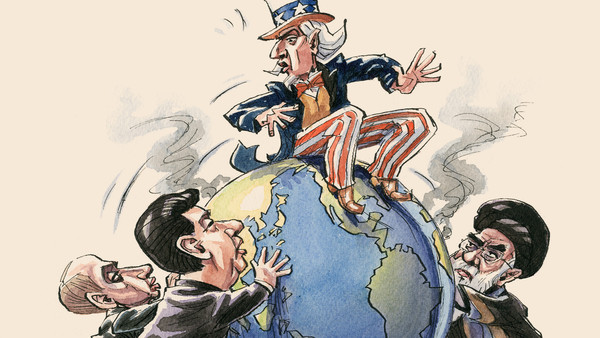
      Globe, U.S. and Others (FT 7.1.14)
     Recent developments continue to highlight a broad range of trade issues from the role of states in trade, trade sanctions and terrorism, subsidies and non-market economies (China), recent WTO cases concerning trade with China, Obama’s trade enforcement strategies, “revisionist powers” in the post-9/11 era, bilateral investment treaties (BIT), revision of the Information Technology Agreement (ITA), cybersecurity and more. Many of these issues concern China, U.S. sanctions policy and export subsidies.
     To me these developments further highlight the central function that trade policy now plays in U.S. foreign policy. To a certain degree trade policy offsets the more overt military aspects of U.S. policy abroad. This is probably how it should be given the globalized and inter-connected world. Geopolitics is increasingly involves trade policy and brings into greater focus the national interest of states. Here are some particulars:
…. Promoting trade and investment relations with our closest trading partners is critical for economic development and job creation. States need to be even more aggressive in order to compete successfully in the global economy. “Virginia Trade Mission.”    “Virginia Trade Mission.”   Governor’s News Release (June 9, 2014).
…. WTO upholds U.S. 2012 GPX law concerning subsidies in non-market economies. U.S. did lose on double remedies issue. “China Fails a Second Time.”  USTR New Release. (June 8, 2014).
 …. “Trade sanctions (and laws such as the Foreign Corrupt Practices Act) are exactly the kinds of policies we should be pursuing to make the world a better place through our economic influence — instead of, to the maximum possible, our military influence.” True, but need to balance our domestic interests and those of our global firms. Can’t be done blindly or as a default foreign-policy action. “Use Economic Clout Responsibly.” Washington Post (July 3, 2014).
…. The Obama administration continues with an aggressive trade enforcement strategy. This is very much needed. 18 WTO complaints filed. Won all 6 that have been litigated. 9 filings were against China. “Obama and Trade Enforcement.” USTR News (July 3, 2014).
….Post-Soviet Union World of 1990s — Global economy, multilateral institutions, U.S. supremacy. Post-9/11 — Emerging powers, terrorism, limited U.S. supremacy. How systemic are the newer challenges? “Revisionist Powers.” Financial Times (July 2, 2014).
…. The $6bn fine on BNP by the Dept. of Justice for violating U.S. financial sanctions is largest & most aggressive ever. It dwarfs earlier cases. Financial Times (June 30, 2014).  “BNP Fine and Trade Sanctions.”   Wall Street Journal (June 3, 2014)
…. Potential China-U.S. Investment Treaty (BIT) great potential benefits for both countries. So does the revision of the Information Technology Agreement (ITA)  as to encourage greater U.S. tech exports to China. “U.S. – China Negotiation.” Wall Street Journal (June 30, 2014).
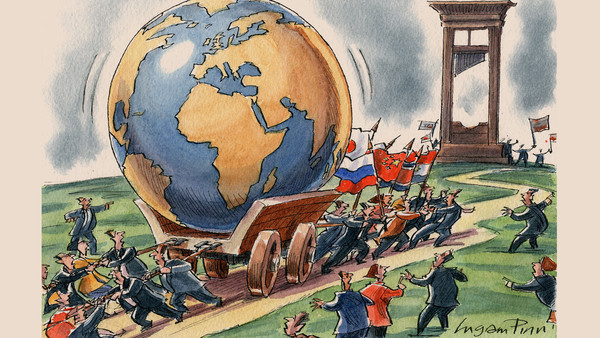
Globe and Conflict (FT)


Posted in Global Trade Relations | Tagged , , , , , , | Leave a comment

Review of U.S. – China Trade Relations and WTO Litigation — Data Reveals Broad Usage and Compliance.

China and WTO
       For a review by Dr. Peter Watson (DCL), former Chairman of the U.S. International Trade Commission ( USITC),  of my recent article “U.S. – China Trade Relations and Litigation”  click here. The following are excerpts:


Two things quickly become obvious to a reader only a very short time into Dr. Malawer’s article, in addition to recognizing his (rare) art in being able to make accessible the still extraordinarily arcane and complex lexicon and concepts permeating international trade rules and regulation.
The first thing one notes is how Malawer deftly deploys extremely well-crafted graphs and metrics to most helpfully set an explanatory frame around his accompanying narrative on this most vital — and very misunderstood — topic.
Prior to Malawer’s clear and thoughtful articulation on the same, much of the reason we have seen more heat than light on readings around the U.S./China trade relationship is that even writers specializing in this space have-to-date lacked serious second or third level analysis or data — especially on WTO metrics. This deficiency is now very usefully and definitively dispatched.
The other item of very clear note about Malawer’s article is that its valuable analytical content goes well beyond its U.S./China subject title. If one can be short-changed, then readers of this article are well and truly long-changed, as the content extends, for example, to meta-data on all nation-state users of the WTO dispute resolution process. This includes providing an excellent comparative analysis of its use between developed and developing nations — the latter usefully identified by Malawer as having “participated strongly in the [WTO’s] dispute settlement system, both as complainants and respondents.”
More long-changing occurs when Malawer does an exceptionally original and compelling analysis of how and to what extent different U.S. presidents have likewise used the WTO dispute process. Well worth the extra money that fortunate readers do not have to pay.


Posted in Global Trade Relations | Tagged , , , , , , , | Leave a comment

Geopolitics, Trade and Foreign Policy — Changing Global Landscape & Growing Uncertainty.

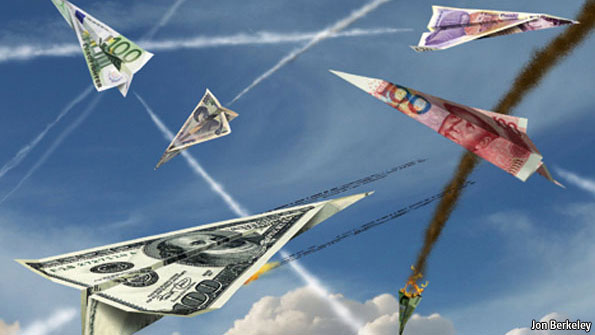
Currency Wars
     A large number of trade and foreign policy issues have arisen the last few weeks. They include among others Chinese investment into the U.S., the revival of Iraqi issues, global tax avoidance of MNC, and the Supreme Court and global debt agreements, and tax incentives for economic development.  The reemergence of geopolitical  considerations as well as continuing financial and tax problems relating to global transactions have taken center stage. They constitute ongoing problems that characterize a growing uncertain and changing global environment. Here are the particulars:
….New $2 billion dollar Chinese investment into Virginia just announced. New paper plant in central Virginia. Foreign direct investment is crucial to Virginia’s economic development. Great success story. “Chinese Investment into Virginia.” Richmond Times-Dispatch (June 20, 2014).
…. The man who brought us the bogus war in Iraq is now blasting Obama, again. The chaos in Iraq is a direct result of the illegal invasion of Iraq by the Bush Administration. Clear and simple. Let’s not forget it. The solution is not to triple  down on the deeply discredited Bush – Cheney doctrine. But to support functioning governments that hold some promise such as in Kurdistan, Jordan, Tunisia, UAE, Turkey and others in the region. This is a civil and religious war that is to be avoided. To make matters worse this is being fought over old colonial borders that made no sense. Our policy should be one of strategic repositioning and containment of terrorist states and entities. This is most realistic. “Cheney and Iraq — The Collapsing Obama Doctrine.” Wall Street Journal (June 18, 2014).
…. Agricultural exports is a bright spot in exports from Virginia especially to China. “Agriculture Exports to China from Virginia.” Richmond Times-Dispatch (June 20, 2014).
…. Economic & tax Incentives are increasing among the states as tools of economic development. “Tax-Incentives Arms Race.” Wall Street Journal (June 16, 2014).
…. Supreme Court rules against Argentina in a major case applying U.S. law to global financial bond obligations involving foreign sovereigns. Good for rule of law in global transactions. “Don’t Cry for Argentina.” Wall Street Journal (June 16, 2014).
…. Back to accessing critical national interests in foreign policy and aligning actions pragmatically. ‘American Exceptionalism” and the “New Disorderly World” makes for hard choices. No knee-jerk reactions wanted. “For the U.S. — A Disappointing World.” Wall Street Journal (June 13, 2014).
…. New phrase — “Profits, not Sales being Globalized.” But same old story. Profits reported offshore to minimize effective tax rates. Huge sums banked in tax havens. Especially by tech and pharma firms such as Apple, Microsoft, Google, Pfizer, Cisco, Oracle, Merck … Transfer- pricing, bank secrecy, tax havens named as usual suspects. Everyone is now looking including the OECD, G7, the SEC, EU, U.K., WTO and more. Some change possible. Hopefully. But don’t hold your breadth. “Taxing Times Ahead.” Financial Times (June 13, 2014).
…. Nothing like blaming the U.S. Gov’t for tax avoidance by U.S. MNCs and pointing to European tax systems as a model. They are now being investigated by the EU. Don’t shift the blame to the system. What about some corporate responsibility? “Lose-Lose Tax Policy.” Wall Street Journal (June 11, 2014).


Posted in Global Trade Relations | Tagged , , , , , , , | Leave a comment

Hallmarks of the New Global Era — Implications are Unclear.

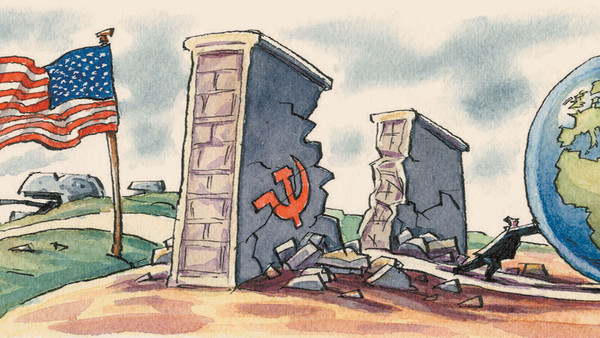
          US Flag and SU (FT6.11.14)
     The issues of globalization, the digital revolution, global institutions, finance and trade, economic integration and political division, and tension between cooperation and conflict are hallmarks of the 21st century. Martin Wolfe has in his own brilliant manner laid them out in a recent article in the Financial Times and  put forth his view of their interaction. The following are some quotes from his recent piece:
“The salient characteristic of the past quarter of a century is globalization. Driven on by the worldwide acceptance of the market economy and turbocharged by the digital revolution, humanity has created an economy that is more highly integrated than in 1913 ….”
“Moreover, this has happened not under empire but under the aegis of global institutions, both public (such as the International Monetary Fund, the World Trade Organization and the EU) and private (transnational companies).”
 “Trade has proved more robust than finance, but even it ceased to rise relative to world output between 2005 and 2012. It is not yet clear how deep-seated this slowdown in globalization will prove.”
“The tension between economic integration and political division remain the Achilles heel of any globally integrated economy.”
“This tension between co-operation and conflict is permanent.”
     I would posit two additional items as being particularly salient in defining this era:  the changing role of governments and the rise of social media. In many ways these change the calculus of national interests and promote sub-national and non-governmental actors in the global system. As someone once said the future isn’t what it used to be.
                  …..”Three Events that Shaped our World.” Financial Times (June 11, 2014)


Posted in Global Trade Relations | Tagged , , , , , | Leave a comment

Financial Sanctions & Foreign Policy — Growing Complexity in Policy & Law.

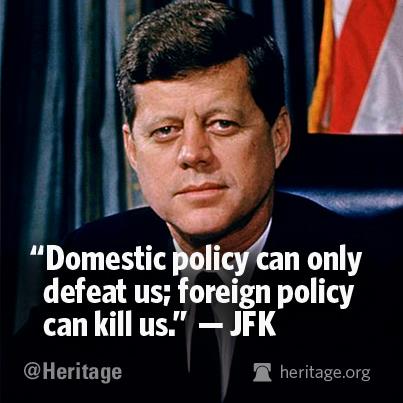
Kennedy and For. Policy


     The inter-relationship of  sanctions policy, trade policy, foreign policy, and presidential leadership values have become even more important recently. To me this represents a maturing of U.S. foreign policy in an increasingly complex global environment. Today foreign policy is much more than diplomatic history and some political discussion. A renewed focus on core national interests and non-military aspects are welcomed.

    Foreign policy and foreign affairs today encompasses a wide variety of sub-topics meshing domestic with foreign and political with economic, finance, tax and the law. A multidisciplinary approach to studying and practicing in this area is absolutely essential. The financial aspect of foreign policy is becoming so much more important today.

     Here are some recent developments.


…. Financial sanctions on foreign banks for violating U.S. trade sanctions have increased. Raises issues in TPP trade negotiations. Not unexpected. Newer developing linkage between sanctions policy and trade policy. “BNP Paribas and Financial Sanctions.” New York Times (June 4, 2014).

…. Financial sanctions & foreign policy — new weapon. More connected a targeted country is to the global economy, more effective the sanctions. “Financial Weapons from Treasury’s War Room.” New York Times (June 4, 2014).

…. Financial sanctions & foreign policy — The Office of Terrorism & Financial Intelligence (Treasury Dept.) is playing a big role in formulation of U.S. foreign policy. Increasingly more important than military action. “Obama Presses Use of Financial Weapons.” New York Times (June 2, 2014).

…. Whose values? Obama’s values are clear. Use force only to protect critical national interests. This allows the U.S. greater freedom of action in formulating foreign policy and addressing a greater numbers of countries. “”Obama’s Values-Free Foreign Policy.” Washington Post (June 1, 2014).

…. Obama’s legacy ought to include tax reform concerning American multinationals. It’s long overdue. It would be good policy and law. “U.S. Companies Fleeing the U.S. Tax Code.” Washington Post (May 31, 2014).

…. Foreign policy leadership means knowing when to say ‘no’ to useless foreign adventures. “Obama’s Leadership is Right for Today.” Washington Post (May 30, 2014).


Posted in Global Trade Relations | Tagged , , , , , , , | Leave a comment

Commercial Cyberespionage, U.S. Foreign Policy, Criminal Prosecutions — What Next for U.S. – China Trade Relations?

Froman and Obama (FT 2013)
     China cyberespionage for commercial gain has taken front-and-center in U.S. trade policy. It raises issues of national security, trade policy, criminal prosecutions, WTO litigation, commercial competitiveness, U.S. foreign policy, among a host of other related ones. A recent WTO trade case brought by the U.S. against China further highlights the U.S. – China tensions this week. Here is some additional information.


…. To what extent are recent indictments by USDOJ an attempt to deflect criticism of U.S. cyber actions against China? To what extent will U.S. forms face blowback in China? “American Businesses in China Feel Heat of Cyber Disputes.” New York Times (May 31, 2014).
….. Obama’s foreign policy has shown to be more realistic and national-interest oriented. Less moralistic. “Obama’s Foreign Policy.” Financial Times (May 26, 2014).
….. The new Obama policy concerning commercial cyber espionage involves both diplomacy and criminal prosecution. I would suggest two additional global actions: filing a trade case against China in the WTO addressing commercial cyber espionage and calling an international conference to draft a convention on cyber espionage generally. These are realistic moves that can be taken quickly. Their success would test U.S. diplomacy. “Indictment of Chinese Hackers Part of Broad U.S. Strategy.” Washington Post (May 23, 2014).
….. Another split decision in a new U.S. – China WTO case just decided. Concerns China’s antidumping and countervailing duties on various U.S. auto imports into China.  Somewhat expected and in line with prior cases. “WTO Issues Panel Report on Imports of Autos into China.”  WTO News (May 23, 2014).
….  So China intrudes into the computer systems of U.S. firms and the U.S. intrudes into those of China. Why exactly does it matter what the intent is? Does it matter if it’s “economic espionage”  or “commercial espionage”? Global rules need to be developed to regulate such actions. That would be in the national interest of both states. Let’s start with real diplomatic negotiations between China and the U.S. Sounds like the wild west right now. “Espionage Indictments Against China.” New York Times (May 21,2014).
….. Blurred Lines — Spying for national security or corporate competitiveness? National economic advantage or firm advantage? Spying on trade negotiations, foreign economic and corporate officials. How really different is NSA and Chinese cyberespionage? What are the legal rules? What’s the best public policy? How do we get some sort of international understanding and global governance concerning commercial cyber espionage? “Fine Line on U.S. Spying on Companies.” New York Times (May 20, 2014).


Posted in Global Trade Relations | Tagged , , , , , | Leave a comment

Understanding the Broad Range of Global Developments — Is There Some Coherence?

     Globe and Question (FT 5.5.14)
     An unusual broad range of articles have appeared recently discussing global trade, foreign policy and domestic politics. They continue to evidence the great variety of topics in global affairs that are so inter-related.  They leave one struggling to make sense of them in some coherent way as to understanding cross-border transactions in today’s global economy. They involve federal-state relations, U.S. – EU relations, the WTO, Russia, China, global taxation, state incentives, economic development, business competitiveness,  Obama’s foreign policy, the OECD, and more. Here’s my take on them.
     This anti-economic development article misses the point. State incentives to attract foreign business is a rationale decision. It is good public policy. It is a rationale choice to support economic development. State incentives are not necessarily subsidies. They are often tied to metrics which must be met to keep those payments — such as to number of new jobs created. Pointing to the WTO and OECD rules adds nothing to this debate. Those rules refer primarily to export subsidies. That is simply not the case here. State incentives in Virginia have clearly led to new businesses, to higher employment, and to improved welfare of Virginians. “How to End State Subsidies.” New York Times (May 10, 2014). 
     Governor trade missions are essential to attracting new trade and investment to Virginia. Really essential for job creation. “Virginia Trade Mission with New Governor to Asia.” Richmond Times-Dispatch (May 10, 2014).
      Russia filed a new case in the WTO against the EU concerning its restrictions in the energy sector & involving import restrictions on natural gas. This could prove to be a huge case given current geopolitical issues. “Russia Files Dispute Against EU.” WTO News (April 30, 2014).
     This OECD tax convention is aimed at sharing information to limit multinational tax evasion. Switzerland just announced its intention to sign this agreement. This could prove to be a turning point in the traditional Swiss resistance to sharing such information. Global taxation is a highly politicized issue in today’s global trade relations. “Convention on Mutual Administrative Assistance in Tax Matters.” OECD website.
     The recent New York Times editorial is correct that President Obama is doing a better foreign-policy job than his critics say. He has run into a more chaotic world than his predecessors. This is because of continued globalization and multipolar dynamics. The New York Times is incorrect to argue that the United States alone can do much more or that he can do a much better job. Can you imagine if the U.S. actually got involved in war zones or potential ones from Syria, Ukraine, central Africa, the East China Sea ….. The first aspect of national security today is a strong U.S. economy and society. This should be our priority. Much will follow from that. “President Obama and the World.” New York Times.” (May 3, 2014).
     I agree that tax avoidance by multinationals has become a full-fledged corporate strategy (scam?). But the solution of doing away with all corporate taxation (domestic and foreign) is laughable. It only further accentuates gross inequality.… We need more realistic policy proposals. We need better U.S. legislation (and enforcement), better international cooperation, and better OECD proposals.  “End Corporate Taxation.” New York Times (May 2, 2014).
     Export growth is essential to economic development and job creation. But current export growth is still not enough. Greater government – private partnership in this area would be very helpful. Greater federal and state cooperation is critic…al. Public universities helping their states would also be of significant assistance. Leveraging their international assets such as their foreign students and international programs remains an untapped endeavor. “U.S. International Trade Deficit.” CNBC (May 6, 2014).
     The evolving multipolar economic world is the principal challenge to U.S. foreign policy as it confronts changes to global trade & international institutions. “Uncertainty, Not China, is Replacing U.S. Power.” Financial Times (May 4, 2014).
     I wonder if this was an intentional signal by China to Japan or an isolated maritime case stemming back to WW II? “Ship Seizure in China.” Asian Review (April 22, 2014). 
     Here’s another former foreign-policy appointee complaining about U.S. foreign policy. I wonder where he was during the last presidential administration when U.S. foreign policy was really chaotic. It’s a messy world and foreign policy mirrors that reality, unfortunately. Our first priority is to focus on the U.S. economy and society as central to our national security. The world is changing and the U.S. needs to act via multilateral arrangements and alliances not unilaterally. That is a prescription for real chaos in the 21st century. “A Foreign Policy Flirting with Chaos.” New York Times (April 29, 2014).
       The U.S. battle over the valuation of the Yuan is not legally correct. This article tells you why it makes no political, economic or business sense. “China Bashing Will Backfire.” CNBC (April 29, 2014).


Posted in Global Trade Relations | Tagged , , , , , , | Leave a comment

Newer Topics for Global Trade — Admiralty Law, Role of Cities, Wartime Claims.

Trade.Ships (5.10.11)

     The issue of Asian trade (TPP), President Obama’s trip to Asia, and recent maritime and admiralty developments continue to highlight issues confronting global trade and global politics today. Also the growing and critical role of cities, states and ports in global trade is exceedingly interesting. Here is some additional information:
…… Asian trade is crucial to global trade. But it’s the multilateral system under WTO rules that ensures global trade for all. Playing geopolitics with TPP to exclude China is not good U.S. policy. The U.S. needs to support more fully the multilateral system and not just regional ones. It should certainly not exclude major countries from regional ones for narrow political purposes. “President Obama’s Asia Trip and Trade.” New York Times (April 24, 2014)
…… Today the challenge is to create virtual bridges between cities & states to the global economy to ensure economic development. “Cities and the Global Economy.” Financial  Times (April 24, 2014).
…… Does this commercial / admiralty litigation in China portend new war claims by China against Japan? “The Chen’s Family Ship Comes in.” Financial Times (April 24, 2014).
…… Is admiralty law becoming more important in foreign policy and international finance? A private wartime shipping litigation in China against a Japanese shipping company is settled after a ship was seized under maritime law and an Argentine naval ship was seized and then released in order to force compensation from Argentina for its default on its sovereign debt. “Wartime Claim is Paid.” New York Times (April 24, 2014).
…… The Port of Virginia is of great importance to Virginia’s economic development. It also needs to be better coordinated with other state agencies to ensure the vital role of maritime traffic in fostering economic development and job creation in Virginia. “Reforming Port Authority.” The Pilot (April 23, 2014).


Posted in Global Trade Relations | Tagged , , , , , , | Leave a comment

Need to Get Trade Policy and Process Right …. Time is Running Out.

Free Trade Agreements


     The New York Times today in a lengthy editorial  criticizes the administration’s trade negotiations — both substance and process. It’s both correct and not so correct. Here’s my take.
….. Agree. The process is overly secretive. It’s reliance on industry advisory committees to the USTR is too exclusive in favor of large multinationals at the expense of public interest groups
….. Agree. If done correctly these new trade agreements (TPP and TTIP) would improve the global trading rules.
….. Agree. Need to ensure more benefits from global trade for workers here.
….. Agree. The main areas of  focus should be on enforceable environmental, intellectual property rights, and labor standards.
.. Disagree. The position that foreign investors should not be given standing to contest directly foreign government action is really wrong. (“Investor-State Dispute Resolution” clauses — ‘ISDR’.) The advances made over the last 50 years to allow such actions are historically significant. Procedures have been widely used to allow such actions including those of the World Bank (ICSID), bilateral investment treaties and the U.S. Foreign Sovereign Immunities Act. Investment and trade are deeply inter-related. Trade agreements need to be upgraded to recognize this essential fact today.
.. Disagree. The position that currency manipulation is the biggest culprit in global trade today is really a stretch. The rules of the WTO do not adders this issue. This is a particular currency and financial issue that should not be included in a trade agreement. The larger issues are technology and globalization.
     Time is running out for the administration. It has announced great plans but so far has delivered little as to developing new trading rules and trade agreements.The president needs to be aggressive and transparent to implement his trade policy. The buy-in by the Congress and the American people are essential. This would lead to good law and good trade policy.


…… “This Time, Get Global Trade Right.” New York Times (April 20, 2014).
Posted in Global Trade Relations | Tagged , , , , , , | Leave a comment