


RSS Feed
-
Recent Posts
- UPDATE (Geopolitics & Geoeconomics): U.S. Tariffs and Refunds — The Saga Continues and Continues.
- UPDATE — Refund of Trump’s Tariffs — Really Tricky & Messy — Court Order Refunds, Now — Tariffs to Increase from 10% to 15% (More Trump Resistance).
- Global TV Interviews — Dr. Stuart Malawer (2026).
- Refund of Trump’s Tariffs — Really Tricky & Messy.
- Trump’s Tariffs Declared Illegal by the Supreme Court — His Actions are Illegal Under U.S. and International Law.
Archives
- March 2026
- February 2026
- January 2026
- December 2025
- November 2025
- October 2025
- September 2025
- August 2025
- July 2025
- June 2025
- May 2025
- April 2025
- March 2025
- February 2025
- January 2025
- December 2024
- November 2024
- October 2024
- September 2024
- August 2024
- July 2024
- June 2024
- May 2024
- April 2024
- March 2024
- February 2024
- January 2024
- December 2023
- November 2023
- September 2023
- August 2023
- June 2023
- April 2023
- March 2023
- February 2023
- January 2023
- December 2022
- November 2022
- October 2022
- September 2022
- August 2022
- July 2022
- June 2022
- May 2022
- April 2022
- March 2022
- February 2022
- December 2021
- October 2021
- August 2021
- June 2021
- May 2021
- April 2021
- February 2021
- January 2021
- December 2020
- November 2020
- September 2020
- August 2020
- July 2020
- June 2020
- May 2020
- April 2020
- March 2020
- February 2020
- January 2020
- November 2019
- September 2019
- June 2019
- April 2019
- January 2019
- November 2018
- October 2018
- September 2018
- June 2018
- May 2018
- March 2018
- February 2018
- January 2018
- December 2017
- November 2017
- October 2017
- September 2017
- August 2017
- July 2017
- June 2017
- May 2017
- April 2017
- March 2017
- February 2017
- January 2017
- December 2016
- November 2016
- October 2016
- September 2016
- August 2016
- July 2016
- May 2016
- April 2016
- March 2016
- February 2016
- January 2016
- December 2015
- November 2015
- October 2015
- September 2015
- August 2015
- July 2015
- June 2015
- May 2015
- April 2015
- March 2015
- February 2015
- January 2015
- December 2014
- November 2014
- October 2014
- September 2014
- August 2014
- July 2014
- June 2014
- May 2014
- April 2014
- March 2014
- February 2014
- January 2014
- December 2013
- November 2013
- October 2013
- September 2013
- August 2013
- July 2013
- June 2013
- May 2013
- April 2013
- March 2013
- February 2013
- January 2013
- December 2012
- November 2012
- October 2012
- September 2012
- August 2012
- July 2012
- June 2012
- May 2012
- April 2012
- March 2012
- February 2012
- January 2012
- December 2011
- November 2011
- October 2011
- September 2011
Categories
Meta
-
Novel Trade Issues in a Changing Global System.
A number of global events recently have raised interesting and novel questions in global trade relations and foreign policy generally. They involve the relationship between antitrust law and trade law (WTO), the disconnect in the U.S. between financial markets and geopolitics, the continued use of ‘tax inversions’ by U.S. multinationals, foreign funding of policy research in the U.S., the reemergence of power politics in global affairs, and retreating from globalization. To me these developments evidence the increasingly changing nature of international relations today and its constantly evolving reality, into newer directions. Here are some particulars:
….. The U.S. Chamber of Commerce contends that China’s use of its new antitrust and monopoly law may violate its WTO trade obligations. It argues WTO litigation should be considered by the U.S. against China. This is a difficult undertaking. The old GATT and the WTO never specifically included competition rules as part of its trade rules. This issue has been on the negotiating table for ever. The WTO should expand its coverage to cover competition rules by negotiating and creating newer rules. This should not be done through its dispute resolution system. “China’s Antitrust Rules and WTO Rules.” New York Times (Sept. 9, 2014).
….. Geopolitics and Financial Markets. Some argue that there is a disconnect between U.S. markets and global politics. That geopolitics aren’t relevant. My take … They aren’t relevant until they are and then it’s too late. Nothing like sticking your head in the sand. “Investors Ignoring War.” Financial Times (Sept. 9, 2014).
….. ‘Inversions’ allow offshore funds to escape U.S. tax liability, to ‘lend’ back, and to deduct ‘interest.’ Enough is enough. We need some sane tax policy and corrective legislation. “Tax Inverters.” Financial Times (Sept. 8, 2014).
….. The best research foreign money can buy? Should the Foreign Agents Registration Act of 1938 apply to Washington think tanks that take foreign money and conduct foreign policy and public policy research? Maybe not but how about at least full disclosure. “Foreign Powers and Think Tanks.” New York Times (Sept. 7, 2014).
….. Is the world in more ‘disorder’ today than previously in global history? Has President Obama ‘over-corrected’ as a matter of foreign policy? What is the balance between Realpolitik (and its heavy reliance on national interest) and a ‘values-driven’ foreign policy’? These are questions that Henry Kissinger deals with in his new book. Still have lingering doubts about his views after his service in the Nixon White House. But he does raise and discuss important foreign-policy issues of the day in a good historical and political context. “World Order.” Financial Times (Sept. 5, 2014).
….. Nothing like cherry-picking and weaving a negative narrative. Nationalism and economic interdependence are indeed global forces at work today. The nature of globalization is evolving, not deconstructing. Back to the future is never a good policy. Leadership can’t rest on only one state. Developing a consensus should be part of a U.S. strategy. One that holds it’s in the national interest of all stakeholders that rules are developed and enforced to provide effective global governance to transnational transactions. “Marching Back From Globalization.” Financial Times (Sept. 4, 2014).
The Changing Role of Trade in the Changing International System.

Recent developments have occurred the last few weeks highlighting the changing role of trade in international relations, the changing international political system, the changing nature of trade relations involving cybersecurity and tariffs, the growing role of sub-national units (such as Virginia) in the global marketplace, as well as the often unrecognized but significant role of foreign students in promoting greater trade and investment opportunities. in the U.S. Here are some specifics:
….. A novel trade action was filed recently by Solar World Americas with the U.S. Dept. of Commerce asking for higher tariffs on imports of solar panels from China. This action is intended to counter the Chinese government’s hacking and theft of trade secrets from it. This is an attempt by a private firm to use trade tools to counter official Chinese government economic cyberespionage. “U.S. Tariffs and Chinese Cyber Spying.” New York Times (Sept. 1, 2014).
…..This program concerning cybersecurity start-ups is only one of several initiatives in Virginia concerning cybersecurity and economic development. This is based in the Center for Innovative Technology (CIT). Earlier this year the Virginia Economic Development (VEDP) supported a study promoting cybersecurity exports as part of Virginia’s new Global Defense Initiative. “Virginia Accelerator and Cybersecurity Companies.” Washington Post (Sept. 1, 2014).
….. The international order faces a paradox: Prosperity is dependent on the success of globalization. However, it produces a reaction that works counter to it. A new order is emerging. But its shape and the U.S. role is still uncertain. “Kissinger on the New World Order.” Wall Street Journal (August 30, 2014).
….. I agree that investment needs are staggering for infrastructure in the developing world. But I would also add the same is true for developed economies, especially for the U.S. There is a desperate need for an upgrade in both policies and institutions on the state, federal and international levels. “Martin Wolfe — The Shifts and the Shocks.” Financial Times (August 30, 2014).
….. Trade is often thought of as limiting potential military conflict between trading partners. But is this true? The opium trade clearly led to a bitter war between the British and China. The Opium War of the mid-19th century was sparked by China’s restrictions on the import of opium by the British from India. The British considered the war as ‘Just.’ The Chinese viewed the resulting treaties as unequal, imposed, and illegal. So what are the lessons for today? Two lessons. One, the impact of trade depends on what type of trade. Two, trade is not a panacea for peaceful relations. “Opium War and Trade.” Wall Street Journal (August 29, 2014).
….. Aligning the ‘new Virginia economy’ with the ‘global marketplace’ is the challenge that Virginia’s new Strategic Planning Committee faces. We need to get this right. It’s critical for the economic development of Virginia especially given the huge shortfalls we are having in the budget. “The New Virginia Economy and the Global Marketplace.” Virginia Governor News Release. (August 27, 2014).
….. Three really good points about local and state leaders leveraging foreign students to promote global trade and investment. This is an untapped strategy for state and local economic development. Public universities have a significant role to play in this process. Sooner the better.
1. Foreign students are a growing economic force in the United States, with huge potential to increase jobs and investment.
2. Local and state leaders should leverage foreign student connections with their home communities abroad to facilitate and deepen economic exchange with large foreign markets.
3. It’s time for local and state leaders to become truly global by realizing that foreign students studying in their regions are economic ambassadors connecting U.S. local economies to communities and networks around the globe.
….. “Foreign Students and D.C. as a Global City.” Washington Post (August 29, 2914). For the full Brookings report see “Geography of Foreign Students in the U.S.” (August 29, 2014).
Posted in Global Trade Relations
Tagged changing global trade and changing international political system, cybersecurity and trade, economic cyber espionage and tariffs, Henry Kissenger, Martin Wolfe, Opium Wars and trade, sforeign students and trade promotion, sub-national units (states) and global trade
Leave a comment
International Judicial Institutions and Global Trade Disputes — Some Favorable Developments.

Significant events concerning global trade continue to occur recently this August. They involve a new WTO decision against China concerning export restrictions, a European Court of Human Rights decision against Russia, a Permanent Court of International Arbitration against Russia (both involving Yukos), increased use of antitrust laws by China concerning trade issues, and an appeal to the International Court of Justice by Argentina against the U.S. concerning sovereign debt obligations. To me the upside of all this is that countries are increasingly using international judicial institutions to help resolve trade disputes. This reflects favorably upon the larger governance issue of creating a rules-based global trading system. Here are the particulars:
The recent win by the U.S. against China in the ‘Rare Earth Case’ will help various industries access various minerals for exports. This win is not unexpected. “USTR Announcement and Rare Earth.” USTR News (August 11,2014) and “China Metals Curb Violates Trade, Law.” New York Times (August 8, 2014) and “WTO AB Report.” WTO News (August 7, 2014).
The growing relationship between foreign antitrust law and trade restrictions is highlighted by China’s aggressive action against Microsoft. Has enforcement of such laws become a trade barrier governed by WTO rules even though the WTO does not specifically address competition law? “China’s Enforcement of Antitrust Laws and Trade.” New York Times (August 11, 2014).
Now the Argentine debt comedy gets really interesting. My judgment — Argentina doesn’t stand a chance in the International Court of Justice in the Hague. The notion of ‘restrictive sovereign immunity’ is well known. Argentina has a long history of avoiding its international debt obligations that goes back to the 19th century. It has often been on the wrong side of international law. Besides the U.S. had previously withdrawn its acceptance of the compulsory jurisdiction of the court. It certainly won’t consent to such jurisdiction now.”Argentina Sues in International Court of Justice.” New York Times (August 7, 2014).
Russian counter-sanctions on agriculture imports. What’s next? “Russia’s Counter-Sanctions — Food and Agricultural Restrictions.” New York Times (August 7, 2014).
“India Now Rejects Bali Agreement.” New York Times (August 8, 2014).
Robust institutions and rule of law is still the hallmark of the Western-based global trading system. But bugging International tragic and arbitrary economic sanctions weakens the legitimacy of that basis, so says this editorial. Sounds about right. “Western Rules …” Financial Times (August 1, 2014).
Three days after word arrived that Russia’s handling of OAO Yukos Oil Company would result in the largest arbitration award in history by a factor of 20, the European Court of Human Rights on Thursday announced a judgment thought to be its largest by a factor of over 100. “European Court of Human Rights and Yukos Award.” American Lawyer (July 31, 2014).
International arbitration is an ever-growing aspect of a rules-based global commerce system today. Just look at the largest arbitration award ever. A $50 billion award was just announced by the Permanent Court of Arbitration against Yukos Oil. Combined with the New York Convention on Arbitration domestic actions will now be filed worldwide to enforce this award. Arbitration of global business disputes is often more effective than litigation in global commerce. Unlike arbitration awards court judgments still remain outside of obligatory national enforcement. “Permanent Court of International Arbitration and Yukos Judgment.” New York Times (July 28, 2014).
Corporate and International Taxation — Is Tax Avoidance Becoming the No. 1 Issue?

Rampant tax avoidance by global banks and multinational corporations keep happening. Corporate taxation and specifically taxation of global transactions is now becoming the number one political issue in the United States this fall. It’s not just corporate inversions but a range of tax strategies and deductions that are being eyed by the general public and politicians as something that need to be addressed immediately. I agree. If the Congress doesn’t act the President should. I also agree. The Treasury Department has great responsibility in interpreting existing legislative enactments and issuing and revising its regulations.
“The Tax Dodge Goes On.” New York Times (August 7, 2014).
“Tax Trouble.” New York Times (August 7, 2014).
Global Trade Rules & Courts Needed to Ensure Order in Increasingly Disorderly Global Relations.
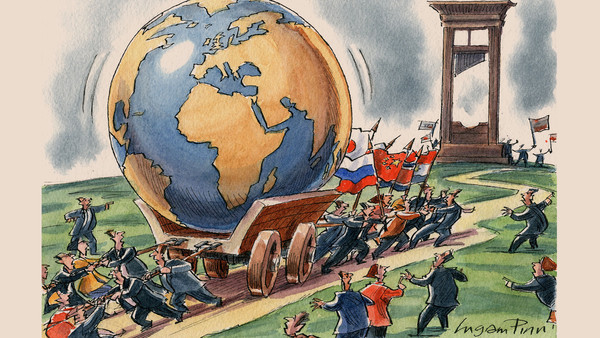
“WTO plunged into crisis as doubts grow over its future.” Financial Times(August 1, 2014).
…. Robust institutions and rule of law is still the hallmark of the Western-based global trading system. But bugging International tragic and arbitrary economic sanctions weakens the legitimacy of that basis, so says this editorial. Sounds about right. “The world calls time on western rules.” Financial Times (August 1, 2014).
More WTO and Federal Cases, More Sanctions, More Tax / Trade Debates — Any End in Sight? Better Rules Needed?

Early July was dominated by news concerning the U.S. and China concerning cyberespionage, trade, a recent WTO case as to SOEs decided against the U.S., a recent federal case decided against the Obama government concerning CFIUS, some state action in the U.S. concerning economic development, and continuing concerns over ‘corporate inversions’ to avoid U.S. taxes by MNCs.. These issues show the increasing importance of legal rules pertaining to international trade relations and U.S. economic policies. (Most recently renewed trade and financial sanctions against Russia, even prior to the destruction of the Malaysian airliner over the Ukraine, is dominating the trade debate.)
To me this ever increasing relevance of trade to a host of non-trade areas only enhances the need for more rules and greater governance over cross-border issues.Here are some specifics:
….. Russia warns of possible retaliation over new U.S. and EU financial and trade sanctions that have been imposed recently. “Russia Warns of Consequences.’ Washington Post (July 18, 2014).
….. In 2012 China filed the most corporate deals (23) that were reviewed by CFIUS. Of the total 114 deals filed 22 were withdrawn during review or investigation. Appeals courts rejects the U.S. in a major loss concerning CFIUS. First Time. First major case addressing the national security reviews by CFIUS of foreign corporations making investments into the U.S. Major win for China and a loss for the U.S. Companies have constitutional rights to present cases based on unclassified evidence to the administration.” Appeals Court and CFIUS.” Wall Street Journal (July 15, 2014).
….. This is a significant defeat for the U.S. in its litigation concerning China in the WTO. The WTO panel ruled that many of the countervailing duties imposed on China by the U.S., to counteract its subsides, were incorrect. Especially as they were applied to state-owned enterprises (SOE). This shows the growing significance of WTO litigation in resolving trade disputes before they become even more politicized. WTO News (July 14, 2014).
….. Doesn’t it make more sense for firms to relocate to other parts of the country to increase efficiency? Of course it does. Look at the move by Northrop Grumman to Virginia to be closer to its customer base in the defense industry. The same can be said for cybersecurity firms and the intelligence sector. This article fails to account for foreign investment and location of foreign subsidiaries to the… U.S. State incentives to them don’t drain business from neighboring states. State Economic incentives are much more nuanced than simply stating they drain tax revenues. “Economic Development Tactics and the Economy.” Washington Post (July 14, 2014).
….. Really need international corporate tax reform in the U.S. This is a good place to start. Off-shore avoidance by MNC and ‘corporate inversions.’ “Off-Shore Tax Avoidance.” Washington Post (July 13, 2014).
….. Governor’s Leadership, Trade and State Economic Development. Great piece in the Washington Post this morning. Connections and closing deals are essential aspects of state economic leadership. Virginia is benefiting from the new Governor’s networking and aggressive focus on international and national firms for bringing new investment and transactions to Virginia. Agriculture, manufacturing and tourism are all benefiting. As government spending is decreasing private sector development is essential. This is especially true for encouraging foreign investment from a variety of countries such as China and Qatar. They have the money and they want to invest and buy from Virginia. This benefits all of us. Greater state cooperation with the federal government including the USTR, Agriculture and Commerce is essential. “Virginia and Foreign Trade.” Washington Post (July 13, 2014).
….. Geopolitics and Globalization. Financial and trade links between the U.S. and China buffer against political and military tensions. Will this continue? Bilateral investment talks are increasing. Surge of Chinese investment into the U.S. But some Chinese industrial policies are counter to greater liberalization. It’s in the interest of all countries that economic diplomacy prevails over issues that could lead to confrontation rather than cooperation. “U.S. – China.” Financial Times (July 11, 2014).
….. Newest criminal indictment in cyberespionage. Story is part of larger Chinese industrial espionage and describes its ecosystem that includes individuals trying to sell to state-owned enterprises. “China and U.S. Cyberespionage.” Washington Post (July 11, 2014).
….. China claims the NSA is conducting spying for economic advantage.The U.S. claims China is even more aggressive in spying for commercial advantage (violating intellectual property rights under the WTO). Too bad the joint committee on cyberespionage didn’t meet at the recent Strategic & Economic Dialogue in Beijing. This would have been a good diplomatic step to address these newer issues in international relations. “U.S. Denies China’s Claims.” New York Times (July 19, 2014).
….. Only good news from the recent Strategic & Economic Dialogue in Beijing is that the U.S. agreed to speed up talks for a bilateral investment treaty (BIT) and China has agreed to open closed areas for new foreign investment. This is good for… mutual economic and trade relations. Maybe next time we’ll have some progress on cybersecurity issues (digital spying for economic and commercial advantage). Financial Times (July 11, 2014).
Trade Policy & Geopolitics —Trade Policy at the Core of U.S. Foreign Policy?
Recent developments continue to highlight a broad range of trade issues from the role of states in trade, trade sanctions and terrorism, subsidies and non-market economies (China), recent WTO cases concerning trade with China, Obama’s trade enforcement strategies, “revisionist powers” in the post-9/11 era, bilateral investment treaties (BIT), revision of the Information Technology Agreement (ITA), cybersecurity and more. Many of these issues concern China, U.S. sanctions policy and export subsidies.
To me these developments further highlight the central function that trade policy now plays in U.S. foreign policy. To a certain degree trade policy offsets the more overt military aspects of U.S. policy abroad. This is probably how it should be given the globalized and inter-connected world. Geopolitics is increasingly involves trade policy and brings into greater focus the national interest of states. Here are some particulars:
…. Promoting trade and investment relations with our closest trading partners is critical for economic development and job creation. States need to be even more aggressive in order to compete successfully in the global economy. “Virginia Trade Mission.” “Virginia Trade Mission.” Governor’s News Release (June 9, 2014).
…. WTO upholds U.S. 2012 GPX law concerning subsidies in non-market economies. U.S. did lose on double remedies issue. “China Fails a Second Time.” USTR New Release. (June 8, 2014).
…. “Trade sanctions (and laws such as the Foreign Corrupt Practices Act) are exactly the kinds of policies we should be pursuing to make the world a better place through our economic influence — instead of, to the maximum possible, our military influence.” True, but need to balance our domestic interests and those of our global firms. Can’t be done blindly or as a default foreign-policy action. “Use Economic Clout Responsibly.” Washington Post (July 3, 2014).
…. The Obama administration continues with an aggressive trade enforcement strategy. This is very much needed. 18 WTO complaints filed. Won all 6 that have been litigated. 9 filings were against China. “Obama and Trade Enforcement.” USTR News (July 3, 2014).
….Post-Soviet Union World of 1990s — Global economy, multilateral institutions, U.S. supremacy. Post-9/11 — Emerging powers, terrorism, limited U.S. supremacy. How systemic are the newer challenges? “Revisionist Powers.” Financial Times (July 2, 2014).
…. The $6bn fine on BNP by the Dept. of Justice for violating U.S. financial sanctions is largest & most aggressive ever. It dwarfs earlier cases. Financial Times (June 30, 2014). “BNP Fine and Trade Sanctions.” Wall Street Journal (June 3, 2014)
…. Potential China-U.S. Investment Treaty (BIT) great potential benefits for both countries. So does the revision of the Information Technology Agreement (ITA) as to encourage greater U.S. tech exports to China. “U.S. – China Negotiation.” Wall Street Journal (June 30, 2014).
Review of U.S. – China Trade Relations and WTO Litigation — Data Reveals Broad Usage and Compliance.
For a review by Dr. Peter Watson (DCL), former Chairman of the U.S. International Trade Commission ( USITC), of my recent article “U.S. – China Trade Relations and Litigation” click here. The following are excerpts:
Two things quickly become obvious to a reader only a very short time into Dr. Malawer’s article, in addition to recognizing his (rare) art in being able to make accessible the still extraordinarily arcane and complex lexicon and concepts permeating international trade rules and regulation.
The first thing one notes is how Malawer deftly deploys extremely well-crafted graphs and metrics to most helpfully set an explanatory frame around his accompanying narrative on this most vital — and very misunderstood — topic.
Prior to Malawer’s clear and thoughtful articulation on the same, much of the reason we have seen more heat than light on readings around the U.S./China trade relationship is that even writers specializing in this space have-to-date lacked serious second or third level analysis or data — especially on WTO metrics. This deficiency is now very usefully and definitively dispatched.
The other item of very clear note about Malawer’s article is that its valuable analytical content goes well beyond its U.S./China subject title. If one can be short-changed, then readers of this article are well and truly long-changed, as the content extends, for example, to meta-data on all nation-state users of the WTO dispute resolution process. This includes providing an excellent comparative analysis of its use between developed and developing nations — the latter usefully identified by Malawer as having “participated strongly in the [WTO’s] dispute settlement system, both as complainants and respondents.”
More long-changing occurs when Malawer does an exceptionally original and compelling analysis of how and to what extent different U.S. presidents have likewise used the WTO dispute process. Well worth the extra money that fortunate readers do not have to pay.
Posted in Global Trade Relations
Tagged Chian trade relations 2001 - 2014, Consultation and full litigation, less developed and developed countries in the DSU, presidents and the WTO litigation, Review by Peter Watson of Malawer article, U.S. - China trade litigation in the WTO, WTO data on dispute resolution (DSU), WTOdata on usage and outcomes of litigation
Leave a comment
Geopolitics, Trade and Foreign Policy — Changing Global Landscape & Growing Uncertainty.
A large number of trade and foreign policy issues have arisen the last few weeks. They include among others Chinese investment into the U.S., the revival of Iraqi issues, global tax avoidance of MNC, and the Supreme Court and global debt agreements, and tax incentives for economic development. The reemergence of geopolitical considerations as well as continuing financial and tax problems relating to global transactions have taken center stage. They constitute ongoing problems that characterize a growing uncertain and changing global environment. Here are the particulars:
….New $2 billion dollar Chinese investment into Virginia just announced. New paper plant in central Virginia. Foreign direct investment is crucial to Virginia’s economic development. Great success story. “Chinese Investment into Virginia.” Richmond Times-Dispatch (June 20, 2014).
…. The man who brought us the bogus war in Iraq is now blasting Obama, again. The chaos in Iraq is a direct result of the illegal invasion of Iraq by the Bush Administration. Clear and simple. Let’s not forget it. The solution is not to triple down on the deeply discredited Bush – Cheney doctrine. But to support functioning governments that hold some promise such as in Kurdistan, Jordan, Tunisia, UAE, Turkey and others in the region. This is a civil and religious war that is to be avoided. To make matters worse this is being fought over old colonial borders that made no sense. Our policy should be one of strategic repositioning and containment of terrorist states and entities. This is most realistic. “Cheney and Iraq — The Collapsing Obama Doctrine.” Wall Street Journal (June 18, 2014).
…. Agricultural exports is a bright spot in exports from Virginia especially to China. “Agriculture Exports to China from Virginia.” Richmond Times-Dispatch (June 20, 2014).
…. Economic & tax Incentives are increasing among the states as tools of economic development. “Tax-Incentives Arms Race.” Wall Street Journal (June 16, 2014).
…. Supreme Court rules against Argentina in a major case applying U.S. law to global financial bond obligations involving foreign sovereigns. Good for rule of law in global transactions. “Don’t Cry for Argentina.” Wall Street Journal (June 16, 2014).
…. Back to accessing critical national interests in foreign policy and aligning actions pragmatically. ‘American Exceptionalism” and the “New Disorderly World” makes for hard choices. No knee-jerk reactions wanted. “For the U.S. — A Disappointing World.” Wall Street Journal (June 13, 2014).
…. New phrase — “Profits, not Sales being Globalized.” But same old story. Profits reported offshore to minimize effective tax rates. Huge sums banked in tax havens. Especially by tech and pharma firms such as Apple, Microsoft, Google, Pfizer, Cisco, Oracle, Merck … Transfer- pricing, bank secrecy, tax havens named as usual suspects. Everyone is now looking including the OECD, G7, the SEC, EU, U.K., WTO and more. Some change possible. Hopefully. But don’t hold your breadth. “Taxing Times Ahead.” Financial Times (June 13, 2014).
…. Nothing like blaming the U.S. Gov’t for tax avoidance by U.S. MNCs and pointing to European tax systems as a model. They are now being investigated by the EU. Don’t shift the blame to the system. What about some corporate responsibility? “Lose-Lose Tax Policy.” Wall Street Journal (June 11, 2014).

 Stuart Malawer
 U.S. LAW & GLOBAL TRADE RELATIONS.
You must be logged in to post a comment.