End-of-the-Year Trade Developments — Cuban Sanctions, Sony Cyber Attack, Chinese Commercial Cyberespionage …….


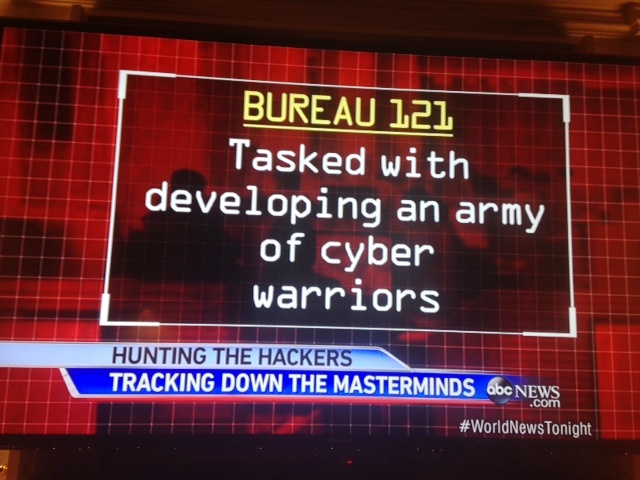
       …..Korea Sony Hack (12.19.2014)

     Late December saw some very interesting trade developments. They include a presidential vow to normalize diplomatic and trade relations with Cuba and an apparent cyber attack by N. Korea on Sony. Discussions continue concerning the TPP and making more relevant the WTO on its 20th anniversary as to negotiating new trade rules. Discussions also continue concerning China’s desire to be seen as a ‘responsible party and stakeholder’ in the global system in light of its own economic cyberespionage. These developments will continue to play out in the new year. Needless to say global trade relations constantly change and pose new challenges for global governance.
…. WTO 20 years today. Great success in dispute settlement. Less so in writing new trade rules. Need to do better. “WTO Celebrates 20 Years.” WTO News (January 1, 2015).
…. USTR Froman points out that the Obama administration has brought 18 cases of unfair trade practices in the WTO and 9 were against China. He hopes to convince Democrats that the administration is a tough trade enforcer so they would support the TPP negotiations and extend ‘fast track.’ But he refuses to include enforceable sanctions on currency manipulators in the trade negotiations. Fearing Federal Reserve policies might become reviewable by a WTO panel. “Obama’s Trade Chief and TPP.” New York Times (December 31, 2014).
…. Republicans argue Obama needs to persuade Congress more in order to succeed on trade. “Trade Opportunity for Obama and Congress.” Wall Street Journal (December 28, 2014).
….. New book argues that the greatest transfer of wealth ever was caused by China’s economic cyber espionage. “Book Review — Military-Internet Complex. “Washington Post (December 28, 2014).
…. People forget that it was the Cuban nationalization of US. corporate-owned property that precipitated the Cuban embargo. That nationalization was in violation of international law that required prompt, adequate and effective compensation. Compensation will probably be one of the first issues resolved during President Obama’s normalcy of Cuban relations. Settlement of claims and diplomatic recognition of governments are squarely within the foreign affairs powers of the President. U.S. diplomatic history and foreign policy are clear on these issues. “Cuban Seizures Present Opportunities.” New York Times (December 21, 2014).
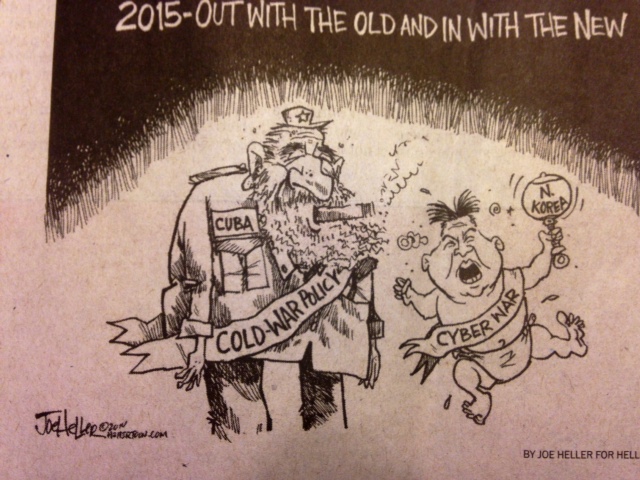

 

Cuba and Cyberattacks, 2015 (Dec. 2014)


Posted in Global Trade Relations | Tagged , , , , , | Leave a comment

Chinese Cyber Espionage and WTO TRIPS Litigation.

Data Protection (FT 11.4..13)

     My new article appeared today in the New York Law Journal (December 23, 2014) on this topic. “Confronting Chinese Economic Cyber Espionage Through WTO Litigation.”  New York Law Journal (December 23, 2014).

Posted in Global Trade Relations | Tagged , , , , | Leave a comment

Recent Trade Developments — Most Important — U.S. – Cuban Relations.


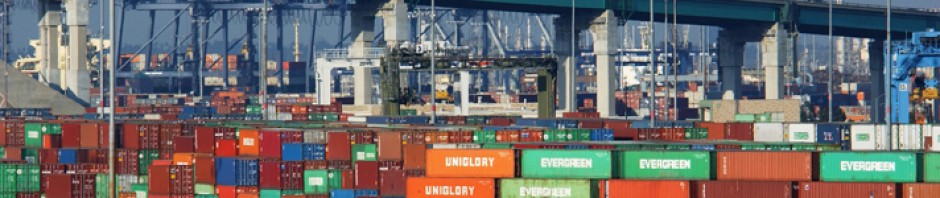
  cropped-globaltrade_-_containers.jpg  
      As the year draws to a close  significant global trade developments continue to happen. But the most important one has been President Obama’s new diplomacy with Cuba which portends the opening of trade and investment with Cuba. (Still need Congressional authorization on many aspects of trade relations). Other developments concern FOREX investigations, newer WTO decisions concerning the U.S. and China, some backsliding on approving the Information Technology Agreement, and newer U.S. tariffs on Chinese solar panels. Here are the specifics:
….. This is a major reversal by the WTO Appellate Body of panel recommendations that had favored the U.S. in litigation brought by China over U.S. subsidies concerning Chinese state-owner enterprises.  “New AB Decisions U.S.  – China.” WTO News (December 18, 2014).
….. Obama’s new Cuban policy. Greater trade & commerce always promotes change. Trade policy and diplomacy when working together promotes individual well-being & national security. Need to overcome narrow interest groups focused on their own economic interests. This newer direction of American foreign policy is welcomed for this new century. “Trade Will Lead to Freedom.” Wall Street Journal (December 18, 2014).
….. Obama foreign policy … A break from the past. More engagement and more trade. A developing theme in US foreign policy & diplomacy. “New Cuban Policy — Throws Obama Foreign Policy into Sharp Relief.” Washington Post (December 18, 2014).
….. Largest foreign corruption case ever by Justice against a multinational. $700m. Investigations span the globe applying US law. “Alston Near $700 million Settlement.” Wall Street Journal (December 16, 2014).
….. I wonder if a better way to go is to settle the case as the EU did in the China-E.U. photovoltaic case. Another problem — China can just move its production to low-cost countries in SE Asia. “China Criticizes Steep U.S. Tariffs on Solar Panels.” New York Times(December 16, 2014).
….. Cities can become more important to regional economic development by increasing their global activities. “About the Global Cities Initiative.” (Brookings website).
….. Failure of Chinese & US diplomatic trade negotiators.Boring tariff issues still important in trade relations.Try again. “Information Technology Agreement (ITA) and China.” New York Times (December 12, 2014).
….. Have US workers benefited from higher duties on China solar panels? No.it‘s US firms producing abroad. Not what our trade laws supposed to do. “Solar Panels and China.” New York Times (December 11, 2014).
….. So far $8.9bn for violation of US sanctions by int’l banks this year. Investigations by US, NY State. Need more of this. “Commerzbank US settlement set to top $1bn ” Financial Times (December 11, 2014).
….. Did the use of algorithms in FOREX platforms suggests a systemic rather than rogue reason for FOREX scandal?Could increase bank fines by millions. “NY Investigates Barclays.” CNBC News (December 11, 2014).


Tagged , , , , , , , , | Leave a comment

Variety of International Commerce Issues — Business as Usual.

        Global Markets

 Issues concerning foreign investment, export subsidies, agricultural exports, and cross-border litigation and corporate structuring continue to be main issues arising in the global economy over the last few weeks.  Business as usual. Some specifics are the following:
…. Foreign Investors & U.S. Commercial Real Estate — Yes, the EB-5 visa program is important. Global money helps out in a slow economy. It allows small foreign investors to invest in the U.S. marketplace. This helps out both small and large U.S. projects. It provides for a new source of funding. The program allows foreign investors residency here and thus brings in more global talent to the U.S. economy. “Funding U.S. Builders — Visas,” Wall Street Journal (December 10, 2014).
…. Managed trade, quotas & subsidies are never good. The proposed Mexico-US sugar deal is only a good deal for industry not consumers. “U.S. – Mexico Sugar Deal.” Washington Post (December 9, 2014).
…. Good straight-forward article summarizing some of the legal issues concerning structuring international and cross-border transactions. “Cross-Border Litigation Issues & International Transactions.” Financier Worldwide (December 2014).
…. The AB of WTO upheld many panel findings against US on imported Indian steel. Some CVDs were not proper. “AB Report and Indian Steel into the U.S.”   WTO News (December 8, 2014).
…. For last year FDI into China was still a bit more than outbound investment. May change for this year because of growth in US market. “Investment Focus — China.” Financial Times (December 5, 2014).
…. GMOs in US agricultural exports to EU may sink the TTIP. Not just science but cultural arguments. “GMOs and EU.” Washington Post (December 4, 2014).
…. ” ‘New Google Tax’ — The UK is launching a crackdown on cross-border financial engineering by multinationals. Will impose a 25% tax on profits “artificially shifted.” “Google Tax and Multinationals.” Financial Times (December 3, 2014).


Posted in Global Trade Relations | Tagged , , , , , | Leave a comment

Structural Changes, Spheres of Influence and Global Trade ……..


         Global Trade


     Web firms, national security, spheres of influence, dispute systems, and structural changes are all current issues concerning global trade relations. Changes are clearly happening and the global landscape is changing rapidly from what existed just a few years ago. This call for even more creative policy responses. Even better dispute resolution processes and diplomatic actions are required.

….. Nat’l security, antitrust, tax reasons are why EU is attacking US Internet firms. This is a building issue. “EU Targets U.S. Web Firms.” Wall Street Journal (November 28, 2014).
….. Long article. But short story. ‘Zeroing’ is invalid in dumping cases. About time the U.S. Just stops using it. “U.S. Rejects WTO’s Methodology.” Note — Myer Brown. (Nov. 25, 2014).
….. Spheres of influence & int’l relations. Are they reemerging or have they never really gone away? We’ve always had them. Like power politics. “Spheres of Influence.” Financial Times (Nov. 25, 2014).
….. Good editorial in the Financial Times claiming foreign direct investment is now becoming more important than traditional cross-border trade since structural changes are taking place in the global system. “Investment & Structural Global Changes.” Financial Times (Nov, 23, 2014).
….. New information from the WTO shows how widely its dispute system has been used over the last 15 years. Very interesting & very encouraging. “2013 in Dispute Settlement.” (WTO — Nov. 23, 2014).


Posted in Global Trade Relations | Tagged , , , , | Leave a comment

Some Movement on a Host of Global Trade, Tax and Commerce Issues.

         Gloabl Investment 1
 A host of trade and global commercial issues continue to create newer international actions and concerns. Among them are China’s use of antitrust law as a trade restriction, Japan’s currency manipulation to increase exports, recent U.S. litigation concerning LIBOR, FOREX and the 1990 Anti-Terrorism law, renewed agreement with India on the ‘Bali” (Trade Facilitation Agreement), agreement on the Information Technology Agreement (ITA) between China and the U.S. at the recent APEC meeting, and formulation of principles concerning ‘beneficial ownership’ of shell companies in the context of international taxation and corruption) (this being in addition to the prior OECD action concerning automatic exchange of tax information). Here are some particulars:
….. The Republican agenda after the 2016 midterm elections involves passing “fast-track,” supporting TTP / TTIP, increased energy exports (crude and natural gas), lifting some restrictions on banks, and perhaps some cooperation on overseas taxation. “2014 Midterm Elections …. Republican Legislative Action.” Financial Times (Nov. 4, 2014); “Revive Fast-Track — After the Midterms.” Washington Post (Editorial 11.7.14)
….. Apple borrows money abroad (and this is tax deductible) to buy back shares but keeps profits abroad (which are not taxable as long as not repatriated). “Apple’s Borrowing Abroad.” Washington Post (Nov. 5, 2014).
….. After Japan’s surprise monetary moves currency manipulation is now back on the table in negotiating the TPP. This surprise action presents a renewed challenge to Obama’s trade policies. There is increasing congressional support for provisions combating currency manipulation (by China, Japan and others) in both TPP negotiations and congressional legislation generally. “Currency Manipulation and Obama’s Trade Policy.” Financial Times (Nov. 7, 2014).
….. In the forthcoming APEC summit the U.S. needs to persuade China to better abide by int’l rules ranging from trade & commerce to territorial & cybersecurity issues. China does abide by many of these rules. But strengthening China’s acceptance of these int’l rules and institutions should be shown to be in its national interests. However, these rules and institutions do need to evolve to adjust to newer global developments involving many newer global players. This growth in global governance is in the national interest of the U.S. also.  “Obama and Beijing and Economic Strains.” Washington Post (Nov.9, 2014).
….. China is aggressively enforcing its new antitrust laws against U.S. multinationals. Trade protectionism? Maybe, maybe not. Understanding national legal and regulatory systems in the context of global trade and commerce is essential. They are part of the bedrock and fabric of global trade relations. “No Longer Business as Usual in China.” New York Times (11.10.14). 
….. Often overlooked is the extraterritorial reach of U.S. laws under the Anti-Terrorism Act as amended by the Patriot Act. This allows public & private actions (including treble damages) against foreign banks for money laundering related to terrorism. Significant cases have been decided and others are pending.  “Banks and Financing Terror Cases.” New York Times (Nov. 11, 2014). 
….. Expanding the International Technology Agreement is a big deal for both U.S.-China trade and the WTO. It will reduce tariffs on $1tn of high-tech goods. This plurilateral agreement is the first significant reduction of tariffs by the WTO in over 15 years. It also signals a shift somewhat away from all encompassing trade agreements to more limited ones. But it keeps the WTO relevant to this newer process and to expanding trade. “China and U.S. and Future Trade Agreement.” Financial Times (Nov. 11, 2014). 
….. FOREX and LIBOR settlements demonstrate the broad foreign reach of U.S. financial laws in civil matters. Now is the time to look at criminal prosecutions of global banks and individuals in this global financial conspiracy. This global conspiracy has broadly impacted U.S. businesses and individuals at all levels in he U.S. and abroad.  “Forex and Libor Scandals.” Financial Times (11.13.14). 
….. The G20 adopted principles as to beneficial-ownership involving shell companies that is behind corruption, tax evasion & money laundering. This builds upon prior actions concerning tax avoidance. 70% of corrupt money taken out of developing countries are through such shell companies and trusts. “G20, Beneficial Ownership and Corruption.” Financial Times (11.17.14). 
….. The recent breakthrough with India on the Bali discussions (as to the Trade Facilitation Agreement) and the U.S. – China Informational Technology Agreement (ITA) announced at the APEC meeting highlights, in fact, the weakness of the WTO. But it’s a good thing that these happened. It gives a chance for the WTO to move forward at least through limited multilateral action via plurilateral agreements. “WTO Breakthroughs and Structural Problems.” Financial Times (11.17.14).
….. The U.S. has lost yet another WTO case concerning ‘zeroing’ and antidumping duties.” Panel on Vietnam and U.S. Dispute.” WTO News (11.17.14).


Posted in Global Trade Relations | Tagged , , , , , , , , , | Leave a comment

New Trade Developments — Increasing Conflict between the EU and Russia ……………..


Global Trade
     Really interesting global trade developments the last two weeks. They involve the EU and Russia (antidumping and countervailing duties), China (investments in U.S), the OECD (global taxation), the IMF (international bankruptcy), state trade incentives (Virginia), EU antitrust enforcement (Google), Mexican sugar tariffs, and more. Of particular interest is the growing WTO litigation between the EU and Russia over a number of trade issues. I’m wondering what this might indicate about the importance of trade to their foreign policy and what this evidences as to Russia’s role in the global trading system (after joining the WTO in 2012) and in the larger international political system. Here’s some specifics ………………..
…. Yet another action filed by the EU against Russia. Involving duties on various products. WTO litigation is heating up between them. Part of deteriorating EU – Russian relations? Trade is a critical part of foreign policy. We’ll see. “EU Files Against Russia.” WTO News (Oct. 31, 2014).
…. This is an example of the importance of foreign trade missions by state governors. Here a Chinese firm has announced a new direct investment into Virginia as a consequence of the governor’s trade mission to China. “China Invests in Virginia.” Richmond Times-Dispatch (Oct. 31, 2014).
…. An historic agreement was signed this week under the auspices of the OECD and G20 that will significantly boost the ability of many nations to combat tax evasion and bank secrecy. It requires the automatic exchange of taxpayers assets and income outside of their home country. This U.S. is following its own path under the 2010 FACTA legislation. “Automatic Exchange of Information.” OECD News  (Oct. 29, 2014).
…. The IMF proposal for creating a new international legal context to handle sovereign debt bankruptcy is back on the table with the IMF’s suggestion for a Sovereign Debt Restructuring Mechanism (SDRM). “International Legal Regime for International Bankruptcy (Sovereigns Debt Defaults).” “International bankruptcy Law.”” Financial Times (Oct. 29, 2014).
…. Aggressive EU antitrust enforcement especially against Google is part of today’s global business landscape. “EU and Antitrust Enforcement (Google and Gazprom).” Financial Times (Oct. 28, 2014).
…. State incentives are crucial to compete in the global economy. Foreign Direct Investment is critical for economic development. Opposition to this is often based upon purely pie-in-the-sky thinking. The Virginia General assembly needs to fund the state incentive programs. They result in more growth and employment. They act as a multiplier in generating growth. “State Incentives and Foreign Investment.” Washington Post (Oct. 28, 2014).
…. The U.S. has imposed both antidumping and countervailing duties on Mexican sugar imports. The U.S. prices are already among the highest in the world. A subsequent agreement with Mexico will lock in somewhat higher rates. This “sugar protectionism” doesn’t sit well with our trading partners.  This again raises the issue of who does the U.S. import remedy legislation really protect — The producer or the consumer? Many argue these older laws need to be revised to focus more on U.S. consumers. I agree. “New Sugar Tariffs and New Mexican Agreement.” Wall Street Journal (Oct. 27, 2014).


Posted in Global Trade Relations | Tagged , , , , , , | 1 Comment

Geopolitics & Global Trade — China & Russia — Changing the Rules?

China and Opiium War (WSJ 7.13.13)
    Good two articles appearing the same day in two of the world’s leading financial newspapers. They discuss China and Russia as posing fundamentally new challenges to the existing international political system.
      The implicit question raised by these two articles is what is the impact of this new geopolitics on global trade relations?
      Geopolitics and global trade cannot be viewed as discrete topics but as intricately intertwined. This impact is now  clearly playing out and is obvious to many but not to all.
    To me one of the most important questions is now how do these two nations challenge the existing rules, foster development of newer ones, and implement decisions of international dispute resolution bodies.
     So far they have joined the global trading system and seem to be utilizing the WTO’s dispute resolution system. In fact, both have so far proven to be very active. China since it accession in 2001 and Russia since its accession in 2012. China has implemented most of the recommended changes and Russia is in midst of its first cases.
      Hopefully, this reliance on an international judicial and arbitration mechanism will carryover to nontrade areas such as territorial and investment disputes. We’ll see.


“Deep Threat (China).” Wall Street Journal (10.25.14).
“Putin (Russia) Blast US-Led Global Order.” Financial Times (10.25.14)
Posted in Global Trade Relations | Tagged , , , , , | Leave a comment

State Trade Missions, Global Trade Litigation and More — Active Trade Agenda & Developments.

 Ships (Calif)   
      State trade missions, EU trade actions against Huawei, more cooperative trade diplomacy, trade and development, Russia and trade sanctions and the ECJ, are just some issues that have been highlighted during the last few weeks in the world of global trade diplomacy. Here are some specifics:
…..’Expenses’ fostering sales to foreign markets for Virginia goods, services and agricultural products should be seen as an ‘investment’ in the Virginia economy. The same is true for promoting foreign direct investment (FDI) into Virginia. State’s have a crucial role in promoting global trade and investment.These expenditures are critical for economic development and job creation. They are crucial in today’s global economy. “Virginia Asia Trade Trip.” Richmond Times-Dispatch (10.23.14).
….. The EU dropped its Huawei case involving illegal subsidies and has assumed a more cooperative trade diplomacy than the confrontational style of U.S. trade relations. The EU is negotiating a bilateral investment treaty with China. “EU Drops Case Against Huawei.” Reuther’s (10.20.14).
….. The new World Trade Report 2014 looks at how four recent major economic trends have changed how developing countries can use trade to facilitate their development. It concludes that this represents a new era in trade and development. These trends are: (i) the economic rise of developing economies; (ii) the growing integration of global production through supply chains; (iii) the higher prices for agricultural goods and natural resources; (iv) the increasing interdependence of the world economy. WTO World Trade Report 2014.
….. Economic development & corporate relocations.It’s about location & not just state incentives.Business environment is important also. “Bechtel Relocates to Virginia.” Washington Post (10.20.14).
….. Russia filed a legal action against the EU in the European Court of Justice as to EU’s trade sanctions over the Ukraine. Might be successful. Next stop the WTO legal system over U.S. sanctions? “Russia Takes the EU to Court.” Financial Times (10.17.14).
….. A WTO panel just ruled in favor of the U.S. against India. This case related to India’s restrictions on agricultural imports from the U.S. based on its regulations regarding Avian Influenza. The panel held that under the SPS agreement India did not establish, among other items, its regulations were based upon ‘relevant international standards’ (Article 3.1 of the SPS Agreement) nor based upon a ‘risk assessment.’ (Article 5 of the SPS Agreement). “U.S. – India Panel Decision.” WTO News (10.14.14).


Posted in Global Trade Relations | Tagged , , , | Leave a comment

WTO Updates — Cotton Case, Bali, China — Challenges Ahead.

China and WTO


There are major challenges ahead for the WTO. Here’s some recent developments:
….. Settlement of the U.S. – Brazil cotton case in the WTO is a novel approach, providing for ‘compensation’ and final settlement of dispute, but still allowing newer U.S. cotton subsidies in the future (but after 5 years they may be attacked).  “Washington Post Editorial — Cotton Case Settlement.” Washington Post (Oct. 8, 2014).
….. Good review of WTO status today by Director-General of the WTO. Five points: (i) the dispute resolution system is performing at a very high level; (ii) failure to negotiate new trade rules is the greatest challenge that the WTO faces; (iii) immediate challenge is to implement the 10 decisions of the Bali Agreement of 2013; (iv) growth of regional trade agreements (253 RTAs have been notified to the WTO)  are no substitute for global multilateral rules for world trade in the global system; (v) global companies operating in global markets demand global rules. “WTO’s Impasse.” WTO News (Oct. 9, 2014). 
….. Concerning China Gen. Wesley Clark argues: (i) China is a fundamental challenge to the global architecture of trade, law and peaceful resolution of disputes; (ii) ‘Naked self-interest’ is an organizing principle of Chinese policy; (iii) Yet, we can still help China assume its place as a global leader. My assessment is a bit different and more positive: (i) China is actively engaging in the global system today and is resolving trade disputes under the rules of the WTO; (ii) All states aim to effectuate their national interests; (iii) The U.S. is working with China to address newer issues as they arise. “Get Real About China.” New York Times (Oct. 12, 2014).
…. For 13 years WTO has failed to conclude new multilateral rules. Perhaps the ‘plurilateral’ way should be tried. This is not what was envisaged 20 years ago but it’s better than no deals. This would move away from ‘unanimity’ in making multilateral agreements to a smaller-subset of willing states in formulating plurilateral agreements such as the Government Procurement Agreement (GPA). “Rethink the Way WTO Takes Decisions.” Financial Times (Editorial 10.14.14)


Posted in Global Trade Relations | Tagged , , , , , , , , , | Leave a comment