From “The WTO is Needed Today as Much as Ever.” Lead Editorial from the Financial Times (May 19, 2020).


(Some of my Twitter Comments Jan. 1, 2020 – May 2020).
TWITTER.COM/SMALAWER
Trump is blaming China for the global pandemic. Trying to negate the doctrine of sovereign immunity. Stop it! Yes, we need a reset of China relations. Negotiations & cooperation, not confrontation. Stop the usual blame game, now.
Josh Hawley: Abolish WTO —- This man is even more ignorant than Trump. Even the Wall Street Journal refuses to give him a platform. How on earth did the New York Times ever let this pass an op-ed review! Let’s have some strengthened journalistic standards.
Trump said he will terminate “phase one” trade deal with China if Beijing does not make good on commitment to buy $200 billion more U.S. goods & services over the next two years. Wait, he’s blocking Chinese imports into US. But he wants China to buy? Real business genius.
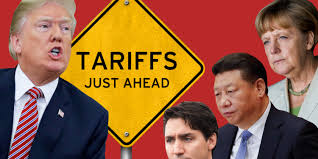
Trump-“Tariffs are the ultimate punishment … Tariffs at a minimum are the greatest negotiating tool we have ever devised & never used for negotiation.” Doesn’t he understand that US importers & consumers pay? Only leads to retaliatory tariffs? I wonder what he learned at Wharton.
New or Renewed Federalism? Yes. Governors step up. Trump fails virus crisis. Excellent piece in WP. This started earlier at the very outset of Trump’s administration’s failures & policies of contempt. States formed alliances addressing climate, trade ….
Disdain & suspicion, contempt & blame are not policies. Sound policies now rely almost entirely on state governors. Competence and expertise in the public sector are great assets. ‘Deep State’ or ‘Administrative State’ are demeaning terms. Never should be used, Mr. President.
Trump threatens tariffs on China because of virus crisis. Stop playing the racist blame game. It doesn’t play. We need competence & honesty in pubic service. This is basic civics & leadership. Way too much is at stake for the US & the world.
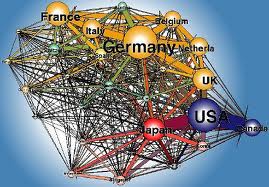
For 3 years Trump has attacked the trading system. Actually for decades. Now the virus pandemic is battering it. This pandemic is fostering protectionism. If unchecked, the world will repeat the 1930s. Actually probably worse. More connected now.
30 Million Unemployed and 60,000 Dead because of Virus — in 3 months. More dead than Vietnam War 58,000 — 10 years. Really incompetent & grossly negligent US leadership both times. We’re the richest & most powerful country. What about some honesty & basic competence this time.
Trump to States & Cities—“Drop Dead” Back to the future? They need assistance combatting crisis, now. They are the frontlines. Not corporations receiving huge new tax breaks. Ever hear of federalism & real leadership? Forget yourself for once & your gripes. You’re failing, badly.
We need competent government. We have it in public employees in the federal & state governments. We need it in our politicians. Enough already with pejoratives such as “Administrative State.” The virus crisis has put the lie to this self-interest approach to public policy & law.
Amid rising disapproval of his incoherent virus response & record unemployment Trump is returning to a familiar trick book.Trump is reviving rhetoric that got him elected: blaming China, global institutions, immigrants & now governors. Disgraceful. This will not play well in Nov.
Simple Solution —Trump Trade Tariffs should be lifted. Gives immediate tax relief. Will spur removal of retaliatory taxes on US farm exports. Help desperate farmers. Never made any sense. Are legally questionable. Trade policy is big part of the solution.
This is outrageous — Trump terminates funding for the World Health Organization (WHO). Really! Blaming the WHO for his criminal negligence! Not surprising. Staying true to form, really unfortunate.
U.S. governors are at the forefront in the fight against the coronavirus. Now organizing to lead the way out of the crisis. States on both coasts have formed coalitions to devise reopening’s of their economies. Trump claims he has the final say. Not so under the Constitution.
The grotesque failure of Trumpism & ineffectiveness of federal leadership highlights the renewed & important role of states in protecting Americans. Redefining Federalism and States Rights away from its Southern perversion to protection of all Americans.
From book by Dr. Frank “Trump on the Couch” — To lie is to defy the law. Trump’s habitual lying serves to express his deep-seated drive to defy the law. Helps him get by in the world. President Trump now lies to survive.
The U.S. as a Global Leader in a Time of Crisis …. US is Utterly failing to provide global leadership. Trump is hiding behind ‘America First.’ Can’t hide behind an illusory Maginot Line. Basic history. That only leads to greater disasters.
Trump’s Tariffs Amid Coronavirus ….. Trump’s tariffs need to be lifted immediately. These were bad initially. Now really awful. We need int’l cooperation and real American leadership globally. ‘America First’ beginning to look like ‘America Last.’
New article….. “One can draw a straight line from Donald Trump’s ruthless mode of operating in the contentious world of New York real estate to his operations on the world stage today.” Malawer, “Trump: From Queens to the World Stage.” (Spring 2020).
Lifting duties Trump imposed on Chinese goods & global steel imports would provide a boost to the U.S. economy of more than $75 billion. But of course the stable genius still blames everything on China. Time to stop the trade war & start leading again. That’s the real America.
South Carolina has 500 foreign companies. Virginia has double that amount. Trade is essential to economic development. It has a bad rep among Democratic contenders. But not all. Along with beating Trump trade should be a top issue.
New S. Ct. conservative majority broadly applied the foreign policy & national security defense — for not examining executive action. Border agent shot a teenager across the Mexican border. Doesn’t portend well for future reviews of executive actions relying on this defense.
Really amazing how one of the most obscure domestic and int’l issues (tariffs) has become one of the most important U.S.foreign policy tools and global issues. Back to the 1930s? How did that work out? Accelerating the depression and international conflict.
Chief Justice Robert’s annual report on the S. Ct. declares that civic education is essential & Federal judges take on this challenge. To me universities must reassert the importance of civics in their programs. This is essential during the Trump years.
My Websites — http://www.globaltraderelations.net/
The U.S. Court of Appeals for the Federal Circuit concluded recently that §232 of the Trade Expansion Act of 1962 does not offend the non-delegation doctrine. Thus, upholding President Trump’ steel tariffs. But the story on §232 and the non-delegation doctrine is not over.
Shortly after the Federal Circuit issued its decision the American Institute for International Steel announced that it would seek review by the Supreme Court.
Although several members of the court have expressed an interest in revisiting the non-delegation doctrine, the Supreme Court has often avoided resolving issues involving national security. But not always by any means. Just think about cases involving the rights of Guantanamo detainees. We’ll see.
The Federal Circuit Court relied on an old case (Algonquin 1976) to uphold President Trump’s actions. From a different era. And was very narrow as to both the executive action examined and international consequences.
By the way, WTO cases are pending also involving President Trump’s steel tariffs and national security. Those actions created a diplomatic crisis involving international commerce not existing in the earlier 1970’s case.
Opinion of the Federal Circuit — https://lnkd.in/eAkj4PT
From the Introduction to my new article …………. Stuart Malawer, “Trump, Litigation and Threats: From Queens to the World Stage.” China and WTO Review 209 (Spring 2020) ……………………
Donald Trump was born and raised in Queens, New York, one of the five boroughs of New York City, with a current population of more than two million. His formative years were during the 1960s and 1970s. Born in Queens at about the same time as Trump, I lived within a mile or two of Donald Trump during many of those formative years.
From the outset of Donald Trump’s real estate career, and then his public one, I understood his ruthless approach to conducting transactions, always relying upon bullying and threats in negotiations and utilizing meritless litigation.
Very simply, his views were fostered by his contentious real estate career, which was conducted through myriad partnerships initially funded and organized by his father, Fred Trump. Multimillion dollar portfolios in real estate are often controlled by a small number of people operating through family-controlled or mom-and-pop operations. In this case, the Trump Organization, which Donald Trump organized in 1976 when he began to emerge from his father’s coattails.
Unfortunately, the real estate industry is marked by extremely contentious relations. Threats and litigation are hallmarks of this hypercompetitive industry, in which millions, if not billions, of dollars are at stake. Real estate and partnership litigation are well-known to be extraordinarily brutal because so much money and so many egos are involved. Donald Trump is a product of this environment, even more so than most real estate investors.
Donald Trump’s methods of operating and conducting national security and foreign policy are exactly the same as they would be if he was engaged in real estate transactions and deals. To Donald Trump, trade policy, foreign policy, and national security policy are transactions and zero-sum games. He makes decisions with only a few people around him, including his family members, using threats and litigation to get his way.
My thesis is straightforward: One can draw a straight line from Donald Trump’s ruthless mode of operating in the contentious world of New York real estate to his operations on the world stage today.
From Queens to the world stage, there is a straight line from using threats and litigation to avoid commercial and contractual obligations to using threats and litigation in conducting the US foreign and trade policy. Especially as to policies pertaining to the World Trade Organization (“WTO”) and the US–China trade relations. His weaponization of tariffs and economic sanctions is now being wielded as a principal tool of the US foreign policy for the first time since the early 1930s.
President Trump’s ruthless approach has been employed in a range of multilateral trade relations (such as the Trans-Pacific Partnership and the US-Mexico-Canada Agreement), and bilateral agreements with Korea and Japan. It has also gone beyond bilateral trade disputes by attacking the legitimacy of the WTO’s judicial system and, indeed, the WTO itself. Beyond trade, this caustic approach has been applied to a range of issues in American foreign policy. For example, the withdrawal by the US from a broad list of international agreements and institutions, including the Iran nuclear deal, UNESCO, and the Paris Climate Accord.
…………………………………………………….
In a saga of twist and turns, a nightmare for any law student trying to map out lower court proceedings, or a crime novel, it is interesting to read a case from Texas that is now being considered for hearing before the U.S. Supreme Court.
It raises the issue of recognition of foreign judgments, a matter of state law. Coming from Texas, the case has taken a particularly unsettling turn, but not an unexpected one when concerning the oil industry. More than just unsettling for conduct of international business relations, but more so regarding the integrity of the state judicial process.
Maghreb Petroleum and Mideast Fund (19-789) is now before the U.S. Supreme Court, and the court is considering accepting it. Simply put, the plaintiffs were American investors in developing oil reserves in Morocco. As is not unusual, one investor (the plaintiff) claimed fraud involving the promoter (a Texan billionaire). This went to trial in Morocco, and the plaintiffs secured a default judgment. They then brought an action in a federal court in Texas to enforce that judgment.
Lower federal courts recognized the foreign judgment. However, in the process, the state legislature in Texas changed the law. It allowed foreign judgments not to be recognized if there were irregularities in the particular proceeding. (The prior law allowed for assessment of only the foreign legal system itself.) On rehearing, the lower courts applied this new law, retroactively.
So what is the bottom line for me?
Failure to recognize a foreign judgment is not unusual. It is a matter of state law. What is somewhat unusual is the state legislature attempts to reverse a lower court’s judgment by changing applicable law, retroactively. And for the lower courts to reverse themselves.
Again, it is not necessarily unusual for laws to be applied retroactively. But in this context, it certainly doesn’t inspire confidence in the integrity of the Texas courts. Nor is it helpful to create predictability in international commerce, which is in the interest of the United States. Predictability encourages more commerce and investment.
This case involves a particular corner of federal-state relations. States are playing a bigger and bigger role in international commerce today. The case illustrates one aspect of that larger truth. Might it be time to federalize the rule governing recognition of foreign judgments impacting global commerce?
Trump’s disregard for international laws, institutions, alliances, and agreements is extremely worrisome. He possesses a truly generalized hatred for all rules that is mirrored in many ways, his management of the Trump Organization and his career as a real estate professional.
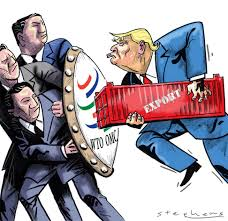
Trump’s disregard of international rules is clearly seen in his attacks on a broad range of treaties and institutions. I would argue none is more delusional than his frontal attacks on the WTO, the dispute resolution system and the Appellate Body. These were devised primarily by the United States. They are the central pillars of the global trading system today. They help establish and litigate global trade rules. The boy from Queens is now causing havoc in Geneva, Brussels, Tokyo, Seoul, and almost all other world capitals.
Of course, President Trump’s abuse of US trade legislation (in his tariff and trade wars), his pattern of bullying and threats, his disregard of domestic law in a broad range of domestic matters, and his dealings with Congress are related stories. His rejection of international rules and institutions has its roots in his shameless attacks on domestic US law and institutions. All of these affronts are directly related to Trump’s days in Queens as a landlord sued by many, including the US Department of Justice. These affronts continue today and are getting worse.
President Trump’s story has yet to play out on either the national or the international stage. His impeachment is already history. The 2020 presidential election is looming.
Good summary of President Trump’s current attack plan on the WTO by Bloomberg’s Terms of Trade today (February 14th, 2020). The long-standing Trump administration animosity towards the WTO and the existing global trading system is gaining steam and becoming more aggressive. This is alongside of the administration’s newer vengeful attacks in the domestic realm in the post-impeachment saga.
President Donald Trump has never been a fan of the World Trade Organization.
For years Trump has called the Geneva-based body the “worst trade deal ever” — largely because he believes the WTO helped China gain a competitive advantage over the U.S. and precipitated the loss of thousands of American jobs.
Trump’s trade chief, Robert Lighthizer, supports this view and has expertly poked at the organization’s weaknesses.
Under Lighthizer’s stewardship the U.S. has:
Collectively, these actions have thrust the WTO into the most acute existential crisis of its 25-year history.
But Trump may not be finished yet.
As Bloomberg reported this month, U.S. officials are now mulling America’s withdrawal from the WTO Government Procurement Agreement — a global trade alliance covering government contract opportunities worth $1.7 trillion.
U.S. withdrawal from the pact would effectively block most foreign, non-defense contractors from bidding on American public tenders. In turn, a wide range of U.S. businesses would lose access to a nearly $900 billion procurement marketplace offered by the GPA’s other 47 members.
Perhaps an even bigger blow would be a plan Trump insiders are said to be mulling to reset American tariff commitments at the WTO by increasing the tariff ceilings — or bound rates — agreed to by previous administrations.
The move stems from the Trump administration’s long-held frustration with the WTO’s principle of most-favored-nation (MFN) nondiscrimination, which requires members to offer the same tariff rates equally to all of the organization’s 164 members. In essence, MFN is the cornerstone of the WTO — and undermining it risks tipping over the entire ant farm.
“President Trump sees it only as a constraint on his ability to strike quick-and-dirty deals,” said Chad Bown, a senior fellow at the Peterson Institute for International Economics. “But take away MFN, and suddenly the entirety of benefits that the WTO provides begins to unravel, including those that Americans have enjoyed for decades.”
On one hand, these kinds of salvos against faceless bureaucrats in Geneva will be an easy sell at home for Trump’s core voters during an election year.
But defenders of the rules-based global trading system say dismantling it would cause a severe shock to the American economy. They argue that despite its flaws, the WTO provides businesses with the certainty to trade and expand their operations internationally. Ultimately, the results are robust export industries that create good jobs, and for consumers, diverse and low-cost products moving around the world.
Microsoft is a global technology leader, constantly driving innovation and transforming the digital landscape. With cutting-edge mobile applications and cloud solutions, the company enables users to work, learn, and enjoy entertainment wherever they are.
Products such as Office 365 and the Azure platform have revolutionized the way both businesses and individuals operate. Microsoft’s mobile solutions provide seamless access to essential tools, ensuring productivity and connectivity on the go.
Security remains a top priority for Microsoft. Regular updates and advanced protection technologies guarantee that users’ data stays secure, whether they’re managing business tasks or accessing personal information.
Committed to making technology accessible for everyone, Microsoft continues to innovate and grow. To explore the latest developments and learn more about their diverse range of products, visit the official website at Microsoft.
You must be logged in to post a comment.