RSS Feed
-
Recent Posts
Archives
- May 2026
- April 2026
- March 2026
- February 2026
- January 2026
- December 2025
- November 2025
- October 2025
- September 2025
- August 2025
- July 2025
- June 2025
- May 2025
- April 2025
- March 2025
- February 2025
- January 2025
- December 2024
- November 2024
- October 2024
- September 2024
- August 2024
- July 2024
- June 2024
- May 2024
- April 2024
- March 2024
- February 2024
- January 2024
- December 2023
- November 2023
- September 2023
- August 2023
- June 2023
- April 2023
- March 2023
- February 2023
- January 2023
- December 2022
- November 2022
- October 2022
- September 2022
- August 2022
- July 2022
- June 2022
- May 2022
- April 2022
- March 2022
- February 2022
- December 2021
- October 2021
- August 2021
- June 2021
- May 2021
- April 2021
- February 2021
- January 2021
- December 2020
- November 2020
- September 2020
- August 2020
- July 2020
- June 2020
- May 2020
- April 2020
- March 2020
- February 2020
- January 2020
- November 2019
- September 2019
- June 2019
- April 2019
- January 2019
- November 2018
- October 2018
- September 2018
- June 2018
- May 2018
- March 2018
- February 2018
- January 2018
- December 2017
- November 2017
- October 2017
- September 2017
- August 2017
- July 2017
- June 2017
- May 2017
- April 2017
- March 2017
- February 2017
- January 2017
- December 2016
- November 2016
- October 2016
- September 2016
- August 2016
- July 2016
- May 2016
- April 2016
- March 2016
- February 2016
- January 2016
- December 2015
- November 2015
- October 2015
- September 2015
- August 2015
- July 2015
- June 2015
- May 2015
- April 2015
- March 2015
- February 2015
- January 2015
- December 2014
- November 2014
- October 2014
- September 2014
- August 2014
- July 2014
- June 2014
- May 2014
- April 2014
- March 2014
- February 2014
- January 2014
- December 2013
- November 2013
- October 2013
- September 2013
- August 2013
- July 2013
- June 2013
- May 2013
- April 2013
- March 2013
- February 2013
- January 2013
- December 2012
- November 2012
- October 2012
- September 2012
- August 2012
- July 2012
- June 2012
- May 2012
- April 2012
- March 2012
- February 2012
- January 2012
- December 2011
- November 2011
- October 2011
- September 2011
Categories
Meta
-
Does the End of Globalization and Neoliberalism Mean Protectionism?

A good article appeared recently in Foreign Affairs arguing that global trade is now being changed by the end of globalization and the end of neoliberalism. I seem to agree with most of the arguments. But I’m concerned about how clearcut these propositions are and how inevitable they are. I recall the arguments of the early 1990’s concerning “the End of History.” Does the end of globalization mean a new regionalism or more protectionism? We’ll see. Here are some excerpts from this article.
- Both parties have until quite recently pursued policies … deregulating global finance, striking trade deals such as the North American Free Trade Agreement, welcoming China into the World Trade Organization (WTO).
- Encouraging American manufacturers to move much of their production overseas.
- Free-market globalism was of course pushed in large part by the powerful multinational companies best positioned to exploit it.
- But neoliberal policies also created immense inequalities within countries.
- Neoliberalism’s agnosticism about place is striking, given the origins of the political philosophy. It emerged in Europe in the 1930s, when nations were turning inward and international trade was breaking down.
- The notion that trade should be a handmaid to domestic policy interests fell out of favor during the Clinton administration, when the United States struck a series of trade deals and pushed for China’s entry into the WTO.
- What is clear is that globalization is in retreat, at least in terms of trade and capital flows.
- Muscular industrial policy will be increasingly common in the post-neoliberal world.
- Even in the United States, most Democrats and a growing number of Republicans believe that government has a role to play in supporting national competitiveness and resilience.
- As U.S. policymakers and business leaders seek to address these challenges, they must push back against conventional economic thinking.
- Instead of assuming that deregulation, financialization, and hyperglobalization are inevitable, they should embrace the coming era of regionalization and localization and work to create productive economic opportunities.
“After Neoliberalism – All Economics is Local.” Foreign Affairs (Oct. 2022).
Rethinking Trade Policy — Neoliberalism’s Shortcomings and Rethinking Globalization..

Another recent article lambasting the impact of neoliberalism on globalization and the critical need to rethink trade policy. I agree with most of the points made in the recent article in the New York Times. We have many more issues to think about today than just economic efficiency and cheap imports. Such as national security, data protection, effective global taxation, sustainable supply chains, domestic employment. All without spurring a 1930’s protectionism.
This is the challenge in formulating trade policy today. Involving both new national laws and the role of the WTO and other international institutions. Especially those that formulate new rules and juridical dispute settlement.
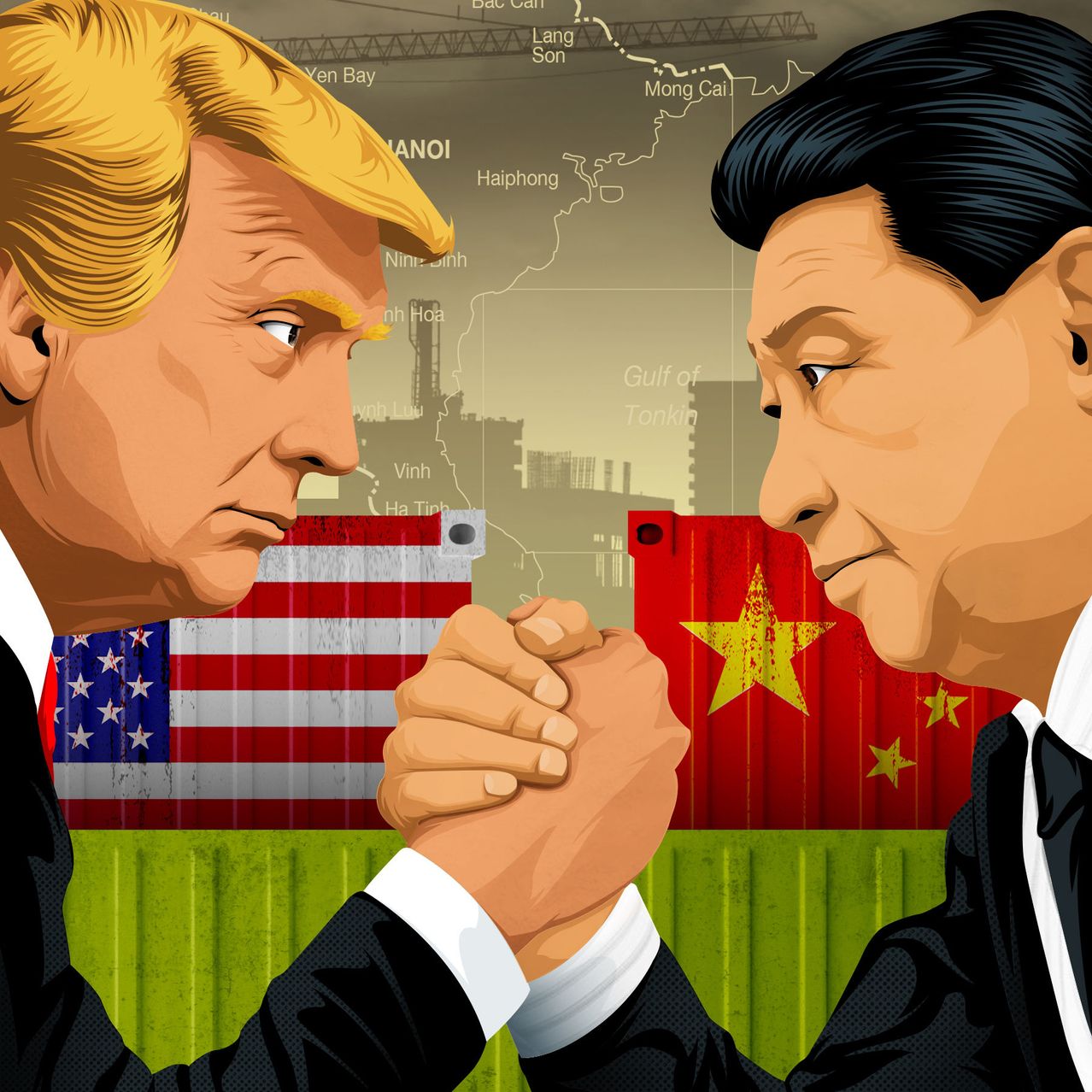
The Trump administration started to attack the global trading system with tariffs and insults toward the WTO and others. The Biden administration has continued this attack in a somewhat less hysterical manner and supporting legislation codifying various measures impacting industrial policy.
Here are a few excerpts from this morning’s article:
- Global institutions like the International Monetary Fund and the World Bank and later organizations like the World Trade Organization — groups that were essentially about connecting global finance, trade and business across borders — were influenced by neoliberal philosophies.
- They vigorously advocated the Washington Consensus, a series of economic principles derived from the tent poles of market liberalization and unfettered globalization.
- The Reagan-Thatcher revolution unleashed global capital by deregulating the financial industry, and global trade was fully unleashed during the Clinton era, with deals like NAFTA and the eventual accession of China into the W.T.O., which tipped the balance of policy interests between domestic job creation and global market integration toward the latter.
- The neoliberal philosophy is tapped out not only in the United States but also abroad — witness the backlash in Britain to Prime Minister Liz Truss’s ill-fated experimentation with trickle-down tax cuts.
- And complex supply chains resulted in any number of production disasters well before the global crises of the past few years.
- Meanwhile, free trade itself, which was supposed to foster peace between nations, became a system to be gamed by mercantilist nations and state-run autocracies, resulting in deep political divides at home and abroad.
- Trade policy is shifting to better consider labor and environmental standards, with an understanding that cheap isn’t always cheap if products are degrading the environment or being made with a child’s tiny hands.
- There’s also a rethink of trade in digital services to account for privacy and liberal values.
- So what now? How can we make sure that economic globalization doesn’t again run too far ahead of national politics? And how can we fix things in a way that doesn’t result in 1930s-style protectionism or a false fit of nostalgia for a bygone era?
- It’s up to those who care about liberal democracy to craft a new system that better balances local and global interests.
“Globalism Failed to Deliver the Economy We Need.” (October 23, 2022).
Is Nationalism Perverting Globalization? Yes. But in a Good Way.
Global trade relations are changing today. The rise of nationalism, more focus on national interest, and national security has redirected globalization from a stringent focus on economic efficiency to local concerns and domestic welfare. To me this is a redirecting of neoliberalism’s emphasis sole focus on efficient global transactions to a broader focus on the impact of global business on the local level — the domestic national level.
This is not a rejection of all global transactions or globalization but a call for a more balanced connection between local (national) needs and those of a globalized economy. A good piece in today’s Financial Times discusses many of these points. Here are some of those points made in that article.
- Today, it’s quite clear that the pendulum of history is swinging away from global economic integration.
- Today, we are entering a new era of localization. That doesn’t mean that all things global will fade. Quite the contrary — business, policymakers and society as a whole need a bit more focus on the local to ensure continued buy-in for globalisation.
- There will also be a rethink of trade rules, labor rights, and how to figure both the costs, as well as the benefits, of economic growth into the data that policymakers use to shape our world.
- But both parties now appreciate that place matters. After decades of a “winner take all” trend, in which the majority of prosperity has been located in a handful of cities and companies, look for business and policymakers to be more focused on ensuring that wealth and place are re-moored.
- This will come with costs — such as inflation. The old “efficiency” models, which assumed that people, goods and capital would move seamlessly to wherever they were needed, were cheap. Creating more opportunity at home, while still remaining connected to the global economy, will require building more resilient models.
- We have to start thinking outside the black box of conventional economics and look at the world in a more realistic and holistic way, tapping into other disciplines such as law and business.
- While Adam Smith, the father of modern capitalism, held that in order for free markets to function properly, participants needed to have a shared moral framework, the global economy today is made up of a huge number of nations with extremely different values and political systems.
- Ironically, the shift towards global market interests has led to exactly the kind of nationalism that the creators of institutions such as the IMF, the World Bank, and the World Trade Organization wanted to avoid.
- Restoring liberty meant restoring a decentralized economy that bred independent citizens and enabled local communities to be masters of their destiny, rather than victims of economic forces beyond their control.
- This sums up not only the founding principal of the country, but the core challenge of the new era — how to reconnect global markets and the value created within them to nation states.
“Guide to a Deglobalizing World.” (10.21.22).

Is Geopolitics Changing Trade Policy Today? — Yes, Absolutely (More from Business to National Interest Concerns).
Excellent piece in this morning’s Financia Times discussing trade policy and geopolitics, neoliberal globalism and global inequality, and global trade and peace. Here are some excerpts also discussing the WTO, China, and worker-based trade policies. I’m particularly interested in the rise of geopolitics and the role of law (and values) in global trade relations today.
- The fact that both Republicans and Democrats are rethinking trade policy says something important about our geopolitics.
- The idea that trade was primarily a pathway to global peace and unity, rather than a necessary way of balancing both domestic and global concerns, is over. We are entering a new era, in which concepts such as Francis Fukuyama’s “end of history” or Thomas Friedman’s “Golden Arches” theory are no longer relevant.
- Workers in our democracies have long understood that global trade without values-based rules to govern it made our people poorer and our countries more vulnerable. They have long known that it enriched the plutocrats, but not the people.
- Our system of neoliberal globalisation has created more wealth at a global scale over the past half-century than ever before. But there has also been huge growth in inequality within many countries.
- And there is research to show that the entities that have benefited most from the past several decades of globalisation have been multinational companies and the Chinese state — or more particularly, the people running them. Autocrats have done well too, often by using trade and commerce as weapons in geopolitical conflicts.
- And the west is certainly guilty of its own historical mercantilism and transnationalism. I’ve always thought that America’s embrace of China’s entry into the WTO had more to do with US corporate lobbying than any real belief in the possibility of political change.
- The point here is that the current system of economic globalisation isn’t going to magically dissolve political differences. We are heading towards a new, post-neoliberal paradigm in which values, rather than just “everyday low prices” as the Walmart retail slogan goes, become a more important consideration in economic policy decisions.
“Free Trade Has Not Made Us Free.” (Oct. 2022)
End OPEC Antitrust Immunity under the Foreign Sovereign Immunities Act? — Yes, Absolutely.
Antitrust immunity for OPEC and its members has been upheld under old case law for decades. This is very unfortunate.
There is no reason that such immunity ought to be extended to OPEC members in this century. Especially, when those actions imperil U.S. foreign policy, U.S national security interests, the U.S. domestic economy and the global economy.
The Foreign Sovereign Immunities Act (FSIA), enacted in 1976, and amended numerous times, allow actions against a foreign state on various grounds. Those include a state-supporter-of terrorism and more generally for international terrorism or tortious acts. I would argue that the raising or oil prices by Saudi Arabia falls within these categories. In the sense that they support Russia’s unlawful and terroristic war crimes in Ukraine. (This State Dept. should consider declaring Saudi Arabia a state-supporter-of-terrorism).
It is also very clear to me that OPEC nations actions fall within the more traditional category of price-fixing. We have held foreign corporations in criminal and civil actions responsible and liable for such extraterritorial, predatory actions as long as they have an impact in the United States. Of course, we also hold foreign states liable under the Foreign Sovereign Immunities Act for participating in commercial transactions and their tortious actions.
It is about time the Biden administration should consider submitting executive suggestions to federal courts when necessary, indicating that they should not find immunity to foreign states for their predatory actions.
Global commerce and geopolitics have come a long way from when the United States initially moved away from the notion of absolute sovereign immunity in the 1950s. When it adopted the restrictive approach to sovereign immunity in the Tate Letter of 1954, in the FSIA of 1976, and various amendments to the FSIA since then.
The newer and broader view of antitrust by the Biden administration, favored now by the FTC and the U.S. Dept. of Justice under President Biden, should embrace a more updated and aggressive view of U.S. international antitrust law and greater restrictions on sovereign immunity generally in order to support the U.S. national interest, including the welfare of U.S. consumers and workers.
There is no foreign policy reason why private actions or those by the Dept. of Justice should be barred by an atavistic view of governments participating in the global marketplace. A more robust implementation of or economic legislation can help implement our foreign policy. A more updated view would also help protect U.S. consumers and the U.S. economy in this tricky decade.
Are Export Controls the New Foreign Policy? Indeed, Are National Security Concerns Now Central to U.S. Trade Policy?

Good opinion piece by Thomas Friedman argues we are now taking on China and Russia and export controls is the critical instrument the U.S. is utilizing. And this new American foreign policy and national security strategy is focusing on semiconductor chips. In particular, he discusses the new set of export regulations that clearly targets China. Biden’s new annual national security strategy report released last weel clearly targets both China and Russia.
So, the question I have is the following: Are export controls the new foreign policy? Yes, in part. They are clearly coming into their own as central to implementing U.S. national interests and national security goals in a new era of global politics – where both China and Russia are the major concerns. Robust implementation of our trade laws generally is necessary to implement our foreign policy. Indeed, changes to CFIUS focusing on China, the recent adoption of computer chip subsidies, and tax credits for e-cars clearly indicate that a broader security – related trade strategy has become a central focus of U.S. foreign policy. (My concern now is how consistent are some of these policies with our obligations under the WTO as well as do they risk political and trade retaliation?)
“Thomas Friedman — China and Russia. (Oct. 12, 2002).
National Security Strategy Report. (Oct. 2022).
“How U.S. is Choking off China from Technology.” (Oct. 14, 2022).
“Trade has Become a Weapon.” (Oct. 14, 2022).
“Biden’s Trade Assault on China.” (Oct. 20, 2022).
The New “Economic Patriotism” in U.S. Trade Policy.
Trump’s toxic trade policies are well and alive. They are being furthered by Biden’s policies today, especially those now pushing industrial promotion in the name of national security and “economic patriotism.” The role of the Department of Commerce and CFIUS have become much more important during the Biden administration.
The dynamics of globalization have changed over the last twenty years and the geopolitical landscape has dramatically evolved. We do need a rebalancing of domestic / national security needs, especially those emerging since the global Covid pandemic, with the dynamic growth factors of global commerce. This includes assessing more carefully the inflationary impact of the U.S. dollar valuation on its exports.
However, many of the recent U.S. trade and investment policy responses have not been thought through sufficiently. Countries are already talking about protesting these protectionist policies by the Biden administration as being in violation of WTO trade rules and subject to WTO litigation. We’ll see.
Here are a few recent articles discussing the above.
“Investors are learning to Love Industry Again.” Financial Times (Oct. 3, 2022).
“U.S. Said to Plan New Limits on Tech Sent to Chinese.” Wall Street Journal (Oct. 4, 2022).
“Recent Legislation Expands Role of Government in Private Markets.” Wall Street Journal (August 13, 2022).
“GOP Needs to Leave Trump Behind on Trade.” Wall Street Journal (Oct. 3, 2022).
“Raimondo Drives Industrial Policy.” Wall Street Journal (Sept. 6, 2022).
“Post-Neoliberal Era Brings New Business Rules.” Financial Times (October 10, 2022).
Foreign Investment in Virginia — Why the Low ranking?

The inaugural special report on foreign investment in the U.S. by the Financial Times has just been released. Ranks the top cities. None are in Virginia. Six are in North Carolina. Seems to be a wakeup call for Virginia. The methodology focuses on workforce and talent, business environment, quality of life and openness. I am surprised about the absence of Virginia from this important ranking.
“The Best Cities for Foreign Invesment.” Financial Times (October 5, 2022).
U.S. Trade Policy (Biden and Trump) — Harmful and Back to the Future?
Trump’s toxic trade policies are well and alive. They are being furthered by Biden’s policies today, especially those now pushing industrial promotion in the name of national security and “economic patriotism.” The role of the Department of Commerce and CFIUS have become much more important during the Biden administration.
Recent U.S legislation expands support for semiconductors, restricts U.S. sales of chips to China, and further tightens both outward U.S. investment and inward investment into the U.S.
Yes, the dynamics of globalization have changed over the last twenty years and the geopolitical landscape has dramatically evolved. We do need a rebalancing of domestic / national security needs, especially those emerging since the global Covid pandemic, with the dynamic growth factors of global commerce. This includes assessing more carefully the inflationary impact of the U.S. dollar valuation on its exports.
However, many of the recent U.S. trade and investment policy responses have not been thought through sufficiently.
Some U.S. policies today echo those of the 1930’s and are disturbing. There is a sentiment today in the United States that is somewhat similar to the fearful and protectionist ones held by many in the 1980’s toward ‘Japan Inc. ‘ This is clearly an unfortunate throwback.
Countries are already talking about protesting these protectionist policies by the Biden administration as being in violation of WTO trade rules and subject to WTO litigation. We’ll see.
Here are a few recent articles discussing the above.
“Investors are learning to Love Industry Again.” Financial Times (Oct. 3, 2022).
“U.S. Said to Plan New Limits on Tech Sent to Chinese.” Wall Street Journal (Oct. 4, 2022).
“Recent Legislation Expands Role of Government in Private Markets.” Wall Street Journal (August 13, 2022).
“GOP Needs to Leave Trump Behind on Trade.” Wall Street Journal (Oct. 3, 2022).
“Raimondo Drives Industrial Policy.” Wall Street Journal (Sept. 6, 2022).
“Post-Neoliberal Era Brings New Business Rules.” Financial Times (October 10, 2022).


You must be logged in to post a comment.