

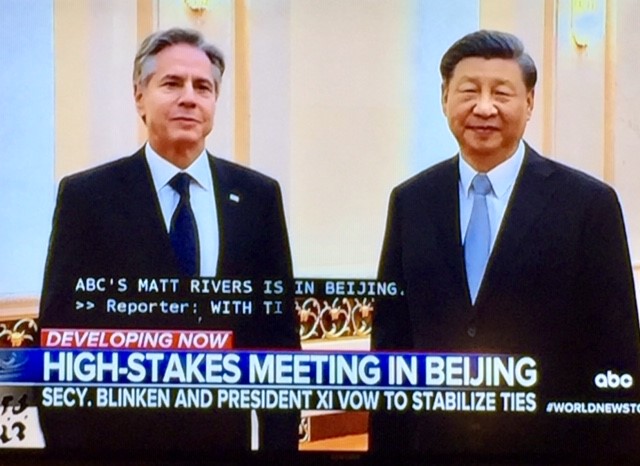
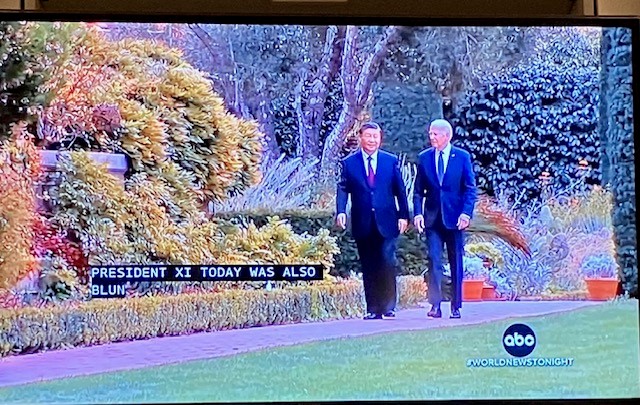
The recent visit by the U.S. Treasury Secretary Yellin this month (April) to China was not very productive. This blog provides quotes from recent articles commenting on U.S.-China trade relations focusing on the U.S. legal aspects.
As I said previously, to me, recent developments and comments highlight the broad and disturbing new aspects of geopolitics and trade. This is especially the situation as we enter a new presidential election in the United States and seemingly a newer era of geopolitics. These development raises newer issues of national security, national industrial policies, regional arrangements, among a host of other trade-related issues (deglobalization / reglobalization, supply chains, etc.).
Legal and political issues today concern, among others, continued U.S. trade and investment restrictions (inward and outward investment controls), U.S. tariffs, U.S. export controls, manufacturing subsidies (chips, EV’s, batteries), cross-border-mergers, multinational corporate operations, the general decline of WTO support and a rules-based system by the U.S. — and a general administration hostility demonstrated by both the Trump and Biden administrations — as well as by Congress. And of course, fears concerning a Trump 2.0.
-
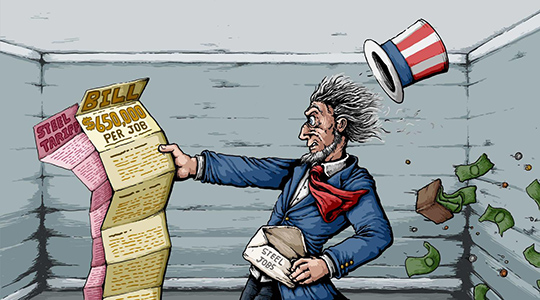
“President Biden called for raising tariffs on imports of steel and aluminum from China, beginning what is expected to be a broadside of protectionist steps against Beijing …. Biden’s move comes as the administration is studying raising tariffs on a range of Chinese exports to the U.S., including electric vehicles, batteries and solar products …. China’s response to the backlash has been to decry rising protectionism, arguing their exports are the result of market dynamics …. The U.S. Trade Representative will also open an investigation into Chinese shipbuilding practices.” “New Biden Tariff on Chinese Steel.” Wall Street Journal (April 17, 2024).
-
“Under the committee’s (CFIUS) statutory analytical framework, Nippon Steel’s acquisition of U.S. Steel poses no national-security risk to the U.S. …. Nothing in this steel-making transaction risks compromising cutting-edge technology, critical infrastructure, sensitive data or the defense industrial base’s supply chain …. Nippon Steel’s investment in U.S. Steel promises to enhance American production capacity and strengthen geopolitical ties between the U.S. and Japan in the face of Chinese aggression. Japan is of indispensable strategic importance, not least because of its supporting U.S.-led export controls.” “CFIUS and U.S. Steel Acquisition.” Wall Street Journal (April 16, 2024).
-
“The panel that reviews foreign investments (CFIUS) will get new powers to obtain information and levy higher fines under a proposal from the Treasury Department, a move that comes amid intense official scrutiny on U.S.-China investment flows. The proposal announced Thursday would allow Cfius, the Committee on Foreign Investment in the U.S., to more easily subpoena companies involved in corporate acquisitions and to expand the types of information it can require they turn over …. President Biden in 2022 ordered Cfius to scrutinize transactions that could give adversaries access to critical technologies or endanger supply chains and personal data.” “Treasury Proposal and CFIUS.” Wall Street Journal (April 12, 2024).
-
“The changes in the NTE symbolize a larger shift in U.S. trade philosophy. The first example from this year’s NTE concerns foreign barriers to digital trade. In effect, USTR has withdrawn from its previous position on data localization and digital trade more generally, prioritizing national security interests over free trade principles …. The second example is its pullback on opposing import substitution policies—policies that aim to replace foreign imports with domestic production. Much like the digital trade barriers issue, this pullback seems to be in line with the Biden administration’s overall direction …. These actions are taken in the name of national security and equity—two worthwhile pursuits that aim to address some of today’s most pressing challenges. However, in adjusting its trade agenda so radically to fit the Biden administration’s policy picture, the United States risks running into major issues.” “2024 National Trade Estimate.” CSIS (April 5, 2024).
-
“As Washington escalates its raft of trade controls against China, the US Uyghur Forced Labor Prevention Act is likely to be a key piece of legislation impelling the momentum …. The US is mulling an end to the de minimis provision that allows shipments valued under US$800 to enter the world’s largest consumer market, a move largely aimed at Chinese exports …. The Biden administration has never quite succinctly enunciated its trade doctrine. Reindustrializing the country, de-risking, and an emphasis on labor rights and the environment have been moving parts of a vast policy machine …. A renewed focus on supply chains, which have become ever more complex and specialized as globalization has advanced, is at the core of this otherwise disparate agenda …. The Entity List, which had 20 companies until June 2023, has now grown to 30.” “U.S. Sets Trade Policy with China.” Hinrich (May 19, 2024).
-
“President Biden has intensified efforts to shield American industries from foreign competition in an election year …. The Biden administration has recently signaled they are preparing new tariffs and other measures to block cheap electric vehicles and other clean-energy imports from China. Those efforts, combined with new limits on American investment in China, restrictions on exports of advanced technology and subsidies for the U.S. semiconductor industry, have fueled major tensions with China …. The politics behind Mr. Biden’s strategy appears clear: When it comes to manufacturing, the president wants to leave no doubt that he is as much ‘America First’ as Mr. Trump, if not more.” “Biden’s Trade Moves.” New York Times (April 11, 2024)
-
“The Biden administration’s August 2023 executive order restricting a subset of outbound investment to China was an important step …. Washington must expand investment restrictions to include critical and emerging technologies …. It must also put an end to U.S. financial firms’ disturbing practice of offering publicly traded financial products, such as exchange-traded funds and mutual funds, that invest in Chinese companies that are on U.S. government blacklists. Using the current export controls on advanced semiconductors as a model, the Department of Commerce should reduce the flow of critical technology to China by introducing similar export bans.” “Competition with China.” Foreign Affairs (May / June 2024).
-
“The prospect of additional American tariffs comes as China has been seeking a rollback of some of the ones that Washington imposed on Chinese imports during the Trump administration …. It would “not be acceptable to the United States” for China to continue to pursue an export strategy that hurts American workers …. As the U.S. election approaching and former President Donald J. Trump proposing sweeping new tariffs, it was already unlikely that existing import levies would be lowered.” “China and Yellin Talks.” New York Times (April 8, 2024).
-
“Globalization itself took off in the 1990s, as technological advances made it easier and cheaper to do business internationally. China’s admission to the World Trade Organization in 2001 seemed to cement the era …. For the W.T.O. (today), “reglobalization” is a more inclusive vision …. Russia, China, Iran and their allies, by contrast, tend to use the term to describe a new world order in which they play a greater role.” “Reglobalization.” New York Times (April 7, 2024).
-
“Yet in the face of change, America’s two protectionist presidents (Trump and Biden) retreated. Their formula has been to tax trade through higher tariffs, restrict the use of foreign inputs for American businesses …. The Biden administration recently compounded its mistakes by pulling back from negotiations in the World Trade Organization and the Indo-Pacific Economic Framework for Prosperity to define the rules of the future digital economy …. (Polls) show that the vast majority of Americans favor more trade and openness. For now, the best hope is putting the brakes on the Biden-Trump race toward obsolescence.” Zoellick, “The Biden-Trump Nostalgia.” Wall Street Journal (April 3, 2024).
-
Beijing has gone to the World Trade Organization to challenge the Biden administration’s signature Inflation Reduction Act …. China challenging tax credits that support US clean energy producers for breaking WTO rules …. When it comes from China, protectionism is understood to be the status quo. The rest of the world seems to simply accept that this is the starting point of China’s state capitalism .… The entire nature of China’s political economy goes against the free trade assumptions of the WTO, not to mention the Washington Consensus. “China’s Hypocrisy on Trade.” Financial Times (April 1, 2024).
-
“Chinese factories are flooding global markets …. That helps the Federal Reserve fight against inflation. But cost American manufacturing jobs …. and Biden administration’s election-year hopes.” “Chinese Imports.” Washington Post (March 31, 2024).
-
“A possible Trump victory in the 2024 election is not delighting oil and gas executives … Fossil fuel firms have found a lot to like in President Biden’s signature climate law, the Inflation Reduction Act, which Trump has vowed to unravel. The law offers lucrative tax credits for companies to capture and store carbon dioxide — subsidies that several oil giants are eager to exploit, even as they pump record amounts of crude oil and post near-record profits. “Big Oil, Trump and Trade War.” Washington Post (March 30, 2024).









 Stuart Malawer

You must be logged in to post a comment.