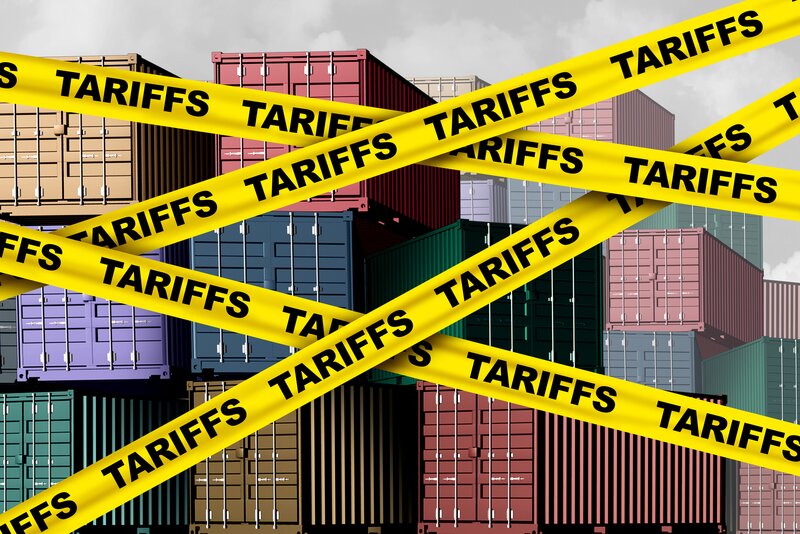
A year since the “Liberation Day Tariffs” were announced, the war with Iran is making the trade war more difficult — Even more so after the recent Supreme Court decision declaring those tariffs illegal. The trade war has not increased factory employment and only threatens us with more inflation. The Iran war has not helped. Many experts consider it illegal and involving war crimes. President Trump is continuing to impose new tariffs. Most recently under national security Section 232. All of this will certainly play out in the midterm elections. We’ll see ……
………………………………………………….
“The real war (with Iran) makes the trade war harder to win.” M. Lynn, Trump is breaking an axiom of war. Why no one warn him. Washington Post (March 24, 2026.
“President Trump’s relationship with the Supreme Court has never been more toxic. Now, it risks getting worse. After the court’s rejection of Trump’s tariffs provoked a new level of hostility from the president, the justices are set to consider a pillar of his immigration crackdown: limiting U.S. citizenship. Trump seems to be bracing for defeat.” J. Romoser, Birthright Citizenship Case Pushes Trump’s Relationship With Supreme Court to Brink. Wall Street Journal (March 29, 2026).
“One year after President Donald Trump stood in the White House Rose Garden and announced the highest U.S. tariffs (Liberation Day Tariffs) in nearly a century, the number of factory jobs is down and inflation is up.” D. Lynch, Trump Has Reshaped the Global Economy – With Mixed Results. Washington Post (March 29, 2026).
“Now, almost exactly a year after President Trump declared “Liberation Day,” companies of every size are wrestling with uncertainty about when, how – and even if – they will get refunds.” L. Radnofsky, L. Wheeler and S. Nassauer, Tariffs put businesses in crisis. Waiting for the refund could be worse. Wall Street Journal (April 1, 2026).
“The U.S. will impose tariffs of as much as 100% on branded pharmaceuticals, the White House said Thursday, though nations or drugmakers that strike deals with the Trump administration or commit to build manufacturing facilities in the U.S. can receive lower levies …. The pharmaceutical tariffs will be imposed under Section 232 of the Trade Expansion Act of 1962, which allows the president to levy tariffs to address national-security risks. Those are separate from Trump’s so-called reciprocal tariffs, which the Supreme Court struck down in February, and the 10% global tariff that Trump imposed to replace the invalidated levies.” G. Bade and X. Martinez, Trump administration unveils up to 100% tariff on branded drugs. Wall Street Journal (April 2, 2026),
“More than 100 experts on international law have signed an open letter expressing “profound concern” about what they see as “serious violations of international law and alarming rhetoric” by the United States, Israel and Iran in the war …. The war as a whole has been broadly denounced in the United States as illegal by critics who point to its lack of authorization from Congress or the United Nations Security Council …. The experts’ letter expressed particular concern over evidence that a U.S. missile struck a girls’ elementary school …. The strike likely violates international humanitarian law, and if evidence is found that those responsible were reckless, it could also be a war crime.” A. Taub, Legal experts express concerns over ‘violations of international law’ in the war. New York Times (April 2, 2026),


 Stuart Malawer

You must be logged in to post a comment.