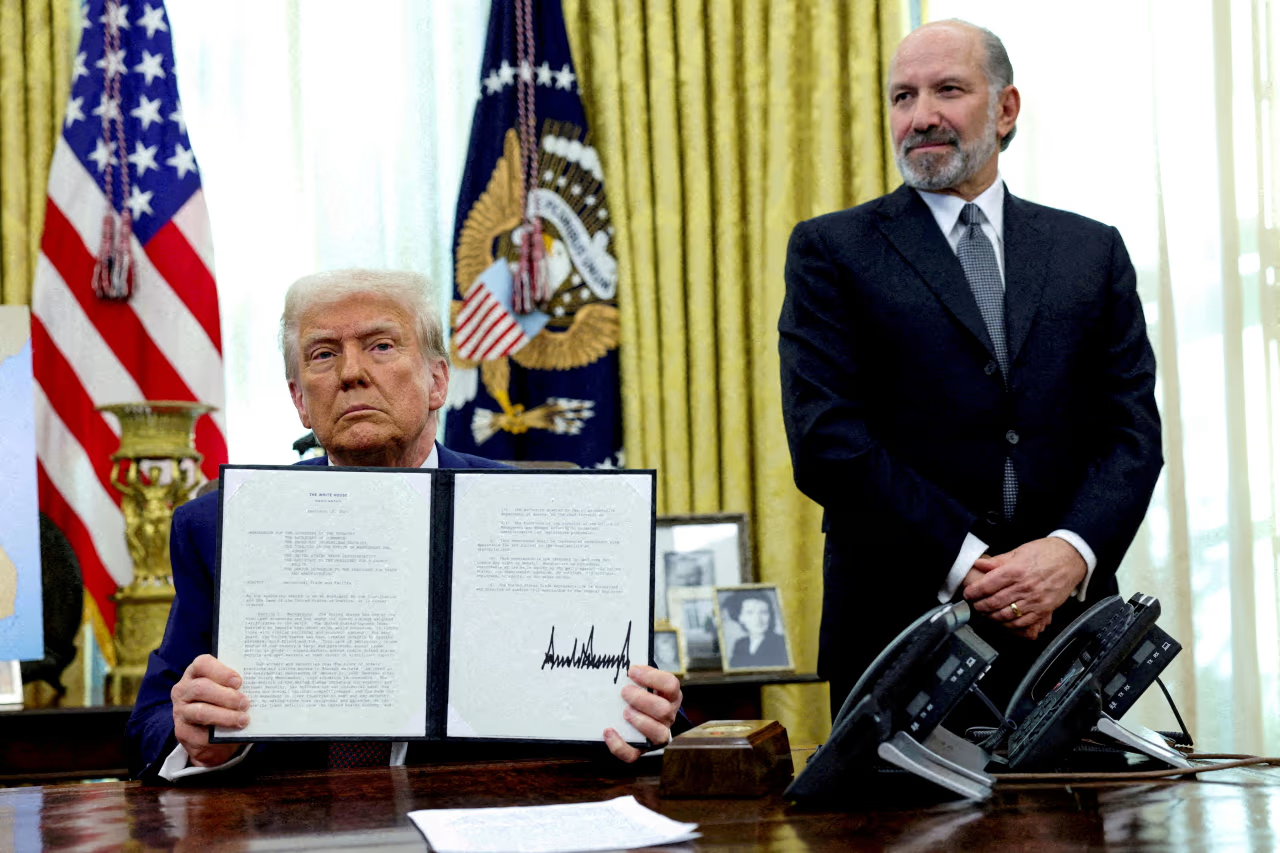
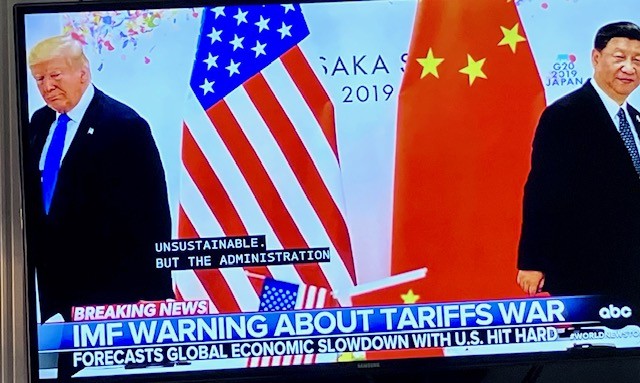
From farmers in the Midwest to communities across the Deep South and much of the rest of the country, tariffs emerged as a major political liability in the midterm elections. They have contributed to inflation, while producing little evidence of significant new investment or employment. Other trade sanctions have yielded similarly disappointing results. Meanwhile, the global oil companies appear to have been among the few major beneficiaries of the war with Iran, reaping extraordinary profits from higher oil prices.
The post-midterm period will likely see Democrats intensify their opposition to tariffs, seek to restore congressional authority over trade policy, and launch broad congressional investigations. Trump’s continuing commitment to protectionism reflects an increasingly defensive, Alamo-like confrontation with his political opponents, economic realities, and much of the international community. This confrontational approach has long been a defining characteristic of his political identity.
But these issues are only part of a much larger problem: the broad pattern of alleged corruption, conflicts of interest, and complicity surrounding Trump, his family and associates, his powerful technology and corporate allies, and, regrettably, even some of the nation’s most prominent law firms. These entanglements, combined with what critics regard as profound failures of judgment and governance, have produced far-reaching and deeply troubling consequences for the country, its institutions and our foreign policy (in particular our military and trade alliances).
Fortunately, federal and state courts have served as a significant, if imperfect, bulwark against executive actions challenged as violations of the Constitution, federal law, and international legal obligations. Congress, however, particularly its Republican leadership, has largely failed to exercise meaningful oversight or assert its constitutional authority. The midterm results suggest that this reluctance to act has carried a substantial political cost. Meanwhile, potential professional misconduct complaints against departing Trump administration lawyers, including possible proceedings before disciplinary authorities in Virginia, Washington, D.C., and New York, could create further legal and professional consequences.
Taken together, these developments point toward two years of increasingly bitter political, constitutional, and institutional conflict, with profound implications for U.S. domestic and foreign policy, national security, and America’s standing in the world. The international system itself will face mounting pressure to reconsider, rebuild, and strengthen the trade and political institutions that have underpinned global stability for decades.
……………………………………………………….
“Of the many losers in this year’s midterm election, one stands out: Trump’s populist economic platform. Many Republicans have always known that Trumponomics is a false promise. On Election Day, America showed that it agrees …. The administration can’t even argue that its tariffs have brought jobs and manufacturing back to America. Look at steel tariffs, initially imposed in Trump’s first term The nation has seen a large increase in steel prices, though, and that has driven up the costs of things such as housing and canned food.” “TheTariffs Were a Mistake.” (Nov. 6, 2026).
“Democrats are preparing to challenge Trump’s signature tariff policy as soon as they take power in the next Congress. Democratic leaders plan to speed legislation to the House floor that reasserts Congress’ authority over trade. Democrats such as Rep. Jamie Raskin are also laying the groundwork to launch tariff-related investigations. Trump’s tariffs were already under pressure: They are being challenged in multiple lawsuits, and some Republicans have distanced themselves from the duties on Canada and others …. If picked as speaker, Jeffries would speed legislation to the House floor that reasserts congressional authority over trade. Democrats are also laying the groundwork for investigations into Trump’s tariffs, which the party folded into its winning campaign message linking high costs with alleged Trump world corruption …. The administration is already embroiled in multiple lawsuits challenging different parts of the government’s tariff policy …. Congress, not the president, holds the power to levy taxes under the U.S. Constitution. Over decades, the legislative branch has ceded some of those powers to the executive. But Trump has asserted virtually unchecked tariff powers – which Democrats say they are intent on clawing back …. Despite their blowout, the party will still lack a 60-vote filibuster-proof majority in the Senate, giving Republicans a crucial tool to block legislation even in their diminished state …. Since taking office in January 2025, Trump has hiked tariffs on nearly every country on the planet, leading to multiple protracted trade wars, most notably against Canada and China …. What’s more, about $138 Billion ,,, has been refunded since the Supreme Court ruling in February. Nearly $20 billion in tariff collections are still set to be refunded. “How Democrats will try to end Trump’s tariffs.” CNBC (Nov.10, 2026).
“It is far too soon to proclaim the rebound of American free trade. It is not too early to declare protectionism’s failure. The backlash against Trump’s tariffs played a key role in last week’s Democratic tsunami. Even in Mississippi, which on Wednesday confirmed it had elected its first Democratic senator since 1982, anti-tariff sentiment played a role …. Democrats are not about to convert to free trade. They will try to claw back some tariff authority from a trigger-happy Trump but will not be pushing any time soon for a revival of the World Trade Organization …. Donald Trump has taught the world why tariffs are useless, the world has adapted surprisingly well to America’s protectionist turn. Unlike in the 1930s, when the Smoot-Hawley Tariff Act triggered a tit-for-tat spiral that helped demolish what was left of the Treaty of Versailles, the rest of the world carried on making trade deals. “US protectionism is a bust — Mississippi edition.” Financial Times(11.14.26).


 Stuart Malawer


You must be logged in to post a comment.