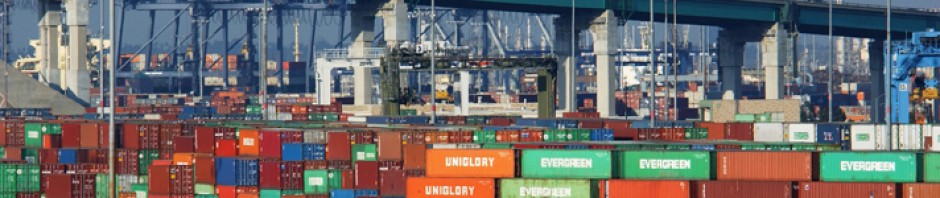

Two outstanding pieces appeared today in the New York Times and the Wall Street Journal — both assessing critically Trump’s tariff policies and focus on geopolitics and national security in economic relations. Namely that his tariff policies have been a total failure and blindly promoting national security concerns over economic efficiency is questionable (if not wrong).
“During his first term, Mr. Trump weaponized tariffs in response to concerns that a trading system lacking reciprocity — with China, in particular — left the United States at a disadvantage. In his second term, his list of targets has expanded enormously …. Corporations will accelerate the overhaul of their operations in a world where artificial intelligence is already driving change. The game theory of global commerce will force many companies to continue to replace just-in-time production strategies with just-in-case ones. Backup supply chains will be more prevalent; so will reshoring factories to be nearer to their major consumers. Expect also the proliferation of chief geopolitical officers or chief geoeconomic officers as boardrooms integrate rigorous national security and industrial policy issues into their corporate strategies …. The transition from an era driven by economic efficiency to one defined by geoeconomics and economic statecraft is no longer theoretical. It is the new operating system for the global economy and its markets. Those who fail to change risk being caught off guard by sudden policy shifts, punitive tariffs and systemic fragmentation.” “Geopolitics now, not Economic Efficiency.” New York Times (7.11.26).
“This is a deflection from the dismal reality that his border taxes are raising costs and have failed to usher in a manufacturing renaissance …. But the President is right that his tariffs are at work—in destroying U.S. jobs and raising prices. The U.S. has lost some 75,000 manufacturing jobs since January 2025, including 25,900 in motor vehicle and parts production. Manufacturing jobs have been declining since early 2023, so not all of these job losses stem from Mr. Trump’s border taxes …. Trump’s Section 232 national security tariffs on autos and parts have cost $35.2 billion through April of this year, and his steel and aluminum tariffs another $17.5 billion, according to U.S. government data. Mr. Trump and his advisers claim that foreigners pay his border taxes, but the evidence shows that U.S. companies, workers and consumers are picking up most of the tab…. The uncertainty hanging over the extension of the U.S.-Mexico-Canada trade agreement is delaying some investments since businesses don’t know what the trade rules or tariffs will be in a few years—or even tomorrow with Trump. His trade oscillations and border taxes are a major reason the economy hasn’t performed as well as during his first term, and why Americans are so unhappy.” “How Trump’s Tariffs Really Work.” Wall Street Journal (7.11.26).


 Stuart Malawer

You must be logged in to post a comment.