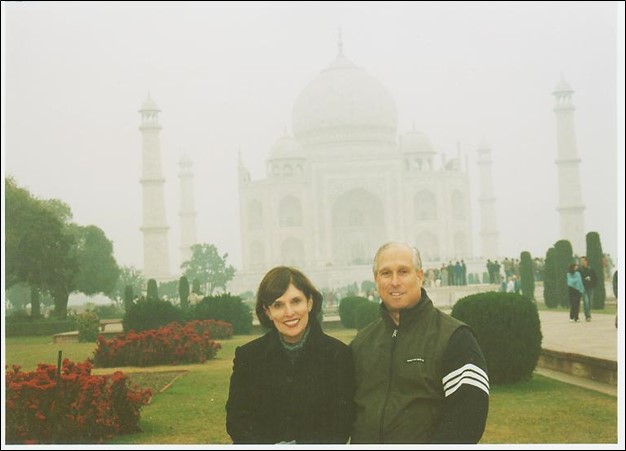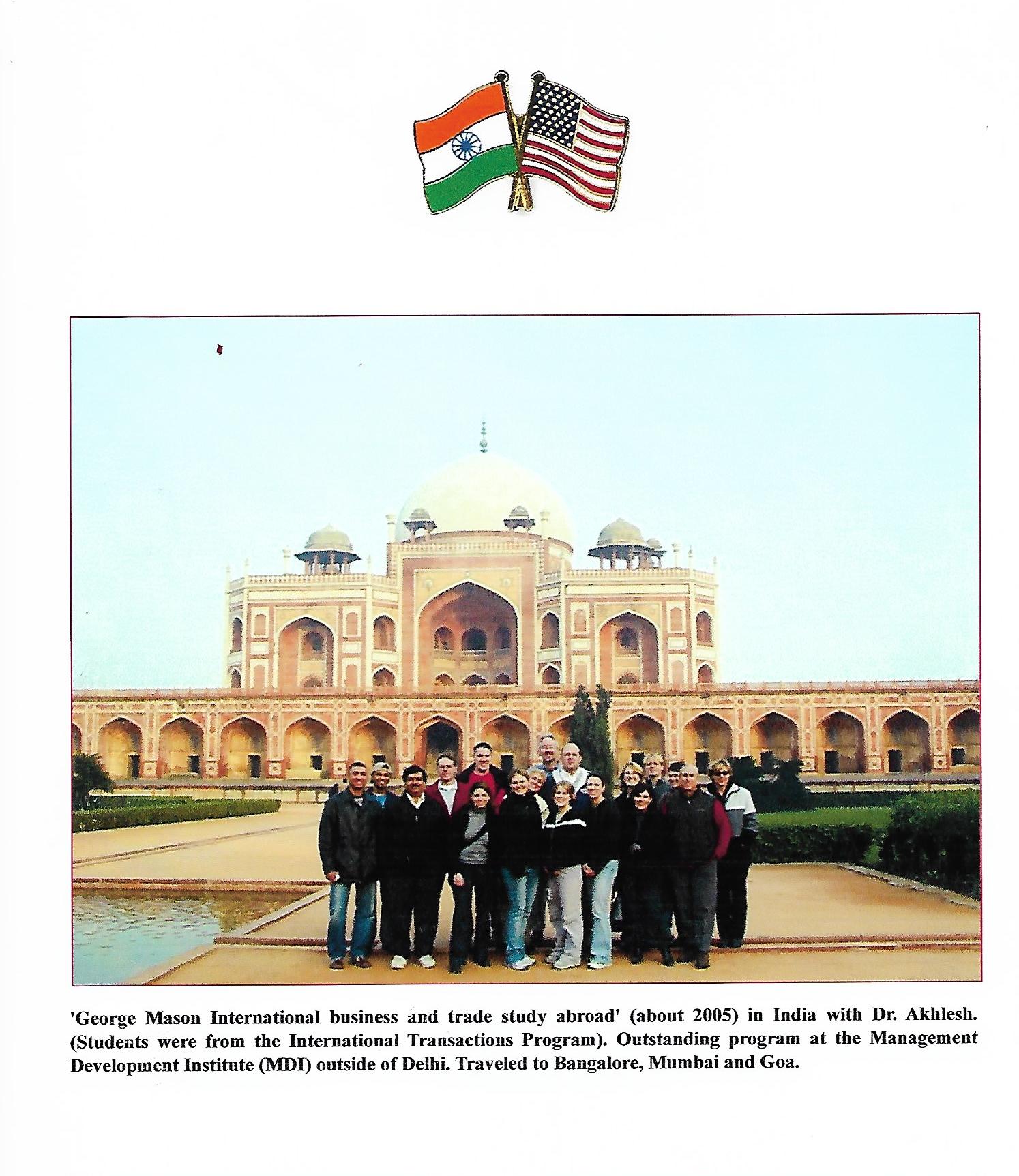
Two Awards 25 Years Apart — 2000 GMU Faculty Member of the Year and 2024 Va General Assembly (Public Service).

     Proud to have received two awards over the past 25 years. One in 2000 and one recently this year.  This represents the last 1/2 of my teaching career in Virginia. The first award was the “Distinguished Faculty Member of the Year Award“(2000) and the second for public service to the Commonwealth of Virginia (2024) for membership on two state boards as a gubernatorial appointee concerning trade and economic development. This award was a unanimous and bipartisan joint resolution of the Virginia General Assembly. Glad to have been a part of the George Mason community (law school and public policy) over the years and a gubernatorial appointee by Virginia governors Kaine, McAuliffe, McDonnell and Northam (and as a delegate on trade missions with Warner).


Leave a comment

TRUMP & TARIFFS 2.0 — BUCKLE UP.

My new article … Malawer, “Trump, Tariffs and China.” Journal of East Asia and Internationa Law (December 2024).

See also: List of Article by Stuart Malawer as to U.S. – China Trade Relations.

Leave a comment

TRUMP & NEW TARIFFS — CRONY CAPITALISM, CHANGING THE TRADE SYSTEM AND DISREGARD OF INTERNATIONAL LAW.

      Trump’s announcement of proposed tariffs on Mexico, China and Canada for his first day in office is signaling no uncertain terms his contempt for treaties, international law, the global trading system (to change it) and a return to crony capitalism in U.S. trade and tariff formulation and implementation.  Trump will be picking economic and diplomatic fights with friends and foes — for both economic and non-economic reasons. The next four tears are going to be chaotic and not good for either the U.S. or the global trading system and its institutions.

     Additional problems relating to trade will undoubtedly emerge, including changes in currency policies of both the U.S. and other countries, leading to currency wars (in addition to tariff wars).  Trump’s proposed movement of leadership over tariff issues to the Department of Commerce away from the USTR, contrary to the initial Congressional intent in forming the USTR decades ago, signifies to me a focus on corporate capturing of trade policy — in contrast to accepting a broader national view for US trade policy. In the meantime the Biden administration is still imposing newer export controls on chips to China. Undoubtedly, retaliation (such as restrictions on export of rare earth minerals or sale of US Treasuries) will occur sooner ha later.

“Trump said that he would impose tariffs on all products coming into the United States from Canada, Mexico and China on his first day in office, a move that would scramble global supply chains and impose heavy costs on companies that rely on doing business with some of the world’s largest economies …. Taken together, the tariff threats were a dramatic ultimatum against the three largest trading partners of the United States, and a move that threatens to sow chaos in America’s diplomatic and economic relationships …. Mexico, China and Canada together account for more than a third of the goods and services both imported and exported by the United States …. Imposing tariffs on Canada and Mexico would also violate the terms of the North American trade agreement that Mr. Trump himself signed in 2020, called the United States-Mexico-Canada Agreement.” “Trump and Tariffs in China, Mexico and Canada on First Day.” New York Times (11.26.24).

“The levies (would violate USMCA) could be imposed using executive powers that would override the USMCA, the free trade agreement Trump signed with Canada and Mexico during his first term as president.” “Trump and Tariffs – China, Mexico and Canada.” Financial Times (11.26.24).

“The major question is whether the threats are a negotiating ploy to wring concessions on trade and other policy priorities from U.S. trading partners, or the start of a sustained campaign to reshape global trade and the American economy …. The threatened tariffs on Mexico and Canada are the bigger surprise, and suggest Trump is eager to reopen the U.S.-Mexico-Canada Agreement, a free-trade accord that came into force in 2020. The USMCA replaced the decades-old Nafta pact, which Trump repeatedly described as the “worst trade deal ever made” …. His tariff threats suggest Trump is seeking to include immigration, security and drugs in a negotiation that usually revolves only around trade, as well as accelerate a planned review of the USMCA scheduled for 2026. “Trump Threatens Tariffs.” Wall Street Journal (11.26.24).

“U.S. trade law gives the executive branch broad discretion in tariff-setting, including the ability to grant exemptions in special cases. So you apply for one of those exemptions. Will your request be granted? …. Trump imposed significant tariffs during his first term, and many businesses applied for exemptions. Who got them? A recently published statistical analysis found that companies with Republican ties, as measured by their 2016 campaign contributions, were significantly more likely (and those with Democratic ties less likely) to have their applications approved …. But that was only a small-scale rehearsal for what could be coming …. The tariff proposals Trump floated during the campaign were far wider in scope and, in the case of China, far higher than anything we saw the first time around; the potential for political favoritism will be an order of magnitude greater…. As I understand it, the term “crony capitalism” …. Time will tell. The evidence suggests that the rules for how to succeed in American business are about to change, and not in a good way.” “Crony Capitalism and Trump Tariffs.” New York Times )11.2524).

“The legitimacy of the international campaign to deter Russian aggression is based on international law, with the ICC case against Putin as a centerpiece …. The emerging clash between the US and its allies over Israel is part of a much broader argument about the future of the world order …. Trump is turning the US into a revisionist state that is challenging every element of the liberal international order it once built: free trade, openness to migration, multilateralism, security alliances, solidarity between democratic nations and the protection of human rights,” “Israel, Western Alliance and International Law.” Financial Times (11.25.24).

“Well, here we go. Trump is still two months from returning to the White House, but he’s already wielding tariffs as an all-purpose bludgeon to achieve his political and foreign-policy goals. Markets will have to get used to it because this is going to be Mr. Trump’s second-term method, no matter the economic and strategic ructions …. This is an extraordinary use of tariffs, but Mr. Trump is going to use this threat often in his second term …. It’s also possible that Mr. Trump views tariffs not merely as a tool for ad hoc negotiation but as a lever to remake the entire global trading system. In that case he’ll try to build high tariff walls in an attempt to force U.S. and foreign companies to build nearly everything in America. The economic and political harm from that strategy is for another day, but investors can’t rule it out and members of Congress would be wise not to give him that power.” “Trump and Tariff Bludgeon.” Wall Street Journal (11.27.24).

“Trump has made it clear that he believes a confrontation with China over trade and technology is inevitable. In the first Trump administration, the Chinese government took mostly symbolic and equivalent measures after U.S. tariffs and trade restrictions. This time, China is poised to escalate its responses …. Since 2019, China has created what it called an “unreliable entity list” to penalize companies that undermine national interests, introduced rules to punish firms that comply with U.S. restrictions on Chinese entities and expanded its export-control laws. The broader reach of these laws enables Beijing to potentially choke global access to critical materials like rare earths and lithium …. The Chinese government will use supply chains as a weapon to advance their interests.” “China Trade Weapons in Response to Trump.” New York Times (Nov. 27, 2024).

“But character is destiny. An administration of narcissists will be a snake pit, in which strife and self-destructive scandal will snuff out effective action. Running things is hard, and changing things is harder, and it’s rarely done well by solipsistic outsiders …. What kind of person do we want our children to become — reformers who honor their commitments to serve and change the institutions they love or performative arsonists who vow to burn it all down?” “The Moral Challenge.” New York Times (11.28.24).

The Biden administration announced broader restrictions on advanced technology that can be sent to China, in an effort to prevent the country from developing its own advanced chips for military equipment and artificial intelligence …. The rules advance measures the Biden administration issued in October 2022, and again in October 2023. They have been the subject of fierce lobbying by both national security hawks eager to crack down on China and the chip industry …. Shipments of chip-making equipment to China from firms like ASML in the Netherlands and Tokyo Electron in Japan have surged in recent years, as those companies have stepped in to provide China with the technology that U.S. companies cannot.” “New Biden Controls on Chip Exports to China.” New York Times (12.3.24).

“President-elect Donald Trump has introduced a momentous change to international trade relations ….   The world trading system survived special deals in the China Phase I agreement in the first Trump administration, and it would survive a special deal with more European purchases from the United States of liquefied natural gas or military equipment …. What should be of more concern is the spread of one-off trade deals as the new normal. A deal acceptable today might not be tomorrow …. Power can be used to build something or to destroy something. In 1971, President Nixon imposed a 10 percent import surcharge. It led ultimately to the reform of the international monetary system and to a major round of multilateral trade negotiations. Power, however, can equally bring chaos, in which case, no economy will benefit.” “Trump Trade – Demands, Not Rules.” PIIE (December 3, 2024).

“Trump said he would impose 100% tariffs on members of the Brics group—whose members include Brazil, Russia, India, China and South Africa—if they create their own currency or seek to replace the U.S. dollar as the main global trade currency …. The pursuit of alternative currencies and methods of settling trade without the dollar risks undermining the U.S.-led international financial plumbing,” “Trump’s Currency Threats (Brics).” Wall Street Journal (December 4, 2024).

“Trump’s threatening retaliation against the unlikely creation of a BRICS currency only reinforces the rest of the world’s concerns about the U.S. willingness to wield dollar dominance as an economic and geopolitical weapon ….. The dollar has been the world’s dominant currency for about a century and has served as the world’s reserve currency since the end of World War II. It makes up the majority of foreign exchange reserves held in global central banks and is widely used in international transactions such as trade and loans.” “Trump’s Currency Threats (Brics).” New York Times (December 5, 2024).

“Trump’s defense of the dollar is a window into how he thinks the U.S. should exercise its economic power. That power, he argues, has been undercut by its excessive use of financial sanctions that encourage other countries to avoid using the dollar …. Tariffs are less likely than sanctions to discourage use of the dollar. They can be calibrated, whereas sanctions are usually all or nothing …. But tariffs have disadvantages. Like sanctions, if overused, they can drive down trade so much the U.S. has no leverage left.” “Trump and Economic Power.” Wall Street Journal (December 5, 2024).

“The Commerce Department has traditionally focused on promoting the interests of American business and increasing U.S. exports abroad. But in recent years, it has taken on a national security role, working to defend the country by restricting exports of America’s most powerful computer chips …. The expanding role of the department is a recognition of how much economics, intelligence and defense have become intertwined …. Ms. Raimondo’s assertion that economic issues are core to national security is increasingly the common wisdom in Washington …. the U.S. government had dramatically increased its use of export controls and related tools in recent years. Trump added three times as many Chinese entities to national security-related lists in his first administration than the total of presidents over the previous 16 years.” “Commerce Dept. and National Security.” New York Times (December 9, 2024).

Tagged , , , , , , , | Leave a comment

TRUMP 2.0 — Corrosive Trade Battles (Domestic Lobbying and Litigation) and General Disdain for International Law.

     It is clear that his Trump’s 2.0 trade policies will have an impact on domestic politics that will lead to crony capitalism and corrosive battles between competing interest groups — especially over formulating new tariffs and applying for special exemptions. This will be a gold mine for K Street lawyers and lobbyists. In addition, he has a crass intent to violate international law (trade and other principles). This reflects his disdain for domestic law. Which is being carried over to the international legal system — both concerning trade and non-trade issues. My conclusion — “Buckle Up.” But this coming chaos will pass and America and the global community will again survive and thrive.


“The global legal order rests on a kind of collective act of faith. For it to work, nations must trust that other nations will behave as if its principles matter. The system is not so unlike the dollar in this respect: It holds value only when — and only because — most of those who use it believe that it does. This is why Donald Trump’s re-election to the American presidency is such a threat to global peace and security. He is — as an elected official and as a person — committed to breaking principles, not maintaining them. He understands and appreciates the value of the dollar. The global legal order? Not so much.”  International Law and Trump.” New York Times (Nov. 22, 2024).

“As Mr. Trump dangles new and potentially more expensive tariffs, many companies are already angling to obtain relief. Lawyers and lobbyists in Washington say they are receiving an influx of requests from companies that want to hire their services, even before the full extent of the president-elect’s tariff plans becomes clear …. Mr. Trump has threatened to impose a 60 percent tariff or more on China, and tariffs of 10 percent to 20 percent on most other countries. He has also suggested targeting particular companies or industries …. While Mr. Trump has often promised to “drain the swamp” in Washington, some have argued that these trade rules did the opposite.” “Firm to Lobby Over his Tariffs.” New York Times (Nov. 22, 2024).

Tagged , , , , , , , , | Leave a comment

Trump 2.0 and Trade — “Buckle Up”


     Donald Trump and the Republicans just achieved a stunning victory in the presidential and congressional elections. Now what? Donald Trump’s first term provides a starting point of what is to come for the next four years. But it is only a starting point.

     Trump will not be hampered by his former advisers who curtailed his excesses. Courts did not restrain his tariff and trade actions then, nor will they do it now. There is no chance that courts will now exercise any real constraint on him whatsoever with his power to appoint new federal judges.

     Most importantly, Trump’s more aggressive tariff and trade policies espoused during this election season were exponentially more aggressive than those during his prior term. This means more confrontation with China and more confrontation with US allies, including the EU, Mexico, Taiwan, Japan and Korea. Much of this confrontation will focus on technology exports to the US and US exports and reexports to China.

     Trump will move quickly to threaten and to impose new tariffs and trade restrictions on China and others. During the presidential campaign, he threatened to impose 20% on all imports and 60% on those from China. Trump will impose more trade and economic sanctions for national security reasons on Iran and for noneconomic reasons such as migration, perhaps on Venezuela, Mexico, and others. He will restrict inward and outward investment and will seek newer tax and antitrust rules favorable to business. Trump will continue to pressure the US and the international legal systems. Most worrisome is what happens if Trump is not able to finish his new term and JD Vance takes over.

     Trump’s foreign policies will harken back to the balance-of-power and national interest–focused realist school of international politics that dominated the 1930s. This approach will now be updated and fused with Trump’s hyper-transactional notion of international relations. This new era of US policy will not end well for the US or the international system. I predict this will be the legacy of Trump 2.0 sooner than later.

     What is the bottom line? “Buckle up.”

Tagged , , , , | Leave a comment

Trump and Biden — More on Tariffs and Trade.

     Discussions of the Trump and Biden administrations tariff and trade policies have continued to escalate during the closing days of this election season. Here are some additional points currently cited. Biden favored working with allies, however, he refused to join the revised Trans-Pacific Partnership Agreement (Known as the Comprehensive & Progressive Agreement for Transpacific Partnership or the CPTPP). President Trump nixed the initial TPP agreement. Biden’s newer approach to greater enforcement of antitrust laws dovetails with his trade policies, focusing on concentration of economic power both domestically and globally (as opposed to focusing on prices).

     There is growing concern that in a second term Trump would attempt to broaden his discretionary trade authority, first granted to presidents concerning trade in the 1930’s under the Reciprocal Trade Agreements Act. He might also use the International Emergency Economic Powers Act to impose sanctions for a broad range of foreign activities.

     In addition, there is concern that he would also broaden his previous efforts of renegotiating existing trade agreements (which he did concerning Mexico, Korea and Japan) and of course impose huge new tariffs on China and others (for example, Mexico) — under various authorities including balance of payments legislation, antidumping / subsidies statutes, retaliation for unfair / illegal trade practices and threats to national security.

      To me, it is clear that no matter who wins this presidential election, U.S. trade policy will continue to be recalibrated in this new era of national security concerns, huge changes in geopolitics and rebuilding sectors of the national economy to provide greater employment and supply-chain security.


The next question is whether Mr. Trump has the power to impose a universal tariff. The Constitution grants Congress, not the President, authority over trade. It’s unlikely that Congress would pass a new broad-based tariff on all imports, though protectionism has been gaining support in the Trump era. But Congress has already ceded considerable power to the President, especially provisions against “unfair” trade practices (Section 301) and “national security” threats (Section 232). Mr. Trump used these powers in his first term, and he was aggressive in exploiting 232 in particular, as he no doubt would be again. The next question is whether Mr. Trump has the power to impose a universal tariff. The Constitution grants Congress, not the President, authority over trade. It’s unlikely that Congress would pass a new broad-based tariff on all imports, though protectionism has been gaining support in the Trump era. But Congress has already ceded considerable power to the President, especially provisions against “unfair” trade practices (Section 301) and “national security” threats (Section 232). Mr. Trump used these powers in his first term, and he was aggressive in exploiting 232 in particular, as he no doubt would be again. Yet it’s hard to believe Mr. Trump could legally get away with declaring all imports from everywhere an emergency to impose a tariff. That would transform IEEPA from a sanctions law into a grant of limitless presidential power over trade. …. Known as import substitution, this model of economic growth kept India globally uncompetitive for decades. It would guarantee higher consumer prices and the slow erosion of U.S. business competitiveness. “Trump’s Tariffs and Risks.” Wall Street Journal (10.22.24).


Biden may be a one-term president, but his administration has changed the global political economy in ways that will continue to resonate long after he is gone. In particular, his trade policy put an end to the era of laissez-faire globalisation …. The Biden administration’s theories around antitrust and competition policy, dovetails with its trade policy. The problem in the global economy today isn’t tariff barriers — it’s concentrated power, be it in states (like China) or companies …. This is an approach that puts power, not just price, at the center of market-making trade today. “Power as well as Price Matters for an Economy.” Financial Times (Oct. 20, 2024).


Roosevelt signed the Reciprocal Trade Agreements Act, under which Congress gave the president authority to negotiate tariff deals with other countries — cutting U.S. tariffs in return for lower tariffs on U.S. exports. This American system then became the template for a global trading system …. The idea behind presidential discretion on tariffs was that presidents, with a broader view of the national interest than members of Congress, would use their power sparingly. Nobody seems to have considered the implications of a president more protectionist than Congress …. “Trump’s Radical Tariff Policy.” New York Times (Oct. 20. 2024).


Trump ended up using tariffs to renegotiate deals with trading partners. The North American Free Trade Agreement became USMCA, South Korea agreed to amend the Korea-U.S. Free Trade Agreement and Japan lowered barriers to U.S. agricultural products …. He could instead turn to the International Emergency Economic Powers Act, a 1977 law intended to sanction countries and individuals seen as national security threats such as Iran and Venezuela. “Second Trump Presidency Stands to Radically Me World Trade.” Wall Street Journal (Oct. 17, 2024).
 

Tagged , , , , , , , , | Leave a comment

Tariffs and Trade (Trump and Harris) — China Tensions and Run-Up to U.S. Presidential Election

     Under Trump and Biden, the US trade policy has veered away from its traditional approach, developed since World War II, from multilateralism to focusing primarily on national and unilateral concerns. At the center of this approach have been tensions with China. This includes a renewal of industrial policies, protectionism and, most importantly, reliance on national security, manifested by newer and unexpected geopolitical developments. The discussion of trade policy today has become very toxic, especially during this presidential campaign season, with its renewed focus on tariffs. The trade debate in the US is now entering a new stage with the nomination of Kamala Harris and J.D. Vance. My judgment is that the US drift away from the postwar policies of promoting global trade and investment will continue. Nationalist and protectionist policies will continue as part of a new economic and industrial policy, fused with national security rhetoric, no matter who wins.

Malawer, TARIFFS AND TRADE: RUN-UP TO THE 2024 PRESIDENTIAL ELECTION (SSRN Oct. 2024)
Tagged , , , | Leave a comment

Trump & Trade — 2020 and 2024 — Worse Today?


What I wrote about Donald Trump in 2020, in the run up to the last presidential election, is even more true today ……….


Prof. Stuart S. Malawer. J.D., Ph.D. INTRODUCTION to TRUMP & TRADE (HeinOnline) (2020).

Donald Trump and I are both from Queens, New York. In fact, we are about the same age and were almost neighbors, living less than two miles apart. I have followed his family and his business career since the 1960s. I watched the U.S. Department of Justice charge him in the 1970s for racial profiling in his family’s real estate rentals and observed his opposition in the 1980s to Japanese investment because it competed with his activities in the New York City real estate market. From the earliest days, Donald Trump abused the domestic legal system and lambasted international trade and foreign investment.

On his first day in office, Trump withdrew from the Trans-Pacific Partnership. He has continued to oppose global trade and cooperation with a growing intensity throughout his four years in office. Simply put, he has shown nothing but contempt and blame for trade and multilateral cooperation.

Trump’s continuous attacks on the World Trade Organization (WTO) and his recent withdrawal from the World Health Organization in the midst of the global pandemic are among his most egregious actions. From the outset of his administration, he imposed unilateral tariffs and trade sanctions that are legally questionable under U.S. and international law. He resorted to tariff wars and a broad range of other trade and investment threats against a large number of countries.

His default policy actions are to complain, reject and withdraw. He has complained about NAFTA, NATO, the European Union, the United Nations, the International Criminal Court, the International Court of Justice, and the WTO, among others. He has withdrawn from the Iranian nuclear deal, a bilateral agreement with Iran, UNESCO, the UN Human Rights Council, and the Open Skies Treaty. The Trump administration’s aggressive use and weaponization of treaty termination has never previously occurred. His foreign policy doctrine can very well be labelled “Rejection and Withdrawal.”

These actions or threatened actions concerning trade and treaty relations are consistent with Trump’s “America First” world view, which championed American isolationism in the 1930s. This policy from the ashes of an unfortunate era has only made the United States less safe today. It has placed the United States in opposition to other nations trying to confront global issues collectively.

Trump’s foreign policy and trade actions have not led to anything good. They have only hurt the U.S. economy, farmers, and workers. For example, his agricultural tax subsidies to offset export loses to farmers have proven gravely ineffective and his tariffs have not increased manufacturing jobs in the United States. Exports have been dramatically reduced. His use of export and investment controls have significantly hurt technology and telecommunication firms.  Global supply chains remain global and reshoring is not happening. His unending and ever-growing animosity toward China, supercharged by his claims relating to the origins of the global pandemic, has now become his principal 2020 reelection strategy. This continues in light of the racial unrest within the United States, which the president further heightened by his astounding militarized response.

This book is a compilation of my writings as an observer of Trump’s trade policies over the last four years (and a few earlier ones). These have appeared in various academic journals and on my blog “Global Trade Relations.” In particular, I focus on the legal aspects of Trump’s protectionist policies, which hearken back to the 1930s but in many ways are much worse than those policies. Donald Trump clings to the delusion that bilateral pressure will rebalance trade in favor of American industry. Trump’s trade actions raise the issues of constitutional law and the interrelationship of public international law and U.S. constitutional law as matters of paramount concern today. The Trump administration’s actions have also given rise to a new aggressive and proactive federalism to counteract erratic, incoherent, and failed policies (e.g., trade, immigration, climate control, and the COVID-19 pandemic).

If you think about it, the world of the 1930s was much less economically or politically interconnected. If the earlier protectionist, mercantilist and unilateral policies led to global economic chaos and then war, what can today’s actions lead to in a time of nuclear weapons and billions more people involved in global commerce?

Trump’s policies represent an aggressive attack on the post-World War II international order. Most notably, Trump’s attack on the judicial system of the WTO, as a derogation of U.S. sovereignty, is hugely baffling. The WTO’s dispute resolution system was an American initiative that reflected the core American belief in a rules-based global system and the American value of relying upon litigation to provide fair judicial determination of conflicts. Trump’s policies reflect his reliance on unilateral actions, raw power politics, the law of the jungle, bluster, and threats. This has only led to needless stress on the U.S. and global economies.

Trump’s attacks on the existing international system have significantly diminished the standing of the United States in diplomatic relations with our friends and allies and has only emboldened others to take unilateral actions. Consequently, over the last four years, the United States has failed to formulate viable foreign policies and strategies to tackle the multitude of global problems confronting its national interests and security.

In the run up to the fall 2020 presidential election, I offer this book as a primer on Trump’s trade policies and his ferocious and unending attacks on both the U.S. legal system and the rules-based international system and its institutions.

Leave a comment

Diplomacy & U.S. – China Trade Conflict — Can it Help?

    Even though U.S. – China trade relations are a source of a continuing and growing political conflict there are some diplomatic efforts attempting to restrain it.  American business is one vocal group supporting such diplomatic efforts to reduce the conflict and to bring more predictability to trade relations.


“A group of senior U.S. officials is traveling to Beijing this week for a round of high-level meetings intended to underscore Washington’s concerns over a wave of Chinese goods flooding world markets …. The planned meetings are the fifth gathering of an economic working group formed by both governments last year to enhance communication at a time of heightened competition between the world’s two largest economies …. At a time of weak demand at home, Beijing has ramped up its manufacturing capacity and sent excess capacity overseas …. Many of China’s trading partners, from the U.S., Europe to even some in Asia that are considered relatively friendly to Beijing, are raising tariffs and other trade barriers aimed at fending off cheap Chinese goods …. Beijing is also moving forward with its own challenge to U.S. industrial practices (case concerns U.S. subsidies for EV) at the World Trade Organization.” “China Export Wave and New Talks.” Wall Street Journal (Sept. 17, 2024).

Tagged , , , , | Leave a comment

Doing Away with the “De Minimis Exception” and Chinese Imports — Harming U.S. Consumers for Political Gain?

     U.S. trade decisions continue to reflect domestic politics rather than basic economics. The proposal to do away with (or extremely limit) the “De Minimis Exception” for tariffs on imports from China (primarily impacting low-cost fashion from Temu and Shein) impacts U.S. consumers. Especially younger and less affluent ones. This only provides less competition to high-priced U.S. products.  This exception to tariffs (no tariffs on imports of less than $800) was enacted in 1930, during the Great Depression. This was to encourage global trade — away from much more restrictive and protectionist legislation of that era. This was one of the earliest pieces of legislation that, in fact, countered the protectionist policies of that era (early 1930s that spurred on the Great Depression). 


“Major American retailers including Amazon and Walmart have been quietly exploring shifting toward a business model that would ship more goods directly to consumers from Chinese factories and require fewer U.S. workers in retail stores and logistics centers …. Rising competition from Shein, Temu and other Chinese companies is pushing many major U.S. retailers to consider shifting to a similar model to qualify for an obscure, century-old U.S. trade law, according to several people familiar with the plans. The law, known as de minimis, allows importers to bypass U.S. taxes and tariffs on goods as long as shipments do not exceed $800 in value …. To bring goods into the United States, retailers have traditionally arranged for shipping containers full of products to arrive from China at U.S. ports. Those goods would then be trucked to a company’s and retail stores warehouses (factory-to-warehouse-to-retail) before being sold to consumers …. The newer China model (factory-direct to-consumer) has taken off since the Trump administration in 2018 and 2019 imposed tariffs on many Chinese goods that retailers brought to the U.S. through traditional channels.” “New Tariff Rules and Direct Retail Shipping.” New York Times (Sept. 16, 2024).

The Biden administration announced new steps on Friday to curtail what it calls the “overuse and abuse” of a longstanding trade law that permits low-value shipments to enter the United States without paying import duties and processing fees …. The steps include a new rule proposal, which would bar overseas shipments of products that are subject to U.S.-China tariffs from being eligible for the special customs exemption …. Known as the de minimis loophole, the trade provision allows packages with a value of less than $800 to enter the United States with relatively little scrutiny. Over the past decade, the number of de minimis shipments has exploded, from roughly 140 million to more than a billion ….  Each individual package is typically worth far less than $800, and thereby qualifies for the de minimis exemption. But new eligibility restrictions for products that are subject to tariffs under Section 301, Section 201 and Section 232 — like the ones proposed Friday — could upend this business model. Since approximately 70% of Chinese textile and apparel imports are subject to section 301 tariffs, this step will drastically reduce the number of shipments …. An obscure tariff law loophole passed by Congress in 1930 – the de minimis exemption landed in the White House’s crosshairs again.” “Biden Targets Shein and Temu.” CNBC (Sept. 13, 2924).

“The White House proposed new rules that would exclude a wide array of goods from being able to claim the exemptions, which extends to shipments of less than $800 in value. The proposed regulations will also make claiming duty free status more complex. The US said the number of shipments entering the country via the de minimis rule had jumped from about 140mn a year a decade ago to more than 1bn a year today …. The Biden administration’s proposed rules, which will go through a public comment period before being finalized, threaten the business model that the Chinese groups have used to undercut and gain market share from online retailer Amazon. Amazon sellers typically ship their goods in bulk to its warehouses, forcing them to pay import taxes, which became more expensive during the Trump administration when a large swath of Chinese imports were hit with higher tariffs.  The new US rules aim to ensure products that ship direct-to-consumer cannot avoid the higher duties.” Temu and De Minims.” Financial Times (Sept. 13, 2024).

Both Democrats and Republicans have turned away from emphasizing the benefits of freer trade to criticizing the role that Chinese imports have played in hollowing out American manufacturing and damaging communities centered around those factories …. One of the measures the Biden administration proposed would drastically limit a trade rule, called de minimis ….  The trade rule allows packages to be shipped from foreign countries directly to consumers or businesses without paying tariffs, as long as the shipments do not exceed $800 per recipient per day. The new proposal would strip that exemption from a wide array of products …. The Biden administration on Friday also published a long-awaited review of the tariffs that the Trump administration placed on more than $300 billion worth of Chinese goods beginning in 2018 …. As part of the review, the Biden administration said it was adding or increasing tariffs on additional products from China, including electric vehicles, battery parts, medical gloves, graphite, semiconductors and other goods. Those levies will go into effect on Sept. 27 …. The Information Technology Industry Council, a trade association for technology firms, said the additional tariffs on chips and other electronics would cause more disruption and instability in global supply chains …. The de minimis provision stems from a century-old trade law and was originally intended for shipments that would be too trivial to require scrutiny from U.S. customs officials …. In recent years, online companies like Shein — and some sellers of Chinese goods on Amazon — have used the provision to gain market share in the United States, shipping cheap clothing and other items directly from Chinese factories to consumers’ doorsteps. In addition to bypassing tariffs, the companies can eliminate costs for warehousing in the United States …. The Retail Industry Leaders Association, a trade group that includes Home Depot, Target, Dollar General and others, praised the move …. Groups including the U.S. Chamber of Commerce and shippers like FedEx and UPS have opposed the changes to de minimis proposed by lawmakers. The National Foreign Trade Council, which lobbies on behalf of major importers, has argued that getting rid of de minimis would create more work for Customs and Border Protection …. An economic study released in June found that eliminating de minimis entirely would result in costs of $12 billion to $14 billion for American consumers. (The Biden administration’s move will only narrow the exemption, not eliminate it.)” “New Tariff Report and De Minimis.” New York Times (Sept. 14, 2024).

Tagged , , , , , , , | Leave a comment