[Post Updated 4.16.25]
Recent Op-Ed in Richmond Times-Dispatch. “Malawer, Trump Tariffs — Federal Courts and Congress.” (April 13, 2025).
Recent Op-Ed in Richmond Times-Dispatch, “Trump’s Tariffs and Virginia.” (January 17, 2025).
Recent interview on India WION (April 8, 2025) on Trump’s Tariffs.
Recent interview on China CGTV (April 2025) on Trump’s Tariffs.
……………………………………………………..
Increasingly obscure legal doctrines and antiquated laws are being invoked—and misused—by former President Trump to justify a range of controversial trade measures and non-economic policies. Examples include the International Emergency Economic Powers Act, the 1798 Alien Enemies Act and the 1950’s State Secrets Privilege (and perhaps the 1808 Insurrection Act). Ironically, the more outdated and obscure these laws are, the more likely federal courts are to invalidate Trump’s actions. It’s that straightforward. (Federal courts cases have now been filed in Florida, the Court of Interational Trade and California by the state of California attacking Trump’s tariffs, especially for relying on spurious emergency claims under the IEEPA relating to migration, trade deficits and fentanyl.)
Additionally, Congress’s exclusive constitutional authority over trade, along with the non-delegation doctrine, further weakens the administration’s legal position on tariffs. The result is likely to be extensive legal costs to the Trump administration with little success—leading only to domestic disruption, international instability, and ultimately, self-inflicted damage.
Federal courts are now taking a leading role in restoring the domestic and international legal order that once defined the post–World War II era and U.S. global leadership. Congress, too, may soon and is increasingly likely to follow. The Trump administration’s threat to withdraw from or to defund the World Trade Organization (WTO) represents a striking departure from decades of bipartisan commitment to international law and postwar foreign policy norms. Legal challenges to Trump’s tariffs have already been initiated at the WTO. (China just filed the most recent one attacking Trump’s reciprocal tariffs.)
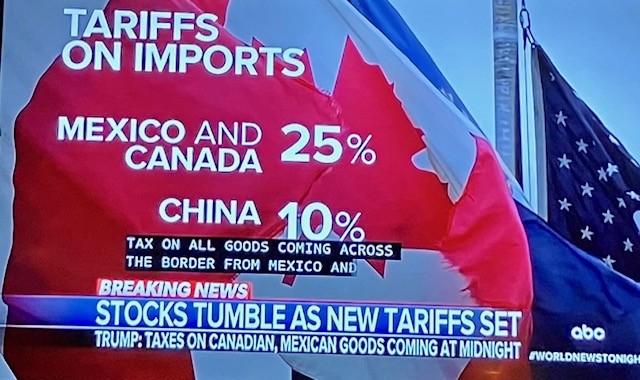
The Senate is examining potential challenges as well. Notably, it recently voted to overturn the national emergency declaration used to justify Trump’s 25% tariff on Canadian imports. This effort was led by Virginia Senator Tim Kaine. Several lawsuits have already been filed in federal courts attacking Trump’s tariffs. For example, a new lawsuit in Florida is contesting the use of an “international emergency” as grounds for imposing new tariffs. This funded by conservative legal groups. Increasingly leading Republicans, major Republican donors and corporate leaders are speaking out against Trump’s tariffs.
Both the Senate vote and the Florida federal court case revolve around the 1977 International Emergency Economic Powers Act (IEEPA). Key elements of trade legislation used in Trump’s executive actions—including IEEPA, Section 232 (national security exception), and Section 301 (retaliation measures)—are increasingly becoming subject to judicial and legislative scrutiny.
There is a growing consensus that presidential tariff authority should be limited to specific trade laws enacted by Congress, such as those concerning anti-dumping measures, countervailing duties, Section 201 safeguard provisions, and Section 122 as to tariffs and deficits—and even then, only after appropriate administrative processes are followed.
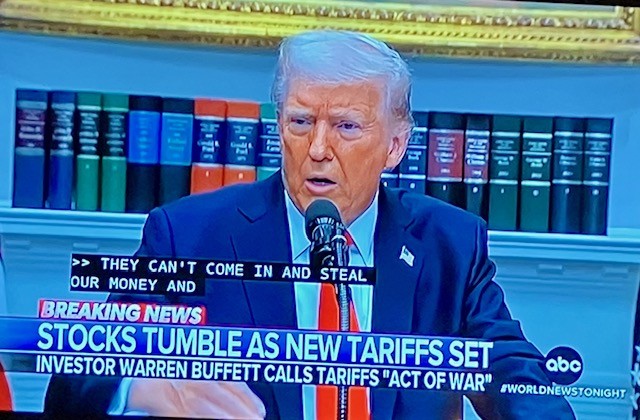
Now, consider this week’s stunning reversal by Trump on reciprocal tariffs and the imposition of even higher tariffs on China. The result? Nothing more than wild swings in stock markets in the United States and worldwide. To me, this further evidences the unsustainable nature of Trump’s tariff policies, which mirror his broader disorganization and unpredictability. Policy driven by grievance, threats and dramatic reversals is unsustainable. Global transactions, diplomatic relations and domestic economic policy require predictability—not shock and awe. Otherwise, chaos will prevail.
What does all this mean for state and local economies in the United States—for consumers and economic development? Take Virginia, for example. China’s recently announced retaliatory tariffs on agriculture will decimate Virginia’s agricultural sector—the largest sector of the state’s economy. China is a leading export destination for Virginia agriculture. U.S. tariffs on imports from Mexico and Canada and other countries—such as Canadian lumber and foreign steel—will severely impact the shipbuilding industry in Tidewater and automobile manufacturing in Southwest Virginia.
In conclusion, the recent assertion of judicial review by the federal courts and the early reassertion by Congress (Senate) of its exclusive authority over tariffs holds great hope for rebalancing the executive abuse and over-reach of the last few months. We’ll see.
…………………………………….
“In the lawsuit filed in the U.S. District Court for the Northern District of California, California challenged Trump’s use of the 1977 International Emergency Economic Powers Act (IEEPA). They say the president cannot impose tariffs or direct Customs and Border Protection and the Department of Homeland Security to enforce them without the consent of Congress. …. California argues that IEEPA does not authorize the president to impose tariffs under a declared emergency, noting specifically that the word “tariff” does not appear in the statute at all. Additionally, the suit argues that no president before Trump has relied on IEEPA to impose tariffs in the 50 years since it was enacted …. Trump imposed a 10 percent tariff on virtually all imports and increased tariffs on China to more than 100 percent …. The president declared a national emergency to impose the tariffs, pointing to the annual merchandise trade deficit that the United States has run each year since 1975.” “California Litigates Trump’s Tariffs.” Washington Post (April 17, 2025).
“Republican lawmakers are quietly hoping the Supreme Court will hit the brakes on President Trump’s trade war, which has become a growing political liability for the GOP even with the president’s pause of much of his tariff regime …. Trump’s sweeping “reciprocal” tariffs against more than 180 counties face new legal challenges after several businesses sued the administration in the U.S. Court of International Trade and a federal district court in Florida …. Senior counsel for the Liberty Justice Center, which has filed a lawsuit challenging Trump’s sweeping “Liberation Day” tariffs on behalf of U.S. businesses that import goods from the countries targeted by the levies, said the case is likely to reach the Supreme Court unless Trump reverses course. “IEEPA [the International Emergency Economic Powers Act] just doesn’t authorize this action to impose these tariffs, and even if IEEPA does authorize some tariffs, which is a question that I think is questionable, they certainly authorize worldwide, across-the-board tariffs” …. Schwab said the Trump administration pointing to trade deficits to justify sweeping tariffs has failed to articulate an unusual and extraordinary emergency. The lead counsel in the case, said he will push to get the case to the Supreme Court quickly, given how soon Trump’s tariffs could have repercussions for businesses.” “Supreme Court, Republicans and Trump Tariffs.” The Hill (April 16, 2025).
“Amid the scramble to beat back the tariffs, the Chamber of Commerce and other top industry groups are discussing whether to file a lawsuit, according to multiple people familiar with the conversations. A suit would pit the nation’s largest pro-business lobbying groups against one of Trump’s signature policies, expanding the legal fight to the bulk of the tariffs ordered by the president …. The Chamber of Commerce, along with the Consumer Technology Association and other groups, are discussing a lawsuit that would allege the president improperly used a 1970s-era law, the International Emergency Economic Powers Act, to impose much of his tariff regime …. To impose the tariffs, Trump declared a series of emergencies that link export taxes to his efforts to curb drug-trafficking, illegal immigration and trade imbalances. The Florida company lawsuit claims that the International Emergency Economic Powers Act doesn’t authorize tariffs, and that Trump’s justification for the China tariffs—to pressure China to crack down on fentanyl trade—is too tenuously connected to the higher levies …. A lawsuit against the universal tariffs could also argue that the chronic trade imbalances Trump cited to justify his actions don’t qualify as an “unusual and extraordinary” threat that the statute requires. The tariffs could also be vulnerable to the same legal doctrine known as the major-questions doctrine, it looks skeptically at executive actions of vast economic and political significance that aren’t clearly authorized by Congress.” “Companies Hit by Tariffs Explore Lawsuit.” Wall Street Journal (April 9, 2025).
“Trump relied on the International Emergency Economic Powers Act to impose last week’s reciprocal tariffs, some of which are as high as 49%. This expansion of executive authority clearly oversteps the boundaries set by the Supreme Court’s major questions doctrine. Prominent in recent judicial rulings, the doctrine holds that federal agencies—and the executive branch—can’t make decisions of vast economic and political significance without clear congressional authorization. IEEPA, enacted in 1977, was intended to rein in what Congress considered overuse of the Trading with the Enemies Act. Under IEEPA, the president retained broad authority to regulate international economic transactions during a declared national emergency. The law’s purpose was to address genuine crises—like foreign aggression or economic sabotage—not to serve as a catch-all to implement domestic policy preferences. Mr. Trump’s reciprocal tariffs stretch IEEPA beyond its intended scope …. By employing this statute, Trump claimed a unilateral power to tax and regulate commerce—powers the Constitution vests in Congress under Article I, Section 8. The Supreme Court has signaled skepticism toward such executive improvisation. In West Virginia v. EPA (2022) the Court struck down the Obama Environmental Protection Agency’s Clean Power Plan …. Some argue that national security justifies flexibility, and courts have traditionally deferred to the executive in this realm. But the major questions doctrine prevents presidents from using national security grounds to transfer congressional authority completely to the executive branch by focusing on the means chosen to achieve compelling ends.” “Trump’s Tariffs and Major Legal Questions.” Wall Street Journal (April 7, 2025).
“There is also the not-so-small matter of the rule of law. Trump justifies his tariffs by declaring a national emergency under the 1977 International Emergency Economic Powers Act. No previous President has used that law to impose tariffs …. Congress has circumscribed the President’s power to impose tariffs, allowing it on imports that threaten national security (Section 232) or in response to “large and serious” balance-of-payments deficits (Section 122), a surge of imports that harms U.S. industry (201), and discriminatory trade practices (301). None of these trade provisions empowers Trump to impose tariffs on all imports from all countries based on an arbitrary formula. Section 122 lets a President impose tariffs of up to 15% in response to trade deficits, but Congress must approve them after 150 days. Someone should sue to block his abuse of power.” “Trump’s Tariffs and the Law.” Wall Street Journal (April 4, 2025).
“Now comes a lawsuit from a small business that argues his tariffs violate the High Court’s major questions doctrine. Simplified, a stationery company in Florida challenged the President’s earlier 20% tariffs on China, though its legal arguments also apply to this week’s Liberation Day blitzkrieg …. Trump justified his tariffs on China, as well as this week’s tariffs, under the 1977 International Emergency Economic Powers Act (IEEPA). The sanctions law gives the President authority to address an “unusual and extraordinary threat” if he declares a national emergency. Trump deemed fentanyl and other drugs such an emergency …. Presidents have used the law to ban imports, freeze assets and impose export controls, but Trump is the first to impose tariffs under it …. Trade laws authorize the President to impose tariffs “only on industries or countries that meet specified criteria, and only under specified conditions, after following specified procedures …. Trump declared the trade deficit a national emergency (as to Trump’s new reciprocal tariffs). Congress has given the President discrete authority to impose tariffs of up to 15% only for as long as 150 days to remedy “large and serious” trade deficits. Trump used IEEPA to circumvent those limits. “Legal Challenge to Trump’s Tariffs.” Wall Street Journal (April 5, 2025).
“A growing number of conservatives are challenging Trump’s wide-reaching tariffs on allies and adversaries alike, with some questioning whether he has the authority to implement them …. It’s coming from an influential, conservative-backed legal nonprofit representing a small stationery company …. The New Civil Liberties Alliance (NCLA) filed a complaint this week over the legality of Trump’s tariffs launched earlier this year on all Chinese imports …. The alliance argues that Trump’s use of the International Emergency Economic Powers Act (IEEPA) to justify the levies was unconstitutional because it does not authorize the president to impose tariffs …. Trump also used the IEEPA to launch global “reciprocal” tariffs …. On Capitol Hill, there’s been growing discontent with Trump’s tariffs among GOP ranks.” “Conservatives Challenge Trump’s Tariffs.” Washington Post (April 6, 2025).
“Trump’s tariffs may be unpopular with financial markets, economists, and anyone with a retirement account, but they have given Senator Rand Paul a golden opportunity to be Right About a Thing The Kentucky Republican points out that the president imposing tariffs is not only stupid, but also completely contrary to the Constitution.” “Libertarians, Law and Trump’s Tariffs.” Above the Law (April5, 2025).
“Four Republicans joined Democrats in the Senate to pass, 51-48, a joint resolution Wednesday that would effectively end President Donald Trump’s steep tariffs on Canadian goods in a vote that revealed GOP resistance to the administration’s sweeping trade agenda. Sen. Rand Paul, R-Ky., was a co-sponsor of the measure offered by Sen. Tim Kaine, D-Va. Republican Sens. Susan Collins of Maine, Lisa Murkowski of Alaska and former Majority Leader Mitch McConnell of Kentucky, along with Paul, voted in support of the resolution. Republicans had previously been largely uncritical of Trump’s trade agenda.” “Senate Votes to End Canadian Tariffs.” Roll Call (April 3, 2025).
“The emergency powers Trump is invoking — based on provisions of the 1977 International Emergency Economic Powers Act — are intended for use in legitimate emergencies related to foreign threats and adversaries. This law is typically used to place sanctions on bad actors like cartels and dictators, but Trump’s rationale for an “emergency” that justifies billions in taxes on American consumers doesn’t make sense in Canada’s case. He has made spurious claims of a fentanyl crisis at the northern border on par with the drug situation at the southern border, but his numbers don’t add up …. Fortunately, the National Emergencies Act of 1976 included a provision allowing any senator to force a vote to block emergency powers (“there is enacted into law a joint resolution terminating the emergency “) being abused by the president. I (Tim Kaina) will be pulling that procedural lever to challenge Trump’s Canada tariffs early next week.” “Senate Voting on ‘Emergency’ Tariff Policy (Kaine).’ (March 28, 2025).
“A federal appeals court in Washington on Wednesday kept in place, for now, a block on the Trump administration’s use of a rarely invoked wartime statute to summarily deport Venezuelan migrants accused of being members of a violent street gang. By a 2-to-1 vote, a panel of the U.S. Court of Appeals for the District of Columbia Circuit said the Venezuelan migrants were likely to succeed in their claims that the government cannot use the wartime law, the Alien Enemies Act, to summarily transfer them to a prison in El Salvador without a hearing. “Appeals Court Blocks ‘Alien Enemy Act’ from Venezuelan Migration Cases.” New York Times (March 27, 2025).
“[The 1798 Alien Enemies Act states ….] “Whenever there is a declared war between the United States and any foreign nation or government, or any invasion or predatory incursion is perpetrated, attempted, or threatened against the territory of the United States by any foreign nation or government . . . all natives, citizens, denizens, or subjects of the hostile nation or government . . who shall be within the United States and not actually naturalized, shall be liable to be apprehended, restrained, secured, and removed as alien enemies.” “Trump and 1798 Alien Enemies Act.” Wall Street Journal (3.23.25).
“Who wants to understand America’s current tariff strategy would do better to think less about orthodox economics, and more about the realpolitik that motivates Trump. There are three points to consider here. Trump’s realpolitik rule number one is that burden sharing between America and the rest of the world must shift …. Realpolitik rule two is that China is the most critical geostrategic threat to the US and must be countered by any means necessary …. Third, the possibility of a “Mar-a-Lago” accord to weaken the dollar is to make US exports more competitive.” “Realpolitik’s of Trade.” Financial Times (March 31, 2025).
“Trump shows no interest in promoting the rule of law or free trade. He is all about power politics in a crude and blustering way that is a disturbing and dangerous throwback to the 19th century.” “Trump’s Foreign Policy and 19th-Century Throwback.” Washington Post (April 8, 2025).
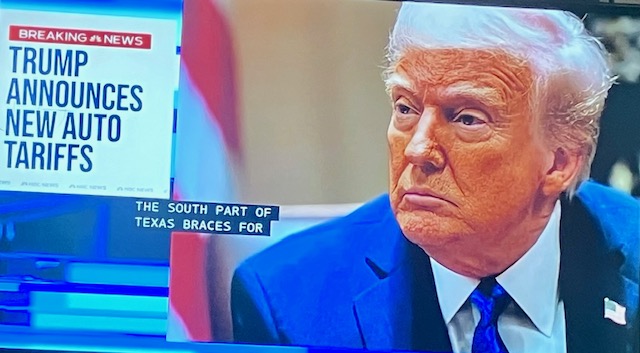
“A decades-long era of US leadership in global trade liberalization ended when Trump announced “reciprocal” tariffs, raising tariffs to levels not seen for nearly a century. He also closed the de minimis exception for Chinese goods, imposed 25% tariffs on auto imports, and introduced 25% tariffs on countries importing oil from Venezuela. Trading partners are retaliating or pressing for negotiations, while some in US Congress are attempting to assert authority over tariff policy.” Hinrich (April 8, 2025).
“The failings of the mob boss approach to trade (by Trump) are now dramatically visible on the markets. The results are likely to be just as disastrous in geopolitics — although they will not become evident so quickly …. Trump cannot abandon mores and methods that he learnt early in his career. His mentor, Roy Cohn, was also a lawyer for the Gambino and Genovese crime families. He taught Trump never to show weakness and never to back down. So, faced with plummeting global markets, Trump is putting on a show of bravado. But he is clearly completely out of his depth.” “Trump (Mob Boss) and lobal Trade.” Financial Times (April 8, 2025).
“The 1807 law (“The Insurrection Act”) allows the president to use active-duty forces trained for combat overseas or federalized National Guard troops to suppress a “rebellion,” temporarily suspending the Posse Comitatus Act, which typically restricts the use of military involvement in domestic law enforcement …. The invocation of the Insurrection Act would mark the latest example of the Trump administration using arcane and extreme laws, including the Alien Enemies Act — last invoked during World War II to detain Japanese, German and Italian nationals — to pursue its domestic immigration agenda.” “Trump and the ‘Insurrection’ Act.”| Washington Post (April 20, 2025).





 Stuart Malawer

You must be logged in to post a comment.