Stuart Malawer with two recent Awards (2025) from the Commonwealth of Virginia — Joint Resolution from the Virginia General Assembly for Public Service and from the Virginia Supreme Court for Pro Bono Litigation.
The impact of Trump on broad areas of domestic and international policies have been chaotic. But is the worse yet to happen? Most likely ………..
Trump’s impact on international areas such as trade, tariffs, migration, alliances (NATO), regional conflicts (Ukraine, Middle East), bilateral trade conflicts (Canada, China, India, Vietnam, EU) and use of force (Iran) is broadly known. As is his impact on domestic areas such as federal workers, foreign student visas, threats to universities, lawyers, law firms, federal judges, domestic use of the military and generally the rule of law (both domestic and international).
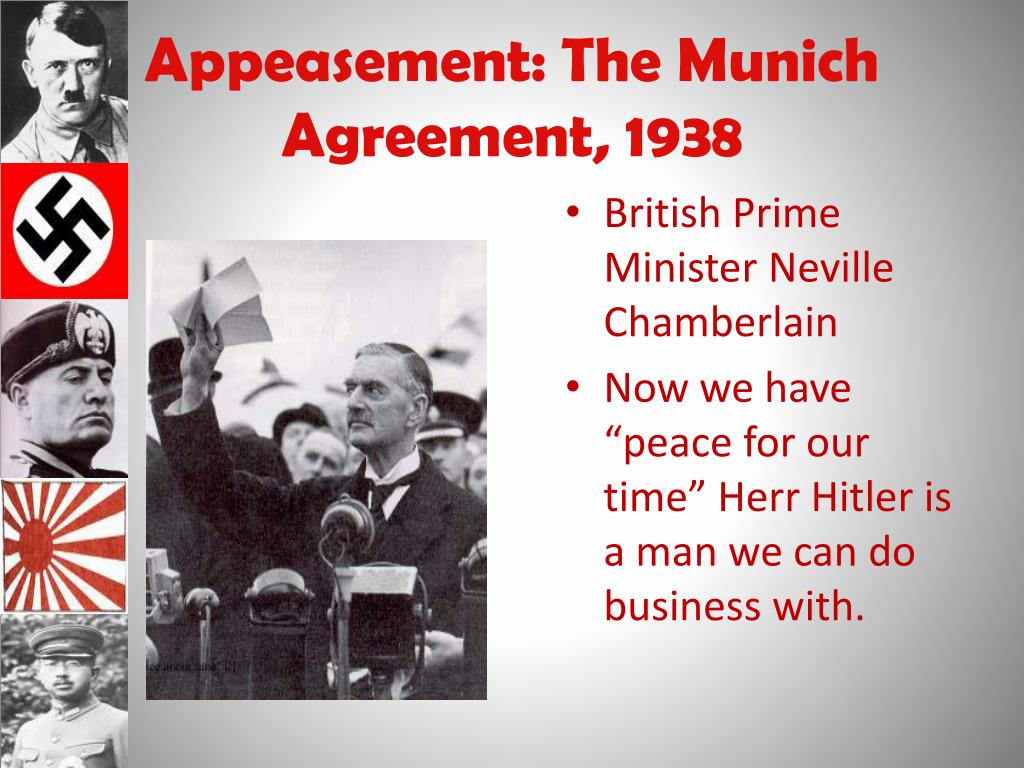
Trump’s overly broad reliance on national security and declaration of national emergencies (which continues) has been attacked in numerous lawsuits with some success. Trump’s back to the future in rejecting international law, interactional organizations, alliances and institutions and obvious attempt to reestablish sphere of influence in international relations and protectionism mirror the disastrous 1930’s.
The fear is that the worse has not yet happened.
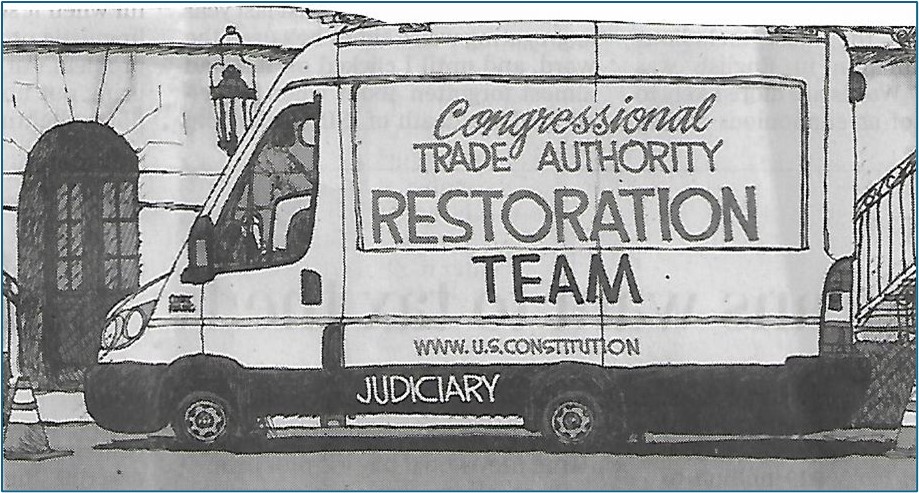
It’s clear that lawyers and federal courts are in the forefront of reacting to executive overreach, even though the recent Supreme Court case limits nationwide injunctions by district courts and continues to utilize its emergency docket to review power court’s preliminary determinations and provisional orders. But the fight continues in light of an uncertain fate before a conservative Supreme Court. Congress is still far behind in formulating an effective opposition. No Congressional resolutions have been passed opposing military use of force (Iran) or extensive use of tariffs as part of Trump’s unilateral economic warfare against adversaries and allies.
Trump’s constant backtracking, deadline extensions, flight from one issue to another only increases policy chaos.
Will the chaos get worse — We’ll see.
…………………………………..
“India, Vietnam, Japan, the European Union, Malaysia and other governments have been working toward deals that could smooth relations with the United States and avoid double-digit tariffs. But the Trump administration has been moving forward with plans to impose another set of tariffs on certain industries that it views as essential to national security, a threat that has foreign leaders worried that there could be more pain ahead …. Those tariffs on certain critical sectors, which would be issued under Section 232 of the Trade Expansion Act of 1962, aim to build up domestic capacity for important products and ensure that the country isn’t reliant on foreign factories in times of war or shortages. But these sectors — along with automobiles and steel, on which the Trump administration has already applied national security tariffs …. Vietnam, Japan, Malaysia, South Korea and Indonesia could be hit by tariffs on semiconductors and other electronics, including phones and computers. Vietnam and Malaysia could also be hurt by tariffs on lumber and timber, which could cover products like kitchen cabinets.” “More Tariff Threats and National Security.”New York Times (July 1, 2025).
“Donald Trump’s return to power has generated chaos for much of the legal sector …. “I’ve challenged federal and agency over-reach under every administration since President Reagan, but this administration’s intrusion is unmatched in scale and scope” …. It is clear that there is not as robust a response to this Trump administration as there was last time.” “Trump’s Chaos and Lawyers.” Financial Times (June 25, 2025).
“The Supreme Court ruling barring judges from swiftly blocking government actions, even when they may be illegal, is yet another way that checks on executive authority have eroded …. But the diminishing of judicial authority as a potential counterweight to exercises of presidential power carries implications far beyond the issue of citizenship. The Supreme Court is effectively tying the hands of lower-court judges at a time when they are trying to respond to a steady geyser of aggressive executive branch orders and policies …. And Congress, under the control of Trump’s fellow Republicans, has done little to defend its constitutional role against his encroachments.” “Supreme Court Slows Trump Litigation.” New York Times (July 29, 2025).
“The Supreme Court’s ruling against nationwide injunctions means that approach is largely out the window, leaving litigants to ponder uncertain strategies that could be slower and less potent … The ruling could mean fewer significant wins for Trump opponents but also prompt a jump in lawsuits against the administration because more individuals, businesses and organizations might have to bring their own cases if they believe their rights have been violated …. Lawyers and public-interest groups immediately began looking to style more lawsuits as class actions, with a lead plaintiff suing on behalf of a broader group of people facing similar circumstances …. Class actions must satisfy several procedural requirements, including that all members of a proposed class have similar characteristics and legal interests. The suits also must be certified by a judge. The …. State attorneys general, who already play a significant role in cases challenging White House policies, could see their influence grow …. Local governments also are thinking about playing larger roles as litigants.” “New Litigation Strategy.”Wall Street Journal (June 30, 2025).
In his first months back in office, Trump has threatened to use military force to seize Greenland and the Panama Canal, suggested that the United States could take ownership of Gaza after the expulsion of two million Palestinians, and demanded that Ukraine give up territory to Russia in exchange for a cease-fire (and bombed Iran!). These acts and statements might appear to be just a handful of examples of Trump’s typical wide-ranging and hyperbolic bluster. But in fact, they all form part of a cohesive assault on a long-standing principle of international law: that states are prohibited from threatening or using military force against other states to resolve disputes. Now, that expectation is gone. Trump is not merely abandoning the United States’ traditional role in defending the prohibition on war and, with it, conquest. He seems to want something more: to restore war or the threat of it as the main way that states resolve their disagreements and seek economic gain …. Prior U.S. administrations can be condemned for their hypocrisy. But the Trump administration’s willingness to give up altogether on the prohibition on war is far more dangerous …. Trump’s various rhetorical salvos and policy shifts may seem chaotic. But they all form part of a wider attempt to dismantle the postwar legal order.” “Trump, Use of Force and International Law.”Foreign Affairs (July / August 2025).
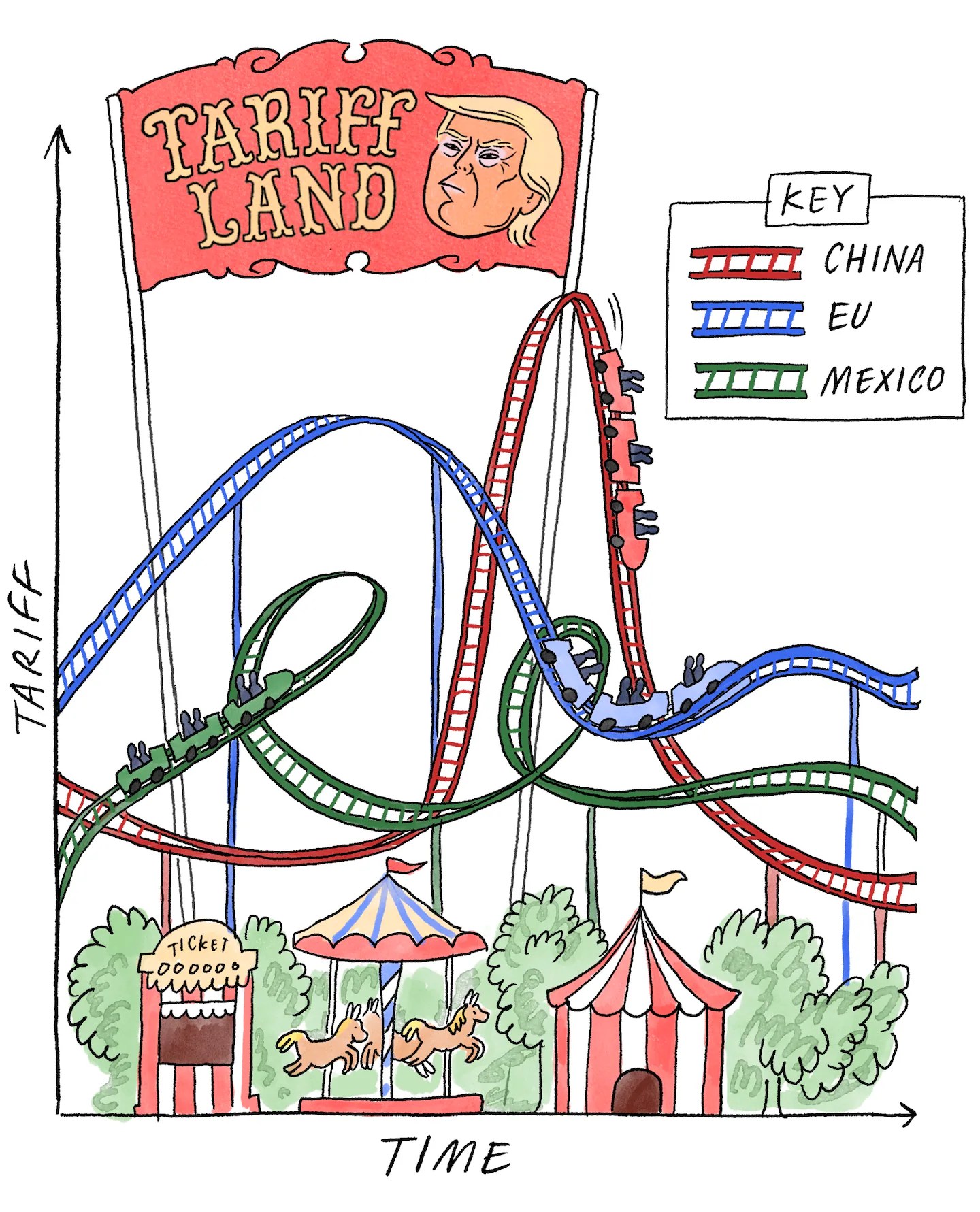
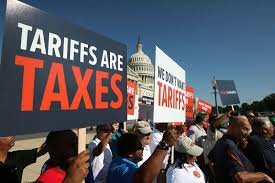
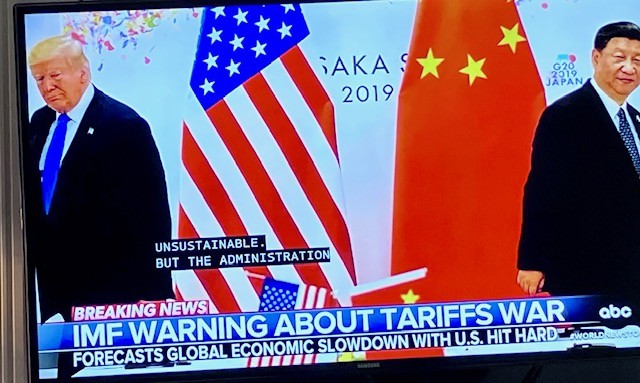
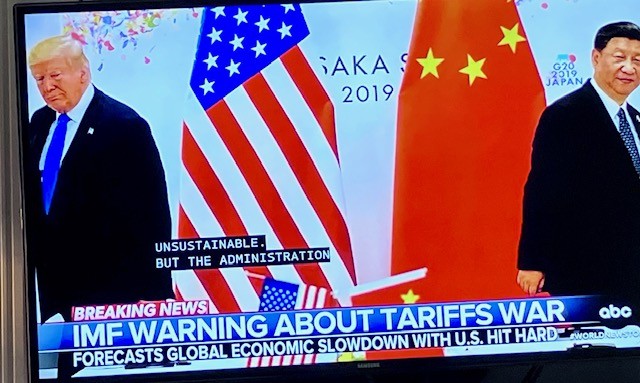
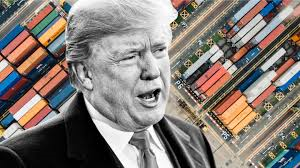
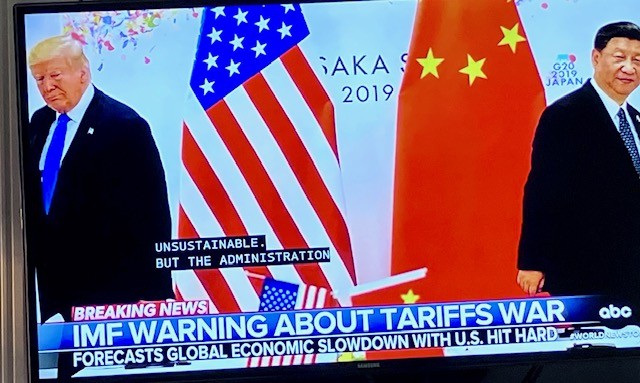
Three recent developments, among many, have now become more apparent as a result of higher U.S. tariffs. One, U.S. corporations are responding to increases in tariffs by resorting to more attempts to reclassify imported products under the Harmonized Tardiff Schedule (HTS). Two, again because of higher U.S. tariffs, China is now redirecting exports and flooding markets throughout the world (another ‘China Shock’). Three, The Supreme Court has declined to fast-track the tariff cases concerning Trump’s tariffs involving IEEPA.
…………
“Tariff engineering involves changing an item’s materials, altering its dimensions or compositions so that the finished products can be justified to fit in a different “harmonized system code” …. There are over 5,000 different product classification codes that U.S. customs authority uses while assessing tariffs. These tariff classifications were determined through decades of negotiations between governments and industry bodies, often varying by product category …. Companies have to tread a fine between redesigning their products and fraudulently misrepresenting product classifications …. U.S. Customs and Border Control has developed a so-called “binding ruling” system where companies can obtain official determinations on product classifications and HTS code before importing.” “Tariff Engineering.” CNBC (June 18, 2025).
“Today, a new China shock is cascading across the globe from Indonesia to Germany to Brazil. As President Trump’s tariffs start to shut China out of the United States, its biggest market, Chinese factories are sending their toys, cars and shoes to other countries at a pace that is reshaping economies and geopolitics. This year so far, China’s trade surplus with the world is nearly $500 billion — a more than 40 percent increase from the same period last year …. By diverting the flow of its stuff to Southeast Asia, Latin America and Europe, China has already eased the economic effect of a plunge in demand from the United States.” “China’s Exports Surge to World.” New York Times (June 18, 2025).
“The Supreme Court on Friday declined to fast-track a legal challenge to President Donald Trump’s tariffs, rejecting a motion to expedite the case and delaying consideration despite pressure from affected companies.” “Supreme Court – No Fast Track for Tariffs.”MSN (June 20, 2025).
Today’s trade war is about to expand to include a new tax war. Proposed congressional legislation (Section 899 of the current fiscal budget bill) would add a punishing income tax on foreign firms operating in the U.S. This would be in retaliation of the OECD proposed minimum tax and digital tax on U.S. firms. U.S. business groups are opposing this new tax. We’ll see ………….
“Business lobbyists are working to kill a tax measure embraced by Republican lawmakers that would punish companies based in countries that try to collect new taxes from American firms …. These taxes would punish companies based in countries that either adhere to the terms of a 2021 global minimum tax agreement or impose digital services taxes on American technology companies …. The legislation is poised to reignite international tax and trade wars that have been on hiatus as policymakers around the world grapple with how to overhaul the global tax system …. The Global Business Alliance estimates that the tax measure, known as Section 899, could cost the United States 700,000 jobs …. The Trump administration is including concerns about digital services taxes and other international tax issues in its trade negotiations with dozens of countries.” “Proposed ‘Punish Tax’ on Foreign Firms in US for OECD Min Tax & Digital Tax.”New York Times (June 17, 2025).
“Much of the financial press has taken to labeling Section 899 of the reconciliation bill a “revenge tax”—generally leaving out what exactly it’s revenge for. The section would allow the Treasury secretary to tax certain income of residents and firms of a country that imposes unfair extraterritorial and double taxation of U.S. companies …. Section 899 would let the U.S. respond to this extraterritorial and double taxation. It could be used to withhold taxes on the income earned by individuals and firms or by the government that collects these taxes.” “Revenge Tax.”Wall Street Journal (June 19, 2025).
Zhaogang, a Visiting Legal Scholar from China, at the George Mason University (Schar School), has just published an article on corporate strategies in light of President Trump’s tariff and trade policies. This appeared in a leading international law journal. Proud to have supervised his year here at George Mason. Congratulations.
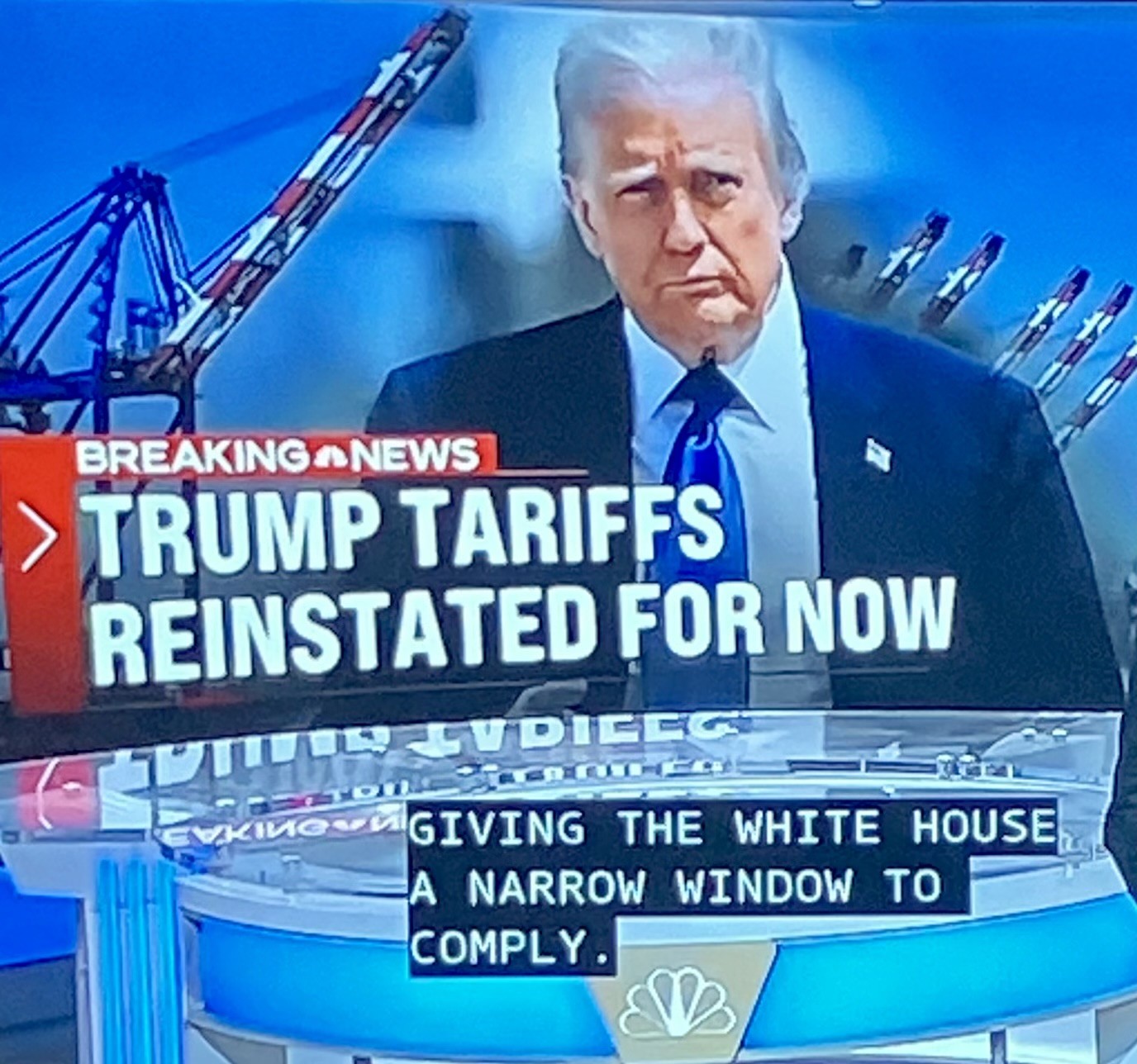
Trade continues to be one of the biggest issues in U.S. politics today. Another federal court decision (continuing Trump’s tariffs temporarily), greater use of export controls, as well as broader use of emergency powers of the president. Both the United States and the global trading system will be impacted depending how these items are handled by the federal courts (and hopefully by Congress). The latest Trump walk-back on tariffs demonstrate he doesn’t really have a viable China export policy.
………………………..
“A federal appeals court on Tuesday granted the Trump administration’s request to keep the president’s far-reaching tariffs in effect for now but agreed to fast track its consideration of the case this summer. The U.S. Court of Appeals for the Federal Circuit extended its earlier temporary pause of a trade court decision that found Trump exceeded his powers in imposing the tariffs. The appeals court said it intends to hear arguments on July 31, which means the tariffs likely will remain in effect for at least the next two months. All of the court’s active judges will participate in the case. The losing party is expected to seek review at the Supreme Court. “Appeal’s Court Extends Stay on Trump’s Tariffs.”Wall Street Journal (June 11, 2025).
“Citing this series of crises, Trump has sought to draw on emergency powers that Congress has scattered throughout the United States Code … upending the global economy with steep tariffs. Legal scholars say the president’s actions are not authorized by the statutes he has cited and are, instead, animated by a different goal. He is declaring utterly bogus emergencies for the sake of trying to expand his power, undermine the Constitution and destroy civil liberties.” “Trump Test Federal Power.” New York Times (June 11, 2025).
“An initial clash over tariffs has grown in recent months into a competition over which country can weaponize its export control over the other’s supply chains. China has clamped down on global shipments of rare minerals that are essential to building cars, missiles and a host of electronic products. The United States has in turn paused shipments to China of chemicals, machinery and technology including software and components to produce nuclear power, airplanes and semiconductors.” “China and U.S. Export Controls.”New York Times (June 11, 2025).
“China and the U.S. appear to be resetting their trade relationship to where it was a few months ago before a tit-for-tat escalation. Trump had agreed to reduce tariffs on China to 30% (55% including those he imposed during his first term) from 145%while China dropped its tariffs on U.S. goods to 10% from 125% …. But Beijing continued to leverage its stranglehold on rare-earth minerals …. Beijing will ease its restrictions on rare-earth minerals, but the U.S. will keep its export controls on advanced chips …. Trump’s export controls harmed American businesses as well as the Chinese. …. This gets to the larger problem with Trump’s tariff strategy—that is, he doesn’t have one. His latest walk-back shows he can’t bully China as he tried to do in his first term.” “Trump Has No China Trade Strategy.”Wall Street Journal (June 12, 2025).
“For years, officials in Washington have used export controls to slow China’s ability to develop cutting-edge technologies …. When officials from the United States and China met this week in London to try to work out their differences over trade, export controls were again front and center …. Trump kicked off a trade war with Beijing in 2018 when he put tariffs on solar panels imported from China …. Trump administration first used export controls to impede the development of a Chinese tech company in 2018, when it barred American firms from selling to the Chinese electronics firm ZTE …. Then in 2019, the Trump administration added the telecommunications giant Huawei to a trade blacklist that barred U.S. companies from selling parts to the company …. President Joseph R. Biden Jr. substantially expanded Washington’s use of export controls. The goal shifted from targeting specific Chinese firms to constraining China’s overall advancement in technologies …. Since taking office a second time in January, Mr. Trump has ended a sweeping rule governing how American-made A.I. chips could be shared with foreign countries that was put in place at the end of Mr. Biden’s term …. U.S. officials have also taken steps to crack down on the flow of chips to China from America’s leading chip maker, Nvidia.” “U.S. China Tech Race (Export Controls / Entity List).”New York Times (June 13, 2025).
“Washing machines, refrigerators and other common household appliances made with steel parts will soon be subject to expanded tariffs …. The higher metal levies have already rankled close allies that sell to the United States, including Canada, Mexico and Europe.” “New Steel Tariffs on Home Appliances.”Wall Street Journal (June 14, 2025).
More on the illegality of Trump’s tariffs and recent court cases — Need to realize, tariffs are not going to bring back jobs. Also basic constitutional doctrines are in play here — the “nondelegation doctrine” and the “major question doctrine.” In another words, certain things the Congress cannot delegate without being precise and if they do delegate permissible authorities, they need to be clearly and specifically relied upon by the executive.
Litigation is continuing with appeals and more appeals. Recently the Federal Court for the Federal Circuit has extended a temporary order allowing the tariffs to remain in effect until a further hearing. They raise various issues (in addition to construing IEEPA), including perhaps eventually the ‘national emergency power’ of the president generally as well as ‘non-tariff issues,’ for example, export controls.
However, what is really at stake is aggressive use of executive authority that is unsustainable and unconstitutional.
…………………………………………
“In an unambiguous and unanimous ruling, the U.S. Court of International Trade held that President Trump’s “reciprocal tariffs” and fentanyl tariff actions exceeded his constitutional and statutory authority. We believe the ruling will stand up under Supreme Court review …. The trade court’s ruling states that the International Economic Emergency Powers Act, or IEEPA, can’t authorize sweeping tariffs without violating what is known as the nondelegation doctrine. A three-judge panel ruled that IEEPA doesn’t grant unlimited, unreviewable authority for the president to declare national emergencies unilaterally or impose tariffs arbitrarily. The ruling cited foundational Supreme Court cases such as Youngstown Sheet &Tube v. Sawyer, as well as more recent decisions such as Loper Bright Enterprises v. Raimondo, on improper delegation of authority from Congress to the executive branch. The court also invoked the “major questions doctrine” of the Roberts court as part of the argument against Mr. Trump’s claim of broad trade authority …. In its argument before the trade court, the administration heavily relied on U.S. v. Yoshida International, a 1974 Supreme Court decision that upheld President Nixon’s brief imposition of a 10% across-the-board tariff aimed at addressing a trade deficit spike. But that reliance ultimately undermines the administration’s case for three key reasons …. Yoshida involved presidential authority under the Trading with the Enemy Act, a statute that was later expressly amended to curtail executive power. Second, the Yoshida opinion emphasized the narrow and temporary scope of Nixon’s tariffs …. Existing domestic trade laws—such as the antidumping and countervailing-duty (anti-subsidy) authorities—have worked to prevent unfair competition and could be strengthened by Congress.” “Lawmakers and Trade.”Wall Street Journal (6.7.25).
“Two federal courts recently ruled that Trump lacks authority to impose them, but a specialized federal court with authority over tariff cases, the Court of Appeals for the Federal Circuit, paused the enforcement of those decisions, ordering lawyers to submit legal briefs. One or both cases are likely to land at the Supreme Court in short order ….. One or both cases are likely to land at the Supreme Court in short order …. As presidents of both parties have grown increasingly aggressive about asserting unilateral power rather than attempting to work with Congresses often dominated by the other political party, the Supreme Court has faced other variants on this issue — but never one as stark and consequential as the tariff case …. First is the nondelegation doctrine, which holds that it is unconstitutional for Congress to delegate some legislative power to the executive branch without providing an “intelligible principle” to guide and limit executive discretion. In practice, the court always steps back from actually holding statutes unconstitutional under this doctrine, but it motivates the justices to refuse to interpret statutes in such a way as to amount to a grant of unbridled discretion …. Second, the court employs what has come to be known as the major questions doctrine. This is a canon of statutory interpretation that requires the executive branch to “point to ‘clear congressional authorization’” to justify exercises of “highly consequential power beyond what Congress could reasonably be understood to have granted.” “Danger of Trump’s Tariffs.” New York Times (June 7, 2025).
“Here’s another historical analogy. Beginning in the late 19th century, Americans began to leave farms for cities because of a combination of increased mechanization on farms, which lowered the number of jobs, and the attractiveness of jobs in factories being built in cities. Trying to drag them back to the farm would have been as counterproductive as trying to restore our textile or furniture-making businesses.” “Manufacturing Jobs are Not Going to Rebound.”New York Times (June 8, 2025).
“The Trump administration’s trade policy chaos has already caused harm, slowing growth, raising prices, and sparking dire predictions about the fate of the world economy. Yet there is a kernel of truth in the president’s insistence that the international trade system needs a reset …. At its core, the current trading system prioritizes nondiscrimination and the “most favored nation” principle that trading partners should treat each other alike. But economic and national security concerns differ by trading partners …. Trump has turned the United States into a revisionist power seeking to shatter what remains of the economic order …. Trade policy, after all, does not need to be this chaotic. The president has a variety of legal avenues to pursue his objectives. The administration could use instruments such as Section 301 of the Trade Act of 1974, which addresses unfair trade practices, and Section 232 of the Trade Expansion Act, which allows the United States to impose tariffs or take other remedial actions on national security grounds …. The United States can work with these countries to negotiate a reset of the trading system—one that preserves many of the advantages of the old system while rectifying its shortcomings.” “How Trade War Ends.” Foreign Affairs (June 2025).
“A federal appeals court is closer to ruling on whether to keep most of President Trump’s global tariffs in place longer while the legal battle over them continues. The Justice Department asked the US Court of Appeals for the Federal Circuit to extend its earlier short-term pause on a lower court’s May 28 ruling that most of Trump’s tariffs are illegal. The government said that the ruling harmed the president’s ability to conduct foreign policy …. The Federal Circuit could now rule at any time on whether or not to pause the order for the duration of an appeals process that’s likely to last months. The administration has also indicated that it will go to the US Supreme Court if the appeals court lifts the current hold …. Ruling in a pair of lawsuits brought by a group of small businesses and Democratic-led states, a three-judge panel of the US Court of International Trade last month found that Trump exceeded his authority to impose tariffs under the 1977 International Emergency Economic Powers Act. Tariffs covered by the ruling include Trump’s global 10% levy, his April 2 “Liberation Day” tariffs and measures targeting China, Canada and Mexico over fentanyl trafficking. Other tariffs on steel, aluminum and automobiles were imposed under different laws and were unaffected …. Several other lawsuits challenging Trump’s tariffs have been put on hold until the Federal Circuit rules. Last week, a lower court judge announced that he would let one case go forward over Trump’s decision to end a tariff exemption for small-value packages from China.” “US Asks Appeals Court to Let Trump Tariffs Remain for Longer.”Bloomberg (June 6, 2925).
“Export controls—a major concern for industries worldwide—are moving to the top of the agenda of trade talks between the U.S. and China …. The trade war between Washington and Beijing has in recent weeks veered away from tariffs, focusing instead on each country’s restrictions on material or products the other side desperately needs …. The U.S. side wants to speed up exports of rare-earth minerals and magnets containing them …. The Chinese team, on the other hand, wants Washington to remove recent restrictions on the sale of jet engines and a variety of technology …. The stakes are high for the global economy, as trade restrictions imposed by the two governments are disrupting the worldwide flow of goods, raw materials and components.” “Export Controls and U.S. – China.”Wall Street Journal (June 10, 2025).
“He has declared eight separate emergencies since taking office, far more than other recent presidents …. The National Emergencies Act of 1976, sought to put restraints around a president’s ability to declare emergencies, in part by allowing Congress to terminate them. But it did not define an emergency or limit its duration, and in practice it has done little to rein in such declarations.” “Trump’s Justification of Emergency Powers.”Washington Post (June 10, 2025).
Hoover and Trump — Protectionist and Isolationist?
In addition to IEEPA, Trump’s has multiple legal tools he can utilize in his international economic warfare. Which may, in fact, withstand court challenges. Namely, Section 232 (national security) of the Trade Expansion Act of 1962 and Section 122 (balance-of- payments) of the Trade Act of 1974. Because Section 232 deals specifically with national security, where presidents have great constitutional authority and because Section 122 provides specific legislative delegation. Of course, the President can use export controls, other financial measures, authority to review foreign direct investment under CFIUS and perhaps new legislation to tax foreign direct investment.
It is clear to me the issues of geopolitics are at the heart of Trump’s trade actions — involving much more than trade and economics. And foreign policy is a great executive constitutional power. However, Congress has a great say also.
Nevertheless, it will be up to the federal courts to decide if Trump’s actions are lawful. Many conservative legal scholars have opposed Trump’s tariffs and actions. If Trump stays true to form and exaggerates his actions and authority, once again. the courts will have an easier time of ruling against him. We’ll see ………..
……………………………………………
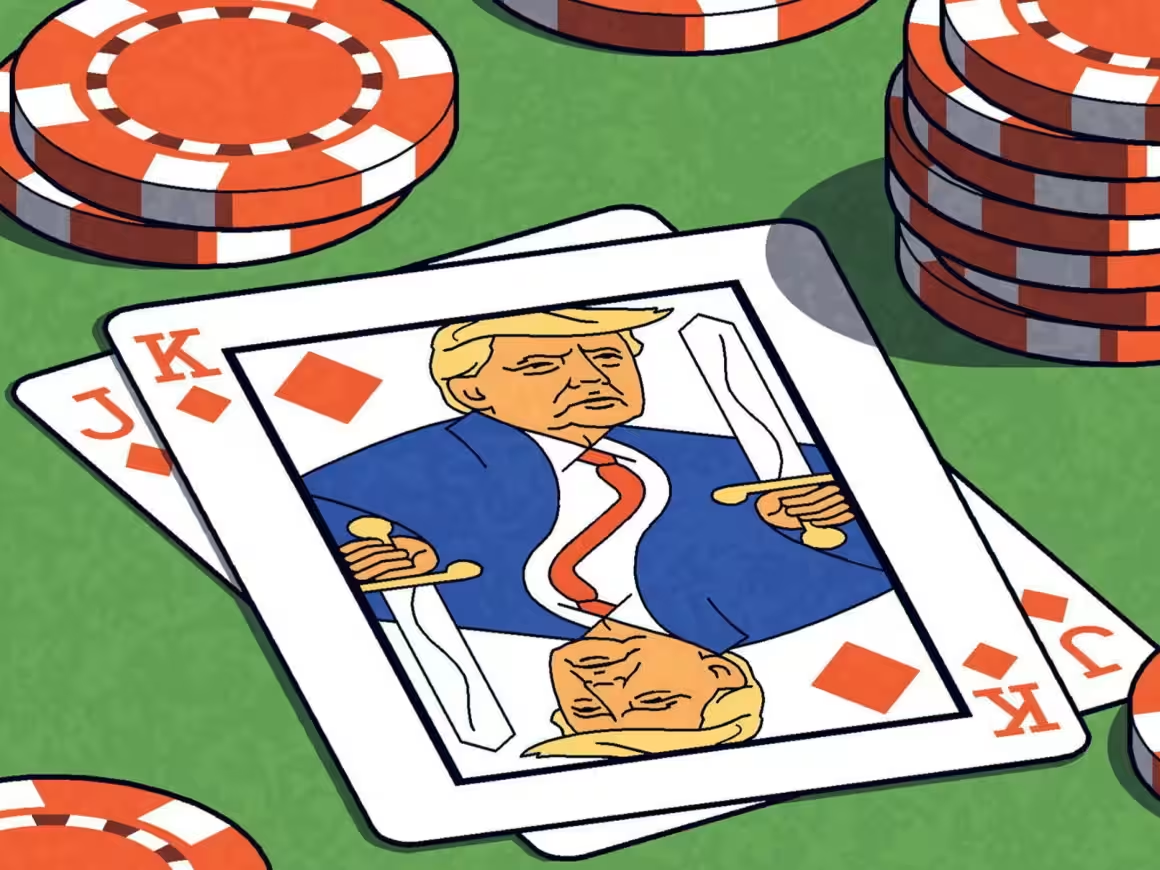
“In fact, “Taco” is not just a useful heuristic for investors. It also turns out to be a key to analyzing Trump’s foreign policy …. Looking at Trump’s two periods in office, Shapiro finds 22 occasions so far in which he has threatened the use of force — but only two in which he has actually followed through. There have been 25 actual uses of force — mainly limited strikes against terrorist groups such as Isis or al-Qaeda. But only on two occasions were they preceded by a presidential threat …. What sets Trump apart is not his reluctance to go to war — but the striking contrast between his tough-guy rhetoric and his real-world caution. The current president seems to have inverted Teddy Roosevelt’s famous maxim about speaking softly and carrying a big stick. Trump prefers to shout loudly, while brandishing a pencil.” “Trump Always Chickens Out Also on Foreign Policy.”Financial Times (6.3.25).
“Trump loves tariffs, but I’ve long suspected that if that weapon turns out to be ineffectual or gets blocked, he will quite quickly turn to other tools of international economic warfare. In fact, he already has. The nasties in his budget bill that will allow reprisals against foreign companies invested in the US were, of course, there before last week’s ruling. But they’re a warning of what happens when Trump widens the field of fire …. How the US weaponized various aspects of the networks connecting the global economy, including finance, data, semiconductors and data centres. “Trump and Other Legal Tools of International Economic Warfare..” Financial Times (June 3, 2025).
“Now that courts have ruled against the Trump administration on IEEPA, its use of Section 232 is even more likely. If IEEPA is not to be used for tariffs against trade partners, the White House will resort to alternative methods. The courts and Congress tend to be highly deferential to executive claims of national security …. There are at least seven additional Section 232 investigations pending, including against pharmaceuticals, semiconductors, copper, lumber, heavy vehicles, critical minerals, and space products. These cases could be concluded at any time, with tariffs likely as a remedy. Now that courts have ruled against the administration on IEEPA, the use of Section 232 is even more likely …. Trump also has recourse to other trade tools. The CIT judges, for instance, suggested the possible use of Section 122 as a replacement. Section 122 deals with balance of payments issues and allows the immediate imposition of tariffs of up to 15% for 150 days7 The original policy document issued by Trump at the start of his term already asked his government agencies to identify all existing legal pathways to manage trade tensions.” “Trump’s Legal Options in the Tariff War – Section 232 (National Security).”Hinrich (June 3, 2025).
”Apowerful sign that President Trump’s tariff-driven trade war is at risk came in a friend-of-the-court brief filed by a coalition that included many prominent conservative and libertarian lawyers, scholars and former officials. The brief was also a signal of a deepening rift between Mr. Trump and the conservative legal movement …. The coalition filed a very similar brief in a second case, too, in the Federal District Court in Washington The trade court ruled for the challengers. On Thursday, the district court judge followed suit, citing the supporting brief eight times …. When it does, the justices will have to grapple with two doctrines dear to the conservative legal movement, both of which would seem to cut against Mr. Trump’s understanding of his powers. One, the nondelegation doctrine, says that Congress may not transfer unbounded legislative powers to the executive branch. The other, the major questions doctrine, says Congress must authorize in plain and direct language any sweeping executive actions that could transform the economy. “Conservatives on Trade Briefs.”New York Times (6.5.25).
“The court holds for the foregoing reasons that IEEPA does not authorize any of the Worldwide, Retaliatory, or Trafficking Tariff Orders. The Worldwide and Retaliatory Tariff Orders exceed any authority granted to the President by IEEPA to regulate importation by means of tariffs. The Trafficking Tariffs fail because they do not deal with the threats set forth in those orders. This conclusion entitles Plaintiffs to judgment as a matter of law; as the court further finds no genuine dispute as to any material fact, summary judgment will enter against the United States. See USCIT R. 56. The challenged Tariff Orders will be vacated and their operation permanently enjoined.”
Unfortunately, the decision of the Court of International Trade was stayed the next day when the Trump administration appealed to the U.S. Court of Appeals for the Federal Circuit. Undoubtedly, this will go to the Supreme Court.
A second case decided the same day also declared the tariffs unconstitutional. Of course, Trump can try other statutory avenues such as Section 122 (balance of payments) and Section 301 (retaliation for trade restrictions) of the 1974 Trade Act, as well as imposing additional duties under Section 232(b) of the 1962 Trade Expansion Act, to enact even greater mercantilist and predatory tariffs and trade policies.
This story is far from over. The once obscure issue of tariffs has now morphed into the geopolitical and legal issue of the day — with grave economic and financial consequences. The appeal raises the question of a 50-year-old case from the Nixon era upholding a limited tariff surcharge. The question comes down to the proper interpretation of the statutory language of IEEPA and the willingness of the courts to review excessive executive actions under newer statutory rules of interpretation.
………………………………
“A federal trade court ruled President Trump didn’t have the authority to impose sweeping tariffs on virtually every nation, voiding the levies that have sparked a global trade war and threatened to upend the world economy. The decision on Wednesday from the Court of International Trade blocked one of the Trump administration’s most audacious assertions of executive power, under the International Emergency Economic Powers Act of 1977 …. The order blows a hole in global trade talks, already under way with more than a dozen nations, which began after the reciprocal tariffs were imposed. It also throws into question recent agreements with the U.K. and China …. The panel also said the U.S. trade deficit didn’t fit the law’s definition of an unusual and extraordinary threat. The Trump tariffs led to several challenges in the Court of International Trade and in federal courts around the country. The trade court, which has nationwide jurisdiction over tariffs and trade disputes, was the first to rule on requests for injunctions after holding hearings in two cases. Appeals from the court are heard by the U.S. Court of Appeals for the Federal Circuit and ultimately the Supreme Court …. The plaintiffs said no other president had ever invoked IEEPA to impose tariffs, because nothing in the law authorizes such power. There is also no emergency, they said, noting that the U.S. trade deficit has existed for decades without creating an economic crisis …. National security tariffs imposed on products like steel and aluminum, as well as similar duties planned on sectors like lumber and semiconductors, are justified under a different law and wouldn’t be affected by the ruling.” “Trade Court Strikes Dow Trump’s Global Tariffs.”Wall Street Journal (May 29, 2025).
“A federal appeals court (CAFC) has temporarily put on hold a ruling that voided President Trump’s tariffs while it considers the administration’s challenge to the lower-court decision (CIT). In a brief order Thursday, the U.S. Court of Appeals for the Federal Circuit said it was pausing Wednesday’s decision from the U.S. Court of International Trade until it can hear further legal arguments. The order, known as an administrative stay, didn’t rule on the merits of the litigation. Administrative stays are common in emergency appeals …. A three-judge panel of the Court of International Trade, a tribunal in New York City, ruled Wednesday that Trump lacked authority under IEEPA to impose the levies. The court does not pass upon the wisdom or likely effectiveness of the President’s use of tariffs as leverage, wrote the three-judge panel. That use is impermissible not because it is unwise or ineffective, but because [IEEPA] does not allow it.” “Tariff Ruling Put on Hold.” Wall Street Journal (May 29, 2025).
“The ruling came down in two cases — one filed by a group of small businesses and the other by 12 Democratic state attorneys general. There are at least five other cases challenging the tariffs pending at the Court of International Trade and other courts throughout the country (including one that dealt Trump another defeat Thursday), but Wednesday’s decision was importantly the first ruling on the merits that Trump had exceeded his authority in imposing such sweeping tariffs. It will also likely pave the way for a more definitive resolution — the administration quickly filed notices of appeal and moved to stay the ruling — perhaps going all the way up the Supreme Court …. There were recent signs of desperation on the part of the administration as the court’s skepticism became increasingly evident over the course of lengthy oral arguments in the two cases …. The litigation is not over, but the legal terrain is probably not going to get any better for Trump. In some respects, it may actually get worse as the case moves up on appeal. And although Trump has a Supreme Court that is heavily skewed in his favor — a 6-3 super-majority of Republican appointees that includes three named by Trump — it is far from clear that they will bail him out when all is said and done …. To fully understand the legal headwinds that continue to face the administration, it is helpful to zero in on a 50-year-old decision that quickly emerged as a central point of contention among the parties — and that the Court of International Trade relied upon heavily in ruling against Trump …. The case in question is known as United States v. Yoshida International, which affirmed President Richard Nixon’s power to impose a 10 percent tariff on imports that he announced in August 1971, under a statute known as the Trading with the Enemy Act (TWEA). The TWEA was the predecessor statute to the International Economic Emergency Powers Act (IEEPA), which Trump invoked to support his tariffs …. Nixon justified the tariff by claiming that an overvaluation of the U.S. dollar at the time had contributed to a trade imbalance and a deficit in America’s “balance of payments” (a broader economic measure that includes both trade and capital flows). The tariff was short-lived — Nixon terminated it in December 1971 after negotiating a realignment of exchange rates with a group of developed countries — but in the meantime, U.S. importers that paid the additional tax challenged Nixon’s legal authority …. One of those companies was Yoshida — now known as YKK — which challenged the tariff on zippers imported from Japan. The company filed a lawsuit and won in the lower court, but the decision was overturned on appeal several years later …. Yoshida at first glance appeared to be quite helpful to the Trump administration …. The court concluded that the tariff was legally justified under the TWEA to address the trade imbalance and pointed to language in the statute that authorized the president to “regulate” the “importation” of foreign goods in the event of an emergency …. For starters, the Yoshida decision rejected a key proposition that is at the heart of the government’s defense of Trump’s tariffs — the notion that courts have no power to review a president’s actions under IEEPA …. Nixon’s tariff was fixed at 10 percent and in place for less than five months. Trump’s tariff framework is far more ambitious, open-ended and has been all over the place since his inauguration — with the effective dates and applicable countries, rates, exceptions and concessions under seemingly constant revision …. And if Trump and some of his advisors are to be believed, there would be no end in sight. “If President Trump succeeds like he wants to succeed,” Trump’s trade adviser Peter Navarro said earlier this year, “we are going to structurally shift the American economy from one over-reliant on income taxes and the Internal Revenue Service, to one which is also reliant on tariff revenue and the External Revenue Service.” …. That is a far cry from a five-month, supplemental 10 percent tariff like what Nixon imposed. ….Two other, subtler points in the Yoshida decision made things worse for the administration. ….First, Nixon’s tariff did not apply to all imports — only those that had been the subject of prior concessions under the government’s tariff schedule — and Nixon made clear in announcing the policy that the rates would nevertheless be capped at levels that Congress had previously set for the relevant goods. …. As a footnote in the Yoshida decision notes, Congress later enacted a specific statutory provision to address the problem that attracted the Nixon administration’s attention. That provision authorizes the president to impose tariffs in response to “large and serious … balance-of-payments deficits,” but it caps those tariffs at 15 percent and limits them to a duration of just 150 days unless Congress authorizes an extension …. There is no way to definitively predict how the appellate court — and eventually the Supreme Court — will approach the matter. But there is good reason to question whether Yoshida will spur them to come to Trump’s rescue …. To start, the country’s federal courts — led by the Supreme Court — have become more committed to textualism as a mode of statutory interpretation. That has generally led to more fine-grained and narrower readings of statutes passed by Congress …. It is far from clear, for instance, whether the current Supreme Court would agree with the conclusion in Yoshida that the power to “regulate” the “importation” of foreign property under the relevant U.S. law includes even a limited power to impose tariffs or otherwise tax those goods. The textual analysis of that position was debatable even at the time and, if anything, is even shakier now …. The Supreme Court’s conservatives have also developed and emphasized two broader interpretive doctrines and themes that suggest that the outcome in Yoshida would not be the same today …. Under the so-called major questions doctrine, when an executive action exceeds an undefined threshold of “economic and political significance,” the justices insist on a clear delegation of authority from Congress on the matter. That does not exist in the case of Trump’s claim to sweeping, open-ended and unreviewable tariff powers …. And in overruling the Chevron doctrine last summer, the court’s conservatives emphasized that judges should not simply defer to the executive branch’s interpretation of ambiguous statutes when evaluating legal questions …. Indeed, the Court of International Trade cited — though did not fully rely upon — both of these points in ruling against the administration. …. “Both the nondelegation and the major questions doctrines, even if not directly applied to strike down a statute as unconstitutional,” the court wrote, “provide useful tools for the court to interpret statutes so as to avoid constitutional problems.” The judges went on to explain that those “tools indicate that an unlimited delegation of tariff authority” from Congress to the president — which the Trump administration effectively claims that it has under IEEPA — “would constitute an improper abdication of legislative power to another branch of government.”
You must be logged in to post a comment.