


RSS Feed
-
Recent Posts
- Malawer, “Trump’s Tariffs & Refunds — Chaos.”
- UPDATE (Geopolitics & Geoeconomics): U.S. Tariffs and Refunds — The Saga Continues and Continues.
- UPDATE — Refund of Trump’s Tariffs — Really Tricky & Messy — Court Order Refunds, Now — Tariffs to Increase from 10% to 15% (More Trump Resistance).
- Global TV Interviews — Dr. Stuart Malawer (2026).
- Refund of Trump’s Tariffs — Really Tricky & Messy.
Archives
- March 2026
- February 2026
- January 2026
- December 2025
- November 2025
- October 2025
- September 2025
- August 2025
- July 2025
- June 2025
- May 2025
- April 2025
- March 2025
- February 2025
- January 2025
- December 2024
- November 2024
- October 2024
- September 2024
- August 2024
- July 2024
- June 2024
- May 2024
- April 2024
- March 2024
- February 2024
- January 2024
- December 2023
- November 2023
- September 2023
- August 2023
- June 2023
- April 2023
- March 2023
- February 2023
- January 2023
- December 2022
- November 2022
- October 2022
- September 2022
- August 2022
- July 2022
- June 2022
- May 2022
- April 2022
- March 2022
- February 2022
- December 2021
- October 2021
- August 2021
- June 2021
- May 2021
- April 2021
- February 2021
- January 2021
- December 2020
- November 2020
- September 2020
- August 2020
- July 2020
- June 2020
- May 2020
- April 2020
- March 2020
- February 2020
- January 2020
- November 2019
- September 2019
- June 2019
- April 2019
- January 2019
- November 2018
- October 2018
- September 2018
- June 2018
- May 2018
- March 2018
- February 2018
- January 2018
- December 2017
- November 2017
- October 2017
- September 2017
- August 2017
- July 2017
- June 2017
- May 2017
- April 2017
- March 2017
- February 2017
- January 2017
- December 2016
- November 2016
- October 2016
- September 2016
- August 2016
- July 2016
- May 2016
- April 2016
- March 2016
- February 2016
- January 2016
- December 2015
- November 2015
- October 2015
- September 2015
- August 2015
- July 2015
- June 2015
- May 2015
- April 2015
- March 2015
- February 2015
- January 2015
- December 2014
- November 2014
- October 2014
- September 2014
- August 2014
- July 2014
- June 2014
- May 2014
- April 2014
- March 2014
- February 2014
- January 2014
- December 2013
- November 2013
- October 2013
- September 2013
- August 2013
- July 2013
- June 2013
- May 2013
- April 2013
- March 2013
- February 2013
- January 2013
- December 2012
- November 2012
- October 2012
- September 2012
- August 2012
- July 2012
- June 2012
- May 2012
- April 2012
- March 2012
- February 2012
- January 2012
- December 2011
- November 2011
- October 2011
- September 2011
Categories
Meta
-
Ex-Im Bank & Export Financing — Promoting Global Competition or Industrial Policy?
The Export – Import Bank was sued last year by various U.S. airlines (Boeing) to stop providing financing to foreign buyers of U.S. built airplanes.
Some economists argue that such financing increases the competitiveness of foreign airlines at the expense of U.S. carriers. This is also the usual line from the Wall Street Journal editorial board. It argues that this U.S. policy amounts to an industrial policy of picking winners (U.S. plane manufacturers) and losers (U.S. airlines). That it’s some sort of corporate welfare at the expense of U.S. lenders of trade finance, which is financed by the U.S. taxpayer.
This is not true. The real answer is that U.S. carriers should increase the quality of services if they really want to compete with service-oriented foreign carriers. U.S. government financing should not be curtailed because of specious arguments. It’s pragmatic and good public policy to provide this type of export financing to help U.S. manufacturers to remain competitive in the global market, especially since our competitors provide this assistance.
In the long-run it is useful for trade diplomacy to try to reduce national financing of this type and this should be done through the WTO, OECD and bilateral negotiations.
Global Shipping, Global Trade & Economic Development — More Federal Money for Port Expansion?

The almost $6 billion project of expansion of the Panama Canal to handle “New Panamax” ships is scheduled for completion in 2014. The completion of a third set of locks with deeper channels will allow much larger ships with deeper drafts passage.
This will be a game changer for U.S. trade and global shipping, especially for the East and Gulf Coast ports of the United States.
However, U.S. ports have not yet completed necessary infrastructure upgrades, mainly to deepen and widen harbors and upgrade port equipment in time for the canal opening. President Obama’s recently proposed budget does little to assist states meeting this challenge.
Global shipping is the backbone of global trade today. It moves the global trade in commodities and goods.
Global shipping is also a huge driver of state economic development, for those states that have major container operations in their ports.
Greater investment today creates more jobs today. Greater federal assistance today is an investment for tomorrow. It is the kind of investment that keeps giving. More federal investment is needed now. The President and Congress should agree upon this crucial undertaking.
Global Trade & State Universities … Foreign Students & Economic Development.
 Op Ed from the Richmond Times-Dispatch (January 29, 2012) …………..
Here’s a revolutionary idea: In exchange for increased state funding from the General Assembly, state universities should be required to become more proactive in helping the commonwealth promote new foreign investment and trade. This would help Virginia create more high-quality jobs.
State universities have large numbers of foreign graduate students studying everything — computer sciences, information technology, international trade, international business, comparative cultures, public health, informatics, life sciences, agricultural economics and myriad other subjects.
Requiring state universities to annually survey these students — who often receive grants and other support, including assistance with their visas — to provide information and leads concerning business, trade and investment opportunities in their home countries could be of immense importance to the commonwealth’s economic development.
The data could then be aggregated and turned into a database for the private sector and relevant state agencies. If a voluntary form is used, this practice would not be too intrusive or violate anyone’s rights.
* * * * *
State universities have a huge untapped asset in the foreign graduate students who have chosen to study in the United States. The primary motive for most of these students is to learn about their professional fields in connection with the United States. In fact, they often want to start businesses with links to their homelands.
New arrivals in this country often become the most aggressive entrepreneurs. They help bring together people, ideas, products and financing from around the world. They are a self-selecting group that has gone through a lot of effort to study and live in the United States. Why waste this opportunity?
The commonwealth can help match the interests of these students or the leads they provide to firms within Virginia. This process would not be too difficult or an excessively burdensome obligation for universities. The schools’ cooperation would help with the most important issue of this decade: job creation.
* * * * *
The governor should consider a proposal along the lines discussed here as part of his legislative and executive agenda. It would cost little and has the potential to be a silver bullet for job creation. Harnessing this slice of globalization for domestic job creation can provide a path to greater economic stability and progress.
On a related note, the governor might consider requiring state universities to cooperate more among themselves in their economic development efforts and to become more aggressive in leveraging their many international assets. This can be done by establishing more formal ties focusing on nurturing the international aspects of economic development. Strong gubernatorial leadership is necessary to harness the dynamic energies of our great universities.
The state university system can provide a real competitive advantage to Virginia as it attempts to compete more effectively in the global economy.
Stuart S. Malawer is a professor at George Mason University’s School of Public Policy. He serves on the board of the Virginia Economic Development Partnership. Contact him at StuartMalawer@msn.com
“Rules & Responsibilities” — For Corporations & Countries — A Policy Approach Long-Overdue.

President Obama’s 2012 State of the Union Message can be summarized in part as a plea for “rules and responsibility.” If you would like this can be further summarized as an R2 approach to corporate and national governance. Unfortunately, many commentators underplayed this aspect of the President’s message.
President Obama focused much of his attention on promoting domestic manufacturing and U.S. exports in his State of the Union. But along with this he argued that corporations as well as countries need to follow rules that are fair and exercise responsibilities to the larger society that ensure a level playing field. Corporations and countries need to follow this approach as they participate in the domestic and the global marketplace.
Reflecting this dual emphasis on fair rules and a larger sense of responsibility the following is a list of proposals and statements President Obama made concerning global trade:
-
Remove tax breaks to corporations that outsource jobs.
-
Every multinational corporation should pay a basic minimum income tax.
-
Export sales need to be facilitated and made easier. (“I will go anywhere in the world to open new markets ….”)
-
Double U.S. exports over the next five years.
-
This export expansion will be helped in part by the new three bilateral trade agreements with Panama, Korea and Colombia
-
Create the “Trade Enforcement Unit” to investigate unfair trade practices.
-
Proclaims that his administration doubled the trade enforcement actions brought against China when compared to the Bush Administration of eight years. (Presumably referring to WTO litigation.)
-
Criticizes foreign subsidies.
-
Criticizes foreign piracy of intellectual property rights.
-
Will not allow foreign subsidies to preclude development of U.S. wind and solar industries.
-
Focuses on China as a target for new investigations of unfair trade practices.
-
Cites the successful imposition of safeguard measures on import of Chinese tires. (This was upheld by the WTO.)
-
More inspections of imports to restrict counterfeit goods.
-
General regulatory reform (meaning trade reorganization, although not specifically enumerated).
I suspect the President’s focus in the State of the Union message on domestic corruption, in the context of the Great Recession in the U.S., will soon be refocused to include greater efforts to confront corruption in the global marketplace.
Corruption by multinationals that distorts trade flows is as insidious as domestic corruption. It may be done overseas but it impacts us domestically. Foreign corruption often involves tax avoidance and use of secret bank accounts and tax havens by U.S. firms.
Greater public sector oversight is needed to prevent global corporate corruption and global tax evasion. Greater enforcement of the fiduciary responsibilities of corporate board members is a good starting point.
In summary, the President’s reliance on “rules and responsibilities,” which was overlooked by many commentators, is a long-overdue counterweight to an almost lawless approach some corporations and countries have taken in the last decade or so.
Rules and Responsibility, akin to law and morality, is the best regulation of competitive capitalism and global relations.
This newer policy approach to domestic and global governance reflects the best in the U.S. character and diplomacy. It’s good public policy, both domestic and foreign.
Posted in Global Trade Relations
Tagged china subsidies, export subsidies, foreign corruption, foreign subsidies, global governance, global trade, IPR, multinationals, president Obama, rules and responsibility, State of the Union, tax avoidance, taxation of multinationals, Trade Enfoorcement Unit, trade reorganization, unfiatr trade practices, wind and solar energy
Leave a comment
Trade Reorganization — USTR & Commerce Dept. — A Good Fit? … Yes, But More is Needed.
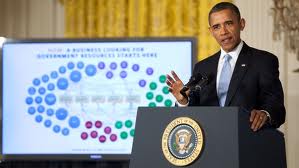
President Obama has finally outlined his proposals for the reorganization of U.S. trade agencies and is now asking Congress for necessary authority. There are various interconnected reasons why these proposals should be authorized by Congress now and implemented quickly. This reorganization is long overdue.
President Obama’s proposals would restructure a bifurcated and diffused trade organization into a more focused and streamlined one. This is a model followed by most of our global competitors, for example, China and Brazil, who have organized and energized to compete aggressively in global commerce over the last few decades.
President Obama proposed consolidating six trade and commerce agencies. This would merge the USTR, OPIC, ExIm Bank, TDA and the SBA within the U.S. Department of Commerce, to be renamed.
The major argument against this reorganization is that it puts the USTR in with Commerce, as just one unit. Thus, reversing the independence USTR has enjoyed since the 1960’s. But the history of the 1960’s is vastly different from the 21st Century. It makes no sense to have trade negotiations conducted by one agency and trade promotion and job creation by another. This reorganization would merge policy and operations. It’s about time.
In the 1960’s during the Kennedy era Congress wanted to make sure that trade negotiations were given a high-profile, somewhat removed from the State Department and the Department of Commerce. At that time trade was viewed by many as being almost independent from both global politics and domestic commerce. But that is not the case today.
Global trade is central to U.S. commerce and international politics. Most of our trading partners have hyper-focused executive agencies dealing with trade, recognizing it as a meld between global commerce and international affairs. We should not be the outlier in this arrangement.
Giving cabinet level access to the USTR can override concerns that trade would be lost in the domestic political decision-making process within the United States.
It is in our national interest to foster greater international transactions and global competitiveness of U.S. firms. This can be done only by creating a strong and more unified government support system.
Bringing together disparate agencies dealing with various aspects of global trade — from trade negotiations, trade enforcement, trade promotion, trade financing, import remedies and small business support — into one agency is essential. An agency that is focused as a laser beam to help crack international markets and promote global commerce for U.S. business is critical today.
Some thought should also be given to including other agencies such as those in the Dept. of Agriculture dealing with agricultural exports, from the Dept. of State concerning arms exports, and from the Treasury Department concerning foreign direct investment. The problem is we don’t want to windup with an unruly conglomeration as in Homeland Security.
Congressional committee jurisdiction would be impacted by President Obama’s proposals. Some committees would gain oversight and others would lose some. It is mutually reinforcing if Congress would streamline its oversight functions to parallel the streamlining of the executive agencies and departments.
There is one additional point that needs to be made. Trade relations are central to national security. National strength is dependent on vibrant economic underpinnings. This is more true today than ever before. Care must also be taken to streamline the inter-agency process that coordinates trade issues with national security concerns.
Just look at the imposition of aggressive trade and financial sanctions on Iran. Coordinating the efforts of the State, Defense and Treasury departments is essential. This coordination must also provide for enhanced congressional oversight and dialogue.
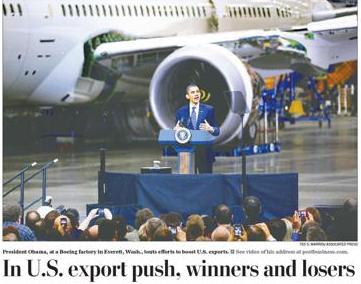
President Obama’s proposals for revamping U.S. government trade organization are good for both policymaking and business creation. They should not be viewed as a partisan battleground. They are a good beginning. But promoting exports and manufacturing is a complex, multi-year undertaking.
Posted in Global Trade Relations
Tagged congessional committee oversight of trade, congress and trade, ExIm, ITA, Obama's trade proposals and trade reorganization, OPIC, the president and trade, trade reorganization, U.S. and global trade, U.S. Dept. of Commerce, U.S. international competitiveness, USTR
Leave a comment
State Incentives & Global Trade – Poor Accountability & Corporate Welfare? — No.
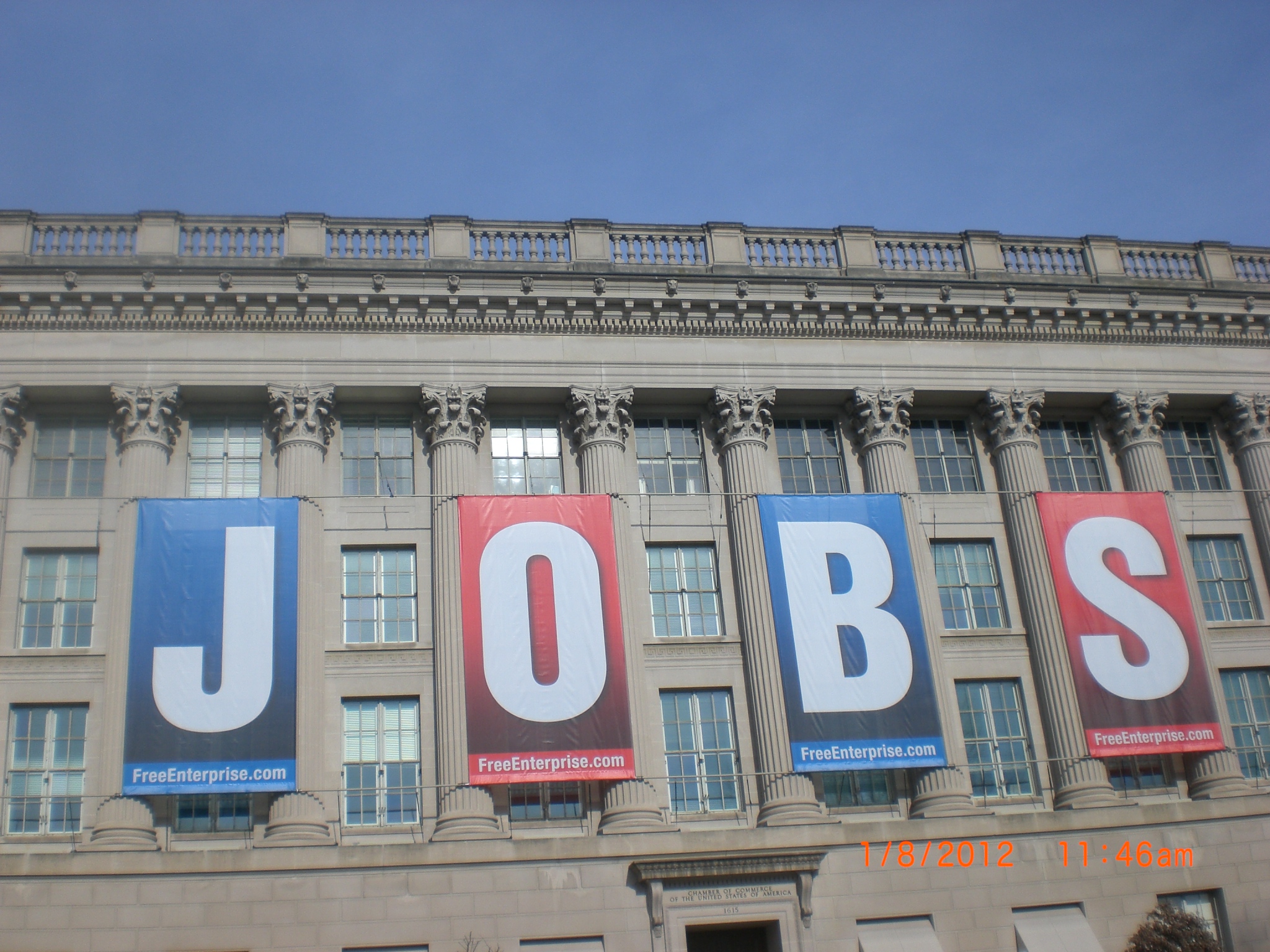
Weak economic performance over the last decade has prompted states to become more aggressive in their economic development efforts to attract foreign firms, investment, and jobs.
Critics argue that state incentives to attract foreign firms amount to corporate welfare.
These critics point to literature denying the benefits of incentives for attracting any firm, domestic or international. They argue that such efforts lack state accountability of public funds. They draw a parallel to weak corporate governance provided by managers and boards of directors. These objections miss the point.
Let’s start with the last point concerning accountability.
The well-known corporate theory of agency declares that managers and corporate officers are agents of the corporation and working on behalf of widely dispersed shareholders. They along with board members have a fiduciary duty to the corporation. The “Business Judgment Rule” imposes a strict standard of fiduciary responsibility on boards members. However, managers often do what they want in their own interest without meaningful oversight or restriction.
As we all know when equity ownership is so dispersed corporate executives and bankers with the cooperation of the boards become highly overpaid. Just look at the last ten years, jobs were lost by the millions and income inequality grew dramatically.
The issue of corporate responsibility is different from state accountability.
State officials are not overpaid and are out of office after periodic elections. State officials are directly responsible to the voters. To the contrary, corporate directors are often personally selected by the CEO and senior corporate management with only pro forma board elections.
Voters provide local control over state officials. Board members overseeing state incentives are often subject to confirmation by state legislatures. Elected state officials do not become personally wealthy at the expense of state citizens.
States have an obligation to provide education and training to its residents. You simply cannot say that when states work in partnership with a firm, often through a community college, this is not a public good. This model is followed by other countries, such as Germany, with great success. Investing in the skills of labor for the long-term is critical. Correcting the mismatch between new job openings and the workforce is essential.
The recent report Good Jobs First (2011) criticizes state incentives as not providing sufficient metrics in their incentives. This is certainly not true for the state that I’m most familiar with, Virginia. This report complains that specific wage levels and benefits should be required for state incentives. But the imposition of wage and benefit levels in this case would amount to excessive government intrusion into the private sector in an uncertain time.
There is a difference when a state attracts a corporation or investment from another state or an international corporation from another country.
Leaving aside the domestic corporate relocation, which often make firms more competitive when locating to a more business-friendly state, attracting foreign firms and investment does not raise in anyway the issue of “beggar-thy-neighbor” or race to the bottom. A policy of attracting foreign investment and foreign corporations for economic development is a no-brainer. This is a legitimate function of state government.
States need to become more aggressive globally to survive newer trends in globalization. Providing state incentives to attract foreign firms, trade, and investment is crucial to the revival of the U.S. economy and the creation of new jobs. We all have a stake in it.
Posted in Global Trade Relations
Tagged beggar-thy-neighbor, community colleges, corporate equity, corporate responsibility, corporate welfare, economic development, Germany, global trade, globalization, growing inequality, jobs, metrics for state incentives, race to the bottom, state acoountability, state incentives, state poiticians, state workers, workforce development
Leave a comment
U.S. Global Trade Actions, 2011 — Long List, But How Effective?
The USTR recently released in December 2011 a list of trade actions taken by the United States during 2011. Rom Kirk declared, “In 2011, the Obama Administration achieved unprecedented results on trade.” Really? The following is an itemization of the major actions listed by the USTR:
.. National Export Initiative (NEI).
.. nited States-Korea Free Trade Agreement (KORUS FTA).
.. United States-Colombia trade agreement.
.. United States-Panama trade agreement.
.. Streamlined Trade Adjustment Assistance (TAA).
.. Trans-Pacific Partnership (TPP).
.. Revise the text of the GPA.
.. Anti-Counterfeiting Trade Agreement (ACTA).
.. Completion of Russia’s negotiations for Membership in the WTO.
.. Transatlantic Economic Council.
.. Winning at the WTO against EU Subsidies to Airbus.
.. Successfully defending U.S. aerospace manufacturers against EU claims.
.. Winning a WTO panel decision indicating China must ensure access to raw materials.
.. China terminated a wind power equipment subsidy program.
.. Challenging Chinese duties on U.S. chicken broiler products.
.. Requesting the establishment of a panel at the WTO over China’s restrictions on foreign suppliers of electronic payment services (EPS).
.. Successfully defending action taken by President Obama under the China specific safeguard mechanism.
It would be instructive to assess the empirical impact of these actions to determine how effective they actually are in promoting U.S. and global trade. The issue of resolving China’s currency valuation issue is not listed anywhere. That’s because it hasn’t been resolved. Perhaps, next year.
Corporate Responsibility & Global Tax (FACTA) – Unilateral or Multilateral?


 Stuart Malawer
 U.S. LAW & GLOBAL TRADE RELATIONS.
You must be logged in to post a comment.