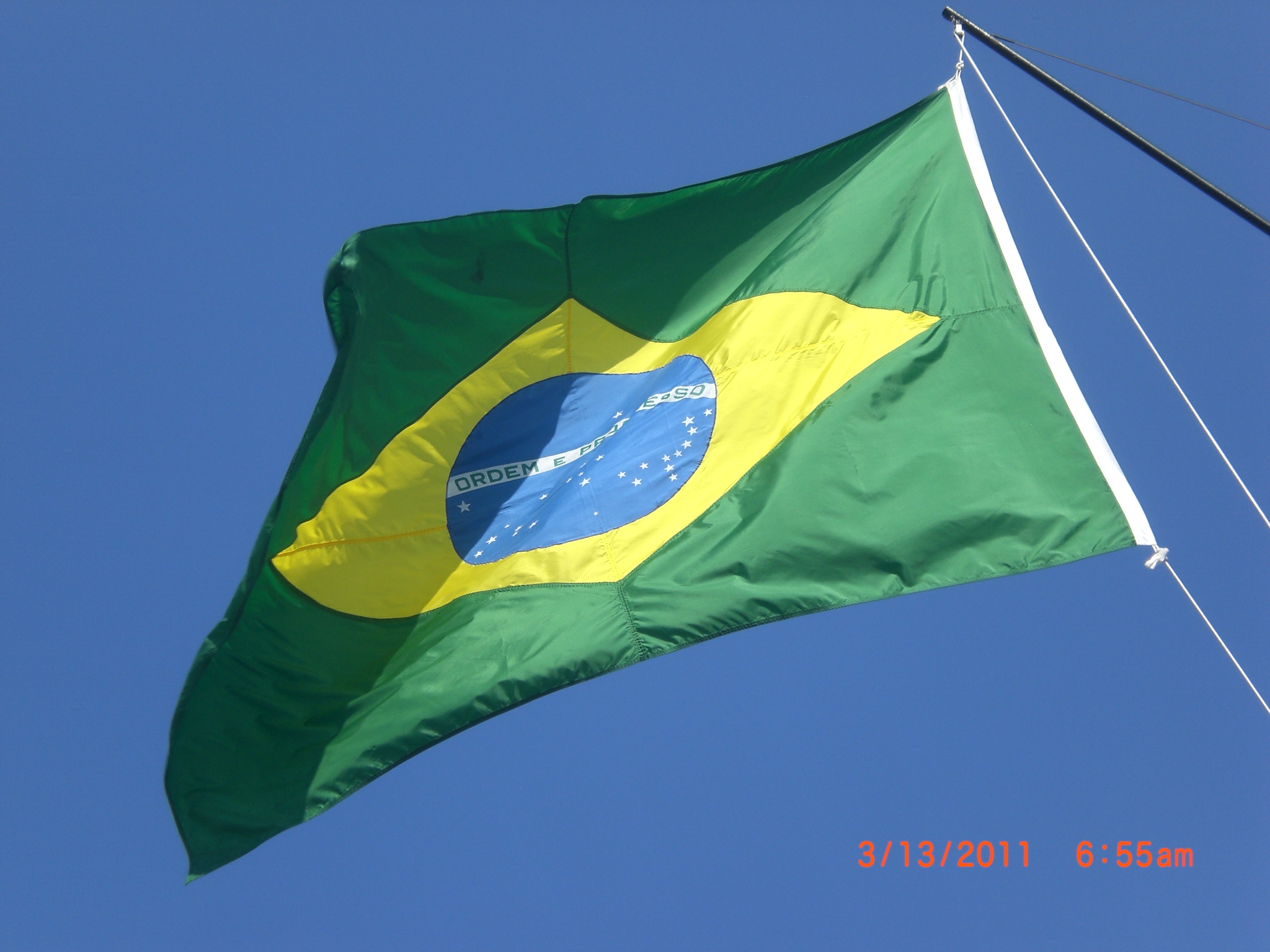
Brazil — Currency Wars, Trade Disputes and Great Opportunity for U.S. Trade and Investment.

I’ve  recently returned from Brazil.
Brazil has various trade disputes and currency issues with a number of countries. For Brazil the “currency wars” continue with the high valuation of its currency. Brazil continues to have issues with the United States concerning export of Brazilian aircraft, U.S. agricultural subsidies, and import restrictions.
Brazil has recently become more focused on its trade relations with China. In particular, it’s concerned about China’s cheap imports into Brazil and China’s huge purchases of its raw materials and commodities. However, Brazil remains a very attractive destination for foreign capital. Sovereign wealth funds from the Middle East have bought into Brazilian conglomerates and holding companies. Foreign oil companies are actively pursuing opportunities in the oil fields off Brazil.
It is interesting that to a significant extent U.S. firms and U.S. trade policy have somewhat ignored Brazil’s gigantic growth. This needs to change.
The New Trade Routes: Brazil and China.” Financial Times (Special Report 2011).
Posted in Global Trade Relations | Tagged , , , , , | Leave a comment

Emerging Issues in International Trade — Recent Conference — Foreign Investment and Cybersecurity.

I gave the keynote address last week at the College of William and Mary Law School’s conference on emerging issues in international trade.  The presentation was on the WTO dispute resolution system and U.S. – China litigation 2001-2012. It is clear that President Obama’s actions in the WTO concerning China have been even more aggressive than those of President’s Bush’s administration. The program was really outstanding.
Malawer, “WTO, Trade enforcement and China Litigation.” (March 23, 2012).
I noticed in today’s papers that Premier Wen Jiabao is elaborating for the first time on China’s “going abroad” investment strategies and that computer hacking has been linked to individuals at a Chinese university. To me one of the biggest issues today in global trade is how the U.S. is going to reconcile the growing need for Chinese investment with concerns over cybersecurity.
Posted in Global Trade Relations | Tagged , , , , , , , | Leave a comment

“WTO / DSU & U.S. Trade Enforcement — U.S. – China Trade Disputes — More Aggressive Enforcement.”

I gave the keynote address last week at the College of William and Mary Law School’s conference on emerging issues in international trade.  The presentation was on the WTO dispute resolution system and U.S. – China litigation 2001-2012. It is clear that President Obama’s actions in the WTO concerning China have been even more aggressive than those of President’s Bush’s administration. Attached is the outline of the presentation. “WTO / DSU & U.S. Trade Enforcement — U.S. – China Trade Disputes.” (March 2012). You might want to contact the law school for the presentations of the other 9 or 10 people. The program was really outstanding.
Tagged , , , , , , | Leave a comment

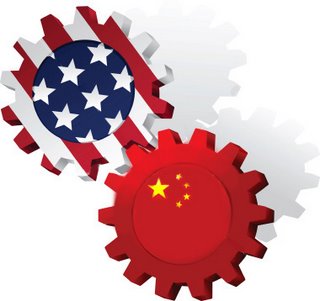
U.S. – China Trade Friction and Recent U.S. Actions … What’s the Assessment?

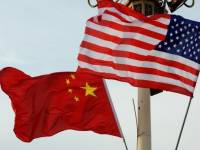
China is warning of increased trade tension during this Presidential election season. It is now considering reciprocal trade actions to combat a string of recent U.S. actions it considers more aggressive and targeted against China.
China points to the following four items:
… The recent filing of the Rare Earth case by the U.S. in the WTO;
… The preliminary decision of the U.S. Dept. of Commerce imposing countervailing duties on imports of solar panels from China (case brought by SolarWorld Industries America);
… The new U.S. legislation allowing countervailing duties on imports from nonmarket economies (China);
… The establishment of the International Trade Enforcement Center (ITEC),
What’s my assessment? Here it is:
… A trade war between China and the U.S. is not very likely.
… The Rare Earth case in the WTO is not easy to win. GATT Article XX(g) allows for trade measures to conserve natural resources.
… The SolarWorld Industries case is highly dependent on the facts. The Chinese government payments may not be too unlike those made by the U.S. government to solar panel manufacturers in the United States.
… There is a great hurdle to argue successfully that subsidies ought to be allowed against  goods coming from nonmarket economies. Provisions of GATT article VI and China’s accession agreement tend to be contrary to that view.
… The establishment of ITEC is fair enough. But along with Section 301 procedures that are still in place, they raise potentially difficult issues concerning the WTO restrictions on unilateral trade actions in non-trade remedy cases (those focusing on foreign market access.)
Posted in Global Trade Relations | Tagged , , , , , , , , , , , | Leave a comment

Obama, Bush & China Litigation in the WTO — Increased Focus & Frequency.

The following are two interesting charts comparing the Bush and Obama administrations in bringing cases against China in the WTO. They indicate the increased rate and focus of the Obama administration in filing such cases. There is also one chart of the Clinton, Bush and Obama administrations filing WTO cases generally.  This one shows a significant decline in filing cases since President Clinton’s administration. Does this show a greater acceptance of the WTO rules by member countries? Malawer, “Three Charts Concerning China Cases in the WTO and More (1993-2012). (March 21, 2012).

Posted in Global Trade Relations | Tagged , , , | Leave a comment

New WTO Case on China Export Restrictions (Rare Earth Minerals), New Legislation and ITA Action — WTO and Trade Focus of U.S. on China.

The U.S. along with Japan and the EU filed disputes against China concerning China’s export restrictions on various rare earths and other minerals. This case follows a recent AB decision in January 2012 against China’s export restrictions on nine raw minerals.

The Obama administration argues that is has brought twice as many trade cases against China than the Bush administration.  This new case clearly indicates a continuing and more aggressive trade policy by the U.S. against China that makes the WTO / DSU a central forum in U.S. – China trade relations.

Other trade issues with China that will likely see action in the near future are auto parts, cars, solar panels and anti-subsidy laws. New legislation was recently passed by the Congress and signed by the President allowing countervailing duties despite the non-market status of China and this is retroactive. (The International Trade Administration recently imposed preliminary countervailing duties on Chinese solar panel imports because of Chinese subsidies.)

I’ve just completed a revised chart of China trade litigation in the WTO (2001 – 2012) and new ones on Obama and Bush litigation against China in the WTO and of the Clinton-Bush-Obama WTO filings generally. Malawer, Chart — China WTO Trade Litigation (March 16, 2012) and Malawer, “Three Charts — Obama & Bush China WTO Litigation and Total WTO Filings by U.S.” (March 2012).

The above indicates that the Obama administration brought 6 cases against China in almost four years while the Bush administration brought 7 in eight years. But what is most astonishing is that the Obama administration brought a total of only eight cases in the WTO while the Bush administration brought a total of 33 cases. Thus, a much more directed focus on China by the Obama administration.

It is interesting to note that the filing of new WTO disputes by all countries for last year (2011) were at its lowest (8). “New WTO Disputes.” (WTO 2012).

U.S., Japan and EU File Disputes Against China.WTO News (March 13, 2012). U.S. Challenges Restraints on Rare Earths.” USTR News (March 13, 2012). Video — Obama Announces WTO Case Over Rare Earths.” CNN (March 13, 2012) (Obama video and CNN report on rare earth case).
Posted in Global Trade Relations | Tagged , , , , , | Leave a comment

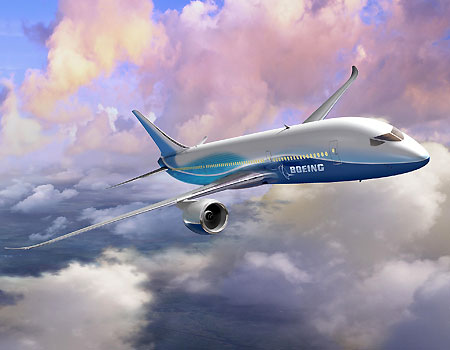
The Boeing Decision — Sub-National and Defense Measures Violate Global Trade Rules.

The WTO Appellate Body upheld some claims of the EU against the U.S. concerning subsidies to Boeing.
The USTR claimed this as a victory because of the smaller amount of subsidies found when compared to those found by the WTO in the U.S. case against the EU and its subsidies to Airbus.
To a great extent the USTR is correct. However,  the AB did find that state tax measures by Washington and some DOD and NASA research funding illegal as having adverse effects on Boeing.
This is interesting because this decision illustrates that sub-national units and defense measures can violate global trade rules. “Appellate Body Report of Boeing.” WTO News (March 12, 2012); “U.S. Victory in WTO Aircraft Dispute.” USTR News (March 12, 2012).
Posted in Global Trade Relations | Tagged , , , , , , | Leave a comment

U.S. Commerce Under Secretary Calls for More Trade with Brazil and Indonesia and More Trade Enforcement.

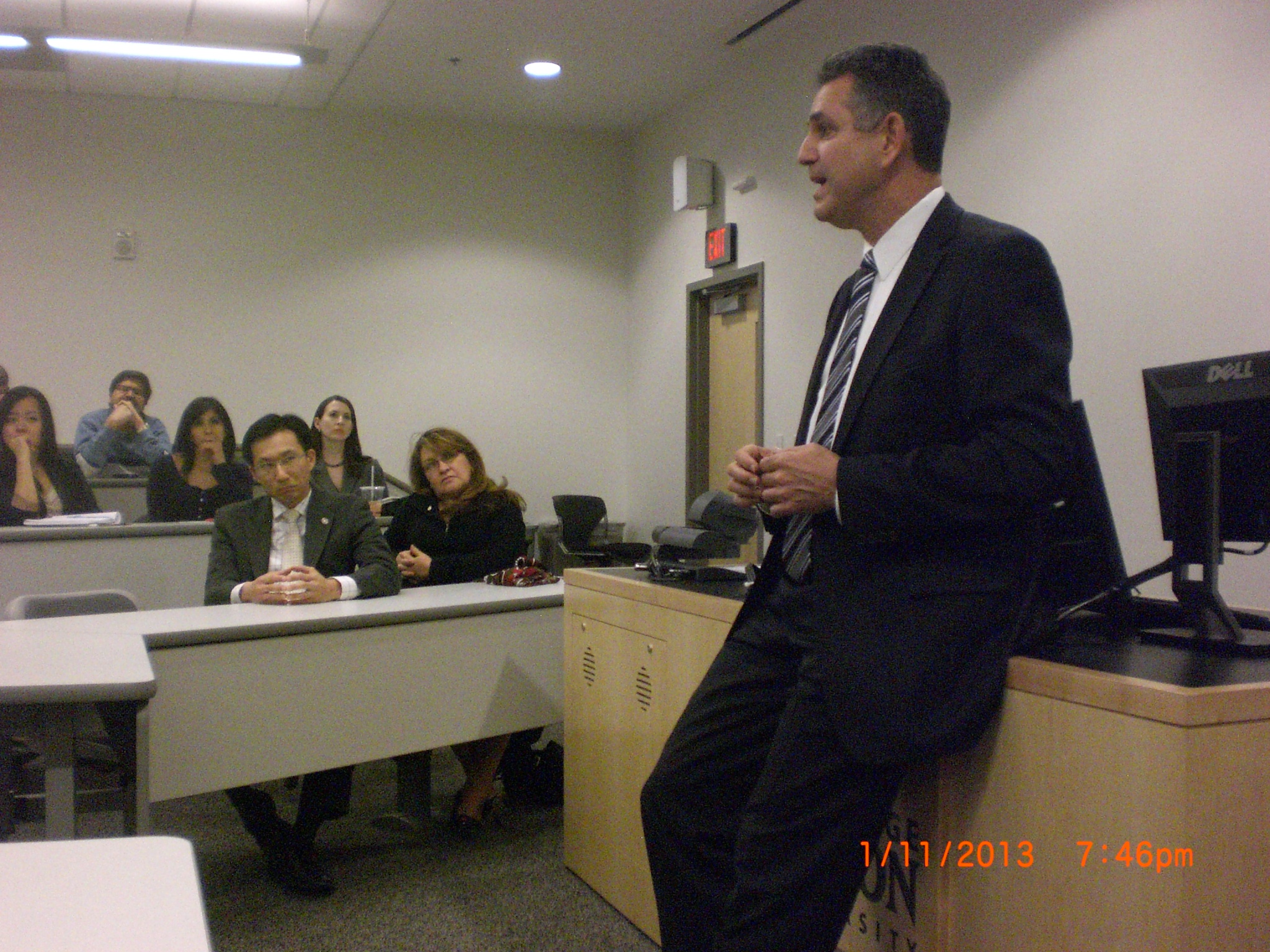
Francisco Sanchez, Under Secretary for International Trade, speaking in Dr. Malawer’s trade class at George Mason Univ. (School of Public Policy)(Feb. 27, 2012).

Francisco Sanchez, the U.S. Commerce Under Secretary for International Trade, called for more trade with Brazil and Indonesia. Among other topics he discussed was greater trade enforcement by the Obama administration. However, it’s interesting to note that his office does not self-initiate actions. It leaves commencement of such actions to the private sector.
Posted in Global Trade Relations | Tagged , , , | Leave a comment

New WTO Case by U.S. Against India — More Aggressive U.S. Trade Enforcement Policy.


The U.S. filed a new WTO dispute against India concerning its agricultural restrictions (poultry imports). This is the fifth time the U.S. has brought a WTO action against India and the first time for the Obama administration.

This is a new part of the more aggressive trade enforcement policy of the U.S. The U.S. filed a similar suit against China recently concerning poultry imports.

Actions against India in the WTO have somewhat been under the public radar.  Actions against China have had a higher profile and priority since the Bush administration. This may be changing, somewhat.

 “U.S. Files Agricultural Dispute Against India.”  WTO News (March 6, 2012). “U.S. Takes India Ban on Poultry Imports to WTO.” Financial Times (March 7, 2012).

Posted in Global Trade Relations | Tagged , , , , , , | 1 Comment

Multinational Corporate Responsibility and the Alien Tort Statute — Overseas Torture & U.S. Courts.

Under the Alien Tort Statute should foreign plaintiffs be allowed to sue foreign corporations in American courts for torture when that action is done abroad in cooperation with a foreign government?
Should the multinationals, unlike private individuals, be allowed to escape American jurisdiction?
The general defense against allowing such suits is that a corporation is not subject to international law. Yet, individuals are in fact, in various situations, subject to customary international law. Pirates have for hundreds of years been subject to capture and jail. Corporations are considered juridical persons and have constitutional rights in the United States.
After hearing oral argument the Supreme Court raised the larger question and asked for briefs on whether anyone should be held liable under the statute — corporations or individuals. This is not a good sign.
Conservative jurists have shown great animosity towards anything international including the application of customary international law within the United States. Which has been applicable in the United States under the Supremacy Clause (Article VI) since the 1800’s.
As a matter of law and policy it seems clear that suits against foreign multinationals (and individuals) for overseas torture should proceed in the United States.
In the context of the global trading system which is  becoming dramatically more inter-connected, upholding jurisdiction under the Alien Tort Statute provides a viable means of enforcing corporate responsibility in an increasingly decentralized and balkanized global legal system.
Corporate Abuse Abroad, A Path to Justice Here.” New York Times (March 3, 2012); “Justices to Consider Broader Question.” Washington Post (March 6, 2012).
Posted in Global Trade Relations | Tagged , , , | Leave a comment