First Case Filed Against Russia in WTO — Russian Recycling Fees on Auto Imports Challenged by the EU.

         Russia and Wto Flags     The  EU filed the first case against Russia in the WTO yesterday. The Russian Federation joined the WTO last August (2012).


     The EU argues that the Russian recycling fee imposed on auto imports violate the national treatment principle. The EU contends that the fees are a protectionist measure under the guise of environmental legislation especially since they apply only to imports. EU officials say they are disappointed since they viewed Russia’s objective in joining the WTO was to anchor it to a more predictable, rules-based trading  system.
      The Russian actions may well disappoint EU officials, and justifiable so, but this is how global trade disputes are settled today. Countries have different views of trade rules in specific situations.  They are then litigated in the WTO. This is central to today’s rules-based system. So far the WTO dispute resolution system has really proven itself over the last twenty years.
      For example, China entered the WTO in 2001 and has been a party in many cases. By-and-large once WTO panels have spoken the recommendations have generally been implemented by China.
      We should expect the same in light of Russia’s accession. Countries find it in their national interest to comply with global trade rules once they have been adjudicated. Just as the EU delegate suggested. Global trade rules create more predictability and thus increases trade and economic development. This is the goal of all states. Russia is no exception. Russia needs more trade and economic development. That’s why it joined.
 …. “EU Takes Russia to WTO Over Car Fee.Wall Street Journal   (July 10, 2013).
…. “EU Brings First Russia Case at WTO.Financial Times   (July 10, 2013).
…. “EU  Files Dispute Against Russia.WTO News (July 9,  2013).
Tagged , , , , | Leave a comment

Global Tax Reform and International Action.

Tax Free
      The G8 promised in its “Lough Erne Declaration” to take the lead in promoting global tax. This hardline against tax avoidance is in part driven by glaring failure of multinational corporations from paying their fair share of taxes, by growing national budget deficits, and struggling national economies.
    This growing global demand for tax reform of  global corporate  transactions and various practices of multinational corporations  generally is long-overdue.  But  such  reform  is  a long process involving international negotiations and actions by national parliaments.
      Let’s see if the U.S. and the EU will follow through with their declarations through bilateral negotiations and through international organizations, especially the OECD and the G8 and G20 working groups.
      Other  countries, developed and developing, are keenly interested.  This includes, among others, Russia, Japan and Brazil. This is a  critical matter of economic development and fiscal equity. Taxation needs to be linked to real economic activity.
     Reform should be of the highest importance  for national and international policy makers. International taxation is an issue that greater cooperation. It is clearly required in order to alleviate the most damaging and outdated aspects of governing global transactions today in a multi-jurisdictional world.  
…. “G8 Leaders Promise Corporate Tax clampdown to bolster Economies.” Financial Times (June 19, 2013). The European Commission criticized opposition to this policy as opposition to globalization.” “European Commission President Criticizes Opposition to Globalization.’ New York Times (June 17, 2013).
…. Other recent articles on global tax reform at the time of the G8 are: “Global Tool Sought to Curb Tax Evasion (OECD).” Washington Post (June 18, 2013); “The World Needs Global Tax Reform.” Financial Times (June 17, 2013); “U.K. Territories To Join Tax Agreement.” Wall Street Journal (June 17, 20013); “Talking Growth, Trade and Transparency.” Wall Street Journal (June 17, 2013).
Tagged , , , , , , | Leave a comment

U.S. Cyber Activity and Global Trade Transactions — They are Related.

    Web

Cyber activity (snooping) and global transactions are related. In more ways than you think. It’s more than just stealing trade secrets. It is clear that the recent disclosures concerning NSA surveillance is already  generating a great deal of debate within the United States and abroad.
It is also clear that this disclosure will impact relations with China and the EU. This will be in the context of various issues including  cyberespionage, data privacy, foreign direct investment (in the U.S. and abroad), and global trade relations.
The forthcoming G-20 meeting is already scheduled to address the three big “T” issues relating to global transactions — trade, tax and transparency (corruption). I would not be surprised that another “T” or issue would be added — Telecommunication and Internet Security. After all, the revolution in information technology and telecommunications is the basis of global trade today.
The recent disclosure of various secretive cyber and telecommunication activities by the U.S. government has implications outside of U.S. domestic politics. This story has only just begun.
We’ll see how the debate develops over data privacy, national security in the digital age, and global trade.
…. The disclosure of the NSA surveillance of phone records and social media will transform the entire terms of debate with China over trade and cyberespionage.  “America and China and Entwined in a Web of War.Financial Times (June 8, 2013).
…. The “Three Ts” of Global Transactions — Trade, Tax and Transparency (Corruption) — are going to be the focus of the forthcoming G-8. “G8 Leaders Braced for Battle on Evasion.Financial Times (June 11, 2013).
…. Also to be considered may be a new “T” — Telecommunications — in light of the recent NSA disclosures. “Hopes Shrink for EU Trade Deal.” Washington Post (June 14,            2013).
Posted in Global Trade Relations | Tagged , , , , , , , , , , | Leave a comment

Asian Central Bankers and Economic Growth — Ideas From the Wharton Global Forum in Tokyo (May 2013).

    
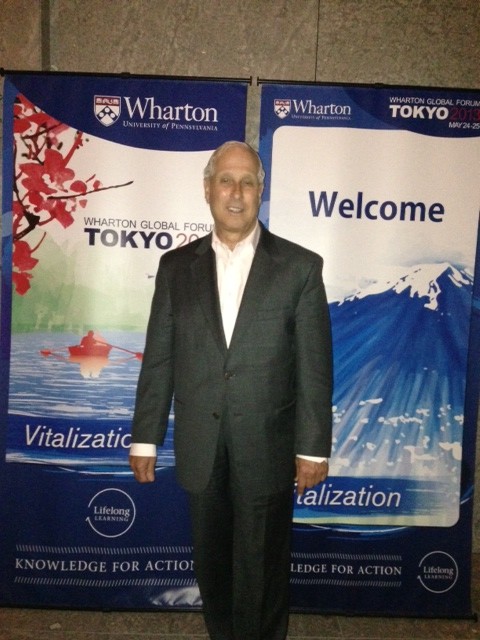
Dr. Stuart Malawer in Tokyo at the Wharton Global Forum (May 2013).

Dr. Stuart Malawer in Tokyo at the Wharton Global Forum (May 2013).


     Quantitative easing, currency devaluation, deleveraging, low-interest rate environment, economic development and sustainable growth are all issues confronting Japan, Korea and emerging markets in Asia. This has been highlighted recently by Japan’s devaluation of the yen to help exports as part of the three arrows of  “Abenomics.”
     The recent Wharton Global Forum held in Tokyo late this May brought together Asian central bank governors from Thailand, Malaysia and Korea as well as leading Japanese corporate leaders to discuss these issues. Here are some of their conclusions and some thoughts:
…. Quantitative Easing may be good for Japan but not for the rest of Asia.
…. There is a need for orderly change in the foreign exchange markets and in particular an orderly unwinding of quantitative easing.
…  Selected capital controls have proven effective and may be utilized again.
…. The real policy problems for Japan, Korea and the Asian emerging markets are growth and employment.
…. Japan needs regulatory reform and structural reforms. The aging population is a huge problem. Greater diversity and openness are needed in Japan to promote innovation and growth. Austerity is not the answer.
…. The 1,000 plus drop in the Nikkei last week is a clear indication that the jury is still out on “Abenomics” and its doubling of the money supply.
…. Japan’s trade relations with China cannot be divorced from its general political relations with Beijing. (To me trade issues are difficult enough and are extremely important.  Witness the new WTO case filed by Japan against China concerning antidumping duties imposed on Japanese steel imports.)
... The critical problem is that a central bank has jurisdiction only within its own nation but  financial issues are global.  There is a lack of an effective global mechanism and an effective global architecture to  address these issues. This is not withstanding the existence of the IMF. This disconnect must be addressed.
…. Fiscal imbalances are only a part of the problem. While the objectives of monetary and fiscal policies are not always agreed upon it is recognized that monetary stability and financial stability are only means to an end — economic development and growth are the real objectives.
…. The international role of central banks is limited and their role is principally nation-centric. Asian nations need to get together to react  to global financial flows and problems generated to a great extent from the U.S. and Europe. They actually need to act more broadly.
…. Japan needs to formulate effective trade objectives concerning the forthcoming Trans-Pacific Partnership negotiations. This cannot merely be protection of its agricultural sector. There is a critical need to develop rules for global trade within Asia.
…. Japan’s participation in the Trans-Pacific Partnership (TPP) cannot be used to maintain its own restrictions or to isolate China. Japan’s future to a significant extent is based upon better trade relations with China. Its foreign relations with China need to be far better managed.
     Only time will tell if the countries of East and Southeast Asia can come together to create an international mechanism and better global governance to address  international financial and trade policy  issues confronting them.                  
image               
Posted in Global Trade Relations | Tagged , , , , , , , , | Leave a comment

Global Tax Avoidance and Newer Trade Issues — Time for Greater Global Cooperation.

Global Money
    Global tax avoidance by multinationals of various countries, especially those in the U.S. and the EU,  has become one of the hottest trade issues this year. This is the year that trade policy issues have become once again central to the foreign policy debate. Policy makers in the U.S., EU, the U.K., the OECD, and the G20 have all taken up this issue. We should expect to see significant change in the near future. Of course, this is long-overdue.
     Other trade issues are also part of the new and revised trade debate especially concerning imposition of trade duties (A/D and CVD) by the U.S. and the EU on Chinese solar panel exports, negotiation of regional trade agreements (TTP and TTIP), ‘fast track (TPA),’ commercial cyberespionage, and the U.S. – China cross-border auditing agreement.
… Multinational corporations shuffle their profits and often their headquarters around the globe to find low-tax jurisdictions. The U.S. and other countries are now striving for a global solution concerning international taxation. This should include an interim step of better policing of transfer-pricing. “The Corporate Tax Code.” New York Times (May 25, 2013).
… The recent U.S. Senate probe of Apple’s tax policies renewed urgency into global efforts in the U.S. and the EU to crack down of aggressive tax avoidance. Plans for reforms of the global tax rules are being considered by the OECD prior to the forthcoming G20 conference. “Transparency” is a central theme as a weapon against tax avoidance. “Apple Tax Probe in U.S. Spurs Plans for Global Regime.” Financial Times (May 24, 2013).
…There is a political furor in the EU over allegations of tax avoidance by multinationals such as Apple, Starbucks and Google.  Tim Cook from Apple and Eric Schmidt from Google defend such actions. “EU to Make Big Companies Set Out Profits and Taxes for Ech Country.” Financial Times (May 24, 2013).
…. The EU has recently called for doing away with bank secrecy, hoping to recoup about $1.5 trillion dollars lost tax each year. “EU Summit Ends Banking Secrecy.” Financial Times (May 24, 2013).
… The U.S. and Switzerland is weighting a tax deal leading to imposition of billions of dollars penalty in resolving bank secrecy and tax avoidance issues of U.S. nationals. “Switzerland Weighs Deal in Tax Cases.” New York Times (May 29, 2013).
… There are growing tensions over the trans-Atlantic negotiation of the TTIP  between the U.S. and the EU. Fifty different farm groups within the U.S. have already expressed their concern as well as others on the proposed “cultural exception” that France has demanded for the film and music industries. “Fractures Appear on Trade Pact.” Financial Times (May 24, 2013).
… China solar panel makers are attempting to negotiate agreements with the U.S. and EU to alleviate the imposition of antidumping duties on their sales to those markets. The U.S. law allows such “suspension agreements.”  There is also an effort to tie these solar panel negotiations with limiting Chinese telecom imports. (To me this is strikingly similar to the managed trade policies of the 1980’s concerning Japanese steel and auto imports into the U.S. Such actions today are very questionable under the newer WTO rules.) “China Solar Panel Makers Negotiate with the U.S and EU.” Financial Times (May 24, 2013). 
… There are proposals in Congress now to authorize U.S. firms to respond to cyber-attacks, to require SEC reporting by firms about cyber-readiness, and companies protection of intellectual property rights (IPR) as a criterion in reviewing foreign takeovers and transactions under CFIUS. “U.S. Urged to Allow Attacks on Hackers.” Financial Times (May 23, 2013). 
… The U.S. has recently agreed with China to give the U.S. PCAOB access to the records of Chinese auditing firms (including those of U.S. subsidiaries in China) that audit Chinese firms listed on the U.S. markets. This is a huge development. “U.S.  and China Set Auditor Pact.” Wall Street Journal (May 27, 2013).
… U.S. business is eager to promote ‘fast track’ authority. The U.S. Chamber and the Business Round Table are taking the lead in lobbying for this. “U.S. Business Keen to Promote ‘Fast Track’ Trade Deals.” Financial Times (May. 20, 2013).
      In summary, it is clear that progress needs to be done on many fronts concerning global taxation and other issues. Global tax avoidance has become big business in the era of globalization, digital communication and multinational business.
      There seems to be developing a consensus  throughout the trading system that cooperation via international agreements is a viable path. States are becoming more forceful in looking at global transactions. This is no surprise given the great amount of problems that have surfaced over the years in a range of issues concerning taxation, securities, cyberespionage and foreign investment. It’s about time for more meaningful national action to confront these international transactions. In particular, this means the formulation of global rules and greater diplomatic cooperation among countries to confront these many issues.
Global Tax
Posted in Global Trade Relations | Tagged , , , , , , , , , , , | Leave a comment

Critical Trade Developments — New Global Players to Chinese Cyberespionage — It’s Now Really Interesting.

         Global Trade (April 1, 2013)      A range of critical trade developments have recently burst upon the global trading system ranging from selecting new global players to Chinese cyberespionage for commercial purposes. It’s now really getting interesting.
     Two new world trade players named — Michael Fromm as the new USTR from the White House and Roberto Azevedo as the new WTO Director-General from Brazil. Both are to take office in the near future. This represents a new chapter in international trade negotiations. Chinese U.S. WTO litigation remains central to U.S. trade policy. The WTO has launched a new monitoring service of global trade remedies, and import / export legislation and regulations.  The EU and China are about to enter into their largest trade dispute with the EU about to impose A/D duties on Chinese imports of solar panels. Here’s some additional information concerning these items.
….. Michael Froman has been named the new USTR which is subject of Senate confirmation. This confirms President Obama’s focus on global trade as a central issue for his second term. Froman is currently the Deputy National Security Adviser for International Economic Affairs. He holds both a law degree and a D.Phil in International Relations from Oxford University. “Barack Obama Cements Focus on Trade for Second Term.” Financial Times (April 29, 2013). “Froman for USTR.Washington Post (May 3, 2013).
…. A new Director-General of the WTO has been selected. Roberto Azevedo is from Brazil. His challenge is to revive the negotiation part of the WTO that results in new trade agreements. It’s role in dispute settlement arena is robust. Brazil has been aggressive in attacking global trade issues especially agriculture but has been somewhat restrictive in its own economic policies and concern for competitive currency devaluation (“Currency Wars“). “Brazilian to Lead World Trade Body.” Wall Street Journal (May 8, 2013).
…. Update on WTO litigation generally and U.S. – China WTO litigation.
        …. Malawer, “China in the WTO / DSU (2001-2013).” (Chart) (April 25, 2013).
        …. Malawer, “U.S. – China Win / Loss (2001-2013).” (Chart) (April 25, 2013).
        …. Malawer, “U.S. – China WTO Cases — Bush & Obama Administrations (6 Charts)” (April 2013).
….The WTO has launched a new trade monitoring interactive database. This is very helpful. “New WTO Trade Monitoring Database.USTR News (May 3,2013). Trade Monitoring Database. This contains information relating to trade remedies (dumping, subsidies and safeguards) and import and exports (for example, tax and regulations).
…. The EU is planning to impose a large anti-dumping duty on solar panels from China. This could lead o one of the largest trade disputes in the WTO / DSU system. Another matter is pending concerning Chinese subsidies on solar panel exports. “EU to Impose Fine on Chinese Solar Panels.Wall Street Journal (5.9.13). The U.S. subsidiary of the EU firm (SolarWorld) that filed this case brought a similar action previously in the U.S. The EU action argues that the solar panels containing polysilicone in the photovoltaic cells are being dumped in the EU. However, the downstream installers of the solar panels in the EU contend that the A/D duty would cause massive loss of business in the EU. “Trade: Solar Flares.Financial Times (May 10th, 2013).
…. The Pentagon released a report slamming China as providing state-supported commercial cyberespionage for both economic and potentially national security gain. “Pentagon’s Annual Report to Congress on China.” (2013) (“The cyber spying could assist Chinese military planners in “building a picture of US network defence networks, logistics, and related military capabilities that could be exploited during a crisis.”)

China and U.S. Flags

Posted in Global Trade Relations | Tagged , , , , , , | Leave a comment

U.S. Export of Liquefied Natural Gas — Geopolitical & National Security Impact.

Energy Exports
The geopolitical and national security implications of U.S. export of liquefied natural gas are immense. But so are the trade and foreign policy implications.
The Shale Gas Revolution in the U.S. and the potential large-scale export of LNG has significant implications for U.S. energy policy as well as global energy relations and U.S. diplomacy. Opening trade in natural gas is clearly within out national interests. It will impact our national security and foreign policy calculus. However, some interest groups, those energy-intensive industries, within the U.S. are not too happy. They want to restrict such exports in favor of domestic industry.
This last point is  legally dubious under WTO law. It is the U.S. that brought recent cases against China in the WTO over its export restrictions on various raw materials and on rare earth minerals.
In the U.S. an export license from the Department of Energy is required to export LNG. To those countries that have specific  trade agreements with the U.S. (often our closest allies) that approval is almost automatic. Other countries without trade agreements may purchase LNG but the process is much more difficult. Proposals have been floated to increase the countries subject to the automatic process.
This newest trade debate is being played out over the specific issue of U.S. Dept. of Energy approvals to plants to export LNG globally.
 As more plants come online, global demand for cheaper gas increases, and opposition from domestic industry hardens the issue, LNG exports have the potential of becoming a divisive trade issue within and outside of the U.S. This is especially true as a number of foreign companies invest in LNG projects and plants and raising anew the issue of national security into critical industries.
The way this debate unfolds domestically and globally will have significant implications for U.S. diplomacy, national security, trade policy and domestic politics. Stay tuned.
…………. “Geopolitics and Exporting Gas.” Wall Street Journal (May 6, 2013).
…………  “Foreign Companies Invest in U.S. LNG Export Projects.New York Times (May 18, 2013).

LNG Exports

Posted in Global Trade Relations | Tagged , , , , , , , , | Leave a comment

Global Tax Reform is Back — At Least Discussion on Both Sides of the Atlantic.

     Global Tax
      Global Tax Reform is back — at least heightened discussion of it on both sides of the Atlantic.
      Both the U.S. and the EU are grappling with revising their provisions concerning international taxation. There is a growing consensus that national austerity policies are inconsistent with multinationals sheltering billions of dollars offshore. The EU is considering adoption of U.S.-style international taxation to capture capital in offshore tax havens.  This includes greater disclosure of data and customer identification.
      The U.S. is considering revision of its tax laws especially concerning overseas income, repatriation of foreign profits, transfer-pricing, tax credits, tax treaties and even unitary taxation.
     Apple’s massive bond issue borrowing $17 billion to pay stock dividends (return of profits to its shareholders) instead of using its offshore billions of retained earnings ($145 billion) seems to be about the last straw. It’s about time. In fact, serious discussion of global tax reform by countries worldwide is long-overdue. It’s now just starting in earnest. National taxation of global  and cross-border transactions as it is today is simply not working. We need better tax policies globally.
     Here are some updates:
….The EU is considering moving more aggressively against tax havens perhaps along the lines of the U.S. “Foreign Account Tax Compliance Act” (FATCA). This issue will be discussed at the upcoming G-20 meeting and the European Union Summit. “Support Grows for European Efforts to Fight Tax Havens.” New York Times (April 15, 2013). See also,Apple, Dividends and Offshore Earnings.” New York Times (5.3.13) discussing Europeans adopting greater offshore tax legislation along the lines of the U.S. adoption of the Foreign Corrupt Practices Act [FCPA] that was followed by nations worldwide).
….The Financial Times Series entitled “Global Tax” discusses the building global resentment over billions of dollars of tax avoidance by multinational corporations in the context of national austerity policies. The FT discusses the building demand for global reform of international business taxation. This demand is spurred on by various countries, the G-20 and the OECD. The OECD  has termed the current situation a “race to the bottom.” But countries are now on the defensive in granting tax breaks to the multinationals. “Nations on Defensive as Anger Grows Over Tax Avoidance.Financial Times (April 29, 2013). This series includes a good global interactive map of corporate tax rates and % of GDP. This series examines EU tax havens such as Holland and Luxembourg.
…. Excellent overview of problems taxing multinational corporations and how aggressive they have become in reducing their tax burden over last 20 years. Tax Burden Isn’t What It Used To Be.” Washington Post (March 23, 2013). This article discusses the MNC intra-group short-term loans as a primary use of offshore monies and raises the issue of repatriation. “How Firms Tap Overseas Cash.Wall Street Journal (March 29, 2013). Excellent article discussing offshore tax havens. Piercing the Secrecy of Offshore Tax Havens.” Washington Post (April 6, 2013) (review of massive data).
…. Good op /ed on reforming multinational corporate taxation on a multilateral level via the G-20 and the OECD. “Op / Ed — Statement by European Finance Ministers.” Financial Times (Feb. 16, 2013). The G-20 has concluded recently the need to be careful about monetary policy and currency devaluation while calling for more actions concerning global taxation. Group of 20 Vows Markets Set Currency Rates. New York Times (Feb. 17, 2013).
Posted in Global Trade Relations | Tagged , , , , , , , , , , | Leave a comment

10 Facts About WTO Litigation & U.S. – China Litigation.

    China and WTO     Here are 10 interesting facts that my current research highlights concerning WTO litigation generally and U.S. – China litigation in the WTO.

  1. Only about 1/3 of all cases filed in the WTO actually result in full litigation. (For the U.S. it’s a bit  higher.)
  2. The U.S. has been a respondent more often than a complainant in the WTO.
  3. The U.S. has won about the same number of cases it has lost in the WTO.    
  4. China has brought more cases against the U.S. than it has against any other country.
  5. The U.S. has won all its decided cases against China that it bought as a complainant.
  6. China has won three cases against the U.S.
  7. The Bush and Obama administrations brought about the same number of cases against China.     
  8. The Bush administration brought about twice as many total cases in the WTO as has the Obama administration.
  9. The Clinton administration has brought about five times the cases in the WTO as has the Obama administration. 
  10. The total number of cases filed in the WTO from 1997-2011 has declined about 80%. 

                          U.S. – China Trade Litigation in the WTO / DSU (2001 – 2013)_– Four Charts._____

                               …… “U.S. & WTO Litigation, 1995 – 2012.” (Snapshot Chart) (From USTR data).

                               …… “China in the WTO / DSU (2001-2013).” (Chart) (April 25, 2013).

                               ……  “U.S. – China Win / Loss (2001-2013).” (Chart) (April 25, 2013).

                               …… “U.S. – China WTO Cases — Bush & Obama Administrations (6 Charts)” (April 2013).

Posted in Global Trade Relations | Tagged , , , , , , | 1 Comment

10 BROAD & DIVERSE TRADE UPDATES — Russian Sanctions, FATCA, Alien Tort Statute, FDI Report, Cyberespionage, Foreign Banks, MNC Tax, New USTR.

Trade News

     A broad range of new trade actions from both the U.S. and EU have shown renewed interest in attacking long-standing problems and some newer ones. This has been driven in part by the continued global economic slowdown and renewed tensions with China and Russia. These actions include global banking, MNC taxation, trade sanctions, sovereign debt, and cybersecurity. The U.S. has named a new USTR who was formerly concerned with national security in the White House. This clearly evidences a renewed focus on global trade policy as an item of great national  and strategic importance to the Obama administration. The TPP, the TTIP, fast track authorization, renewed WTO negotiations,  export promotion, trade reorganization, and trade enforcement actions have obviously become principal trade objectives of the second Obama term.
  1. …. The U.S. has imposed sanctions on various Russians under the Magnitsky legislation and the Russians have responded in kind. “Russia Bars 18 Americans After Sanctions by U.S.New York Times (April 14, 2013).
  2. ….The EU is considering moving more aggressively against tax havens perhaps along the lines of the U.S. “Foreign Account Tax Compliance Act” (FATCA). This issue will be discussed at the upcoming G-20 meeting and the European Union Summit. “Support Grows for European Efforts to Fight Tax Havens.” New York Times (April 15, 2013).
  3. ….The Supreme Court in Kiobel v. Royal Dutch (2013)  declared that the general presumption against extraterritoriality of U.S. legislation was not overcome (and thus upheld the presumption of territoriality of U.S. legislation unless Congress says otherwise).  The Supreme Court held that the Alien Tort Statute could not apply to a foreign multinational corporation for its  human rights violations in another country involving foreign plaintiffs.  “S.Ct. Restricts Alien Tort Statute.” New York Times (April 18, 2013); “Wall Street Journal — Editorial — Alien Tort Statute.” Wall Street Journal (April 18, 2013); “New York Times — Editorial — Alien Tort Statute.” New York Times (April 18, 2013). This is a major win for multinational corporations and a significant loss for human rights groups. This decision reversed a thirty-year interpretation of the legislation. Predictably the New York Times editors were dismayed and the Wall Street Journal editors were joyous.
  4. …. The new foreign direct investment report for 2012 and projections for 2013 has been released by the Financial Times. There was a 9.48% decline in FDI into the U.S. Virginia did not rank within the top 10 states. Global projections are grim. The U.S. remains the top source and destination country.  FDI Report for 2012 (FT 2013).
  5. ….   Report — Administration on Mitigating the Theft of U.S. Trade Secrets. (U.S. Gov’t, Feb. 2013). U.S. – China Focus on Cybersecurity.” New York Times (April 23, 2013) (sudden tensions and need for global standards). “U.S. Demands China Block Cyberattacks.New York Times (March 12, 2013). Speech by Tom Donilon, “The U.S. and Asia.” (White House March 11, 2013) (global standards and norms). “China Hacking.” Wall Street Journal (April 22, 2013).  See, “WTO, International Law and Economic Cyberespionage.” (ASIL Insights) (March  20, 2013) (doubts about applicable WTO rules or international law).
  6. …. The Federal Reserve is proposing that foreign bank subsidiaries have new capital requirements and to form holding companies here. This has raised strong foreign bank and county reactions to this proposed U.S. regulation. “Federal Reserve and Foreign Bank Subsidiaries in the U.S. and New Holding Company Requirement.New York Times (April 26, 2013).
  7. ….The SEC has release draft regulations implementing parts of the 2010 Dodd-Frank legislation requiring U.S. oil and mining companies to disclose payments to foreign governments. “Venue Set for Foreign-Payment-Rule Case.Washington Post (April 27, 2013).
  8. Dodd-Frank legislation also gives greater authority to the CFTC (more than to the SEC) to regulate derivatives trading and to require foreign subsidiaries of U.S. firms and foreign institutions with connections to the U.S. to turn over information of U.S. customers concerning foreign trades. “Banks Resist Strict Controls of Foreign Bets.” New York Times. (May 1, 2013).
  9. …. The Financial Times Series entitled “Global Tax” discusses the building global resentment over billions of dollars of tax avoidance by multinational corporations in the context of national austerity policies. The FT discusses the building demand for global reform of international business taxation. This demand is spurred on by various countries, the G-20 and the OECD. The OECD  has termed the current situation a “race to the bottom.” But countries are now on the defensive in granting tax breaks to the multinationals. The series examines EU tax havens such as Holland and Luxembourg. “Nations on Defensive as Anger Grows Over Tax Avoidance.” Financial Times (April 29, 2013). This series includes a good global interactive map of corporate tax rates and % of GDP.
  10. …. Michael Froman has been named the new USTR which is subject of Senate confirmation. This confirms President Obama’s focus on global trade as a central issue for his second term. Froman is currently the Deputy National Security Adviser for International Economic Affairs. He holds both a law degree and a D.Phil in International Relations from Oxford University. “Barack Obama Cements Focus on Trade for Second Term.” Financial Times (April 29, 2013); “Froman for USTR.” Washington Post (May 3, 2013).
Posted in Global Trade Relations | Tagged , , , , , , , , , , , , , , , | Leave a comment