
RSS Feed
-
Recent Posts
- UPDATE (Geopolitics & Geoeconomics): U.S. Tariffs and Refunds — The Saga Continues and Continues.
- UPDATE — Refund of Trump’s Tariffs — Really Tricky & Messy — Court Order Refunds, Now — Tariffs to Increase from 10% to 15% (More Trump Resistance).
- Global TV Interviews — Dr. Stuart Malawer (2026).
- Refund of Trump’s Tariffs — Really Tricky & Messy.
- Trump’s Tariffs Declared Illegal by the Supreme Court — His Actions are Illegal Under U.S. and International Law.
Archives
- March 2026
- February 2026
- January 2026
- December 2025
- November 2025
- October 2025
- September 2025
- August 2025
- July 2025
- June 2025
- May 2025
- April 2025
- March 2025
- February 2025
- January 2025
- December 2024
- November 2024
- October 2024
- September 2024
- August 2024
- July 2024
- June 2024
- May 2024
- April 2024
- March 2024
- February 2024
- January 2024
- December 2023
- November 2023
- September 2023
- August 2023
- June 2023
- April 2023
- March 2023
- February 2023
- January 2023
- December 2022
- November 2022
- October 2022
- September 2022
- August 2022
- July 2022
- June 2022
- May 2022
- April 2022
- March 2022
- February 2022
- December 2021
- October 2021
- August 2021
- June 2021
- May 2021
- April 2021
- February 2021
- January 2021
- December 2020
- November 2020
- September 2020
- August 2020
- July 2020
- June 2020
- May 2020
- April 2020
- March 2020
- February 2020
- January 2020
- November 2019
- September 2019
- June 2019
- April 2019
- January 2019
- November 2018
- October 2018
- September 2018
- June 2018
- May 2018
- March 2018
- February 2018
- January 2018
- December 2017
- November 2017
- October 2017
- September 2017
- August 2017
- July 2017
- June 2017
- May 2017
- April 2017
- March 2017
- February 2017
- January 2017
- December 2016
- November 2016
- October 2016
- September 2016
- August 2016
- July 2016
- May 2016
- April 2016
- March 2016
- February 2016
- January 2016
- December 2015
- November 2015
- October 2015
- September 2015
- August 2015
- July 2015
- June 2015
- May 2015
- April 2015
- March 2015
- February 2015
- January 2015
- December 2014
- November 2014
- October 2014
- September 2014
- August 2014
- July 2014
- June 2014
- May 2014
- April 2014
- March 2014
- February 2014
- January 2014
- December 2013
- November 2013
- October 2013
- September 2013
- August 2013
- July 2013
- June 2013
- May 2013
- April 2013
- March 2013
- February 2013
- January 2013
- December 2012
- November 2012
- October 2012
- September 2012
- August 2012
- July 2012
- June 2012
- May 2012
- April 2012
- March 2012
- February 2012
- January 2012
- December 2011
- November 2011
- October 2011
- September 2011
Categories
Meta
-
U.S. & Global Trade — U.S. Global Leadership Role at Issue.
Posted in Global Trade Relations
Tagged Imports and trade, military and trade, national security and trade, TAA, TPA, TPP, TTIP, WTO
Leave a comment
Ever-Expanding Topics within Global Trade — A Dynamic and Critical Aspect of Global Politics.
A broad range of trade actions have occurred within the last few weeks impacting areas not recently addressed. They include among others: cyber espionage and new U.S. asset controls relating to cyber espionage, new EU antitrust cases (Google and Gazprom), an emerging Obama doctrine for global issues, a new ‘Open-Skies’ dispute with Gulf airlines, geopolitical aspects of trade diplomacy, among others. These continue to demonstrate the broad range of ever-expanding topics impacting global trade and transactions.
-
The President issued a new Executive Order authorizing freezing of property of foreign nationals in the U.S. if they are involved in cyber attacks on critical infrastructure, disruption of computer networks, or stealing trade secrets for commercial or competitive gain. This is the application of U.S. trade sanctions (under IEEPA) to foreign activity outside of the U.S. that has an effect within the U.S. Just the latest example. Executive Order — “Blocking the Property of Certain Person Engaging in Significant Malicious Cyber-Enabled Activities.” (April 1, 2015).
-
The EU is now going after Google for antitrust violations for manipulating search results and Apple for manipulating tax transactions. U.S. technology multinationals are under heavy scrutiny by the EU. Aggressive compared to the U.S. and its general acquiescence. “EU Antitrust and Tax and Google and Apple.” New York Times (April 3, 2015).
-
TPP & TPA need to be concluded by the President and Congress. They are in our national interest. “Why Asian Trade Deal Matters.” New York Times ( 4.4.15).
-
Friedman argues that the ‘Obama Doctrine’ in foreign affairs is ‘engagement.’ In the context of Myanmar, Cuba and Iran it is recognizing that trade sanctions should be lifted to establish diplomatic relations. In the case of Cuba they have failed and in case of Iran they have been somewhat success. (Need to keep in mind that many trade sanctions can only be lifted by the Congress.) “The Obama Doctrine and Iran.” New York Times (April 6, 2015).
-
The AB of the WTO denied claims of Vietnam concerning U.S. antidumping duties on shrimp. “U.S. – Vietnam Shrimp.” WTO News (April 7, 2015).
-
As geopolitical tensions grows so do cyber attacks. Firms may be attacked for reasons totally unrelated to their business or for particular economic / commercial advantage. This latter is more prevalent for China than Russia which is more interested in traditional espionage. Cyber is a new domain and there is always conflict over a new domain. “Global Tension Increase Cyber Threat.” Financial Times (April 10, 2015).
-
Article 11 of the “Multilateral Agreement on the Liberalization of International Air Transport (Model Open- Skies Agreement) [MALIAT]” governs “Fair Competition.” No specific language as to government subsidies. “Model Open Skies Agreement” (U.S. Dept. of Transportation, Office of International Aviation) (January 2012).
-
In addition to the Google antitrust case brought by the EU Commission recently an action is now being filed against Gazprom. This seems to evidence that antitrust laws are not only used for business and trade reasons but to some extent geopolitical ones. Certainly such cases might very well have geopolitical consequences. “EU Poise to Unveil Antitrust Charges Against Russia’s Gazprom.” Financial Times (April 21, 2015).
Growing Importance of Many Factors to Global Trade & of Trade to Global Policy.
There have been several interesting developments in global trade the last few weeks reflecting the greater role it has to play in the global system and the broad factors influencing trade policy. They include the emergence of the Chinese initiative concerning the Asian Infrastructure Investment Bank (and the role of China in this new economic era), the dispute over arbitration provisions in trade agreements (as to the issue of sovereignty), and the general relationship of geopolitics and geoeconomics (as to influences on trade policy generally).
- New WTO dispute filed against US in WTO by Indonesia over antidumping duties. Just the usual. “Indonesia and the U.S.” WTO News (March 13, 2015).
- The Asian Infrastructure Investment Bank (AIIB), the new China initiative challenging the U.S. dominated World Bank It is gaining more European members after the U.K. In many ways if the U.S. would join it could mean more investment opportunities for the U.S. and would indicate a less confrontational approach to global trade. But geopolitical issues (non-trade and non-financial issues) seem to predominate in the current U.S. opposition to the new bank. This is part of China’s efforts to mold newer international institutions and global trade rules. “China’s New Bank (AIIB).” Financial Times (March 16, 2015).
- U.S. ports are struggling to handle larger container ships. Infrastructure around them, rail links and roads need upgrading. Importers and exporters are facing higher costs. Shipping is a critical aspect of global trade, needless to say, but U.S. trade officials often seen to ignore this. The real impetus in improving this situation seems to be left to the states and cities where these facilities are located. Really need much more aggressive federal leadership. “U.S. Ports and Gridlock.” Financial Times (March 18, 2015).
- Speech by Azevedo on current WTO challenges and concerns over bilateral and regional agreements. “Speech by Director General.” WTO News (3.24.15).
- Investor-State Dispute Settlement provisions (ISDS) and the TPP. Opposition continues to grow to these provisions. Some view these provisions as a door for multinationals to file suit against regulations. Some sense these violate sovereignty and should not be included when dealing with developed countries. (They do make sense when dealing with developing countries without well-defined judicial systems and the rule of law.) Opposition to these provisions are within foreign countries as well as within the U.S. “TPP — Back Door for Foreign Suits.” Wall Street Journal (March 26, 2015).
-
Newer dimensions of the post-Cold War era are now becoming more clearly apparent. How will the globally interconnected economic and financial systems of the last 25 years be changed by the rising geopolitics and geoeconomic of this decade? The rise of China and the Mideast religious chaos, among others, are the most obvious challenges to what we once considered a workable and sustainable global system of governance. One led by the U.S. and various multilateral institutions. One suggestion, and only one in formulating a remedy, is that the US and its allies need to offer China and others greater influence in the structures of such governance. I would also add making it clear that international cooperation is a precondition of developing strong innovative economies. The continued development of a rules-based international order is critical. Continued chaos is not. “China’s Rise Confounds a Splintered West.” Financial Times (March 27, 2015).
Is the U.S. Trade Offensive Against China Really Helping? Are China’s Newer Actions a Mirror of Ours?

A recent article in the American Lawyer (March 12, 2015) entitled “The U.S. Offensive in the China Trade War” argues the case that the U.S. WTO litigation and domestic actions are not justified. They amount to protectionism and are counter-productive. It makes a number of interesting points:
…. Foreign direct investors (U.S. multinationals in China) are caught in the crossfire between exporters in China and the U.S. fighting each other through WTO litigation;
…. There is a U.S. government trade offensive in the WTO and this is parallel to its domestic offensive against Chinese firms under U.S. antitrust laws concerning price-fixing and predatory pricing;
…. The trade offensive impacts a minute $1ob yearly of Chinese exports out of $591n in mutual trade;
… The use of trade and antitrust laws by the U.S. government now is mirrored by China’s use of its trade and antitrust regimes. Keep in mind that trade law is aimed at government action and antitrust is aimed at corporate action;
…. There is an inconsistency in the application by the U.S. in applying countervailing and antidumping duties. The U.S. treats China as a market economy in applying subsidies. It considers China a non-market when applying antidumping laws (by using third-party surrogate pricing for determining home market sales / cost of production);
…. The U.S. law applies a “dualism.” It does not consider WTO decisions as part of or recognized as U.S. domestic law. It is viewed as only international law, as presumably an international judicial decision, that is not incorporated into the domestic legal system under the ‘doctrine of incorporation‘ that applies to customary international law only. This is part of a general failure of U.S. courts (led by the Supreme Court) of not fully effectuating international law.
Without countering these arguments the general theme that emerges is a credible argument against the narrative that the U.S. is merely enforcing trade rules to ensure fairness. This argument is that there is a counter-narrative. That U.S. actions are not upholding WTO rulings and is often protectionism. That the Chinese use of WTO trade procedures and domestic Chinese antitrust legislation is a mirror-image of U.S. actions.
While I would generally conclude that this counter-narrative is not correct. Many specific points are very interesting and some quite persuasive. But a full counter to this counter-argument (that also needs to be more fully developed) is for another day.
Posted in Global Trade Relations
Tagged 'dualism' and U.S. law as to applying international judgments, antidumping, China's trade actions mirror of U.S. actions, incorporaton of WTO decisions as U.S. domestic law, market economies, non-market economies, subsidies, tarde and antitrust actions against china, U.S. trade offensive agaist China in WTO
Leave a comment
Is Trade and Its Expanded Definition Now the Core of International Relations? Seems So ….

A host of very broad trade issues continue to arise globally the last few weeks especially including their legal and policy aspects. They demonstrate how broad and encompassing global trade realties are today. Some include the following: new Chinese tech rules and a Chinese antitrust case involving U.S. firms; the U.S. Foreign Sovereign Immunities Act; investor-state arbitration provisions in trade negotiations (TPP and TTIP); currency manipulation and ‘fast track’; state-owned enterprises (SOEs) in aviation; ‘Weaponized finance (as trade sanctions in foreign policy involving national security), among others. “Trade” continues to expand the areas it now covers, way beyond what was thought of just a few years ago. In many ways this is now becoming the core of international relations.
-
Interview with USTR Froman discussing TPP, globalization, income equality, trader agreements and fast track. “Politics of Trade.” New York Times (Feb.7, 2015).
-
New national security strategy report by the Obama administration includes further promoting ‘rules of the road,’ strengthening global institutions, and further supporting trade agenda (TPP, TTIP). “Fact Sheet — The 2015 National Security Strategy.” (White House 2015).
-
LLCs & offshore shell companies allow billions of questionable dollars (often criminal and result of international tax evasion) to be invested in to the U.S. (for example into elite New York City real estate condos). This evidences the often unmanageable cross-border flow of funds and violation of money laundering laws. This also reflects globalization of the financial markets, insufficient state corporate laws, local real estate recording lows, and adverse impact on local markets. “Foreign Investment in U.S. (NYC) Real Estate.” New York Times (Feb. 8th, 2015).
-
China hits Qualcomm for an almost $1bn fine for violating its antitrust rules concerning licensing and cross-licensing of intellectual property rights (patents). This escalates trade friction with the U.S. and multinationals to a higher level. “China and Qualcomm.” New York Times (Feb. 10, 2015).
-
The U.S. filed a new case against China over “Demonstration Bases – Common Service Platforms.” These are geographical clusters of 150 similar firms of an industry or sub-sectors which receive lower-priced discounted services. The U.S. argues these discounts amount to an export subsidy. “U.S. Launches Challenge to Extensive Chinese Export Subsidy Program.” USTR News (Feb. 11, 2015). “White House Files New China Trade Case in WTO.” New York Times (Feb. 11, 2015). “U.S. -China Dispute over Export-Contingent Subsidies.” WTO News (Feb. 11, 2015) (relating to textiles, agriculture, medical products, light industry, chemical engineering, new materials and building materials).
-
Editorial by the Financial Times against including currency manipulation provisions in ‘Fast Track’. They are not workable. “US Congress Threatens Trade Deal with Currency Debate.” Financial Times (Feb. 12, 2015).
-
Chinese antidumping duty on steel from EU and Japanese firms found to be improper. “EU / Japan win in WTO Panel Against China.” Japan Times (February 13, 2015).
-
New Congressional proposal to extend the reach of U.S. law (Foreign Sovereign Immunities Act) to foreign states (terrorism financing).” JASTA and FSIA.” The American Lawyer (2.17.15).
-
A panel has been established by the WTO pursuant to a request by the EU concerning Boeing as to extension of U.S. tax measures (Washington state measures favoring domestic over imported goods). The EU alleges these are prohibited subsidies.” Panel Established on EU Complaint against U.S. Over Large Commercial Aircraft,” WTO News (Feb. 23, 2015)
-
Warren attacks arbitration provisions (Investor-State Dispute Settlement — ISDS provisions) in TPP. Warren and TPP.” Washington Post (2.25.15)
-
New proposed Internet regulations in China and recent Chinese antitrust decisions have the potential of significantly reducing the business opportunities of U.S. Internet, telecom, and social media firms in China. Part of broader trade relations between China and the U.S. raising issues of cybersecurity and national security. China has some valid reason to be concerned as well as the U.S. “China, Technology and Suspicion.” New York Times (Feb. 28, 2015).
-
The New York Times argues that currency manipulation should be included in the TransPacific Partnership negotiations. “Role of Congress in Trade (Fast Track / TPP).” New York Times (March 2, 2015).
-
Investor-State Dispute Settlement provisions (ISDS) and the TPP. These provisions are important when investing in countries with weaker legal systems. It’s a mechanism of international adjudication that allows mitigating risks of foreign investments. “TPP and ISDS.” Wall Street Journal (3.3.15).
-
Do tech firms have an advantage over telecoms because of overseas tax avoidance? “Tech and Telecoms.” New York Times (March 2, 2015).
-
Obama criticizes China’s new rules for banking technology rules (source code, encryption, back-door key) and possible extension to other sectors. China is concerned about national security and the U.S. sees these rules as protectionism. “China’s New Technology Rules Concerning Source Code, Encryption, Back-Door Key.” New York Times (March 4, 2015).
-
The use of restrictions on international finance as trade sanctions is viewed as “weaponization of finance.” Imposes pain but changes behavior little. Perhaps even encourage counter-measures such as cyber attacks. “Weaponized Finance.” Financial Times (March 4, 2015).
-
MNCs fighting U.S. lawsuits as to global human rights violations. S.Ct. supports them. “Companies and Human Rights.” New York Times (March 6, 2015).
-
Three Gulf airlines (Qatar, Emirates and Etihad) are under attack by U.S. carriers as state-owned enterprises that receive state subsidies. But these aviation issue do not fall under the WTO rules. Have separate bilateral ‘Open-Skies Treaties’ that govern this sector. “U.S. Airlines Attack Gulf Airlines for Subsidies.” Wall Street Journal (March 7, 2015).
Global Taxation and International Arbitration for Investors … Two Critical Issues in Need of Resolution.
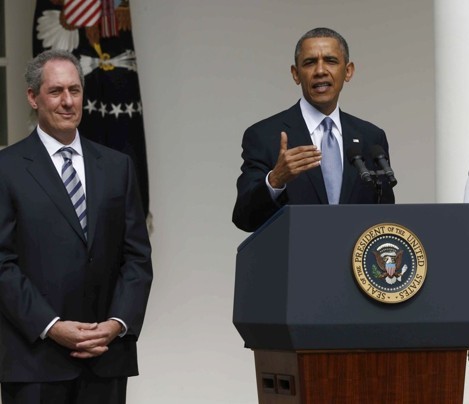
Both China and the U.S. are independently addressing the issue of global taxation of their firms and multinationals doing business in their countries. Very interesting development. Another interesting event is the stalemate between the U.S. and the EU over allowing foreign investors (American firms) resorting to international arbitration rather than European courts under the proposed TTIP.
…. Interestingly both China & U.S. are now addressing tax avoidance by multinational corporations. “China and Overseas Taxation.” New York Times (Feb. 4, 2015).
…. Obama proposes to tax overseas cash of U.S. firms.Aggressive tax strategies are under attack. “Obama’s Tax Crackdown on MNCs.” Financial Times (Feb. 2, 2015).
…. China’s new security rules concerning technology impacting foreign tech firms are really trade restrictive. “China’s Self-Destructive Tech Crackdown.” New York Times (Jan. 30, 2015).
…. The ‘Investor State Dispute Settlement’ clause (ISDS) is causing major havoc in the TTIP negotiations between the U.S. and the EU.” “ISDS and U.S. – EU TTIP Negotiations.” Euractiv.com (Jan. 14, 2015).
Cybersecurity, Cuban Trade and Chinese Global Taxation — New Issues for the New Year.
As this new year begins new issues of cybersecurity, Cuban trade, and Chinese global taxation have come into focus. They make for an interesting start of the new year. Here are some particulars:
“New Obama Legislation.” Financial Times (1.11.15).
….. Aggressive Virginia-Cuba trade mutually beneficial. Agriculture leads the way via 3 governors. “Virginia and Cuba.” Washington Post (1.8.15).
….. China has now started applying its earlier 1993 worldwide taxation statute to its nationals abroad. “China and Worldwide Taxes.” New York Times (1.7.15).
….. A trade response may be necessary for this state-sponsored cyber attack on a U.S. firm. “National Security & Sony Attack.” Washington Post (12.23.14).
End-of-the-Year Trade Developments — Cuban Sanctions, Sony Cyber Attack, Chinese Commercial Cyberespionage …….
…..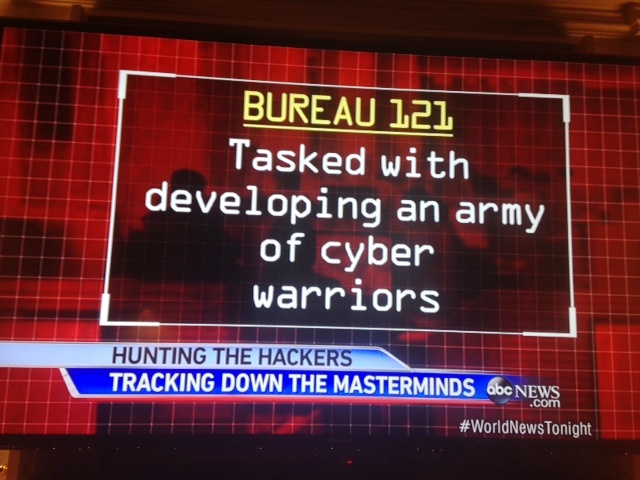
Late December saw some very interesting trade developments. They include a presidential vow to normalize diplomatic and trade relations with Cuba and an apparent cyber attack by N. Korea on Sony. Discussions continue concerning the TPP and making more relevant the WTO on its 20th anniversary as to negotiating new trade rules. Discussions also continue concerning China’s desire to be seen as a ‘responsible party and stakeholder’ in the global system in light of its own economic cyberespionage. These developments will continue to play out in the new year. Needless to say global trade relations constantly change and pose new challenges for global governance.
…. WTO 20 years today. Great success in dispute settlement. Less so in writing new trade rules. Need to do better. “WTO Celebrates 20 Years.” WTO News (January 1, 2015).
…. USTR Froman points out that the Obama administration has brought 18 cases of unfair trade practices in the WTO and 9 were against China. He hopes to convince Democrats that the administration is a tough trade enforcer so they would support the TPP negotiations and extend ‘fast track.’ But he refuses to include enforceable sanctions on currency manipulators in the trade negotiations. Fearing Federal Reserve policies might become reviewable by a WTO panel. “Obama’s Trade Chief and TPP.” New York Times (December 31, 2014).
…. Republicans argue Obama needs to persuade Congress more in order to succeed on trade. “Trade Opportunity for Obama and Congress.” Wall Street Journal (December 28, 2014).
….. New book argues that the greatest transfer of wealth ever was caused by China’s economic cyber espionage. “Book Review — Military-Internet Complex. “Washington Post (December 28, 2014).
…. People forget that it was the Cuban nationalization of US. corporate-owned property that precipitated the Cuban embargo. That nationalization was in violation of international law that required prompt, adequate and effective compensation. Compensation will probably be one of the first issues resolved during President Obama’s normalcy of Cuban relations. Settlement of claims and diplomatic recognition of governments are squarely within the foreign affairs powers of the President. U.S. diplomatic history and foreign policy are clear on these issues. “Cuban Seizures Present Opportunities.” New York Times (December 21, 2014).
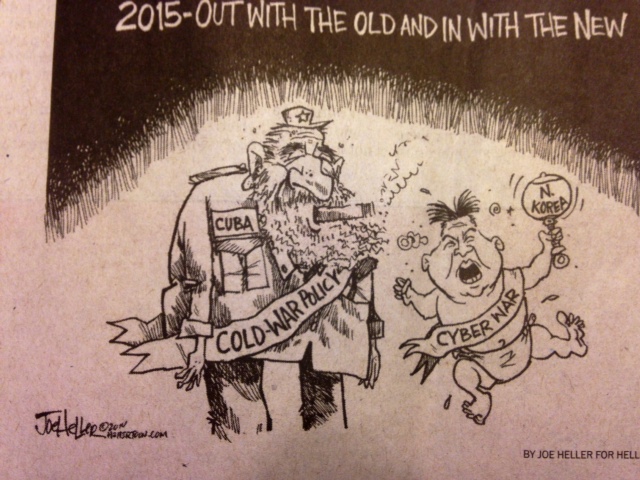
Chinese Cyber Espionage and WTO TRIPS Litigation.

My new article appeared today in the New York Law Journal (December 23, 2014) on this topic. “Confronting Chinese Economic Cyber Espionage Through WTO Litigation.” New York Law Journal (December 23, 2014).
Recent Trade Developments — Most Important — U.S. – Cuban Relations.
As the year draws to a close significant global trade developments continue to happen. But the most important one has been President Obama’s new diplomacy with Cuba which portends the opening of trade and investment with Cuba. (Still need Congressional authorization on many aspects of trade relations). Other developments concern FOREX investigations, newer WTO decisions concerning the U.S. and China, some backsliding on approving the Information Technology Agreement, and newer U.S. tariffs on Chinese solar panels. Here are the specifics:
….. This is a major reversal by the WTO Appellate Body of panel recommendations that had favored the U.S. in litigation brought by China over U.S. subsidies concerning Chinese state-owner enterprises. “New AB Decisions U.S. – China.” WTO News (December 18, 2014).
….. Obama’s new Cuban policy. Greater trade & commerce always promotes change. Trade policy and diplomacy when working together promotes individual well-being & national security. Need to overcome narrow interest groups focused on their own economic interests. This newer direction of American foreign policy is welcomed for this new century. “Trade Will Lead to Freedom.” Wall Street Journal (December 18, 2014).
….. Obama foreign policy … A break from the past. More engagement and more trade. A developing theme in US foreign policy & diplomacy. “New Cuban Policy — Throws Obama Foreign Policy into Sharp Relief.” Washington Post (December 18, 2014).
….. Largest foreign corruption case ever by Justice against a multinational. $700m. Investigations span the globe applying US law. “Alston Near $700 million Settlement.” Wall Street Journal (December 16, 2014).
….. I wonder if a better way to go is to settle the case as the EU did in the China-E.U. photovoltaic case. Another problem — China can just move its production to low-cost countries in SE Asia. “China Criticizes Steep U.S. Tariffs on Solar Panels.” New York Times(December 16, 2014).
….. Cities can become more important to regional economic development by increasing their global activities. “About the Global Cities Initiative.” (Brookings website).
….. Failure of Chinese & US diplomatic trade negotiators.Boring tariff issues still important in trade relations.Try again. “Information Technology Agreement (ITA) and China.” New York Times (December 12, 2014).
….. Have US workers benefited from higher duties on China solar panels? No.it‘s US firms producing abroad. Not what our trade laws supposed to do. “Solar Panels and China.” New York Times (December 11, 2014).
….. So far $8.9bn for violation of US sanctions by int’l banks this year. Investigations by US, NY State. Need more of this. “Commerzbank US settlement set to top $1bn ” Financial Times (December 11, 2014).
….. Did the use of algorithms in FOREX platforms suggests a systemic rather than rogue reason for FOREX scandal?Could increase bank fines by millions. “NY Investigates Barclays.” CNBC News (December 11, 2014).

 Stuart Malawer
 U.S. LAW & GLOBAL TRADE RELATIONS.
You must be logged in to post a comment.