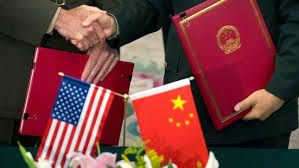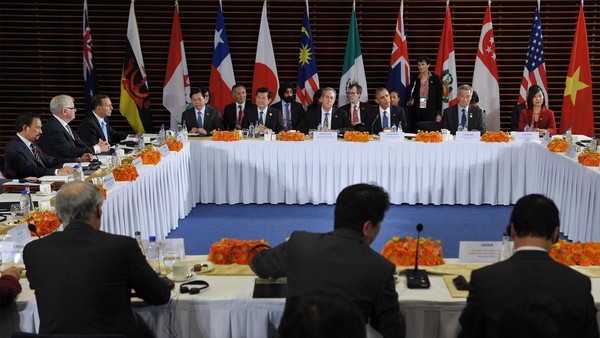
National Security, Protectionism and U.S.-China Trade — Biden v. Trump 2.0 (Commentaries).

     The quotes below are from articles that have appeared recently discussing Trump, global trade, national security, the WTO, U.S. trade policy, U.S-China trade, and U.S. foreign policy generally — seen through the prism of recent events and the current U.S. presidential race.

    To me, I find them particularly succinct. They highlight the broad and disturbing aspects of geopolitics and trade as we enter a new presidential election in the United States.

     The way these issues will play out will have immense impact on U.S. corporations as well as the United States (domestically and internationally), the global trade and political systems and in particular U.S.-China trade relations.


  • Biden’s sophisticated economic nationalism is a very big deal, much more so than Trump’s protectionist thrashing ….  China just filed a complaint with the World Trade Organization about the Inflation Reduction Act, which, despite its name, is at its core an attempt to fight climate change …. China complained about electric vehicle subsidies that it says unfairly discriminate against production using car battery components made in China …. America’s new industrial policy does favor domestic production and — we’ll see — might be in violation of W.T.O. rules …. In 2022, the W.T.O. ruled that U.S. tariffs on steel and aluminum, imposed under Trump but retained under Biden, were illegitimate. The U.S. is also promoting semiconductor production …  And the Biden administration has imposed stiff limits on technology exports to China, with the clear goal of crimping Chinese technological progress in advanced semiconductors and computing …. Biden’s China policy is so tough that it makes me, someone who generally favors a rules-based system. Krugman, “Bidenomics and China.” New York Times (March 29, 2025).

  • China filed a complaint at the World Trade Organization over the U.S.’s Inflation Reduction Act, saying that it was discriminatory and distorted fair competition. The rules being challenged require vehicles to use parts from specific regions to qualify for subsidies while excluding products from China. Under the Inflation Reduction Act, consumers in the U.S. won’t be able to claim a $7,500 clean-vehicle tax credit if they buy cars containing battery components from a “foreign entity of concern” starting in 2024. The policy will extend to the minerals that go into battery components in 2025. “China Files WTO Complaint Against US Over EV Subsidies.” Wall Street Journal (March 27, 2024).

  • “After a long dormant period since the Washington Consensus of the 1980s, industrial policy is back and dramatically reshaping global manufacturing. As large-scale subsidies policies proliferate, countries that used to take a laissez-faire approach to market governance have entered a race to subsidize strategic sectors …. In response to China subsidies, President Biden’s Inflation Reduction Act (IRA) and the CHIPS and Science Act (CHIPS) amplified and implemented subsidies so attractive …. likened them to a gold rush.” “Trade Distortion and Protectionism — Fighting Subsidies with Subsidies.” Hinrich Foundation (March 26, 2024).

  • “The latest purchasing rules represent China’s most significant step yet to build up domestic substitutes for foreign technology and echo moves in the US …… Washington has imposed sanctions on a growing number of Chinese companies on national security grounds, legislated to encourage more tech to be produced in the US and blocked exports of advanced chips.” “Beijing Block Chips.” Financial Times (March 24, 2024).

  • “(US trade policy has become) rank protectionism. For instance, US national security adviser Jake Sullivan’s evocative picture of shielding a “narrow yard” of security-relevant technologies with “high fences” has expanded quickly into a much broader yard where any device or platform that collects information can be banned on security grounds, whether it be Chinese EVs or TikTok in the US or Apple and Tesla in China.” “Protectionism.” Financial Times (Marc 22, 2024).

  • “(The question is) if Washington’s bipartisan turn away (Nippon Steel case) from economic liberalism, in favor of state-directed investment strategies and trade protectionism, will ultimately help the economy.” “Bidennomics and the Nippon Steel – US Steel Dive.” Wall Street Journal (March 22, 2024).

  • “The U.S. may be slouching toward state capitalism (like China) in which government regularly intervenes in business to ensure it serves the national interest.” “U.S. and China-Style Capitalism. Wall Street Journal (March 21, 2024).

  • “The trend increasing state power (recent Supreme Court immigration case) will have far-reaching consequences not only for domestic politics but also for U.S. foreign policy …. (T)his shift will determine whether state-level action becomes a source of resilience or a destabilizing force. “Fractured Superpower — Federalism and Foreign Policy.”  Foreign Affairs (March 23, 2024).

    • “(The recent filing of a Section 301 case by labor in the U.S. International Trade Commission as to China’s subsidies to its ship building sector has) the potential to reignite the U.S.-China trade conflict, but it will also increase the focus on China’s military might and the massive commercial shipping industry that underpins it.” “Shipping as the New Battleground in the US-China Trade War.” Financial Times (March 13, 2024).

    • “Everyone knows the Trump-Biden election campaign is going to be nasty, brutish and not short enough, but the unknown is how much policy damage it will do. One unfolding example is the fiasco of self-destructive opposition to Nippon Steel’s proposed acquisition of U.S. Steel. The American political consensus used to be that foreign investment is a sign of U.S. economic strength and a source of good-paying jobs …. But now they’re targeting even investment in U.S. manufacturing from friendly countries.” “Nippon Steel Fiasco.” Wall Street Journal (March 15, 2024). “

    • (The new ‘Washington Consensus’) calls for a mix of tariffs and subsidies to support domestic industries … Freewheeling global trade helped lower consumer prices but at the expense of U.S. workers and national security.” “Retreating Further on Free Trade.” Wall Street Journal (March 17, 2024).

    • “The Biden administration has reasserted the role of the state in the US economy: subsidizing strategic industries, rethinking trade relations and rebooting competition policy.” “America and Industrial Policy.” Financial Times (Match 17, 2024).

    • “There is a pattern. The deep-seated US aversion to subjecting its domestic laws to international institutions or foreign courts is the same US exceptionalism that explains American hostility to the WTO’s judicial function. It also explains America’s refusal to join the International Criminal Court and other international bodies.” “When the US Fell out of Love with Geneva.” Hinrich Foundation (March 19, 2024).

    • “An American president opposing investment by a staunch ally (Nippon Steel) in a US manufacturing company (US Steel) is a sign that protectionism has run amok. What Biden should be focused on instead is the long-term prosperity of the American people. Nippon’s acquisition of US Steel would benefit the economy broadly and the working class specifically.” “Protectionism is Running Amok in the US.” Financial Times (March 18, 2024).

    • “The TixTox legislation sailed through the House … (A) court would require judges to weigh national security … The U.S. has long restricted foreign ownership in radio, television …. A federal court ruled against Commerce Dept. efforts to ban TikTok during the Trump administration (under the International Economics Powers Act) … Similar legislation unfolded when the Trump administration sought to ban WeChat.” “TixTox Ban and Free Speech.” Wall Street Journal (March 19, 2024).

    • “Huawei, China’s telecom and mobile-technology champion, is a poster child for the country’s high-tech ambitions—and a symbol of Washington’s determination to cut them down to size … It’s surprising resilience in the face of U.S. sanctions therefore says a lot about how the tech war is likely to unfold in the years ahead ….. But the further down the technological ladder sanctions extend, the more difficult they are to enforce—as the West has discovered with Russia since 2022.” “Huawei and Limits of U.S. Power.” Wall Street Journal (March 21, 2024).

  • “(The recent filing of a Section 301 case by labor in the U.S. International Trade Commission as to China’s subsidies to its ship building sector has) the potential to reignite the U.S.-China trade conflict, but it will also increase the focus on China’s military might and the massive commercial shipping industry that underpins it.” “Shipping as the New Battleground in the US-China Trade War.” Financial Times (March 13, 2024).

  • “Everyone knows the Trump-Biden election campaign is going to be nasty, brutish and not short enough, but the unknown is how much policy damage it will do. One unfolding example is the fiasco of self-destructive opposition to Nippon Steel’s proposed acquisition of U.S. Steel. The American political consensus used to be that foreign investment is a sign of U.S. economic strength and a source of good-paying jobs …. But now they’re targeting even investment in U.S. manufacturing from friendly countries.” “Nippon Steel Fiasco.” Wall Street Journal (March 15, 2024). “

  • (The new ‘Washington Consensus’) calls for a mix of tariffs and subsidies to support domestic industries … Freewheeling global trade helped lower consumer prices but at the expense of U.S. workers and national security.” “Retreating Further on Free Trade.” Wall Street Journal (March 17, 2024).

  • “The Biden administration has reasserted the role of the state in the US economy: subsidizing strategic industries, rethinking trade relations and rebooting competition policy.” “America and Industrial Policy.” Financial Times (Match 17, 2024).

  • “There is a pattern. The deep-seated US aversion to subjecting its domestic laws to international institutions or foreign courts is the same US exceptionalism that explains American hostility to the WTO’s judicial function. It also explains America’s refusal to join the International Criminal Court and other international bodies.” “When the US Fell out of Love with Geneva.” Hinrich Foundation (March 19, 2024).

  • “An American president opposing investment by a staunch ally (Nippon Steel) in a US manufacturing company (US Steel) is a sign that protectionism has run amok. What Biden should be focused on instead is the long-term prosperity of the American people. Nippon’s acquisition of US Steel would benefit the economy broadly and the working class specifically.” “Protectionism is Running Amok in the US.” Financial Times (March 18, 2024).

  • “The TixTox legislation sailed through the House … (A) court would require judges to weigh national security … The U.S. has long restricted foreign ownership in radio, television …. A federal court ruled against Commerce Dept. efforts to ban TikTok during the Trump administration (under the International Economics Powers Act) … Similar legislation unfolded when the Trump administration sought to ban WeChat.” “TixTox Ban and Free Speech.” Wall Street Journal (March 19, 2024).

  • “Huawei, China’s telecom and mobile-technology champion, is a poster child for the country’s high-tech ambitions—and a symbol of Washington’s determination to cut them down to size … It’s surprising resilience in the face of U.S. sanctions therefore says a lot about how the tech war is likely to unfold in the years ahead ….. But the further down the technological ladder sanctions extend, the more difficult they are to enforce—as the West has discovered with Russia since 2022.” “Huawei and Limits of U.S. Power.” Wall Street Journal (March 21, 2024).

  • “(O)ne going back to the 1980s has been his (Trump’s) conviction that the United States has been shafted by allies on trade, immigration and security.” “Disdain of U.S. Alliances.” New York Times (Feb. 16, 2024).

    • “(The recent filing of a Section 301 case by labor in the U.S. International Trade Commission as to China’s subsidies to its ship building sector has) the potential to reignite the U.S.-China trade conflict, but it will also increase the focus on China’s military might and the massive commercial shipping industry that underpins it.” “Shipping as the New Battleground in the US-China Trade War.” Financial Times (March 13, 2024).

    • “Everyone knows the Trump-Biden election campaign is going to be nasty, brutish and not short enough, but the unknown is how much policy damage it will do. One unfolding example is the fiasco of self-destructive opposition to Nippon Steel’s proposed acquisition of U.S. Steel. The American political consensus used to be that foreign investment is a sign of U.S. economic strength and a source of good-paying jobs …. But now they’re targeting even investment in U.S. manufacturing from friendly countries.” “Nippon Steel Fiasco.” Wall Street Journal (March 15, 2024). “

    • (The new ‘Washington Consensus’) calls for a mix of tariffs and subsidies to support domestic industries … Freewheeling global trade helped lower consumer prices but at the expense of U.S. workers and national security.” “Retreating Further on Free Trade.” Wall Street Journal (March 17, 2024).

    • “The Biden administration has reasserted the role of the state in the US economy: subsidizing strategic industries, rethinking trade relations and rebooting competition policy.” “America and Industrial Policy.” Financial Times (Match 17, 2024).

    • “There is a pattern. The deep-seated US aversion to subjecting its domestic laws to international institutions or foreign courts is the same US exceptionalism that explains American hostility to the WTO’s judicial function. It also explains America’s refusal to join the International Criminal Court and other international bodies.” “When the US Fell out of Love with Geneva.” Hinrich Foundation (March 19, 2024).

    • “An American president opposing investment by a staunch ally (Nippon Steel) in a US manufacturing company (US Steel) is a sign that protectionism has run amok. What Biden should be focused on instead is the long-term prosperity of the American people. Nippon’s acquisition of US Steel would benefit the economy broadly and the working class specifically.” “Protectionism is Running Amok in the US.” Financial Times (March 18, 2024).

    • “The TixTox legislation sailed through the House … (A) court would require judges to weigh national security … The U.S. has long restricted foreign ownership in radio, television …. A federal court ruled against Commerce Dept. efforts to ban TikTok during the Trump administration (under the International Economics Powers Act) … Similar legislation unfolded when the Trump administration sought to ban WeChat.” “TixTox Ban and Free Speech.” Wall Street Journal (March 19, 2024).

    • “Huawei, China’s telecom and mobile-technology champion, is a poster child for the country’s high-tech ambitions—and a symbol of Washington’s determination to cut them down to size … It’s surprising resilience in the face of U.S. sanctions therefore says a lot about how the tech war is likely to unfold in the years ahead ….. But the further down the technological ladder sanctions extend, the more difficult they are to enforce—as the West has discovered with Russia since 2022.” “Huawei and Limits of U.S. Power.” Wall Street Journal (March 21, 2024).

  • “A second Trump term would see American unilateralism on steroids.” “American Unilateralism,” Financial Times (Feb. 13, 2024).

  • “(A) second Trump administration will not only be fired by a desire for revenge and a radicalized Republican party. It will also inherit from Biden a state machinery schooled o a much darker view of the world than which Obama bequeathed to Trump.” “America’s Economic Security.” Financial Times (March 5, 2024).

  • “(U)”nless Washington recovers its commitment to a rules-based trading system, the organization (WTO) it painstakingly helped build over half a century to police international commerce will prove irrelevant to the new global challenges.” “World Trade Organization.” Washington Post March 4, 2024).

  • “At the top of my worry list for a second term (for Trump): an even more aggressively protectionist approach to trade.” “Economic Impact and Trump 2.0.” New York Times (Feb. 29, 2024).

  • “The main headwind for the global trading system has come in the form of a breakdown of the WTO’s dispute resolution system. .” “China and World Trade.” Financial Times (Feb. 27, 2024).

  • “The world has shifted away from decades of emphasizing private competition and has plunged into a new era of competitive policy.” “Bidenomics” New York Times (Feb. 29, 2024).
Tagged , , , , , , , , , , , | Leave a comment

Trade, National Security and Geopolitics — Trump v. Biden 2.0

     The following are quotes from the many articles that have appeared recently discussing Trump, global trade, national security, the WTO, U.S. trade policy, China and foreign policy — seen through the prism of the current U.S. presidential race. To me, I find them particularly succinct. They highlight the broad and disturbing aspects of geopolitics and trade as we enter a new presidential election in the United States. The way these issues will play out will have immense impact on corporations as well as both the United States and the global system.

  • “(A) second Trump administration will not only be fired by a desire for revenge and a radicalized Republican party. It will also inherit from Biden a state machinery schooled o a much darker view of the world than which Obama bequeathed to Trump.” “America’s Economic Security.” Financial Times (March 5, 2024).

  • “(U)”nless Washington recovers its commitment to a rules-based trading system, the organization (WTO) it painstakingly helped build over half a century to police international commerce will prove irrelevant to the new global challenges.” “World Trade Organization.Washington Post March 4, 2024).

  • “At the top of my worry list for a second term (for Trump): an even more aggressively protectionist approach to trade.” “Economic Impact and Trump 2.0.New York Times (Feb. 29, 2024).
  • “The main headwind for the global trading system has come in the form of a breakdown of the WTO’s dispute resolution system. .” “China and World Trade.” Financial Times (Feb. 27, 2024).

  • “The world has shifted away from decades of emphasizing private competition and has plunged into a new era of competitive policy.” “BidenomicsNew York Times (Feb. 29, 2024).
  • “(The recent filing of a Section 301 case by labor in the U.S. International Trade Commission as to China’s subsidies to its ship building sector has) the potential to reignite the U.S.-China trade conflict, but it will also increase the focus on China’s military might and the massive commercial shipping industry that underpins it.” “Shipping as the New Battleground in the US-China Trade War.” Financial Times (March 13, 2024).

  • “Everyone knows the Trump-Biden election campaign is going to be nasty, brutish and not short enough, but the unknown is how much policy damage it will do. One unfolding example is the fiasco of self-destructive opposition to Nippon Steel’s proposed acquisition of U.S. Steel. The American political consensus used to be that foreign investment is a sign of U.S. economic strength and a source of good-paying jobs …. But now they’re targeting even investment in U.S. manufacturing from friendly countries.” “Nippon Steel Fiasco.” Wall Street Journal (March 15, 2024). “

  • (The new ‘Washington Consensus’) calls for a mix of tariffs and subsidies to support domestic industries … Freewheeling global trade helped lower consumer prices but at the expense of U.S. workers and national security.” “Retreating Further on Free Trade.” Wall Street Journal (March 17, 2024).

  • “The Biden administration has reasserted the role of the state in the US economy: subsidizing strategic industries, rethinking trade relations and rebooting competition policy.” “America and Industrial Policy.Financial Times (Match 17, 2024).

  • “There is a pattern. The deep-seated US aversion to subjecting its domestic laws to international institutions or foreign courts is the same US exceptionalism that explains American hostility to the WTO’s judicial function. It also explains America’s refusal to join the International Criminal Court and other international bodies.” “When the US Fell out of Love with Geneva.” Hinrich Foundation (March 19, 2024).

  • “An American president opposing investment by a staunch ally (Nippon Steel) in a US manufacturing company (US Steel) is a sign that protectionism has run amok. What Biden should be focused on instead is the long-term prosperity of the American people. Nippon’s acquisition of US Steel would benefit the economy broadly and the working class specifically.” “Protectionism is Running Amok in the US.” Financial Times (March 18, 2024).

  • “The TixTox legislation sailed through the House … (A) court would require judges to weigh national security … The U.S. has long restricted foreign ownership in radio, television …. A federal court ruled against Commerce Dept. efforts to ban TikTok during the Trump administration (under the International Economics Powers Act) … Similar legislation unfolded when the Trump administration sought to ban WeChat.” “TixTox Ban and Free Speech.” Wall Street Journal (March 19, 2024).


Tagged , , , , , , , | Leave a comment

IS CHINA TRADE STRATEGY A RESPONSE TO U.S. TRADE LAWS?

    A new hypothesis seems to be emerging concerning China’s trade policies and U.S. law, which I agree with to some extent. That China’s global trade policies are in response, in part, to restrictions and other actions under U.S. trade law.  An outstanding article recently appeared in the Financial Times (2.27.24) discussing this correlation between China trade policies and U.S. law. More work needs to be done to fully explore this very interesting law and policy observation. Here are a few excerpts from this lengthy analysis:


  • Even during the first blush of the honeymoon period that attended China’s accession to the World Trade Organization in 2001, it was clear that Washington and Beijing were — as a Chinese idiom has it — “sharing a bed but dreaming different dreams”.
  • As the world trade body falters, China is accelerating efforts to construct an alternative trade architecture that is insulated from US influence and centered upon the developing world.
  • The architecture under construction revolves around a China-centric network of bilateral and regional “free trade agreements” (FTAs), which allow for trade at low tariffs while also promoting direct investment flows, Chinese officials and trade experts say.
  • This alternative is mainly based on the BRI, to which China is progressively trying to shift its exports from traditional markets like the US and EU.”
  • The dysfunction of the WTO’s appellate body — the top appeals court for world trade — has meant that many multibillion-dollar trade disputes sit in legal limbo, making commerce more costly and complicated. Most analysts do not foresee drastic scenarios such as the demise of the WTO.
  • But it was after the US excluded China from talks to join the Trans-Pacific Partnership, a big multilateral trade deal that was signed in 2016, that Beijing really threw its FTA program into overdrive.


  • China does not wish to see the demise of globalisation as represented by the WTO. On the contrary, Beijing has been a clear beneficiary of trade liberalization over more than two decades, enjoying more than a 10-fold increase in its total trade since its 2001 accession to the world trade body, vastly outstripping the global average by several times. But in spite of all the effort that Beijing has expended in building its alternative trade architecture, the current escalation of trade friction with both the US and EU means that China remains gravely exposed to risks that global trade.


  • During the administration of Donald Trump, which ended in 2021, the US imposed tariffs on some $300bn in Chinese exports. EU competition commissioner Margrethe Vestager said this month the bloc was “absolutely willing to use” trade tools to tackle unfair Chinese trade practices.
  • With so much uncertainty hanging over the future, Chinese companies are taking pre-emptive measures to skirt whatever trade altercations are coming their way.
  • Chinese companies are seeking to circumvent US and EU tariffs in a number of different ways. One of these ways is transshipment, a method that is fully on display in Mexico, which as a member of North American Free Trade Agreement (Nafta) can export goods to the US market at much lower tariffs than China can access.
  • Another trend is for “nearshoring” — or the relocation of production capacity closer to customers to limit vulnerability to geopolitical tensions — which is reconstituting China’s global footprint. Chinese direct investment flows into Malaysia, Indonesia and other countries seen as useful “nearshoring” countries have been on the rise.
  • But even here, Chinese investors are not necessarily safe. “China’s FTAs can facilitate Chinese companies to set up factories and manufacturing plants in foreign countries to eventually export to the US and EU,” says Liu. “But if laws in the US and EU change to include additional restrictions on Chinese ownership of factories outside of China, Chinese factory migration may eventually prove to be not as effective,” she adds.

                      “China World Trade.” Financial Times (Feb. 27, 2024).

Tagged , , | Leave a comment

National Security Council & Trade Policy — New Major Player in Global Trade Relations.

       It has become evident recently that national security has become a major driving-force in formulating U.S. economic policy generally (semiconductor subsidies) and in particular U.S. trade policy (including proposals for related climate change issues, international digital taxation, supply chain security and revitalizing domestic industries).  So it is no surprise that the National Security Council has become a major player in formulating trade policies. And in particular, the Deputy National Security Adviser for Economic Affairs has taken the lead,

      This development clearly got a jump-start with President Trump (trade and tariff wars) and has continued to gain momentum during the Biden administration (newer restrictions on both China and Russia). However, this is particularly the case with U.S. – China trade relations (newer tariff and investment restrictions) but includes trade relations with the EU (battery and EV subsidies) and Japan (proposed Nippon Steel and U.S. steel merger).

      A good article discussing a particularly interesting issue is the rising role of the Deputy National Security Adviser at the National Security Council, trade policy and trade negotiations. This appeared in today’s New York Times. Here are a few excerpts from this timely article.

  • Leading the way for the administration is Mr. Pyle, an under-the-radar aide on the National Security Council who is leaving the administration at the end of this month after more than three years in the White House. Mr. Pyle played an outsize role in putting in place and selling Mr. Biden’s vision of global economic cooperation and confrontation to often-skeptical allies.
  • Pyle’s tenure as deputy national security adviser for international economic affairs included putting together some operational details of an untried effort to restrict Russian revenues from global oil sales. It spanned a range of administration attempts to forge a global alliance to outcompete China.
  • The deputy national security adviser for international economic affairs leads negotiations on declarations at international summits, often working months in advance to smooth over disagreements with allies.
  • Biden, he said, “is advancing a new model for today’s challenges, and one that tests old rules with new types of solutions. That’s hard.”

                                 “Biden’s Global Economic Policy.” New York Times (Feb. 21, 2024)

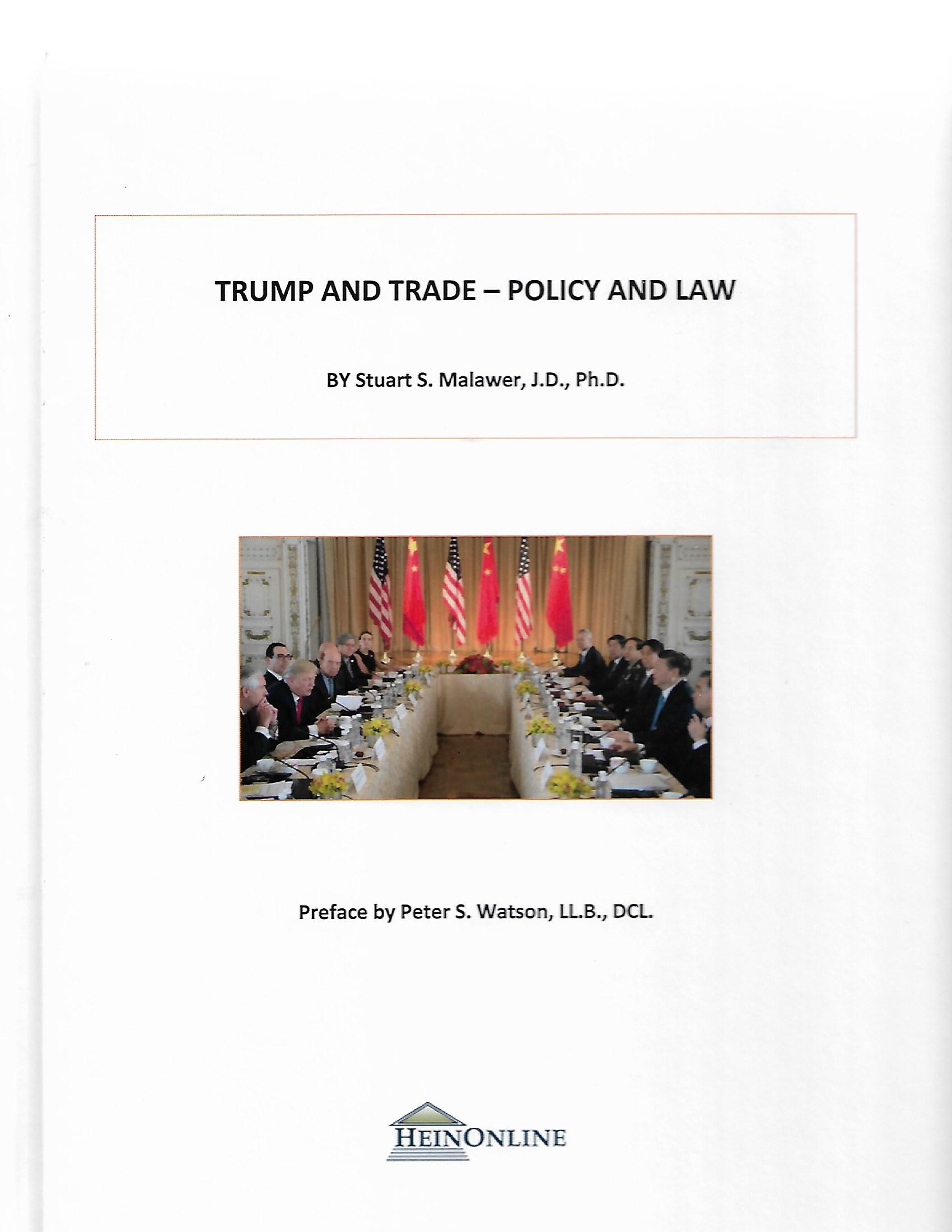
My newer article ……Malawer, “Under Trump and Biden has the US Become a Protectionist and National Security Trading State?” (SSRN 2024). To be published May 1st in China and WTO Review (Korea).


Tagged , , , , , , , | Leave a comment

TRUMP’S FOREIGN POLICY 2.0 — Back to the 1930’s and America First.

     Trump’s foreign policies for a second term are now coming into focus as he strives for another term.  Thoughtful article appeared recently in the Wall Street Journal surveying the possibilities including a new 10% tariff on all imports, tougher policies concerning Iran, rapprochement with North Korea, more aggressive trade approach with China (revoking Most-Favored-Nation treatment), and a general a more protectionist and restrictive national-interest approach to foreign policy — which includes more aggressive unilateralism and retreat from multilateral institutions and agreements.

     In another words, a form of isolationism 2.0 resembling but worse than that of the 1930’s and ‘America First’ — that kept us from confronting Nazi Germany for years.  The following are comments from the above article:

  • Trumps foreign-policy agenda is coming into sharper relief following the incendiary suggestion that he would encourage Russia to attack NATO nations that fall short on defense-spending goals. Trump’s views largely track those of his first term.
  • Trump’s conviction that America has been taken advantage of long predates his election in 2016, and he has helped to intensify an isolationist strain in the GOP, while suppressing the appetite in both parties for multilateral trade accords. Expanding the Abramson Accords in the Middle East.
  • Broadly, Trump has proposed a 10% tariff on all imported goods, a move business and economic leaders say would be devastating for the U.S. economy, and he has floated much higher rates for China. He is itching for a tariff fight with European carmakers and has promised to once again withdraw the U.S. from the Paris Climate Accords. He has declared that Biden’s fledgling economic cooperation pact with 13 Indo-Pacific countries would be dead on arrival.
  • On Iran, Trump would return to the tougher policies of his first term, when he terminated the Obama-era accord to curtail its nuclear program in exchange for sanctions relief. Trump allies have said it is likely he would seek new sanctions, but the candidate hasn’t been specific about how he would handle current hostilities.
  • To expand on the Abraham Accords, a marquee achievement of his first term that forged Israeli relations with several Arab states. Trump’s son-in-law, Jared Kushner, played a central role in negotiating the accords. Kushner, who started a private-equity firm that has raised money from Saudi, Emirati and Qatari investors, has said he wouldn’t rejoin the White House if Trump won a second term.
  • Trump would also have to deal with an increasingly bellicose North Korea, which U.S. officials say is now supplying weapons to Russia. Trump was initially hostile to Kim, promising in 2017 that threats would be “met with fire and fury like the world has never seen,” but he then sought a high-stakes rapprochement that failed to achieve a deal.
  • Mixed approach to China. Trump has promised an even more aggressive approach on trade, saying he wants to revoke normal trading relations, a legal step that would automatically raise levies on everything from toys and aircraft to industrial materials. He has talked of tariffs exceeding 60%.

                  “Trump Foreign Policy 2.0.” Wall Street Journal (Feb. 17, 2024).

See my Recent Article –Malawer, “Under Trump and Biden Has the U.S. Become a Protectionist and National Security Trading State.” (SSRN 2024)
Tagged , , , , , , , , , , , , | Leave a comment

TRUMP AND TARIFFS 2.0 — More Protectionism, Unilateralism and National Security Rationale.

Two recent articles addressed trade issues concerning the Trump / Biden reliance on tariffs and recent focus on national security and protectionism. They conclude that protectionism shrinks rather than expands production. And one of the biggest shifts in US trade policy has been the reversal of the US support for the international system. With a reliance on protectionism, unilateralism and national security rationales. My conclusion is that cross-party insurrection by Conservatives and Progressive came full blown during the era of the Trump-Biden trade policies. The issue now is how much further will this play out if there is a Trump 2?

Farah Stockman, “Unlikely Co-Conspirators in the Fight Against Free Trade.” NEW YORK TIMES (January 17, 2024.

Phil Gramm and Donald J. Boudreau, “The High Cost of the Trump-Biden Tariffs.” WALL STREET JOURNAL (January 17, 2024).

…….See my commentaries on US-trade relations during the Trump-Biden era published in the CHINA AND WTO REVIEW (2017-2024)

Leave a comment

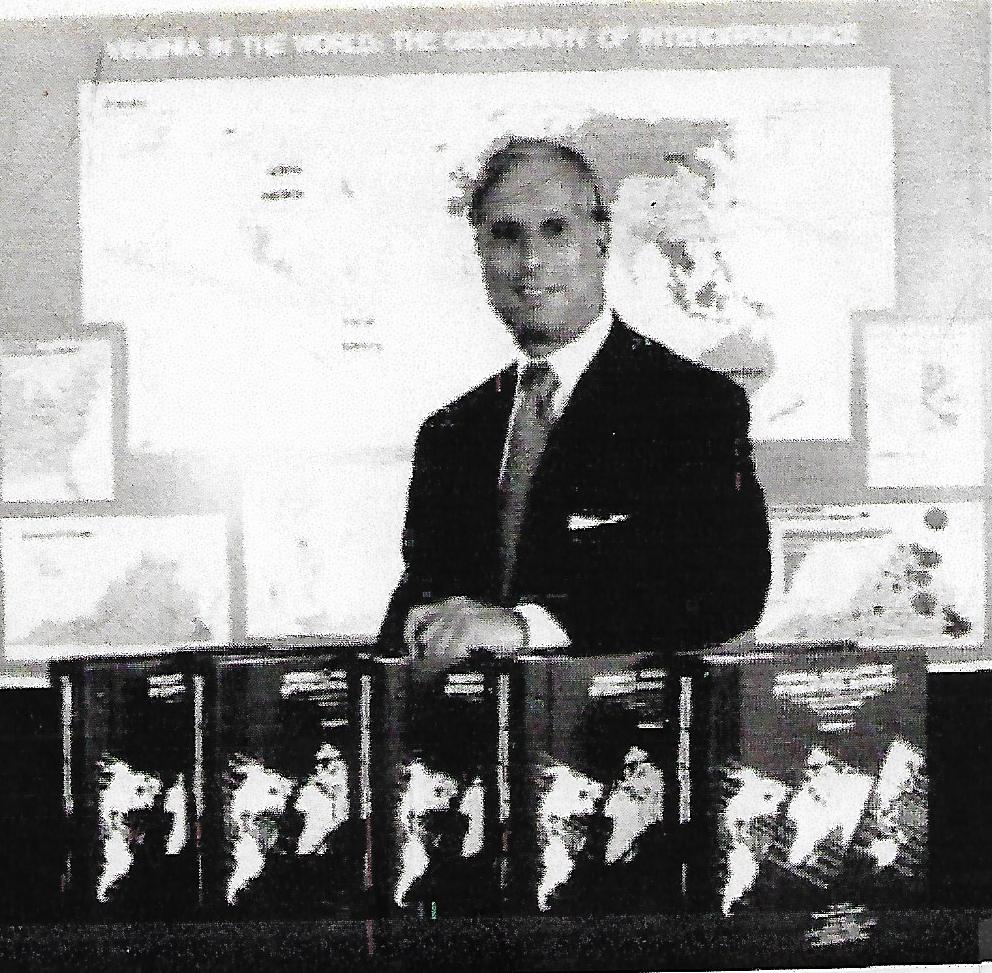
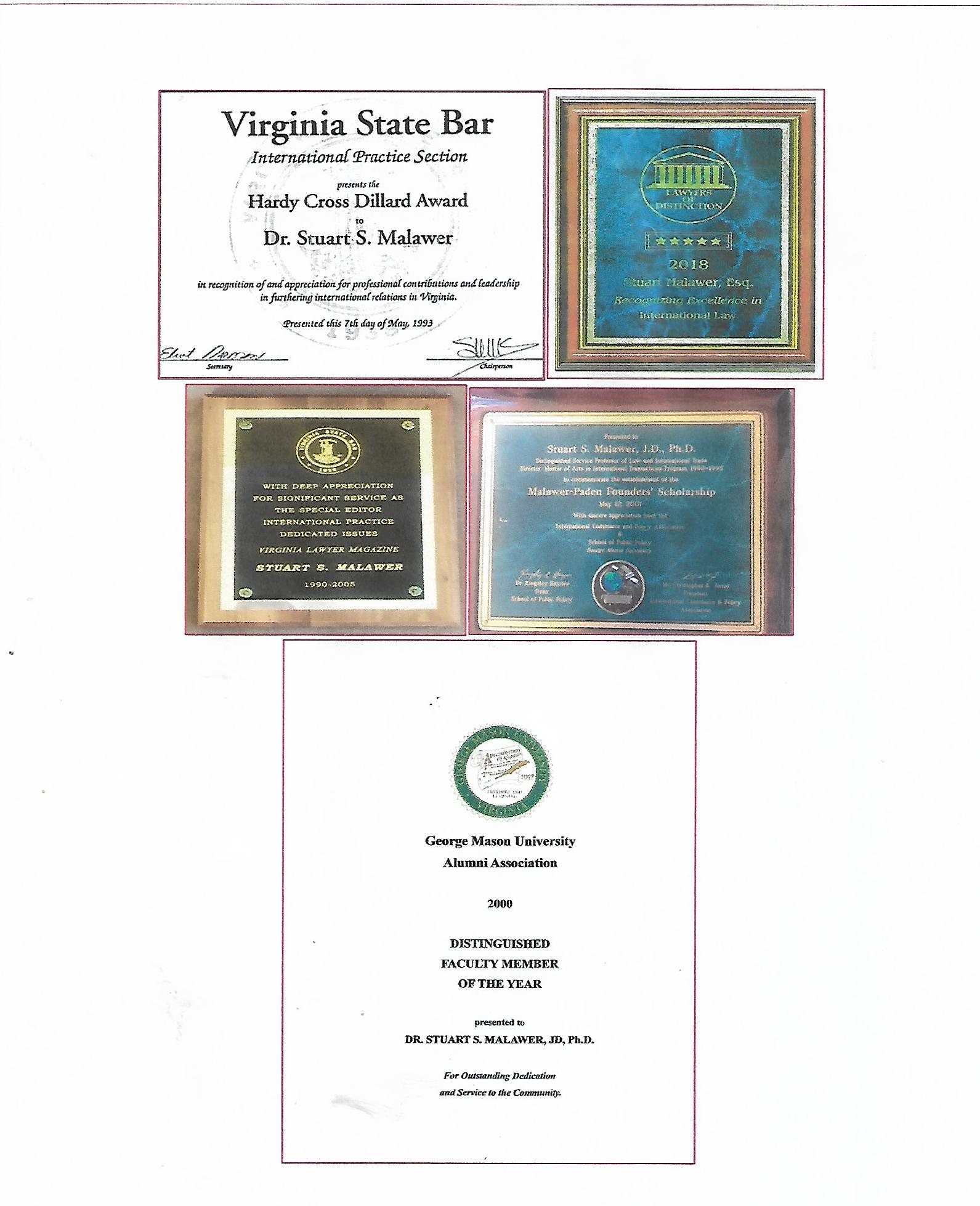
Stuart Malawer — Books / Awards — Int’l Law (1974 – 2024)

            Stuart Malawer ………. Some Books & Awards.

Leave a comment

TRUMP TRADE POLICY 2.0 (2025) — Protectionist Chaos & Trade War.

 Two outstanding articles appeared the same day in the New York Times and Wall Street Journal discussing the likely tragic consequences of a Trump victory in 2024 in the area of trade relations.

            Hayashi, “Trump is Primed for a Trade War in a Second Term, Calling for ‘Eye-for-Eye Tariffs’.” WALL STREET JOURNAL (December 26, 2023). https://www.wsj.com/politics/elections/trump-is-primed-for-a-trade-war-in-a-second-term-calling-for-eye-for-eye-tariffs-aff5bec5

            Salvage, J. Swan and M Haberman, “New Tax on Imports and a Split from China: “Trump’s 2025 Trade Agenda.” NEW YORK TMES (December 26, 2023). https://www.nytimes.com/2023/12/26/us/politics/trump-2025-trade-

 Here are two very worthwhile quotes:

         “Donald Trump upended U.S. trade policy during his first term, launching a tariff war with China …. Trump has been stocking an arsenal of protectionist measures for a potential second term ….”  Y. Hayashi, “Trump is Primed for a Trade War in a Second Term, Calling for ‘Eye-for-Eye Tariffs’.” WALL STREET JOURNAL (December 26, 2023). https://www.wsj.com/politics/elections/trump-is-primed-for-a-trade-war-in-a-second-term-calling-for-eye-for-eye-tariffs-aff5bec5

          “Former President Donald J. Trump is planning an aggressive expansion of his first-term efforts to upend America’s trade policies if he returns to power in 2025.” C. Salvage, J. Swan and M. Haberman, “New Tax on Imports and a Split from China: “Trump’s 2025 Trade Agenda.”  NEW YORK TMES (December 26, 2023). https://www.nytimes.com/2023/12/26/us/politics/trump-2025-trade-

Tagged , , , , , , | Leave a comment

BIDEN’S TRADE POLICY: National Security & Protectionism.

   Here’s a recent article of mine on Biden’s trade policy now focusing on national security and protectionism. This builds upon Trump’s policies and foreshadows Trump’s newer policies if he is reelected. This is somewhat worrisome. The following is an abstract of that article. The following link brings you to the entire article now posted on SSRN.

  • Geopolitical risk is now among the most important factors in the formulation of multinational corporate strategy and US trade policy. This is most clearly seen in US-China trade relations. The US has aggressively enacted national-security-based trade sanctions, which recently include export controls on semiconductor chips and restrictions on outbound and inbound investment. The US has also adopted major legislation providing historical subsidies and tax breaks, for example, in promoting semiconductor chip manufacturing and supporting advanced battery technology development and production. Congress and the courts have (somewhat unexpectedly) upheld the president’s use of national security as a basis of trade actions and generally supported his protectionist policies. Trade should not be restricted or weaponized. Global and national rules need to be strengthened and, perhaps, a bit updated, but protectionism in the name of national security is a losing argument. The growing movement by the US to rely more on national security and protectionism in formulating trade policy is a very worrisome development.
  • Biden’s Trade Policy: National Security & Protectionism.” (2024) https://papers.ssrn.com/sol3/papers.cfm?abstract_id=4672276
Tagged , , , , , , , | Leave a comment

Best US Cities for International Business.


This image has an empty alt attribute; its file name is cities-and-investment.jpg

New ranking of US cities for international business just released by the Financial Times (November 2023), This is a must read for foreign investors thinking about investment in the United States. Needless to say, cities in Texas and Florida lead the nation. However, Boston and Bew York ran highly. |The Best US Cities for International Business in 2023.”

Leave a comment