

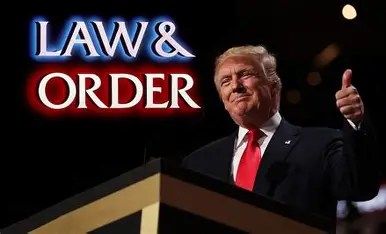
It’s becoming clearer that it is the courts, not Congress, that is the best chance of reining in Trump’s excessive power grab — from illegal tariff actions to bombing boats on the high seas. Violating domestic law and international law. His overt favoritism to his political allies (the crypto-tech bros) and his friends and family are in plain sight. The federal courts are the place where the action is — not the Congress, unfortunately. They are now considering a broad range of questionable executive actions. Many federal judges are already skeptical of the Depatioment of Justice. And it is the small, specialized litigation firms that are bringing the cases — not the larger law firms.
The future is uncertain given the nature of the Supreme Court today. The final arbiter of these legal disputes. Ruling on the most important of these cases, set for argument next month, the tariff case, is uncertain. Trump’s potential attendance at the oral argument, the first for any president, is an obvious attempt at persuasion if not intimidation. We’ll see …………
……………………………………..
“Dozens of sitting judges shared their concerns about risks to the courts’ legitimacy as the Supreme Court releases opaque orders about Trump administration policies …. At issue are the quick turn orders the Supreme Court has issued dictating whether Trump administration policies should be left in place while they are litigated through the lower courts. That emergency docket, a growing part of the Supreme Court’s work in recent years, has taken on greater importance amid the flood of litigation challenging President Trump’s efforts to expand executive power. While the orders are technically temporary, they have had broad practical effects …. The emergency docket is known to its critics as the shadow docket, and its rise as a flashpoint for tensions in the judiciary coincides with the Supreme Court’s increasing use of it in ways that have benefited Trump’s agenda.” “Federal Judged Warn of Shadow Docket.” New York Times (10.11.25).
“In most instances, Trump has justified his actions not as inherent in his Article II powers but as the appropriate use of statutes already on the books. As legal challenges to his actions multiply, it’s possible that the judiciary will determine that he has exceeded his legal authority. But the opposite is also possible: Strengthening executive authority has been an important theme of some conservative jurisprudence since the 1980s, and the Supreme Court could further bolster presidential power. If that happens, it will be up to Congress to write legal language defining clearly the limits of presidential power.“ “Congress Can Rein in Executive Power.” Wall Street Journal (10.15.25).
“Litigants seek a friendly venue for challenges to Trump; Massachusetts, Rhode Island, New Hampshire, Maine in focus; Judges in these states rule overwhelmingly against Trump; Supreme Court often backs Trump despite lower court rulings —–
At least 72 lawsuits challenging Trump’s policies have been filed in federal courts in those four states by plaintiffs, including Democratic state attorneys general, advocacy groups and institutions targeted by the administration. Trial court judges have made at least an initial decision in 51 of those cases, ruling against Trump in 46 of them, the analysis showed …. While nationwide the U.S. judiciary is closely divided among judges appointed by Democratic and Republican presidents, in these four states 17 of the 20 active federal trial judges are Democratic appointees. These states fall under the umbrella of the Boston-based 1st U.S. Circuit Court of Appeals, whose five active judges all were appointed by Democratic presidents while a Trump nominee awaits Senate confirmation …. The administration repeatedly has gone to the Supreme Court with emergency requests to implement policies impeded by lower courts, and the justices have almost always backed Trump. The Supreme Court already this year on seven occasions fully or partially put on hold judicial orders against Trump policies arising out of the 1st Circuit’s jurisdiction …. The idea of “forum shopping,” seeking a friendly legal venue, is nothing new, as litigants across the political spectrum long have steered cases to ideologically sympathetic judges.” “Courts have Become Battleground Against Trump.” Wall Street Journal (10.14.25).
“Trump said he might attend oral arguments on Nov. 5 at the Supreme Court for the tariffs case that could determine the fate of his protectionist trade agenda …. The case centers on whether the law that Trump used to impose his biggest country-specific tariff policies actually authorizes a president to take such trade actions …. If he goes, Trump would apparently be the first sitting U.S. president to attend Supreme Court arguments.” “Trump to Attend S. Ct. Tariff Case.” CNBC (10.16.25).
“Whether Trump’s tariffs survive or fall, one outcome is certain: the decision will redefine how executives plan in an era where law and economics collide. Even if the law is on the challengers’ side, the pragmatic economic and executive power concerns, make the case’s outcome “almost a coin toss.“ The Court’s ruling, expected by year’s end, will either restore Congress’s trade prerogatives, or confirm that the president’s emergency powers can reach deep into the heart of global commerce. “Tariff Case is a Coin Toss.” Fortune (10.16.25).
“The U.S. and China have escalated their trade conflict to the maritime sector, launching reciprocal port fees on vessels operating between the two countries. The move marks a significant expansion of the trade war, with global shipping firms now caught in the crossfire of economic and geopolitical rivalry.” “Maritime Front in US-China Trade War.” Global Trade (10.15.25).
“The president’s lucrative embrace of crypto, part of a broader fusion of his business and political interests, is unprecedented in modern US history …. Policy moves have either followed or been followed by large donations to Trump’s Super Pac …. Large tech companies including Meta, which donated to Trump’s inauguration, are still facing antitrust lawsuits and other investigations under the Trump administration. “ “Crypto-Tech Bros and Trump Favoritism.” Financial Times (10.17.25).
“Nine months into Trump’s second term, however, those cracks have spread across the glass. Judges are routinely skeptical of the Justice Department’s representations in court. They’ve called out flagrant misrepresentations, scolded prosecutors for irregular decisions and warned that the historical presumption that the executive branch acts in good faith before the court, known as the “presumption of regularity,” has been stretched to the breaking point.” “Federal Judges and the DOJ.” Politico (Oct. 17, 2025).
“The Trump II reign has been characterized by repeated attacks on the rule of law and blatant power grabs. And Big law has proven… it is not up to the task. When directly confronted with unconstitutional Executive Orders targeting firms on Trump’s list for retribution, more than twice as many major law firms were willing to promise the president nearly a billion dollars in pro bono payola for conservative causes or clients as were willing to fight the EOs in court. Not a great look for the supposed best in the legal industry …. Small law and boutiques have stepped up, and these small but mighty firms are poised to take on some of the biggest cases.” “Non-Profits and Trump Litigation.” Above the Law (10.18.25).
“Trump believes national security will be on the line when the court considers a challenge to his “ambitious tariff agenda” on Nov. 5 ….. “This is national security,” he said during a Sunday appearance on Sunday Morning Futures on Fox News. “If they took away tariffs, then they’ve taken away our national security.” Trump shared a similar message last week when speaking with reporters about potentially attending oral arguments in the case. “I think it’s one of the most important cases ever brought because we will be defenseless against the world.” “Trump and S. Ct. Tariff Case.” “SCOTUS Blog (10.20.25).
“US district and appeals courts are increasingly rebuking Trump’s radical moves on tackling crime, illegal immigration and other actions where administration lawyers or Trump have made sweeping claims of emergencies that judges have bluntly rejected as erroneous and undermining the rule of law in America …. Some former appeals court judges say that the district courts and courts of appeals are responding appropriately to a pattern of unlawful conduct by Trump and his top deputies …. Recent court rulings reveal a pattern of strong judicial rebukes to the Trump administration from district and appeals courts on multiple issues since Trump took office again …. But despite the growing number of strong lower court rulings against the administration, some may well get reversed by the supreme court given its 6-3 conservative majority, and its rulings that have markedly expanded presidential powers.” “US Judges Pushing Back Against Trump.” The Guardian (10.21.25).


 Stuart Malawer
 U.S. LAW & GLOBAL TRADE RELATIONS.
You must be logged in to post a comment.