Trump’s Tariffs — Relying on Really Old Law & Doctrines — The Easier for Federal Courts to Declare Tariffs Void & to Reestablish a Sense of Law & Order.

     Really obscure laws and legal doctrines are being increasingly utilized by Trump to unleash a growing global trade war — especially for non-economic objectives. (The 1798 Alien Enemies Act, Reciprocal Tariffs from the late 1800’s, and the 1950’s States Secret’s Privilege.) More obscure and old, the easier they will be set aside by the federal courts. It’s as simple as that. (Of course, Congress’s exclusive authority over trade and the ‘non-delegation doctrine’ don’t help the administration.) The administration will spend millions of dollars on legal bills with nothing to show for it, but pure domestic and international chaos and inevitable self-destruction. Bullies will always backdown when forcefully confronted (by dometic and international players). The federal courts are now taking the lead in reestablishing some sense of law and order that have become the essence of the post-war era and former American leadership. (The Congress may not be far behind.) The recent Trump decision to quit or defund the WTO is the most egregious disregard of international law and the exceptionalism of post-war U.S. foreign policy.

“The emergency powers Trump is invoking — based on provisions of the 1977 International Emergency Economic Powers Act — are intended for use in legitimate emergencies related to foreign threats and adversaries. This law is typically used to place sanctions on bad actors like cartels and dictators, but Trump’s rationale for an “emergency” that justifies billions in taxes on American consumers doesn’t make sense in Canada’s case. He has made spurious claims of a fentanyl crisis at the northern border on par with the drug situation at the southern border, but his numbers don’t add up …. Fortunately, the National Emergencies Act of 1976 included a provision allowing any senator to force a vote to block emergency powers (“there is enacted into law a joint resolution terminating the emergency “) being abused by the president. I (Tim Kaina) will be pulling that procedural lever to challenge Trump’s Canada tariffs early next week.” “Senate Voting on ‘Emergency’ Tariff Policy (Kaine).’ (March 28, 2025).
“A federal appeals court in Washington on Wednesday kept in place, for now, a block on the Trump administration’s use of a rarely invoked wartime statute to summarily deport Venezuelan migrants accused of being members of a violent street gang. By a 2-to-1 vote, a panel of the U.S. Court of Appeals for the District of Columbia Circuit said the Venezuelan migrants were likely to succeed in their claims that the government cannot use the wartime law, the Alien Enemies Act, to summarily transfer them to a prison in El Salvador without a hearing. “Appeals Court Blocks ‘Alien Enemy Act’ from Venezuelan Migration Cases.New York Times (March 27, 2025).
“[The 1798 Alien Enemies Act states ….]  “Whenever there is a declared war between the United States and any foreign nation or government, or any invasion or predatory incursion is perpetrated, attempted, or threatened against the territory of the United States by any foreign nation or government . . . all natives, citizens, denizens, or subjects of the hostile nation or government   . . who shall be within the United States and not actually naturalized, shall be liable to be apprehended, restrained, secured, and removed as alien enemies.” “Trump and 1798 Alien Enemies Act.” Wall Street Journal (3.23.25).
Much like his trade tactics, Trump doubles or quadruples retaliatory threats whenever a judge pauses one of his actions. But he has not yet unequivocally refused to comply with an order. It’s a game of chicken.” “Trump Assault on the Rule of Law.” Financial Times (March 23, 2025).
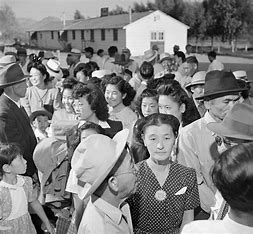
“Trump quietly signed a proclamation invoking the law, known as the Alien Enemies Act of 1798. It grants him the authority to remove from the United States foreign citizens he has designated as “alien enemies” in the cases of war or an invasion …. Legal scholars have long criticized the law as prone to abuse. During World War II, in one of the darker chapters in the nation’s history, the law paved the way for citizens of Germany, Italy or Japan to be searched and detained.” “Alien Enemy Act and Warrantless Searches.” New York Times (March 22, 2025).
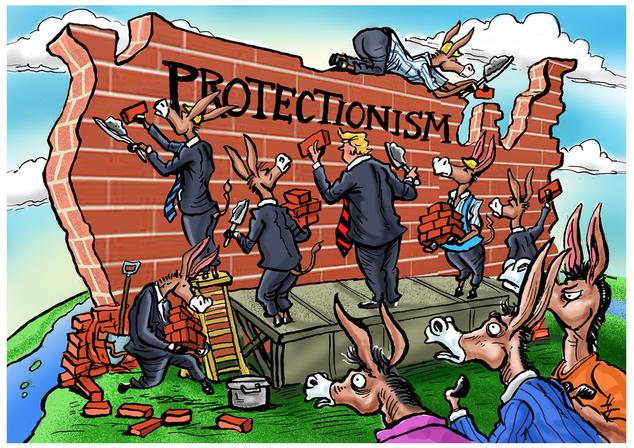
“Barriers to open trade are rising across the world at a pace unseen in decades, a cascade of protectionism that harks back to the isolationist fervor that swept the globe in the 1930s and worsened the Great Depression …. If Trump follows through on all his remaining tariff threats, tariffs on U.S. imports could hit 18% on average, Fitch Ratings estimates—the highest level in 90 years.” “Trade War Explodes.” Wall Street Journal (March 24, 2025).
“Trump has promised to unleash the largest sweep of his trade policy agenda next week, with a raft of new tariffs to be applied globally and armed with a set of legal justifications for a range of actions beyond just tariffs. April 2, which Trump is now calling “Liberation Day,” will be the most important turning point in reversing the last 80 years of US economic integration with the world in favor of implementing America First. Trump has promised “Liberation Day” on April 2, when his reciprocal tariff agenda goes global …. Reciprocal tariffs, to recap, are meant to include five key assessments.12 These include mirroring high foreign tariff levels with higher US tariff levels,13 any domestic Value Added (VAT) or Goods and Services (GST) taxes, non-tariff barriers, “burdensome requirements” on American businesses, and any other “structural impediments” deemed “unfair.” This means that reciprocal tariffs can be applied to any and all countries, even those with free trade agreements in place and those with lower or zero tariffs, as the concept is not simply limited to tariff rates alone. The difficulty of managing this system is going to be high. “Trump’s ‘(Tariff) Liberation Day’.” Hinrich (March 25, 2025).
Trump’s policy turns the traditional meaning of reciprocal trade on its head. He wants to achieve reciprocity only by raising tariffs, almost certainly triggering retaliation. Reciprocal trade policy as envisioned by President William McKinley recognized that by the dawn of the 20th century America had emerged as an economic colossus capable of producing an abundance of products that could be profitably exported. McKinley’s reciprocal trade policy was aimed at opening markets for U.S. products with agreements that lowered tariffs on imported products proportionately as other countries lowered theirs on U.S. products. Roosevelt used reciprocal trade policies to back the world out of the Smoot-Hawley tariff. The Trump perversion of reciprocal trade co-opts a politically appealing phrase to justify his preferred policy.” “Wiliam McKinley is Turning in is Grave.” Wall Street Journal (March 20, 2025).
“Trump appeared to invent a new tariff altogether. Secondary tariffsa mash-up of secondary sanctions and tariffs — will be imposed by the US on any nation that buys oil or gas from Venezuela. The import duties will take effect from April 2, the day when the world expects to hear what the US administration’s plans are for its headline agenda of reciprocal levies ….  Trump says America would apply a 25 per cent tariff on buyers of Venezuelan crude on top of existing tariffs ….  In January, the president threatened Colombia with 25 per cent tariffs, among other sanctions, for its refusal to take deported migrants …. Beyond trying to coerce other nations, there isn’t a coherent strategy here.” “Trump’s Tariffs & Foreign Policy Goals (Secondary Sanctions).” Financial Times (March 26, 2025).
“The administration is invoking an extraordinary national security power, the state secrets privilege, under highly unusual circumstances …. The doctrine can allow the executive branch to block the use of particular evidence in open court — or in some cases even to shut down entire lawsuits — when litigating a matter would risk disclosing information that could jeopardize national security. Nothing in the Constitution says this power exists. It was created by judges during the early Cold War. In a 1953 case, United States v. Reynolds, the Supreme Court said information can be blocked if there is a “reasonable danger” that the disclosure “will expose military matters which, in the interest of national security, should not be divulged.” “State Secrets Privilege.” New York Times (March 26, 2025).

Tagged , , , , , | Leave a comment

Legality of Trump’s Tariffs on Mexico, Canada and China? — Very Questionable.

      The legality of Trump’s recent tariffs under U.S. statutory law is very questionable. To me, it’s an abuse of the International Emergency Economics Power Act (‘national emergency’) and Section 301 (‘retaliation’). The Congress needs to reclaim its authority under Article 1, Section 8, Clause 3 (exclusive authority to regulate foreign commerce tariffs’. The federal courts need to exercise their authority to review these executive actions impacting trade and taxes. We will undoubtedly see litigation and hopefully congressional action. For the first time, the Congress is now trying to reclaim some of its authority. (Will also see more WTO litigation — China and Canada have recently filed cases before the dispute resolution system. Look for future cases by Mexico and the EU)

      Trump’s tariffs are a reversal of decades of American foreign policy. They particularly will hurt U.S. farmers. His explanations for them often have nothing to do with economics but different political and foreign policy objectives and surely for other reasons. Often trying to squeeze his action into foreign policy and national security focused economic legislation (IEEPA and Section 232). Obviously, for Trump the two most beautiful words are ‘tariffs’ and ‘threats.’

      Trump’s illegal reversal of years of U.S. tariffs and trade policy mirrors his even more important abrupt change of U.S. foreign policies. From Munich 2, Trump’s apparent sell out of Ukraine (which mirrors Chamberlain’s appeasement of Nazi Germany in 1938) and then the new Trump – Putin relationship (mirroring the German-Russia Alliance of 1939, leading to Germany’s attack on Poland and the start of World War II). It is interesting to note that Trump’s ancestry is German and his actions mirror that of 1930’s Germany and sympathy his parents had for the American Bund in the 1930’s. 


A blanket tariff imposed by the president, without an act of Congress, would be more likely to be found to be unconstitutional than a series of retaliatory measures on varying stated grounds. A piecemeal approach is far more likely to be sustained. The effect may be the same. Negotiations with the four major US trading partners—Mexico, Canada, the EU, and China—would by themselves cover almost half of US imports …. The principal constraints on US trade policy are likely to be a combination of foreign responses, economic forces unleashed by the new US tariffs, and the domestic political fallout from them.” “Constraints on Trump’s Trade Policies?” Petersen Institute.” (March 4, 2025).

“Trump’s executive orders imposing tariffs cited as authorities the US Constitution and several laws. The two key provisions cited are Section 301 of the Trade Act of 1974, which grants authority to retaliate against other countries for unreasonable acts that burden US commerce, and the International Emergency Economic Powers Act, which gives presidents wide latitude to respond to national emergencies. Both were cited in President Trump’s tariff executive orders. The retaliatory authority may have been included because it has been used in the past to deal with China, and the order called for additional 10 percent tariffs on Chinese goods as well. It is likely that the IEEPA is the primary authority included for the tariffs aimed at Canada and Mexico. The IEEPA has never been used for imposing tariffs. However, its language is extraordinarily broad—the enumerated authorities granted to the president by Congress is virtually unlimited—including the seizure of property to deal with a national emergency …. The IEEPA is not being used here to try to halt fentanyl shipments directly (e.g., applying sanctions to the shippers) but to force Canada and Mexico to deploy extra resources to crack down on this illicit trade. Similarly, the law is cited to force Canada and Mexico to stop illegal immigration across the Canadian and Mexican borders into the US. The new tariffs will apply to all products—fruits and vegetables, prepared foodstuffs, lumber, steel, home appliances, fuel, clothing, footwear, electrical machinery and electronic goods, toys and sports equipment, to name a few …. The one precedent related even tangentially to Trump’s Mexico and Canada tariffs is the 10 percent import surcharge that President Richard Nixon levied on August 15, 1971, under the predecessor authority to the IEEPA.  “Trade Wars Authorized? Petersen Institute (Feb. 4, 2025).

“Even the trade war, outrageous though it is, pales by comparison with the ambush of Volodymyr Zelenskyy in the Oval Office by the US president and vice-president and the subsequent suspension of military aid to Ukraine (and intelligence sharing).” “Trump’s Global Order Assault.” Financial Times (March 5, 2025).

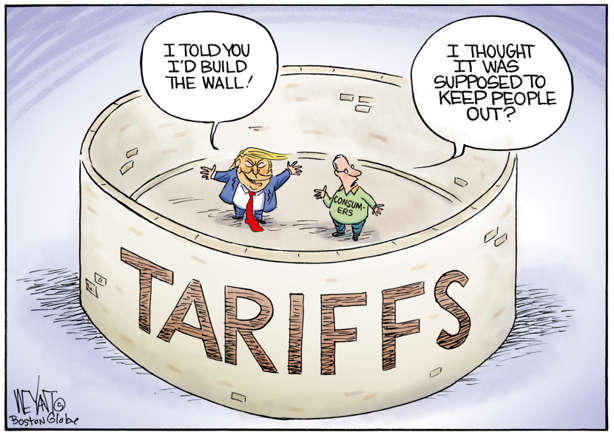
“The U.S. tariffs were a stark turnabout from the free-trade evangelism that has marked much of postwar American foreign policy. The measures amounted to 25 percent tariffs on all imports from Canada and Mexico and a 10 percent tariff on all imports from China. They came on top of a 10 percent tariff on Chinese goods put into effect one month ago and a variety of older levies, including those that remain from the China trade war during Trump’s first term.” “Trump’s Tariffs.” New York Times (March 5, 2025).

The President also professes to love American farmers, but he apparently loves tariffs more. U.S. farmers are already being squeezed by low crop prices and inflation. The American Farm Bureau Federation (AFBF) says farmers are losing money on almost every major crop planted for the third straight year. Tariffs will increase their pain. About 85% of the U.S. potash supply for fertilizer is imported from Canada. China is hitting U.S. farm exports with a 15% tariff, which will let farmers in Brazil and Australia grab market share.” “Trump’s Tariffs and Trump Voters.” Wall Street Journal (March 5, 2025).

“Trump has offered up a variety of explanations for the tariffs, saying they are punishment for other countries’ failure to stop drugs and migrants from flowing into the United States, a way to force manufacturing back to America and retribution for countries that take advantage of the United States.” “Trump’s Tariffs and Economic Gamble” New York Times (March 5,  2025). 

“Trump originally justified the tariffs under an emergency law to combat the alleged threat of fentanyl. But he claimed Tuesday the tariffs are needed because “we pay subsidies to Canada and to Mexico of hundreds of billions of dollars” and have “very large deficits with both of them.” …. That sounds like White House protectionist in chief Peter Navarro. He and his boss love tariffs for their own sake.” “Trump’s Roller Coaster Tariffs.” Wall Street Journal (March 6, 2025).

“It’s doubtful Mr. Trump even has the power to impose these tariffs, and we hope his afflatus gets a legal challenge. The Constitution gives power over trade to Congress, which for most of U.S. history wrote tariff law. That changed after the catastrophe of the 1930 Smoot-Hawley tariff, …. and ceded authority to the President to negotiate bilateral trade deals. It ceded more power after World War II …. The President now has the explicit power to restrict imports, but only for specific reasons. The President may impose tariffs on imports that threaten national security (Section 232) or in response to “large and serious” balance-of-payments deficits (Sec. 122), a surge of imports that harms U.S. industry (Sec. 201), and discriminatory trade practices (Sec. 301) …. During his first term, Trump used Section 232 to impose tariffs on steel and aluminum and 301 on goods from China. Mr. Trump’s executive orders imposing 25% across-the-board tariffs on Canada and Mexico and 10% (now 20%) on China instead invoke the 1977 International Emergency Economic Powers Act (IEEPA), which gives the President authority to address an “unusual and extraordinary threat” if he declares a national emergency. Trump deems fentanyl and other drugs such an emergency …. The bigger problem is that IEEPA doesn’t clearly authorize tariffs. The law lets the President investigate, block, prohibit or regulate any “importation or exportation” or financial transaction involving “property in which any foreign country or a national” has an interest or “any property, subject to the jurisdiction of the United States.” Presidents have used the law to freeze assets of foreign governments and nationals, restrict U.S. companies from doing business with them, limit export of technologies and ban imports from adversaries …. Trump’s tariff doesn’t appear reasonably related to the fentanyl emergency …. Presidents of both parties are now declaring everything to be an emergency to achieve their policy goals without having to deal with a frustrating Congress.” “Trump’s Tariffs are No Emergency.” Wall Street Journal (March 7, 2025).

Trump’s start-and-stop expansion of tariffs on major trading partners has no analog in modern history. Yet the past can still be instructive. Previous trade disputes over everything from semiconductors to lumber to chickens have sometimes dragged out for decades, rattling international markets and boosting consumer prices. …. Reagan-era tariffs on Japanese semiconductors aimed to shield the U.S. technology sector from a daunting competitor. President Nixon ended short-lived across-the-board tariffs in 1971 soon after the export juggernauts of West Germany and Japan agreed to boost the value of their currencies. Contrary to many trade spats of past decades, the Trump White House has offered conflicting rationales for taxing foreign goods now, a sign that the coming trade wars could be open-ended.” “Trade Clashes Outlive Tariffs.” Wall Street Journal (March 10, 2025).

Legal Tools of Trump’s Trade Strategy — The Trump administration’s choice legal instruments are Section 232, Section 301, and the International Emergency Powers Act (IEEPA). Section 232 allows the US government to impose trade restrictions under the justification of national security. While this provision has existed for decades, Trump’s use of it has been particularly aggressive, employing it to justify tariffs on steel, aluminum, and potentially automobiles  ….  Section 301, originally used to counteract unfair trade practices, had been largely dormant since 1995, until Trump revived it to impose tariffs on China under his first administration. The law grants the US government unilateral authority to investigate and penalize foreign trade policies it deems unfair, without requiring international arbitration or approval from the World Trade Organization (WTO). The IEEPA, perhaps the most flexible tool in Trump’s trade arsenal, grants the president sweeping powers to impose economic measures, under the rubric of “international emergency,” without lengthy investigations by other branches of government. Originally intended for national security crises, it has been increasingly invoked to implement economic restrictions, reinforcing Trump’s preference for executive-driven trade policy. “Trump’s American Trade Policy.” Hinrich (March 11, 2025).

“Democrats (are) forcing a vote to terminate Trump’s national emergency declarations for fentanyl and the southern border. The President used the emergency to impose tariffs on Canada and Mexico under the 1977 International Emergency Economic Powers Act (IEEPA). The National Emergencies Act provides fast-track procedures for Congress to end a presidential emergency.” “Congress and Reclaiming Trade Authority,” Wall Street Journal (March 13, 2025).

Tagged , , , , | Leave a comment

Trump’s Unsettling Economic Warfare — Tariffs, Taxes and Financial — “Back to the Future”?

     Trump is clearly resorting to economic warfare. Threatening U.S. allies and now even Ukraine. Demanding billions of dollars from sale of its rare minerals, to threatening punitive taxation of foreign firms if their countries are discriminating against U.S. firms (under rarely used Section 891 of Internal Revenue Code). Economic warfare is not new and generally not effective. Often causing negative repercussions. This has been particularly true for U.S. farmers. Who during Trump 1.0 lost millions in sales on Chinese retaliatory tariffs and then had to be rescued by massive federal bailouts and payments. (By the way, one reason for Japan’s attack on Pearl Harbor was because of the U.S. oil embargo of it in 1941.

     Of course, much of the tariffs, global tax and investment proposals (CFIUS) are intended to further economic warfare but also to provide further tax relief for American corporations. But this is a part of an even larger story attempting to undo the world order (trading and political) as we know it. Reflecting Trump’s atavistic view of his youth that focused on the America and the world of the 1930’s. Namely a world of power politics, spheres of influence and no rules.

     To me, Trump simple does not understand today’s global economy and underestimates the U.S. leverage in the global trading and political system. He does not understand international relations. His view is an atavistic notion of power politics and misreads the true U.S. national interest.  (Trump 2.0 = Munich 2.0, sorry Ukraine.) Trump’s attack on the WTO and its dispute resolution system is simple outrageous. But it is part of his attack on the international system generally. Upholding the rules and laws of the international system today is critically important. Do not want a return to ‘law of the jungle’ in either foreign affairs or trade relations.


The new shape of geopolitics—one in which the U.S. mobilizes its economic and financial pre-eminence for geopolitical objectives, especially in its clashes with China, Iran and Russia. It’s the story of a world economy that has moved from confident globalization to increasing fragmentation and in which economic warfare has become a baseline feature of our world.” “The New Economic Warfare.” Wall Street Journal (2.22.25).

“Trump’s enthusiasm for increasing taxes on all imported products could ignite a global trade war that boomerangs on American farmers, the principal targets of foreign retaliation in Trump’s first term …. At the time, China retaliated by erecting its own barriers to U.S. goods, including a steep tariff on soybeans. Chinese purchases of American soybeans fell from $12.2 billion in 2017 to barely $3 billion in 2018 …. Trump got Congress to approve a $28 billion bailout to cover farmers’ losses, more than three times what the federal government spent to rescue the auto industry during the 2008 financial crisis.” “Tariffs and Farmers.” Washington Post (2.22.25).

“By use of tariffs Trump wants to shift the tax burden away from the well-off and toward the poor and middle class …. The signature legislative achievement of Trump’s first term was the Tax Cuts and Jobs Act, legislation that permanently lowered the corporate tax rate by 14 percentage points, alongside temporary tax cut provisions that expire at the end of 2025 …. the United States and more than 130 other countries reached a tax agreement in 2021 to fix that problem, coordinating a minimum tax rate of 15 percent on multinational income for companies with annual revenue of more than 750 million euros, or $784 million …. Consumers and voters are now making a link between tariffs and higher prices.” “Trump’s Tariffs, Globa Tax and Tax Breaks.” New York Times (2.23.25).

“In his first month in office, President Donald Trump has upended the nation’s nearly century-old approach to global affairs. The speed and energy with which the president has moved to remake Washington’s role in the world has been most visible in his approach to the war between Russia and Ukraine …. Trump has no overarching national security philosophy. He doesn’t do grand strategy.” ” “Trump and Going Back to an Older World Order.” Washington Post (2.24.25).

Investment at all costs is not always in the national interest, however.  Certain foreign adversaries, including the People’s Republic of China (PRC), systematically direct and facilitate investment in United States companies and assets to obtain cutting-edge technologies, intellectual property, and leverage in strategic industries.  The PRC pursues these strategies in diverse ways, both visible and concealed, and often through partner companies or investment funds in third countries. Economic security is national security.  The PRC does not allow United States companies to take over their critical infrastructure, and the United States should not allow the PRC to take over United States critical infrastructure.  PRC-affiliated investors are targeting the crown jewels of United States technology, food supplies, farmland, minerals, natural resources, ports, and shipping terminals. The PRC is also increasingly exploiting United States capital to develop and modernize its military, intelligence, and other security apparatuses, which poses significant risk to the United States homeland and Armed Forces of the United States around the world.  Related actions include the development and deployment of dual-use technologies, weapons of mass destruction, advanced conventional weapons, and malicious cyber‑enabled actions against the United States and its people … Those Chinese companies also raise capital by:  selling to American investors securities that trade on American and foreign public exchanges; lobbying United States index providers and funds to include these securities in market offerings; and engaging in other acts to ensure access to United States capital and accompanying intangible benefits.  In this way, the PRC exploits United States investors to finance and advance the development and modernization of its military.” “America First Investment Policy Memo.” White House (Feb. 21, 2025).

Trump’s tariffs are a twentieth century tool that simply won’t work in the 21st century global trading system …. What we had was a brand-new type of globalisation opened up in the late ‘80s, early ‘90s, where we had offshoring and outsourcing of manufacturing …. The big trigger was information and communication technology ….  China now accounts for 35 per cent of the gross production of manufacturing in the whole world, and Chinese gross production is now larger than the next nine countries put together ….Trump is not understanding the modern economy. I don’t know when he first read about tariffs, but surely it was when the world was a simpler place before all these global supply chains got put up …. Trump is totally overestimating the leverage he has over the entire world. So US imports are only about 11 per cent of world imports overall, and the US economy is only about 25 per cent of the world economy ….  You have to retaliate when people do unfair, unusual things in trade. That is the basis even of the World Trade Organization system …. Trump playing is what we call the mad-dog strategy …. The thing is about it’s not just its services are growing faster than goods trade. I think there’s a systemic, long-term technological reason why trade, especially in manufactured goods, is declining.” “Future of Global Trade.Financial Times (2.25.25).

For over 75 years, the multilateral trading system has helped ensure stability and order in the global economy. The General Agreement on Tariffs and Trade and its successor, the World Trade Organization (WTO), brought states together to cooperate in lowering tariffs and other trade barriers, promoting global economic integration and establishing rules to govern trade. This system has proved extraordinarily effective and fostered an era of unprecedented global prosperity. But now this liberal trading order is in crisis. International cooperation on trade has largely broken down. The United States, the longtime champion of open markets, has abandoned its commitment to free trade, multilateral cooperation, and respect for the rule of law. By imposing tariffs and providing massive subsidies across multiple industrial sectors, Washington has openly violated the WTO’s rules and principles. China has likewise distorted and increasingly weaponized trade through its own use of subsidies and economic coercion. To avoid punishment for its violations, the United States has also paralyzed the existing system’s enforcement mechanism, thus risking the complete unraveling of the trading order …. The greatest and most immediate threat to the liberal trading order comes from the weakening of the WTO’s dispute-settlement mechanism. The WTO’s system for adjudicating trade disputes is essential for enforcing global trade rules, and it has had very high rates of compliance. If a state is found to be in violation of WTO rules, it is required to stop the offending measure or provide proportionate compensation; if it fails to do so, affected states are legally authorized to retaliate …. The United States is the single biggest source of appeals into the void, accounting for 38 percent …. India has taken similar steps. Seeking to emulate China’s development model, India put in place an extensive system of subsidies tied to “special economic zones” to promote its exports …. These are not isolated cases: two-thirds of WTO rulings are now being appealed into the void. Countries are also taking fewer cases to the WTO in the first place. The number of disputes initiated at the WTO has dropped to about one-third of what it was before the Appellate Body collapsed. This precipitous drop in the number of disputes taken to the WTO comes even as more states adopt protectionist trade measures contrary to WTO rules. Countries no longer see the WTO as an effective means to enforce their rights in the international trading system. With this breakdown in the WTO’s enforcement mechanism, rule violation will only spread …. The crisis in the liberal trading order now goes far beyond competition between the United States and China. The two countries’ disregard for long-established norms and institutions has weakened the incentives for other states to abide by and maintain that order …. Once ignited, the flames of economic nationalism are difficult to contain. The world risks returning to the trading environments of the 1930s and 1940s, when a widespread turn to protectionism led to a dramatic contraction of world trade that exacerbated the Great Depression and helped precipitate World War II.” “Abandoning the WTO.” Foreign Affairs (March-April 2025).

Leave a comment

Trump’s Tariffs — Legality Under U.S. and WTO Law? — Very Questionable.


Two recent CGTN interviews (Feb. 2025) ………………….

https://www.youtube.com/watch?v=toarh82Bgfs&t=6s

https://www.youtube.com/watch?v=C1I9hsWLb7k


     Trump’s reliance on domestic legislation that authorizes tariff and trade actions for either national security or foreign policy reasons is very questionable. Federal courts will eventually review these actions. But keeping in mind the president’s constitutional authority in foreign affairs, they will undoubtedly be very careful. We’ll see. Without a doubt his actions under WTO law are clear violations and amount to a repudiation of the global trading system that has developed since 1945.


“The ruling was the latest evidence that the biggest check to Trump and his executive power is not Congress or the Democratic party, but America’s courts …. The response from Congress has been pretty anemic ….  If it doesn’t respond to its oversight and its laws and its spending being disregarded, it’s going to give away all of its power and not have much ability to actually perform its constitutional role, which is crucial to our system of checks and balances ….The US constitution gives the president wide powers. But it also gives Congress much authority, especially over raising public money and spending it, and entrusts the courts to enforce the limits on the other two parts of government …. Republican lawmakers have barely commented on these moves (Trump’s tariff actions), in contrast to lawyers and judges …. Some lawyers are now stepping up …. But legal experts argue Trump’s administration may still lose before the Supreme Court …. The bigger unknown would be if the president refused to follow court orders. This could prompt a constitutional crisis of the likes not seen since the civil war …. Courts may in that case order contempt on government officials.” “Courts Last Line of Defense against Trump.” Financial Times (Fe. 18, 2025.

“Trump has threatened 25 percent tariffs on goods from Mexico and Canada, risking immediate disruption of the North American economy, and placed additional tariffs on imports from China, bringing tariffs on some Chinese goods to over 35 percent. On Monday, 25 percent tariffs on foreign steel and aluminum were announced …. To claim the authority to impose these new tariffs, Trump invoked the Trade Expansion Act and the International Emergency Economic Powers Act, two federal statutes that authorize the president to regulate international commerce during a national emergency or to address national security threats. In doing so, he sidestepped constitutional constraints on the executive branch to levy taxes without the consent of Congress …. By claiming tariffs as his preferred weapon, the president has chosen a powerful instrument to reward and harm not only foreign nations but also domestic interests. Tariffs create domestic winners (those who receive protection) and domestic losers (those who must pay higher prices) … We need a renewed framework for managing trade policy while limiting the ability of the executive branch to use tariffs as an all-purpose weapon. Congress has the constitutional and economic justification to create that framework …. But this was not simply a power grab. What Trump is doing with tariffs is a result of a lost consensus about how the United States should interact with other countries in the global economy.” “The Dangers of Arbitrary Trade Policy.New York Times (Feb. 15, 2025).

Leave a comment

Will U.S. Courts or Congress Stop Trump’s Tariffs? Maybe.

Two recent CGTN interviews (Feb. 2025) ………………….

https://www.youtube.com/watch?v=toarh82Bgfs&t=6s

https://www.youtube.com/watch?v=C1I9hsWLb7k


  It’s my belief that the best avenue to restrain Trump’s use of tariffs and other trade actions (sanctions, investment restrictions, sales restrictions) lie within the federal courts and the Congress.

     Hopefully, the ‘best avenue’ will be sufficient. Under the Constitution the Congress has the exclusive authority to ‘regulate commerce with foreign nations’ –– tariffs and trade. The federal courts undertake judicial review of executive compliance with trade statutes. 

      Courts need to review Trump’s specious interpretation of statutes, often relying upon phony ‘national security’ or foreign policy arguments. Congress needs to reassert its exclusive authority to regulate trade and commerce. We’ll see.

“Neither international nor domestic courts on their own will stop the US president’s destructive tariffs …. A great edifice of international law, multilateral and regional, has been built up since the second world war and particularly since the creation of the World Trade Organization in 1995. While Trump’s threat this week to bring back and extend his steel and aluminum tariffs merely violates WTO laws, his reciprocity plan to equalize US tariffs with each trading partner (and apparently to add extra penalties) is a wholesale destruction of the equal treatment “most-favored nation” (MFN) principle that underpins the entire system …. Bringing WTO cases against the US must be part of a wider campaign by governments ….You would hope domestic US trade law might bind Trump’s hands somewhat more. It’s conducted through binding law in established processes, including the non-partisan International Trade Commission (ITC) federal agency whose decisions can be appealed against at the Court of International Trade (CIT). On the legislative side, Congress — although it delegates negotiating authority to the president ….  But like the casual invocation of the national security loophole at the WTO, Trump can bypass these constraints by using emergency presidential powers. The 25 per cent tariffs he ordered and then suspended last week on Canada and Mexico relied on the International Emergency Economic Powers Act, which is supposed to be reserved for periods of intense conflict rather than some made-up nonsense about fentanyl crossing the Canadian border. To avoid having to take his reciprocal tariff plan through Congress, Trump could use the IEEPA again, or perhaps the little-known Section 338 of a law from 1930 that predates the MFN principle. The courts could stop this, but the CIT has traditionally deferred to presidential authority, especially when foreign policy issues are involved, and there’s a high bar for federal district courts to issue injunctions against tariffs. Even if they do, the US Supreme Court has shown itself unwilling to inconvenience Trump. “Trade  Law & Trump.” Financial Times (2.14.25).

Leave a comment

Global Trade Panel – Global Trade War? — Is the U.S. Violating U.S. and WTO Law?

Here’s a link to a recent panel discussion with two leading world authorities on the likelihood of a global trade war. (Feb. 15, 2025) ……. https://www.youtube.com/watch?v=toarh82Bgfs

Leave a comment

Trump & ‘Reciprocal Tariffs’ — Trying to Find U.S. Law to Further Undermine Global Trade Law & the Global System.

     The Trump administration is scouring U.S. law to find a basis for furthering disrupting the existing global trading system and thus the broader international political and economic system. Legally, his reliance on various domestic laws is very questionable, especially national security and foreign policy.

     Trump has already imposed a 25% universal tariff and steel and aluminum (under IEEPA) as well as an additional 10% on Chinese imports (also under IEEPA). He previously threatened to impose tariffs on Mexico and Canada before backing off (also under IEEPA). His administration did away with the “de minimis exception” (1930 Tariff Act) and is now considering Reciprocal Tariffs as a system as a means of doing away with the WTO’s ‘Most-Favored-Nation Principle” (under Section 338 of the 1930 Tariff Act — 50% increase for foreign discrimination).  

     His various proposals and executive actions will only hurt the U.S. economy and consumers as well as our allies. This can be seen most recently in Trump’s support of ‘reciprocal tariffs.’ The U.S. federal courts (who reviews executive actions) and the Congress (who has the exclusive Constitutional power to regulate tariffs and trade) hold the keys to stop this.  We’ll see.

     Needless to say, new U.S. tariffs will lead to retaliation and those will then lead to even more counter-retaliation. The setting of tariffs under Gatt / WTO including the various and numerous trade rounds was a huge task. Tariffs were not identical, but once negotiated they were binding had to be applied evenly, without discrimination, under the ‘most-favored-national principle.’ Less developed countries (India and China) were permitted higher tariff levels.

     Renegotiation of existing tariffs bilaterally today (to make them equal) and then to administer these tariffs worldwide, would be an almost incomprehensible undertaking. The Harmonized Tariff Schedule of the U.S., which details individual rates on particular commodities, has about 13,000 line items. The U.S. trades with roughly 200 countries. 

     Trump is now considering a broad range of U.S. trade and economic statutory provisions as bases for new tariff and related economic actions — such as §201 (escape clause), §232 (national security), §301 (unfair practices / retaliation), A/D and Subsidy laws (predatory pricing and export subsidies), IEEPA (foreign policy and national security), export controls, Entity List (as to foreign buyers), CFIUS (investment rules), etc.


“The administration has considered Section 301 of the Trade Act of 1974, which allows for tariffs to address discrimination by foreign governments, according to people familiar with the situation. The administration is also thinking about invoking Section 338 of the Tariff Act of 1930, which hasn’t been used in decades but allows for tariffs of up to 50% on nations that discriminate, or “disadvantage,” U.S. companies. The president could also deploy the International Emergency Economic Powers Act, the law Trump used to impose his recent 10% additional tariff on China, but which would require him to declare a national emergency and is the perhaps most likely to open him up to legal scrutiny. The administration could also cobble together several legal authorities, depending on the nations targeted for tariffs. No matter which legal route Trump chooses, trade experts said reciprocal tariffs would represent a further break from global trading rules and norms set up as part of the World Trade Organization, which Trump undermined in his first term by blocking appointments to its top dispute-settlement panel. Reciprocal tariffs, according to some trade experts, would dilute the WTO concept of “most favored nation” status, a principle of the organization that requires member nations to guarantee equal tariff and regulatory treatment to other members. The action would be gutting a huge part of why we set up WTO in the first place … Trump and his allies have long argued that China and other nations game WTO rules and cheat the U.S.” “Reciprocal Tariffs.” Wall Street Journal (2.13.25).

“Trump is using a rarely deployed national security law, known as the International Emergency Economic Powers Act, to legally justify imposing tariffs on countries that have trade agreements with the United States ….  Trump’s legal rationale for the tariffs is likely to be challenged in American courts. It could also dissuade other countries from negotiating trade pacts with the United States out of fear that the president could arbitrarily scrap them by using his emergency powers …. The pushback from major industry groups that have been bracing for the tariffs has been less restrained. U.S. spirits, cars and farm products are all ripe targets for retaliation from Canada, Mexico and China, and retaliatory tariffs could deal a blow to the U.S. economy. Big lobbying groups urged the Trump administration to consider other ways to address border and fentanyl concerns and warned that tariffs would only harm American workers and businesses.” “Trump Moves  to Upend Global Economic Order.” New York Times (Feb. 14, 2025).

“Trump confirmed that he’s going ahead with his reciprocal tariff plan. The U.S., he said, will impose the same tariffs on other countries as they impose on the U.S.: “No more, no less.” That sounds fair—we treat them the way they treat us—but it’s actually a terrible idea …. The U.S. shouldn’t have stupid tariff policies just because other countries have stupid tariff policies …. A reciprocal policy would enormously complicate the U.S. tariff system. The Harmonized Tariff Schedule of the U.S., which details individual rates on particular commodities, has about 13,000 line items. The U.S. trades with roughly 200 countries …. Reciprocal tariffs don’t make sense even using the mercantilist logic that pervades the Trump administration. A prolonged bout of inflation has made the American public sensitive about prices.” “Reciprocal Tariffs Make No Sense.” Wall Street Journal (2.14.25).

“Trump ordered federal agencies to explore how to adjust U.S. tariffs (Reciprocal Tariffs) to match those of other countries, a move that threatens international rules in place for decades …. Trade experts said such moves would undermine the WTO’s paradigm of “most favored nation” status, a principle of the organization that requires member nations to guarantee equal tariff and regulatory treatment to other members unless they have free-trade agreements in place …. If President Trump does move the United States to a reciprocity-based tariff system, that would arguably be a fundamental change to U.S. trade policy …. It also wasn’t clear what legal authority Trump would use to impose the tariffs, though the White House indicated several laws would likely be deployed.” “Trump Orders Review of Reciprocal Tariffs.” Wall Street Journal (Feb. 14, 2025).

“Trump has unveiled a sweeping plan to impose “reciprocal” tariffs on America’s trading partners, heralding greater disruption for the global economy …. Trump criticized the EU over its value added tax regime, digital services tax and efforts to curtail American tech companies in the courts …. Trump’s reciprocal tariff plan would be at odds with many of the established rules of global trade. Trump could use different legal powers to implement reciprocal levies, such as Section 301 of the Trade Act and the International Emergency Economic Powers Act, to circumvent Congress. Trump said he intended to issue further tariffs against cars, chips and pharmaceuticals “over and above” the reciprocal tariffs. He has already applied levies of 10 per cent on all Chinese imports and tariffs of 25 per cent on all steel and aluminum imports are set to take effect next month. “ “Reciprocal Tariff Plan.” Financial Times (Feb. 14, 2025).

“Trump is pursuing a far more aggressive trade policy than he embraced in his first term ….  Trump proposed his most aggressive and consequential measure to date with a global rework of tariffs — a move that made it clear that the president would have no qualms about weaponizing tariffs and antagonizing trading partners to extract concessions …. That came just days after he said he would impose 25 percent tariffs on steel and aluminum from all countries as of March 12, with no exclusions …. Trump came to the brink of imposing tariffs on all goods from Canada and Mexico — more than $900 billion of trade — over concerns about illegal drugs and migrants. He ultimately paused those measures for one month after winning some modest concessions. But he moved forward with an additional 10 percent tariff on all goods from China …. Trump’s proposed tariffs would be one of the steepest increases in trade taxes in American history, and the largest since the Smoot-Hawley tariff of the 1930s.” “Trump’s Tariffs and Bending Global Trade.” New York Times (2.14.25).

“Trump’s tariffs would violate W.T.O. rules in two ways. Applying different tariff rates to different countries would violate a commitment by W.T.O. members not to discriminate against one another …. A decision to unilaterally increase U.S. import tariffs, product by product, country by country, would be President Trump’s biggest blow yet to the rules-based trading system. …. Trump’s proposal represents a significant reversal in a decades-long push in trade policy toward lowering international barriers. While past presidents have often negotiated with foreign countries over tariffs, those agreements have typically led to lower levies, not higher ones. …. The president signed a proclamation imposing 25 percent tariffs on all foreign steel and aluminum. Mr. Trump said his advisers would also meet over the next four weeks to discuss measures on cars, pharmaceuticals, chips and other goods …. The White House said the president could draw on several legal authorities to issue the tariffs, including Section 232, which relates to national security; Section 301, which relates to unfair trading; and the International Emergency Economic Powers Act …. Trump criticizes other countries for charging higher tariffs on certain American products than the United States charges them. For example, he has pointed to the 10 percent tariff that the European Union charges on American cars, versus a 2.5 percent tariff for cars sold in the other direction …. The United States has set its tariff rates for imports lower than that of some trading partners, because for decades U.S. officials were convinced of the benefits of freer trade. They believed lower tariffs would allow the United States to import cheap products for U.S. consumers and raw materials for its factories, fueling the American economy …. Economists and historians also say that the varying tariffs that countries put on one another’s products are not evidence of discrimination. Rather, they reflect the priorities that each government had when it agreed to maximum tariff rates in negotiations with other members of the World Trade Organization.” “Trump’s Tariffs ad Bending Global Trade.” New York Times (2.14.25).

“Seven years ago, the spirits industry found itself a casualty in a worldwide trade war …. The European Union retaliated with a spate of tariffs that included a 25 percent charge on American whiskey — aiming to deliver a blow to Senator Mitch McConnell, Republican of Kentucky and the then majority leader. A series of tit-for-tat tariffs followed, hitting spirits from rum to cognac on both sides of the Atlantic …. After March 31, 2025 ramped-up tariffs of 50 percent will automatically apply to American whiskey, and charges will hit a range of other goods, including motorcycles …. American whiskey exports to the European Union fell 20 percent in the year after the imposition of 25 percent tariffs ….  The idea that tariffs cost all parties involved has, in fact, been one of the European Union’s main talking points. “Tariffs are taxes — bad for business, worse for consumers.”  “European Whiskey Retaliation and Mutual Reciprocal Retaliation, Then and Now.” New York Times (Feb. 2015).

“The US plan would break World Trade Organization rules, since members must offer the same rates to each other unless they conclude a bilateral or regional trade deal — the so-called most favored nation principle. While the US has long since stopped playing within WTO rules, moving to a system of reciprocity would mark a sharp departure for Washington’s trade policy. …. Japan, India and the EU were the biggest targets of the new measures, while the White House fact sheet added Brazil to the list …. Japan has relatively low tariffs but high structural barriers whereas India . . . has some of the highest tariffs in the world …. India, Thailand and South Korea would be most exposed to retaliation …. The EU could also suffer. It levies 10 per cent on car imports, while the US only charges 2.5 per cent. Cars account for 8 per cent of EU exports to the US …. The US trade-weighted average tariff is 2.2 per cent, according to the WTO. By contrast, India’s average rate is 12 per cent …. U.S. tariffs — for example the 25 per cent tariff on light trucks or ones on clothing and footwear — will not go down …. What has Trump done so far …….. The president’s threats to impose tariffs on Canada and Mexico forced both countries to hurry to show Washington they were making meaningful efforts to secure their borders and stymie fentanyl trafficking.  Trump has also shown he is willing to apply steep tariffs to protect specific US industries, approving a blanket 25 per cent tariff on all imports of steel and aluminium beginning in March. Trump officials said there would be no exclusions for any companies or products. He has also carried out his threat to impose 10 per cent tariffs on all imports from China, a move that hits everyday consumer goods. Trump suggested he would put tariffs on auto imports ….. Alongside these early actions, Trump has ordered his investigations into whether foreign countries are unfairly taxing US companies, the reasons for the US’s persistent trade deficit and whether countries are manipulating their currencies. “Trump’s Reciprocal Tariff Plan.” Financial Times (Feb. 15, 2025).

Higher tariffs would also complicate matters for the European Central Bank, which has been steadily cutting interest rates …. Trump has taken particular aim at Germany, Europe’s largest economy …. At risk are Europe’s automakers like Audi and Porsche, which export billions of dollars’ worth of cars to the United States, as well as pharmaceutical companies ….The German auto industry, in particular, appears to bother Trump, who for years has claimed that BMW, Mercedes-Benz and Volkswagen put “millions of cars” on U.S. streets. But in 2023, those three German carmakers produced 900,000 vehicles in the United States, creating 48,000 jobs.” “Trump’s Tariffs and Europe.” New York Times (Feb. 15, 2025).

Tagged , , , , | Leave a comment

Trump’s Trade Policies — Continuing to Go Backward, More Unilateral, Confrontational and Unpredictable.

     The Trump administration continues to upset existing trade relations by imposing universal tariffs on steel and aluminum and by digging deeper into U.S. trade law by relying on older legislation.  In particular, by focusing on national security and foreign policy (for steel tariffs), on reciprocity for bilateral tariff increases (going back to an obscure 1930’s legal provision). and now refusing to prosecute violations of foreign corruption under the 1977 Foreign Corrupt Practices Act. These aggressive trade and international business policies mirror in many ways his foreign policy pronouncements (Greenland, Panama Canal, Gaza) and demonstrates his disregard of U.S. and international trade law.

Tariffs have never been universally low, reciprocal, or predictable. The current multilateral trading system, first put into place in 1947 and expanded in 1995 with the creation of the World Trade Organization (WTO), accomplished a lot in lowering tariffs among member countries and establishing a system of adjudication and enforcement that (most of the time) kept tariffs from spiraling back up over many decades. But it has had much less success in bringing all tariffs down. The last substantial tariff cuts now date back nearly 30 years, to the WTO Information Technology Agreement. This failure is one factor in generating grievances over the lack of reciprocity in tariff levels between nations. In fact, some of the large emerging economies that benefit most from exports to the United States continue to maintain high tariff rates. Then it should not be surprising that a reckoning with this imbalance might be overdue. Reciprocity has been a longstanding policy and tradition in American trade politics …. current average tariff levels continue to vary substantially among WTO members …. The good news is that tariffs remain at generally historic lows. However, the lowest tariffs are increasingly reserved for countries in preferential trade agreements …. …. The United States under both Trump and Biden justified higher tariffs exceeding WTO commitments by arguing that national security and dependable supply chains were at stake, which triggered complaints over whether such moves were legal in the judgment of the WTO. The complaints, however, do not take into account the fact that other members, such as India, Indonesia, and South Africa, can raise their tariffs without violating WTO rules because their bound commitments, negotiated decades ago and justified as necessary to reflect their developing economy status.” “Reciprocal Tariffs and WTO.” Hinrich (2.11.25).

President Trump announced sweeping tariffs on foreign steel and aluminum re-upping a policy from his first term. The president signed two official proclamations that would impose a 25 percent tariff on steel and aluminum from all countries (universal tariffs) …. Trump said that he also planned to move forward this week with so-called reciprocal tariffs, which would raise certain U.S. tariff rates to match those of foreign countries …. The largest supplier of steel to the United States in 2024 was Canada, followed by Brazil, Mexico, South Korea and Vietnam …. In his first term, Mr. Trump levied tariffs on foreign steel and aluminum using a national security provision called Section 232 of the Trade Expansion Act …. The United States imports very little steel or aluminum directly from China, since Chinese exports have long been blocked by a variety of anti-dumping and anti-subsidy tariffs. But some argue that China’s excess steel production is still flooding other markets and pushing down global prices …. Mexico, Canada and the European Union have all drawn up lists of American products they could strike with their own levies in response to U.S. measures.” “Trump’s Tariffs on Steel and Aluminum.” New York Times (2.11.25).

“Trump has imposed 25 per cent tariffs on all steel and aluminum imports from March ….  widening his global trade conflicts. Retaliation threats have started to roll in, with the EU …. While Mexico and Canada were given a 30-day reprieve from blanket levies earlier this month, they’re right back in the US president’s crosshairs. In 2023, the two nations were, along with China, the biggest exporters of steel and aluminum products to the US. These tariffs could also potentially hit countries such as Brazil, Germany and South Korea. “Trump’s Tariffs on Steel Broadens Atack on Global Trade.” Financial Times (2.10.25).

“The steel and aluminum tariffs are expected to go into effect March 12, leaving some time for possible negotiation …. For Europe, the steel and aluminum tariffs are only the first shoe to drop. Trump has made it clear in recent days that he could announce more wide-ranging “reciprocal” tariffs.” “EU Response to Trump’s Tariffs.” New York Times (2.12.25).

“Trump could announce his reciprocal tariff plan soon …. Trump said that he planned to slap reciprocal tariffs on “every country” that imposes import duties on the U.S. “Very simply it’s if they charge us, we charge them,” “Reciprocal Tariffs Coming.” CNBC (2.12.25).

“The ambitions veiled in this trade policy document are far-reaching. It provides the clearest indication of a coordinated game plan as the Trump administration searches for the best legal weapons for its desired trade policies …. Disguised in bureaucratic language, Trump 2.0’s first presidential memo promises major adjustments to US trade policy which will have global consequences. Tariffs are a clear and visible danger, but this memo on Day One provides evidence of a much larger trade strategy in the pipeline …. The memo also declares that there are both economic and national security risks that come from these goods deficits …. The America First trade document goes on to urge government agencies to use any and all existing legal avenues (including older, often obscure provisions) to address topics such as unfair trade practices; currency manipulation; application of trade rules and remedies like anti-dumping and countervailing duties; export controls; determination of losses from counterfeit and illicit trade including through provisions such as de minimis; adjustment of imports that threaten the national security of the United States (including steel and aluminum); and inbound and outbound investment rules …. It is striking that a memo about trade policy includes so many different regulatory agencies across the US government. For example, in addition to Commerce, USTR, Treasury, and State, the document tasks the Director of the Office of Management and Budget to assess foreign government financial contributions and subsidies …. But tariffs are a centerpiece of Trump’s approach, including the use of tariffs to support fiscal balance, serve as a method of threat and punishment against all and sundry in the rest of the world, act as a bargaining chip for different types of negotiation, foster domestic manufacturing, or be a symbol of America First power.” “Trump’s ‘America First Trade Memo’.” Hinrich (2.13.25).

Tagged , , , , | Leave a comment

Trump’s Attack on both the International Trade & Political Systems — Trying to Destroy them? U.S. is now Unpredictable (Domestically and Internationally).

     At this point China’s retaliatory actions to Trump’s new tariffs on Chinese imports are fairly broad (antitrust, imports, exports, however, no restrictions on agricultural imports). But these actions are not that aggressive.

     What is most important, at this point, is how the U.S. position in the international relations system has very quickly become very precarious and transactional. It has also become unpredictable and erratic.  Trump’s use of tariffs under the International Emergency Economic Powers Act is very questionable and is subject to litigation. Such tariffs are also very questionable under WTO law. (China has just filed a WTO case against the U.S. for its new 10% tariffs.)

     Now have proposals in Congress to do away with “most-favored-nation’ treatment” for China. Trump’s trade policy toward China has been spelled out, kind of, in his memo “America First Trade Policy.” Indeed, the farm sector is the most at risk of damage because of retaliatory actions.

     Tariffs on our closest allies Canada, Mexico and the EU is only a part of his broad base and chaotic attack on the post-war system.  They will only lead to retaliatory tariffs and other trade actions (for example, restricting U.S. services). Note also Trump’s comments on Greenland, Panama, Canada and now Gaza and the UN, the ICC, the WHO as well as his actions concerning the U.S. domestic system (DOGE, Guantanamo and attacks on the civil service). This is only after two weeks of the new Trump administration.

“A crucial objection to what Trump is doing is the uncertainty he creates. The decisions by Canada and Mexico to enter a free trade agreement with the US, just like other countries chose to open their economies within the General Agreement on Tariffs and Trade and the World Trade Organization, were bets on policy stability …. Before Trump killed the WTO dispute settlement mechanism in 2019, countries used to bring and win cases against the US. The rules-governed order was not a fantasy. But it is now — thanks to Trump. The economics are at the heart of Trump’s abuse of the tariff weapon. But it is about far more than economics. The unpredictability of the US affects every aspect of its international relations …. If the US threatens friends, the latter must stand up to it. That is how to deal with bullies.” “Trump’s Tariffs.Financial Times (Feb. 5, 2025).

“China unleashed a burst of retaliatory measures in response to President Trump’s tariff increase, resuming a long-simmering trade war between the world’s two largest economies ….  State Council, imposed 15% tariffs on U.S. coal and liquefied natural gas imports, while raising levies on crude oil, agricultural machinery and certain vehicles (but not on agricultural exports from the U.S.) …. China’s antitrust regulator opened a probe into Google, a high-profile symbol of American technological dominance, for possible antitrust violations, while adding PVH, the parent company of Tommy Hilfiger and Calvin Klein, to a list of “unreliable entities,” which could be used to restrict or ban firms from trading with or investing in China (also imposed export  restriction on rare earth minerals).” “China Retaliates.” Wall Street Journal (Feb. 5, 2025).

“Talk has finally turned into action and the first shots of the 2025 trade war have been fired. President Trump has used the International Emergency Economic Powers Act (IEEPA) to place 25 percent tariffs on products from Mexico and Canada (10 percent on Canadian “energy resources”) and 10 percent on all products from China. For all three countries, the rationale for these measures is to motivate action to address the fentanyl crisis in the United States—a pressing economic security priority that deserves immediate attention. However, counter to their intended goal, the tariffs on Mexico and Canada (which have since been delayed by one month) in particular risk undermining U.S. economic security by their direct economic repercussions; their inadequacy in motivating policy change by our partners, and their likelihood of degrading partnerships essential to countering global threats, in particular from China.” “IEEPA and Tariffs.” Petersen Institute (Feb. 5, 2025).

American foreign policy under Trump is widely described as transactional. And rightly so. The president’s mindset could only be described as hugely inimical to international co-operation.   Trump has little regard for global norms or institutions — witness his immediate withdrawal, on taking office, of the US from the Paris climate accord (once again) and the World Health Organization. His world view is zero sum, focused on short-term wins rather than grand strategy.  The narrowness of the president’s conception of security and economic interests is exemplified by his threats to wage a 1930s-style tariff war on friends, neighbors and foes alike. And, more colorfully, by his view of alliances as protection rackets.” “Trump and Transactional Age.” Financial Times (Feb. 7, 2025).

The chaos unleashed by Trump’s demands brought back memories of the trade battles during his first term in office. The hardline trade hawks within the new administration, led by Peter Navarro, Trump’s manufacturing and trade adviser, are setting the agenda, with the voices of more cautious officials such as Bessent muted — for now …. As it became clear over the weekend that Washington intended to impose sweeping levies without exemptions — apart from a lower rate of 10 per cent for Canadian oil — the backlash began.” “Trade Chaos.” Financial Times (Feb. 7, 2025).

“Farmers understand that trading relationships go up on a stairway, where you work hard to build them up, but go down on an elevator — very, very fast” …. Suddenly, farmers were facing the specter of retaliatory tariffs and the prospect of a full-scale conflict that some fear could decimate America’s rural heartland …. Farmers in an area of the country that has become a bedrock of support for Trump now worry that the president’s tariffs, though suspended at the last minute, have permanently damaged the image of the US in the eyes of its most important trading partners …. Free trade is the backbone of the economy in the Midwest …. Yet the prospects for farm finances could get even gloomier if Trump makes good on his threat of import levies.” “U.S. Farmers and Trade War.” Financial Times(Feb. 7, 2025).

“Weeks into Donald Trump’s second term as U.S. President, his vision of American foreign policy appears even more transactional and unilateral than during his first administration.” “Trump’s American Foreign Policy.” Foreign Policy (Feb. 9, 2025).

Tagged , , , , | Leave a comment

Trump Launches Trade War — Protectionism & Economic Nationalism — ‘Expansive’ Use of U.S. Laws & Attacks Rules-Based Trading System (as Expected).

     Trump’s trade war now includes his use of the International Economics Powers Act and his rejection of the de minimis exception.  Overall, his actions amount to rejection of the post-war system of trade relations and toxic unilateral action, using trade and economic coercion for non- trade purposes. One thing is guaranteed — more domestic and WTO litigation.

Trump unleashed aggressive new tariffs on imports from Canada, Mexico and China, a day after threatening the EU with high levies. Trump is gambling that he can pressure US trading partners to comply with Washington’s wishes …. These tariffs herald a new era of US trade protectionism that will affect all American trading partners, whether rivals or allies, and will significantly disrupt international commerce …. This could be a trade war on steroids …. The first round was more targeted. Now they seem to be going across the board ….  Trump now wants to use tariffs to generate revenue to pay for the extension of trillions of dollars of tax cuts …. As Trump doubles down on tariffs, he faces little resistance from business groups and free-market Republicans.”  “Trade War on Steroids’: New Age of US Protectionism.” Financial Times (Feb. 2, 2025).

Why is free trade such a hard sell? Even though virtually every economist since the sixteenth century has agreed with the case for open markets …. Polls show only tenuous public support for free trade and even less understanding of its virtues …. There is a fundamental disconnect between economic theory and the worldview of the general public …. Perhaps the public sees the central goal of an economic system as providing well-paid jobs, not producing cheap goods …. If so, the standard case for free trade evaporates.” “Free Trade Paradox.” Foreign Affairs (Feb. 2, 2025).

“No president since World War II has been more determined to scuttle the remnants of globalization for unvarnished economic nationalism …. The entire process of trade liberalization was wiped out. “Trumps Tariffs is the End.” New York Tims (Feb. 2, 2025).

“Trump is the first president to use the International Emergency Economic Powers Act to impose tariffs, teeing up likely legal battles that will test his executive authority …. The International Emergency Economic Powers Act, passed in 1977, grants the president broad authority over economic transactions, and a wide range of abilities to deal with “any unusual and extraordinary threat,” stemming in whole or in part from foreign sources. Presidents, including Trump’s predecessor Joe Biden, have used the law to impose economic sanctions on other countries, including on Russia after it launched its 2022 war on Ukraine. But the closest a president has come to citing a national emergency to impose tariffs was when President Richard Nixon used a different law — the Trading with the Enemy Act of 1917 — to levy a temporary universal tariff on all imports in 1971. Trump justified his new by pointing to “the major threat of illegal aliens and deadly drugs killing our Citizens, including fentanyl …. Trump’s use of IEEPA to justify his trade actions doesn’t really pass the red-face test …. The question will be, can you find a judge who will write an injunction to stay the tariffs from going into effect that will be hard, because you’re asking a federal judge to essentially say, ‘I know more than the President does about what an emergency is’ ….  What about the WTO? China has already threatened to file a complaint with the World Trade Organization and take unspecified “corresponding countermeasures to firmly safeguard its own rights and interests.” The WTO has previously ruled that the U.S. has illegally imposed duties on China and other countries.” “Trump’s Tariffs and IEEPA.” Politico (Feb. 3, 2025).

“President Trump’s tariff measures included a significant change to trade rules that could increase costs for many products bought online, including on Amazon, Shein and Temu …. This obscure provision of trade law underpins major business models. Shein, Temu and many sellers on Amazon have used the de minimis exemption to bypass tariffs. The exemption allows packages to be shipped from other countries without paying tariffs, as long as the shipments do not exceed $800 per recipient per day.” “De Minimis Knocked Out by Trump.” New York Times (Feb. 3, 2025).

“Soft power is out. Hard power is in. Since returning to the White House, Trump has demonstrated that he prefers to bludgeon, not bargain, his way to foreign policy goals …. Trump has shown a willingness to use American power in a way that most of his modern predecessors have not. His favorite blunt instrument is not military force but economic coercion, like the tariffs. “Favoring Tough Guy in Trade and Foreign Policy.” New York Times (Feb. 2, 2025).

“A growing number of countries, including American allies, are striking trade deals as the Trump administration erects a higher fence around its global commerce …. In just the last two months, the European Union concluded three new trade deals …. By punishing longtime allies with tariffs, Trump is encouraging other nations to form trading blocs and networks that exclude the United States …. The trend is not necessarily anyone’s preference, he said, but the arrangements offer a “second best” option given America’s rejection of a more open economic order.” “Countries Striking Trade Deals.” New York Times (2.2.25).

The postwar bipartisan consensus that the U.S. prospers by fostering cooperation and integration with allies and neighbors is gone. In its place looms the prospect of continuous trade war driven not by traditional alliances and ideology, but the priorities of the day …. He used a statute, the International Emergency Economic Powers Act, usually reserved for terrorists and rogue states. It imposes almost no waiting period, is unusually broad and is difficult to block by Congress or via the courts. It effectively allows Trump to wage economic war with virtually no notice, oversight or expiration date.” “Trade Threat with Abandon.” Wall Street Journal (2.4.25).

Tagged , , , , | Leave a comment