


RSS Feed
-
Recent Posts
- Trump Makes Mockery of U.S. Tariff Laws — Xi Summit Achieves Nothing & New Trade Litigation.
- Stuart Malawer with Virginia Governors
- Trump Makes Mockery of U.S. Tariff Laws — Xi Summit Achieves Nothing.
- Dr. Malawer and Two Visiting Chinese Law & Trade Scholars at GMU (Schar School) (2024-2026).
- More Trump Threats — Expanding the Tariff & Trade Wars — Useless?
Archives
- September 2026
- August 2026
- July 2026
- June 2026
- May 2026
- April 2026
- March 2026
- February 2026
- January 2026
- December 2025
- November 2025
- October 2025
- September 2025
- August 2025
- July 2025
- June 2025
- May 2025
- April 2025
- March 2025
- February 2025
- January 2025
- December 2024
- November 2024
- October 2024
- September 2024
- August 2024
- July 2024
- June 2024
- May 2024
- April 2024
- March 2024
- February 2024
- January 2024
- December 2023
- November 2023
- September 2023
- August 2023
- June 2023
- April 2023
- March 2023
- February 2023
- January 2023
- December 2022
- November 2022
- October 2022
- September 2022
- August 2022
- July 2022
- June 2022
- May 2022
- April 2022
- March 2022
- February 2022
- December 2021
- October 2021
- August 2021
- June 2021
- May 2021
- April 2021
- February 2021
- January 2021
- December 2020
- November 2020
- September 2020
- August 2020
- July 2020
- June 2020
- May 2020
- April 2020
- March 2020
- February 2020
- January 2020
- November 2019
- September 2019
- June 2019
- April 2019
- January 2019
- November 2018
- October 2018
- September 2018
- June 2018
- May 2018
- March 2018
- February 2018
- January 2018
- December 2017
- November 2017
- October 2017
- September 2017
- August 2017
- July 2017
- June 2017
- May 2017
- April 2017
- March 2017
- February 2017
- January 2017
- December 2016
- November 2016
- October 2016
- September 2016
- August 2016
- July 2016
- May 2016
- April 2016
- March 2016
- February 2016
- January 2016
- December 2015
- November 2015
- October 2015
- September 2015
- August 2015
- July 2015
- June 2015
- May 2015
- April 2015
- March 2015
- February 2015
- January 2015
- December 2014
- November 2014
- October 2014
- September 2014
- August 2014
- July 2014
- June 2014
- May 2014
- April 2014
- March 2014
- February 2014
- January 2014
- December 2013
- November 2013
- October 2013
- September 2013
- August 2013
- July 2013
- June 2013
- May 2013
- April 2013
- March 2013
- February 2013
- January 2013
- December 2012
- November 2012
- October 2012
- September 2012
- August 2012
- July 2012
- June 2012
- May 2012
- April 2012
- March 2012
- February 2012
- January 2012
- December 2011
- November 2011
- October 2011
- September 2011
Categories
Meta
-
Solar Panel Litigation & the Emerging Clean Energy Trade War — Good for Whom?
Posted in Global Trade Relations
Tagged actionable subsidies, antidumping, China, china subsidies, chinese dumping, chinese exoirt subsidies, countervailing duites, countervailing duties, export subsidies, industries of the future, International Trade Administration, new China dumping case, protected industries, solar panel filing, solar panels, solar power, U.S. Dept. of Commerce
Leave a comment
Foreign Investment and National Security – Restricting Huawei’s Contracts & Investments – Wrong Signal?
Various attempts to acquire business opportunities in the U.S. by the Chinese telecom company, Huawei, have been blocked by the federal government. These federal actions have been based upon national security concerns over technology transfer and cybersecurity.
Global mergers and foreign investment are essential to the economic prosperity of the U.S. While there is a “security exception” under the WTO rules governing trade relations it has never been relied upon or adjudicated.
The U .S. needs to clarify its dealings with Huawei. It should fully address the issues of technology security and foreign government ownership. This clarification would help ensure that U.S. policies are sound and are consistent with its general policy of attracting foreign investment.
Greater transparency that encourages foreign investment is good for jobs, economic development, and global transactions.
National security restrictions need to be justifiable and not provide cover for protectionist actions. We do not want foreign governments to use national security as an excuse to preclude U.S. investment into their markets. Global investment into the U.S. should be welcomed and not scared away.
During this presidential election season the clash of interests in Washington between national security and global trade is obvious. But this domestic political debate cannot become self-destructive. Sensible policies should be formulated and implemented to encourage direct investment but also to protect our national interests.
It is a tricky balance to engage in the global trading system, to manage important bilateral economic relations, and to provide for the national defense in the 21st century.
It is a globalized world, hyper-charged by technology and greater connectivity. We need to embrace this global environment in order compete aggressively to succeed. But we also need to be safe.
Three New Bilateral Trade Agreements — What’s the Real Impact? — Economic or Political?

Congress just passed the bilateral trade agreements with South Korea, Colombia and Panama. This is clearly a rare bipartisan act and a success for President Obama. But what is the real significance of these new free-trade agreements? Is it economic (read American jobs) or political?
It seems to me that in the context of interlocking issues of globalization and global commerce these agreements are not particularly important. It appears to many that the impact will be small in terms of new U.S. jobs.
It’s interesting that these agreements were passed by Congress while it was voting favorably for the restrictive currency legislation aimed at China. Perhaps the vote for the protectionist legislation provided cover for those voting for the free-trade agreements.
Nevertheless, the passage of the bilaterals is a real political achievement for President Obama. It may have significant and beneficial overtones for U.S. foreign policy.
Hopefully, the passage of this legislation will lead to a more robust American trade policy and leadership in global trade relations generally. The Congress should start by renewing the fast track authority (“Trade Promotion Authority”) for the President. This would help make the U.S. look more serious in its trade negotiations.
Trade Remedy Actions — Which countries are the biggest users and biggest targets? — Some Surprises.

Which countries are the biggest users of trade remedy actions? Which countries are the most often targets of these investigations? What are the global trends in these cases?
Here’s some very interesting data from the WTO concerning antidumping cases, countervailing duty proceeding and safeguard actions:
-
The two leading countries initiating countervailing duty investigations in 1995-2010 were: India 48 and China 43. (The U.S. had 12.)
-
The two leading countries initiating antidumping investigations in 1995-2010 were: China 804 and Korea 273. (The U.S. had 224.)
-
The two leading countries initiating safeguard investigations in 1995-2010 were: India 26 and Turkey / Jordan 15. (The U.S. had 10.)
-
New antidumping investigations declined 29% from 2009 to 2010. India and the EU reported the most new ones.
-
New safeguard actions declined worldwide from 43 to 26 in 2010 (3rd quarter compared to the 1st quarter).
The following is data from the Congressional Research Service concerning antidumping actions for 1995 – 2005:
-
The three most often targets of antidumping actions were India, U.S. and the EU.
-
The four most often initiating antidumping actions were China, the EU, South Korea and the U.S.
The above is very interesting. The U.S. is not the biggest user of trade remedy actions or the biggest target for such global actions. In fact, the numbers of such actions globally have actually been declining.
U.S., China and EU — Recent Trade Cases — What do the Portend?

The four major cases noted below have been decided by the WTO concerning China, the U.S. and the EU during 2011. What do they indicate? One, that China has won a major case against the EU. This is China’s biggest victory in the WTO. Two, the U.S. has won two major cases against China. Three, China mostly prevailed on appeals in an important case against the U.S.
What are the lessons? One, the U.S. is doing pretty well in the WTO litigation process. Two, but so is China. What does this portend for future trade relations? The answer is simple. Both China and the U.S. know the global trade rules and they are perfectly able to defend their positions. Don’t take any litigation for granted. The U.S. recently filed another case against China late last month in the WTO. This one contesting China’s antidumping duties on the import of U.S. poultry into China.
Recently Decided China Trade Litigation in the WTO in 2011.
-
AB for U.S. in Tires Case for safeguards on import of tires from China. WTO Summary for Case # 399.
-
Panel for U.S. on export restraints on raw materials from China. WTO Summary for Case # 394.
-
AB for China on EU A/D on fastners from China. WTO Case Summary for Case #397.
-
AB mostly for China on A/D and CVD on steel from China. WTO Case Summary for Case #379.
Foreign Policy is now driven by Domestic Economic Policy.
U.S. foreign policy is now driven by domestic economic policy considerations. Can the U.S. sustain overseas wars and military actions while China and other countries are thriving and the U.S. is not? To me this is the threshold question confronting U.S. policymakers and electorate. After 10 years of fighting wars and cutting taxes the U.S. simply cannot continue businness as usual, which in increasing its economic distress daily. Foreign policies will now be judged more on a cost-benefit basis than ever before. We need to refocus our foreign policy goals and to formulate a more precise form of international involvement. We can’t do everything. How will our foreign policy impact the U.S. economy (jobs), relations with China, and global economic competitiveness? Is anything clearer than this?
Free Trade and National Security — Stronger Foreign Economies are in our National Interest.

President Obama’s national security adviser Ton Donilon makes the free-trade case for national security when he advocates the passage of three bilateral trade agreements recently submitted to Congress (Panama, Colombia and South Korea). He argues passage will signal our commitment to strengthening bilateral relations and demonstrate American strength and resolve. He argues these trade agreements complement our political and military ties to these nations. I wonder if a better argument would be that bilateral trade agreements significantly support economic development of countries and that is what is important to American national interests.
Enforcing Corporate Responsibility when Banks Undertake Questionable Foreign Exchange and Currency Transactions.
Private whistleblower litigation and litigation by the state officials have been brought against the Bank of New York Mellon in courts throughout the United States including New York, Virginia, California, Florida, and Massachusetts. Just this week the federal government (U.S. Department of Justice) also filed suit for $2bn for fraud in New York.
Generally these suits allege that the bank breached its fiduciary duty and defrauded state pension funds. In particular, they allege the bank overcharged state pension funds when it conducted foreign currency transactions on their behalf. These case further contend this cost the pension funds and state employees millions of dollars.
Federal securities regulators (SEC) have also began to look at this situation.
This is clearly a situation where it is good public policy to utilize litigation and administrative action to enforce corporate responsibility when a bank conducts questionable foreign financial and exchange transactions on behalf of a client. And it is the bank that profits. It is good for corporate governance, state pension funds, and for state employees.
These cases argue that the bank intentionally charged state pension funds different rates for converting dollars to foreign currencies and converting foreign currencies to dollars. That the bank reported inaccurate data to its clients to mislead them and pocketed the differences. The bank argued that it owed no duty to its clients to disclose let alone to do anything any differently
Public pension funds have doubled their international transactions in the past 15 years. This is a huge problem that has only recently become apparent.
Some of the nation’s largest investment firms have also claimed that they have been overcharged in their foreign-currency transactions. For example, Black Rock, Inc., the world’s largest fund manager, identified questionable pricing issues with the Bank of New York’s buying or selling currency in the foreign-exchange market. It claims the bank exchanged currency at prices favorable to the bank under “standard instructions” rather than at the most beneficial prices for its customer, Black Rock, Inc.
To me, if a national bank is trying to systematically profit improperly at the expense of investment banks, state pension funds, and state employees it should be called to answer in the courts and federal agencies. It is this type of financial self-dealing that was a significant cause of the recent financial crisis. Enforcing good corporate responsibility is good public policy via litigation, especially in tough times.
Export Subsidies and Undervalued Foreign Currency — New Bill is a Bad Idea.
The U.S. Senate recently passed the “Currency Exchange Rate Oversight Reform Act of 2011.” This proposed legislation is very questionable. It purports to give a populist answer to a very complex set of problems. These problems include market access, recognition of intellectual property rights and cybersecurity.
The proposed legislation would allow the undervaluation of a foreign currency to be considered as a factor in determining an illegal subsidy. Technically, such undervaluation would be viewed under the WTO rules as an “actionable subsidy” allowing a countervailing duty in the form of a tariff surcharge. This is through by imposition of countervailing duties by the United States via the International Trade Commission / International Trade Administration process. This type of protectionist action in the midst of a global slowdown could lead almost inevitably to a trade war with China.
Here are two major problems, among many others, concerning the proposed legislation relating to the World Trade Organization (WTO) and third-party countries (countries other than China).
One, the U.S. legislation is simply not consistent with WTO rules. WTO rules concerning subsidies and currency obligations do not regulate general currency or monetary policies. Action by China against the U.S. in the WTO is almost certain. (China is a very active litigant in the WTO’s dispute resolution process.)
Two, the rule of unintended consequences may come into play. Actions could be brought by U.S. firms against imports from countries other than China. This is because the language of the legislation is general and not specific to China. This might well involve litigation against countries such as Japan, Switzerland and Brazil. In addition, countries may bring actions against the U.S. and U.S. exports under their own laws and interpretation of WTO rules. Countries have been critical of the U.S. monetary policy of quantitative easing and proposals for future easing. They argue this monetary policy leads to undervaluation of the dollar (“cheap dollar”) and helps U.S. exports, which of course it does. The issue of competitive devaluation is always lurking underneath the surface.
Merely filing subsidy actions in the U.S. against Chinese imports would most likely result in more trade friction with China. This is just what we do not need in the midst of this economic mess. Negotiations with China are more appropriate than more trade friction and increased global trade litigation.
Chinese Investment & State Economic Development in the U.S. — A Good Idea.

As a result of the 2008 global financial crisis and the Great Recession, states are confronting fierce fiscal challenges and the job market is weak. In addition, the U.S. economy is not recovering as it has in past economic downturns. In response to these increasingly bleak prospects, states have become more aggressive in the global marketplace. Fostering corporate investment from China is seen as one of the major strategies for job creation in the United States. What do you think?
Check my recent article “Chinese Investment and State Economic Development” in the New York Law Journal (Oct. 2011).
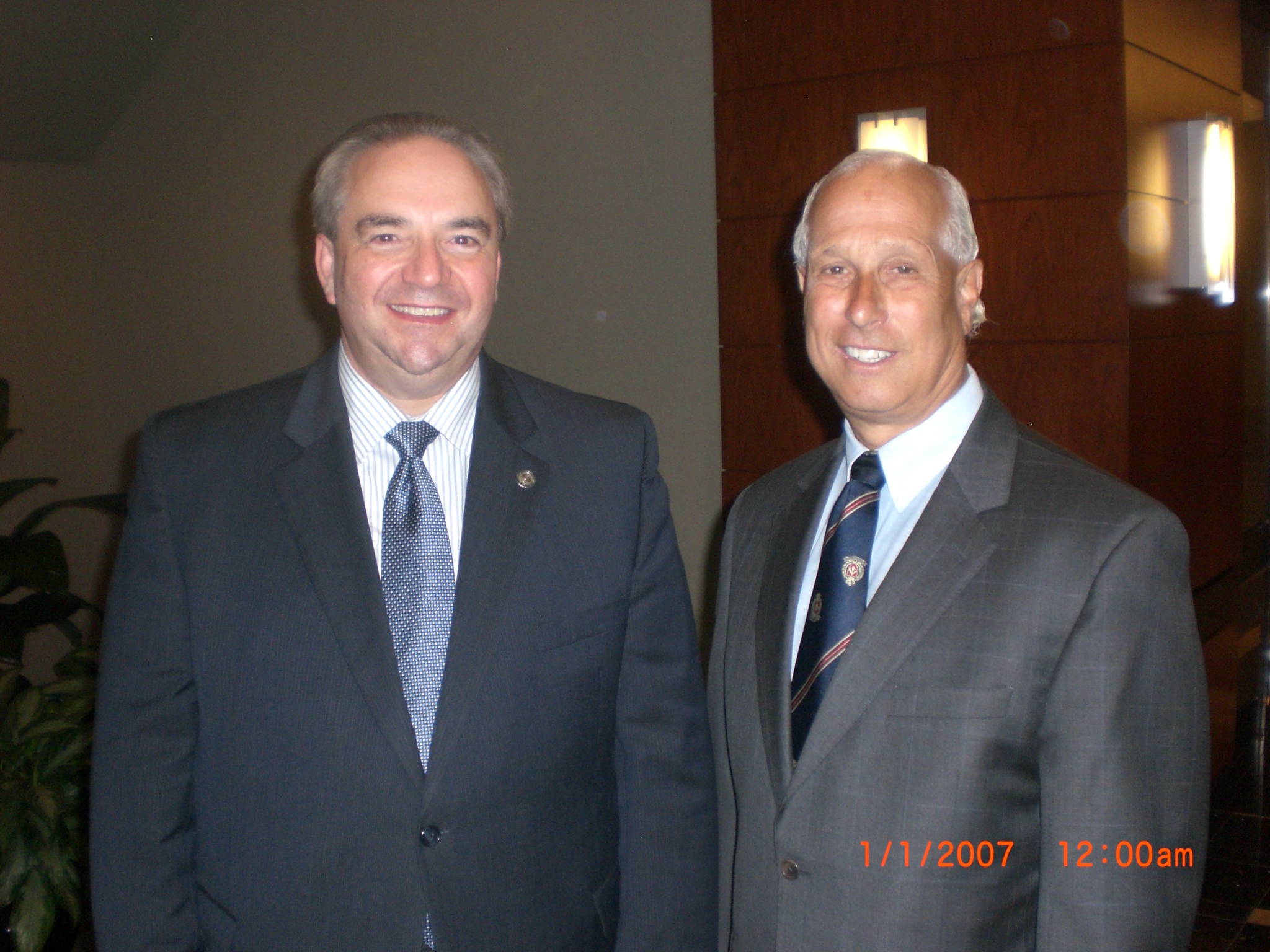
Virginia Lt. Governor Bolling & Stuart Malawer, Members of the Board of Directors of the Virginia Economic Development Partnership

 Stuart Malawer

You must be logged in to post a comment.