







RSS Feed
-
Recent Posts
- Malawer, “Trump’s Tariffs & Refunds — Chaos.”
- UPDATE (Geopolitics & Geoeconomics): U.S. Tariffs and Refunds — The Saga Continues and Continues.
- UPDATE — Refund of Trump’s Tariffs — Really Tricky & Messy — Court Order Refunds, Now — Tariffs to Increase from 10% to 15% (More Trump Resistance).
- Global TV Interviews — Dr. Stuart Malawer (2026).
- Refund of Trump’s Tariffs — Really Tricky & Messy.
Archives
- March 2026
- February 2026
- January 2026
- December 2025
- November 2025
- October 2025
- September 2025
- August 2025
- July 2025
- June 2025
- May 2025
- April 2025
- March 2025
- February 2025
- January 2025
- December 2024
- November 2024
- October 2024
- September 2024
- August 2024
- July 2024
- June 2024
- May 2024
- April 2024
- March 2024
- February 2024
- January 2024
- December 2023
- November 2023
- September 2023
- August 2023
- June 2023
- April 2023
- March 2023
- February 2023
- January 2023
- December 2022
- November 2022
- October 2022
- September 2022
- August 2022
- July 2022
- June 2022
- May 2022
- April 2022
- March 2022
- February 2022
- December 2021
- October 2021
- August 2021
- June 2021
- May 2021
- April 2021
- February 2021
- January 2021
- December 2020
- November 2020
- September 2020
- August 2020
- July 2020
- June 2020
- May 2020
- April 2020
- March 2020
- February 2020
- January 2020
- November 2019
- September 2019
- June 2019
- April 2019
- January 2019
- November 2018
- October 2018
- September 2018
- June 2018
- May 2018
- March 2018
- February 2018
- January 2018
- December 2017
- November 2017
- October 2017
- September 2017
- August 2017
- July 2017
- June 2017
- May 2017
- April 2017
- March 2017
- February 2017
- January 2017
- December 2016
- November 2016
- October 2016
- September 2016
- August 2016
- July 2016
- May 2016
- April 2016
- March 2016
- February 2016
- January 2016
- December 2015
- November 2015
- October 2015
- September 2015
- August 2015
- July 2015
- June 2015
- May 2015
- April 2015
- March 2015
- February 2015
- January 2015
- December 2014
- November 2014
- October 2014
- September 2014
- August 2014
- July 2014
- June 2014
- May 2014
- April 2014
- March 2014
- February 2014
- January 2014
- December 2013
- November 2013
- October 2013
- September 2013
- August 2013
- July 2013
- June 2013
- May 2013
- April 2013
- March 2013
- February 2013
- January 2013
- December 2012
- November 2012
- October 2012
- September 2012
- August 2012
- July 2012
- June 2012
- May 2012
- April 2012
- March 2012
- February 2012
- January 2012
- December 2011
- November 2011
- October 2011
- September 2011
Categories
Meta
-
UBS Libor Conspiracy — Foreign Subsidiary Pleads Guilty — Why Not the Parent Corp. Also?

A Japanese subsidiary of the Swiss bank UBS plead guilty for conspiring to fix LIBOR rates. The concern among many is why the Justice Dept. did not also insist on a similar plea by its parent Swiss corporation. “UBS Admits Rigging Tares in ‘Epic’ Plot.” Wall Street Journal (December 20, 2012). To me the scale of UBS’s involvement in rate fixing is beyond astonishment, well beyond that of Barclays. The conspiracy to fix LIBOR is a question of global collusion at its worst. Until the U.S. Dept. of Justice decides to prosecute this type of activity and to hold parent companies criminally responsible, I simply don’t see what the incentive is for global banks to curtail this illegal behavior. Finding a parent company criminally responsible holds the downside risk for these banks of being barred from the U.S. marketplace. This would be the death knell for such banks. This is the proper national policy to enforce responsible global behavior of global financial institutions. Today’s globalized economy demands nothing less.
Posted in Global Trade Relations
Tagged global banking, Justice Dept., LIBOR-conspiracy, parent v. subsidiary, UBS
1 Comment
Diverse and Rapidly Changing Global Trade Landscape — Five Newer Developments.
Important developments in international trade relations over the last two weeks show how diverse this field is and how quickly events unfurl. They include the following areas: global antitrust, international taxation (transfer-pricing), newer non-tariff barriers (general national economic regulation), the Russian Federation’s accession to the WTO and recent EU complaints, and the International Telecommunication Union’s (ITU) communications treaty impacting Internet regulation.
…. The EU has levied its biggest fine ever of $1.92 billion. This case involves an international price-fixing cartel (cathode-ray tubes) of foreign corporations. The USDOJ is continuing a similar investigation. The EU previously fined $1/2 billion the LCD makers over its cartel. “Global Cartels Fined.” Wall Street Journal (December 6, 2012).
…. A good discussion of Apple’s use of transfer-pricing, licensing intellectual property rights, and off-shore tax havens to amass two billions dollars offshore and to avoid paying EU and U.S. corporate income taxes. “Apple and Billions Offshore.” New York Times (12.6.12).
…. Annual review of global trade by the Director-General of the WTO. Calls for addressing increase in new restrictive trade measures, that anti-dumping measures are on the rise, regional trade arrangements continue to be strong utilized, and new national regulatory measures are emerging as newer non-tariff barriers. The world needs a renewed commitment to revitalize the multilateral trading system. Lamy, “Overview of Developments in the International Trading Environment.” (WTO, December 2012).
…. Russia has been criticized by the EU for not following the rules concerning its accession to the EU, just four months after joining the WTO. “Russia’s Interest in Following the Rules.” Financial Times (December 10, 2012).
…. The United States refused to sign the new ITU treaty at the World Conference on International Telecommunications (WCIT) in Dubai, the first new one in 24 years, because of its inclusion of provisions concerning the Internet that the U.S. feels would lead to international regulation of it, a reversal of the private regulation of it, even though aspects of the treaty dealt with freedom of speech and cyberwarfare. “U.S. Leads Rejection of Treaty on Internet.” Financial Times (December 15, 2012).
Additional items of great importance that demonstrate the rapidly evolving landscape and newer issues now being considered as part of international trade relations in this decade are the following: (i) HSBC’s massive global money laundering and payment of $1.9 billion in fines; (ii) UBS’s soon to be announced guilty plea to criminal charges concerning fixing the LIBOR rate (a potential fine of $1 billion); (iii) the extension of U.S. capital requirements to foreign banks doing business in the United States through subsidiaries; (iv) allegation of overseas bribery by Rolls Royce; the U.K. investigation by the Serious Fraud Unit (SFU); (v) extensive application of U.S. trade sanctions to foreign corporations; (vi) calls to revise U.S. international corporate taxation concerning foreign tax havens, bank secrecy, transfer-pricing, worldwide taxation, among other issues.
The items above further highlight the increasing importance of the extraterritorial application of U.S. economic legislation as well as that of other countries to global transactions of all kinds.
This is really a great time to be involved in this dynamic and critical area. It is about time that professionals and professors engaged in global trade pay more attention to the legal and regulatory nature of this field. Recognizing that it is more and more becoming the poster child of this century. One involving great implications for trade, peaceful relations and national security for all nations.
Posted in Global Trade Relations
Tagged bank secrecy, extraterritorial application of law and regulation, foreign economic regulation of global transactions, global cartels, global transactions, HSBC and money laundering, international taxation, Internet regulation, ITU and communication treaty, national regulation and non-tariff barriers, newer non-tariff barrriers (NTB), Rolls-Royce and foreign bribery, Russia's accession to the WTO and he EU, tax havens, trade sanctions and U.S. laws, transfer-pricing, U.S. international economic regulation, U.S. regulation of foreign banks (capital requirements), UBS and Libor rate fixing, worldwide taxation
Leave a comment
State Incentives for Economic Development — Corporate Welfare? The Debate We Haven’t Had — Any Federal or International Legal Issues? Maybe.
The New York Times recently published a series of front-page articles on state and local incentives and economic development. This series was the culmination of a 10-month investigation into economic incentives awarded by hundreds of cities, counties, and states.
Perhaps the most invaluable contribution of the series is its extensive interactive databases about the companies, states, and sectors involved, including per capita expenditures, percentage of state budgets going to incentives, and an extensive listing of the types of incentives (tax refunds, loan guarantees, tax credits, and more).
Article # 1 — “Companies Seek Tax Deals.” New York Times (December 2, 2012).
Article # 2 — “Texas and Industry Bonanza.” New York Times (December 3, 2012).
The New York Times investigated several recent high-profile cases from Michigan to Texas. It concluded that there is a significant degree of cronyism involved in awarding these incentives, and they place a large drain on state and local budgets, often without much to show for themselves.
The articles highlight the lack of a national debate on this widely used approach to economic development during the ongoing economic crisis.
While focusing on the political and business aspects of incentives and not as much on economic theory or historical cases, this series emphasizes one topic that has been argued over through the years: Whether these incentives represent “beggar-thy-neighbor” policies, corporate welfare and if they come at the expense of other priorities, including improving workforce training and developing better employment conditions, such as wages and benefits.
The New York Times series contend that long-term benefits may be at least as likely to come from investing in public universities and infrastructure projects as from supporting corporate relocations. That large corporations have the ability to lobby for declining tax dollars and then follow the best incentive offers where they may appear.
There is a broad range of state and local incentives, including among others: corporate income tax credit, state tax refunds, various tax exemptions (for example, local personal property and property taxes), cash grants, loans and loan guarantees.
To me state incentives need to be carefully assessed in terms on competing economic interests, expected outcomes, and measurable metrics.
One needs to delineate between state support of domestic corporate relocations and foreign ones. One needs also to consider state support of export promotion, especially of small and mid-size firms, as distinct from corporate relocation.
Unfortunately, in 2006, the Supreme Court declined an opportunity to rule on the use of state incentives for economic development under the interstate and foreign commerce clause. This, however, really is a major issue of federalism that needs to be decided by the courts.
The extensive interactive data sets in the New York Times series can let policy makers assess and compare the impact of economic and fiscal incentives on state budgets, taxes, and corporate policies, including relocation and expansion. For example, they make clear the relation of incentives to actual job creation.
It should be emphasized that this debate is particularly important when comparing the value of incentives for corporate relocation within the United States against that of recruiting new foreign direct investment into the United States (“Greenfield investments”).
Is there a more valid reason to offer economic incentives to foreign companies not located here than to firms already located in the United States? Is it preferable to fund export promotion rather than domestic corporate relocation and thus avoid the beggar-thy-neighbor dilemma?
By the way, the World Trade Organization (WTO) recently ruled that state and local incentives given to Boeing in the state of Washington are illegal subsidies that violate U.S. global trade obligations.
I look forward to more rigorous assessments of state incentives and economic development in our rapidly globalizing and hyper-competitive world. Taxpayers and society deserve closer government and public scrutiny of these state programs in order to support more sustainable economic development.
From my personal observation, as a board member of the Virginia Economic Development partnership, the range of incentives available in Virginia, at both the state and local levels, are an essential element of economic development. This along with a favorable regulatory business environment constantly drives Virginia to be ranked as one of the most business friendly states in the United States. One that leads in job creation.
Virginia state incentives are definitely free of the political cronyism that The New York Times reported on in Texas.
Proper procedures, continuing oversight, specific performance metrics, and constant evaluation are essential to successful state actions in awarding and monitoring a broad range of state incentives aimed at economic development and job creation.
Earlier post discussing similar issue ………….. Malawer, “State Incentives and Global Trade.” (January 9, 2012).
Posted in Global Trade Relations
Tagged cronyism and state incentives, infrastructure investments, large corporation lobbying, legality of state incentives, management of state incentives, metrics and state incentives, property tax abatement, public works investment, range of state and local economic incentives for economic development, sales tax reduction, state and local incentives, state and local subsidies, state incentives and economic development, state incentives data bases, state incentives or corporate welfare, state universities and state support, Texas state incentives, transparency and state incentives, types of state and local incentives, Virginia economic development, WTO and local subsidies
1 Comment
U.S. – EU Free Trade Agreement, Sovereign Debt and New Global Landscape — New DNA in Trade Relations?
Here are three items concerning the EU (and the U.S.), the multilateral trading system, and Argentina (sovereign debt restructuring) indicating how global trade issues are changing every day and how important they are to be understood by policy makers in a legal, business and political perspective.
….The WTO Director-General discusses the new DNA of the global trading system as encompassing a changing landscape of geo-political shifts and technological advances. This new world includes the emergence of a range of new state actors who are not “policy takers” but makers in a multi-polar world. He also discusses global value chains (“Made in the World“) involving trade in intermediate goods and the rise of regulations as a non-tariff barrier. This calls for new ways of measuring trade. Lamy, “Future of the International Trading System.” WTO News (November 26, 2012).
….The EU and the U.S. are in very early stages of perhaps discussing a bilateral free trade arrangement, in light of the failure of DOHA. This primarily involves non-tariff barriers (NTBs) involving the impact of regulatory actions on actual trade flows.”Trade Deal Between U.S. and Europe.” New York Times (11.26.12).
…. A U.S. federal court has held against Argentina in its sovereign debt restructuring since it did not have a “Collection Action Clause” (CAC) in its sovereign debt. This is really a simple matter of contract law and a choice-of-law clause. The court interpreted the “pari passu clause” (“on equal footing“)
to protect non-consenting bondholders — new debt cannot be senior to existing debt. “Markets: An Unforgiven Debt.” Financial Times (Nov. 28, 2012). “Sovereign Debt.“ Financial Times (11.26.12). “Courts and Argentine Brinksmanship.” New York Times (Nov. 28, 2012).
Posted in Global Trade Relations
Tagged "collection Action Clause", "pari passu" ("equal footing") clause, changes in the multilateral trading system, choice-of-law clauses, global investment, international contracts, international finance contracts, non-tariff-barriers and regulatory actions (health and safety), regulatory impact on trade transactions and trade flows, sovereign debt litigation, sovereign debt restructuring, U.S. - EU Free Trade Agreement
Leave a comment
Dramatic New Trade Developments, They Keep Happening.
Developments keep happening demonstrating how global trade is dramatically changing and encompassing a broad range of newer topics.
For example, the issue of foreign corporate corruption continues to get top treatment by the U.S. Dept. of Justice, U.S. – Russia trade relations are becoming more intertwined with human rights concerns, trade statistics and data are confronting the need for more accurate measurements of actual added values in global supply chains rather than merely relying upon the final price in the “country-of-origin approach,” and aggressive foreign bank disclosure requirements by aggressive U.S. tax collectors to limit tax evasion and bank secrecy.
The following are some recent developments ………….
…. A new detailed guide to the Foreign Corrupt Practice Act has been released by the Dept. of Justice and the SEC. A Resource Guide to the U.S. Foreign Corrupt Practices Act (USDOJ and SEC, November 2012). “Speech by USDOJ AAG on FCPA.” USDOJ News (Nov. 16, 2012) discussing “global anti-corruption mission” of criminal division.
…. One of the first acts of the lame duck session of Congress after President Obama’s reelection was the passage of a trade bill and the Magnitsky bill. This allows the U.S. to take advantage of Russia’s accession to the WTO and changes the Jackson-Vanik Amendment. But it would authorize new human rights restrictions (visa sanctions) aimed at Russia. “Lawmakers Pass Russia Trade Bill.” Wall Street Journal (WSJ 11.17.12).
…. Four new interactive databases are now provided by the WTO (ITC and UNCTAD) concerning market access. “WTO Launches New Market Access Interactive Tool.” WTO News (Nov. 19, 2012).
…. An overly extraterritorial tax regime is being imposed by the U.S. on foreign banks to report U.S. accounts or face a 30% withholding tax on income or gains to be paid to those banks from the U.S. “U.S. Offshore Crackdown Brings Planning Worries.” Financial Times (11.20.12).
State Universities and Economic Development — A New Top Priority, Long Overdue.
Professor Stuart Malawer (left) and Visiting Scholar Dr. Li Fenning, Wuhan University of Technology (right), with Jim Cheng, Secretary of Commerce and Trade, Commonwealth of Virginia, discussing trade and investment strategies for increasing China – Virginia commercial relations. At George Mason University (School of Public Policy) (November 2012).
State universities are beginning to acknowledge that economic development should be a critical part of their mission. Historically, land grant colleges recognized this but in reality this has not been a top priority for a long time. States are beginning to demand that public universities become more proactive in fostering economic development and job creation. Governors of many states are demanding greater accountability of public universities while searching for greater investment and business contacts worldwide.
I was glad to be able to arrange a meeting recently between a Visiting Scholar of international economic law from China here at George Mason University (School of Public Policy) and Virginia’s Secretary of Commerce and Trade. They discussed strategies to increase Chinese investment in Virginia in order to promote greater economic development and job creation. Leveraging international aspects of state universities to help foster state economic development is long overdue.
National Security and Direct Investment — Canadian Style — Same as U.S.?
Petronas, Malaysia’s state-owned oil company, is battling the Canadian government to allow its proposed $5.3bn acquisition of Progress Energy Resolution. Also waiting approval is China’s CNOOC’s proposed $15bn acquisition of Nexen, another Canadian company.
The issues raised by the Canadian government are in many ways similar to those raised by the U.S. government concerning foreign takeovers by Asian companies — there’s a potential risk to national security and economic protectionism.
To me this issue of national security and foreign direct investment raises serious concerns testing the openness of Western economies to foreign investment by foreign state-owned companies or those with ties to a foreign government, particularly those located in Asia.
In part, the answer is for the United States, Canada and others, is to require the boards of the foreign corporations to have independent directors and sufficient regulatory reporting requirements as to corporate policies, finances and identity of shareholders, to provide corporate transparency to the host state.
Trade, direct investment, economic development and jobs are increasingly dependent on these global transactions, especially those emanating from Asia and other emerging markets. They need to be encouraged and not stymied by unnecessary restrictions amounting to economomic protetionism. They could be addressed by sensible public policies addressing corporate governance and disclosure in today’s global environment.
U.S. – China Litigation in the WTO — What Does the Record Show for Obama and Bush?
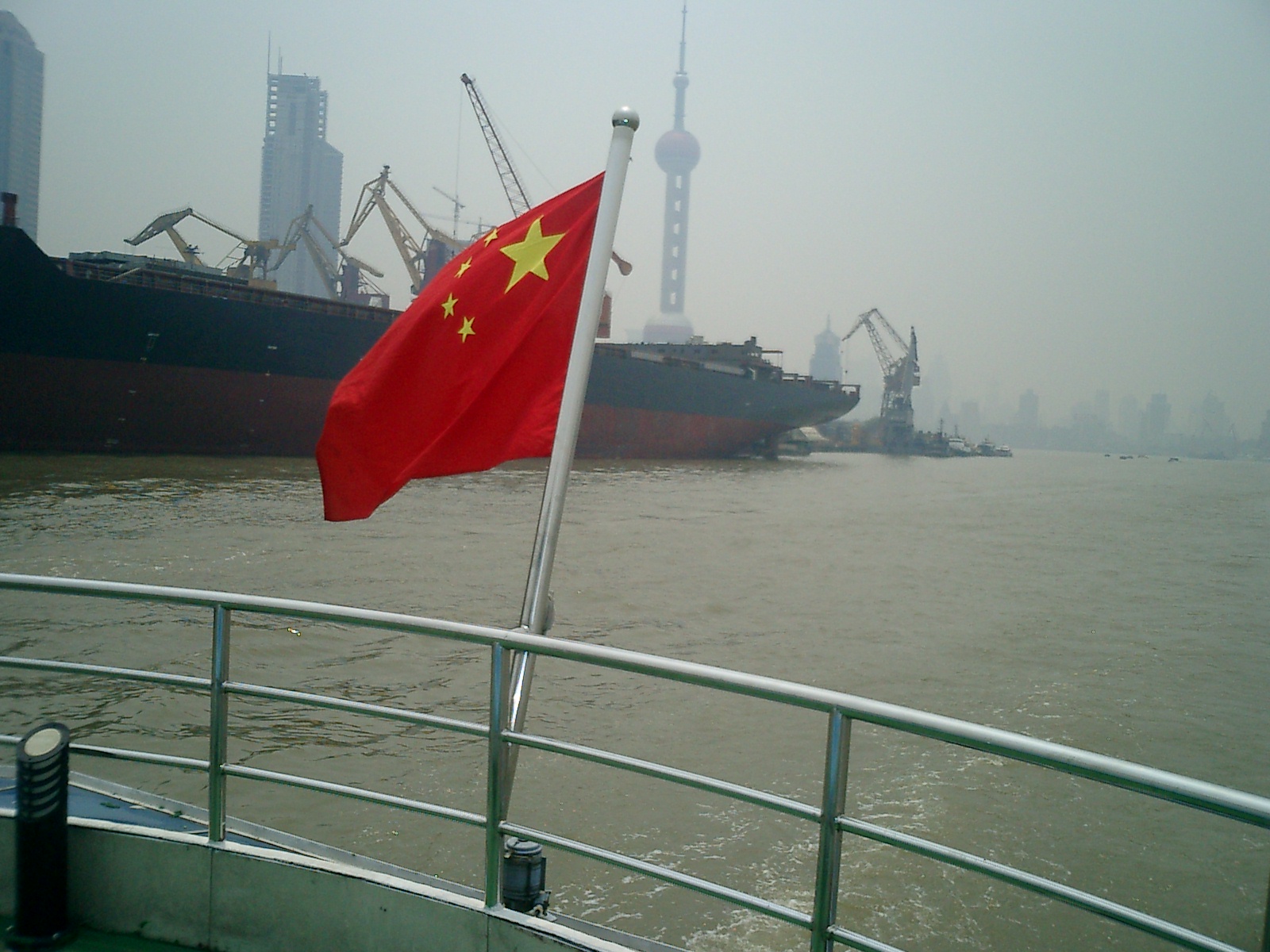
U.S.-China trade relations have become a leading foreign policy and trade issue in the 2012 presidential campaign, as demonstrated by the candidates’ statements throughout the presidential debates.
What does the WTO data show?
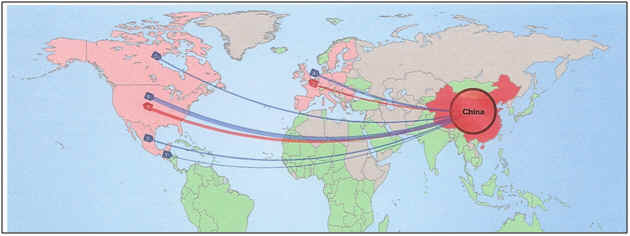
President Obama’s administration has filed more cases against China in four years than the Bush administration did in its eight years. Obama has already filed 8; Bush filed a total of 7.
Interestingly, the Obama administration has focused on aggressively targeting China through WTO litigation.
President Obama filed 8 cases against China, out of a total of 11 WTO cases filed by his administration. President Bush’s administration filed 7 cases, out of a total of 24 WTO cases filed by his administration.
However, it is noteworthy that the Obama administration has filed fewer total WTO cases than either the Bush administration or the Clinton administration. (Obama filed 11; Bush filed 24; Clinton filed 68.) The Obama administration’s data covers only four years, not the eight years by President Clinton or President Bush. The Clinton administration’s data, in addition, only covered six years of actual WTO membership; the WTO didn’t exist until 1995.
Any conclusions?
It is clear that the Obama administration has focused forcefully on WTO litigation against China. However, its total litigations against other countries have significantly decreased. Throughout the history of the WTO, from 1995-2011, the most litigation occurred in 1997 (50 cases), and the least occurred last year, in 2011 (8 cases).
Are countries violating the global trade rules less frequently? Perhaps the decrease in filed WTO cases demonstrates a greater acceptance and better understanding of the WTO global trade rules.
Filing cases in the WTO and litigating them in that global forum is more beneficial than taking aggressive unilateral actions. It is much more likely to be effective and viewed as legitimate under the umbrella of international law as determined by an international panel.
The WTO data discloses significant trends and comparisons for serious policy discussions for the remainder of this presidential campaign and beyond.
Malawer, “U.S. – China WTO Cases — Bush & Obama Administrations Compared.” (Sept. 20, 2012).

 Stuart Malawer
 U.S. LAW & GLOBAL TRADE RELATIONS.
You must be logged in to post a comment.