Innovation, 21st Century Trade Rules, Gov’t Shutdown, Trade Deals & Domestic Reform, Corp. Inversions.

       Electronic Commerce

     A range of newer issues have appeared recently in global trade discussions concerning innovation. 21st century rules, the U.S. government shutdown, the use of trade deals as leverage for domestic reform, and corporate cross-border mergers (“corporate inversions”). The following is a bit more information on each topic. This just further illustrates to me the very broad scope global trade now encompasses and global public policy challenges they present.
    • The Uruguay Round was concluded, in 1995, prior to the commercial use of the Internet. Many of the WTO disciplines concerning the multilateral system need to be updated. The WTO is adding to the general discussion of global  trade the newer dimension of how domestic innovation can help developing countries promote greater global trade and their own  economic development. This is really important and a very interesting newer topic in global trade relations. “Azevedo Opens Public Forum.” WTO News (Oct. 1, 2013).
    • Good editorial from the Financial Times discussing the TPP and the multilateral system (WTO). Discusses the TPP as setting a “gold” standard for newer trade issues in the 21st Century (compared to the WTO that predates the Internet age and that has been hampered by outdated rules and processes). “Trading Principles.” Financial Times (Oct. 4, 2013). 
    • The impact of the U.S. government shutdown on both the TPP  and TTIP is raising significant questions especially as to the renewal of “fast track authority.” “U.S. Tries to Reassure Asia Allies.” Financial Times (Oct. 7, 2013).
    •  Trade deals are often seen as leverage for domestic reforms. That is the thinking concerning Japan’s role in the TPP and “Abenomics.” The TPP is perhaps the most important part for domestic reform — the removal of Japanese trade restrictions and protectionism. “TPP Negotiations and Japan.” Financial Times (Oct. 8, 2013).
    • “Corporate inversions” are long-standing means of avoiding U.S. taxation on multinational profits. These cross-border mergers have been one step ahead of each new round of tax law changes. Newest rules require that 25% of assets and income need to be in foreign domicile. The Obama administration and the Congress want to review international corporate taxation as part of their review of corporate taxation generally. “New Corporate Tax Shelter: A Merger Abroad.New York Times (Oct. 9, 2013).
Posted in Global Trade Relations | Tagged , , , , | Leave a comment

Doha Lite, Currency Manipulation, Investor Litigation, Corruption, Tobacco Controls, Sovereign Debt, Foreign Taxation.

     China trade
     A broad range of trade issues have continued to be raised in different international forums including the TPP, TTIP, World Bank and the WTO. They include among others Doha Lite, Currency Manipulation, Investor Litigation, Corruption, Tobacco Controls, Sovereign Debt, Foreign Taxation.  Here is some additional information concerning international activity over the last few weeks ………………
  • The new Director-General of the WTO Roberto Azevedo is renewing the push for the conclusion of the Doha Round at Bali this December. He does not see an increase in regional or inter-regional arrangements as a threat to the multilateral system. “Roberto Azevedo Urges WTO to Reach $1tn global trade Deal in Bali.Financial Times (Sept. 10, 2013).
  •  France has raised legal issues concerning TTIP negotiations concerning  “Investor-State Dispute Settlement Mechanism” and government  procurement restrictions in the U.S. This reflects the  traditional French positions and is mostly unwarranted. “Trade  Talks Leave States at Risk from U.S. Lawyers.Financial    Times (Sept. 11, 2013). 
  • World  Bank sanctions are at a seven-year high after efforts by the bank to clamp down on fraud and corruption in the  projects it funds. The World Bank blacklisted 250 entities and individuals in the first       seven months of 2013. “World Bank Sanctions for Corruption.Financial Times  (9.16.13).
  •  The  issue of precluding tobacco controls from the free-trade provisions  of the TPP is now a contentious issue within the U.S.   Negotiations seem to be moving from a “safe-harbor  exemption” (to allow state controls with no right of challenge)  to only a presumptive or a voidable one (allowing states to contest            controls and requiring consultation prior to litigation). “Snuffing out Tobacco Exemption in the TPP.Washington Post (Sept. 18, 2013). 
  • The Financial  Times in an editorial declared “It is time (for Argentina) to grow up” concerning its international bond restructurings  and nationalizations. “Argentina Bondage.” Financial Times (Sept. 19, 2013). 
  • Momentous changes are set to start in July concerning U.S. taxation of foreign  income that imposes new requirements on foreign financial institutions. FACTA is the most recent development in the U.S. tax            policy that started in 2009 against UBS of aggressively enforcing  U.S. laws concerning foreign tax havens and bank accounts. “Offshore  Accounts: No Pace to Hide.” Wall Street Journal   (Sept. 21, 2013).
  • Statement   by the new Director-General of the WTO on the Bali Ministerial (as  to the Doha Round) concerning three potential deliverables (“Doha  Lite”). “Statement  by Azevedo as to Bali Ministerial.” WTO News (Sept.  23, 2013). His concern about becoming irrelevant in light of the   WTO’s failure to complete the Doha Round and negotiations of the TPP  and TTIP. “TPP & Ocean’s Twelve (and WTO).Financial Times (Sept. 24, 2013). 
  • The U.S.  Senate along with the House have been pressuring the Obama administration to include currency manipulation in the TPP talks. This is aimed primarily at Japan (“Abenomics”) but raises  issues of U.S. Quantitative Easing also.  “Currency Manipulation Should be Part of Trade Talks.Financial Times (Sept. 25, 2013).
Posted in Global Trade Relations | Tagged , , , , , , , , , , | Leave a comment

EXPANDING GLOBAL TRADE — Greater Innovation = Greater Trade.

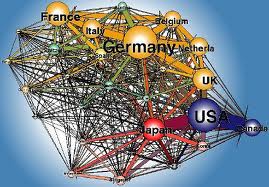
     Digital Trade Map

     The WTO is about to launch a three-day global forum on trade, innovation and the digital economy.  The thesis is simple. We can increase global trade and growth, especially of developing countries, by increasing domestic innovation. This is the theme of this year’s Global Public Forum in Geneva. 

     The Provision Program includes such topics as: e-commerce, digital innovation, cross-border data flows, intellectual property rights, inter-connected e-platforms, the internet, digital developments.

    Clearly the issue of innovation in the context of the digital revolution and trade promotion is extremely important. Global discussion of this is long overdue. While some have discussed this topic, for example within the World Intellectual Property Organization (WIPO) and within the U.N. Conference on Trade and Development (UNCTAD), it is good that the WTO is now looking at this more closely and in the context of global trade. After all, the Uruguay Round was concluded, in 1995, prior to the commercial use of the Internet. Many of the WTO disciplines concerning the multilateral system need to be updated.

     The WTO is adding to the general discussion of global  trade the newer dimension of how domestic innovation can help developing countries promote greater global trade and their own  economic development. This is really important and a very interesting newer topic in global trade relations. Keep posted.

….”Azevedo Opens Public Forum.” WTO News (Oct. 1, 2013).

Posted in Global Trade Relations | Tagged , , , , , | Leave a comment

Newer Global Trade and Business Developments — Both National & Multilateral.

          China trade     The last few weeks have been very busy in terms of developments in global trade. These developments range from the continued U.S. court rejection of the Argentine bond default practices, to greater international arbitration of global business disputes, a new filings of a WTO action by Korea against the U.S. concerning its antidumping calculation and methodologies, G-20 global tax proposals (in St. Petersburg) to restrict tax avoidance by individuals and multinationals, and an in-depth WTO forum concerning innovation as a means of fueling greater global trade. Here is some more information concerning these developments:

  • A U.S. appeals court  has upheld a judgment against Argentina for payment to holdout bondholders            of defaulted sovereign bonds. This is a huge development that now  confronts Argentina and its practice of defaulting on sovereign debt. (If the bonds had a “collective-action clause” instead of an “equal treatment clause” the outcome would  have been different.) “Argentina  Bond Showdown is Set.” Wall Street Journal (Aug.  24-25, 2013).
  • As international commerce  expands so does the need for international arbitration of cases worth billions of dollars under either bilateral investment treaties  (BIT) or between corporate entities. “Growth in Global Disputes. New York Times (August 27,  2013).
  • Korea filed a new action against the U.S. in the WTO over its antidumping and subsidies  measures concerning imports from Korea that utilize  “zeroing.” This methodology has long been contested in            many actions against the U.S. in the WTO and the U.S. has almost  always been found to have violated the WTO rules for A/D. “Korea  Files Dispute (Washing Machines).” WTO News   (August 29, 2013).
  • The G-20 meeting in St.  Petersburg of the heads of state agreed to curbing international tax avoidance by committing to exchanging information  automatically on tax matters by the end of 2015 and a separate            commitment concerning multinational corporations and their use of offshore subsidiaries and tax havens.  This is considered  one of the few real accomplishments at this summit. “The  Group of 20 Tackles Tax Avoidance.New York Times (Sept. 7, 2013).
  • The takeover of  Smithfield Foods by Shuanghui International has cleared CFIUS. This is the largest Chinese take over in the U.S. ever. “Smithfield Takeover Wins U.S. Clearance.New York Times (Sept.      7, 2013).
  • The WTO Public Forum this  October , in Geneva, will spend three days on the topic of “Global Trade         through Innovation and the Digital Economy.” “Expanding Trade Through Innovation & the Digital Economy. WTO News (Sept. 2013). This discusses among other topics the   Internet as a trading platform, mobile technology, e-commerce,   innovation and international competitiveness, global value chains,            social media, data protection, and interactive e-platforms. Provisional Programme.
Posted in Global Trade Relations | Tagged , , , , , , | Leave a comment

US-China Trade Relations — Litigation in the WTO .

 China and WTO

This is a slightly longer version of my article that appeared in the New York Law Journal (August 9, 2013)    ………………………………….           

US-China Trade Relations — Litigation in the WTO 2001-2013

Introduction.

The WTO dispute resolution system is widely used and is a litigation-oriented process.  It is at the core of global trade relations  today.  Both  the  United  States and China have been aggressive users of it. Each country has shown a willingness to address contentious issues. This has been to the benefit of both countries. As newer trade issues arise this process will be indispensable in keeping US – China trade relations on a stable course.

My approach to assessing US-China trade litigation in the WTO is to examine the data provided by the WTO and the United States Trade Representative (USTR) concerning the WTO dispute resolution system from its inception, the activity of the Bush and Obama administrations,  and  China’s  record  in the WTO.

This is not a jurisprudential study but one assessing  empirical litigation data in order to disclose implications for American trade policy and the international  trade  system.  A  series  of charts with short explanatory passages helps illustrate this story. A statistical assessment of WTO litigation is essential to policymakers confronting the future of the WTO.1

The specific conclusions are straightforward. The dispute resolution system is widely used by many developed and  developing  countries.  The  US  has been the most active country in it. The focus of the US has increasingly been on China and Chinese litigation has been primarily focused on the US. Further, the pace  of  WTO  litigation  among  all countries has picked up.

This review of US-China litigation is of competition reflecting trade flows and friction, which are addressed successfully in a rules-based system, rather than a narrative of a deadly, winner-take-all conflict.  Such  legal  conflict  and diplomatic resolution is the way that the system was intended to work by its architects, principally the US.

My general conclusion is that, whereas the US and China are competitors, they have  channeled  their  major  trade disputes into an international diplomatic and adjudicatory mechanism that demonstrates cooperation and management. This approach is beneficial to both parties politically, US-China trade relations, and global governance.

 Background.

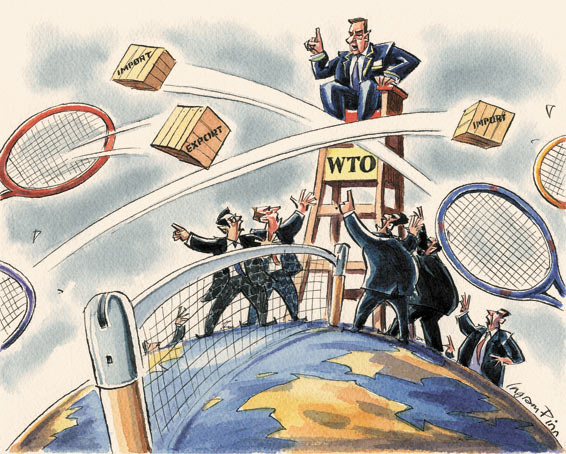
The dispute resolution system is at the heart of the WTO and decides trade disputes between members. It is the judicial system of the WTO and of the global trading system.

The WTO and its dispute resolution system is the successor to the older, much weaker GATT system, and came into existence in 1995. For the first time in history, there is now a multilateral system that resolves trade disputes with binding decisions enforceable by sanctions. There is  nothing  else  like  this  in  the international economic arena today.

The basis of the dispute resolution system is the WTO’s “Dispute Settlement Understanding,” one of the multilateral agreements that came into force in 1995. It provides compulsory jurisdiction and decisions enforced by trade sanctions. It applies all the rules found in the whole range of WTO agreements relating to agriculture, intellectual property, dumping, subsidies, services, investment measures, merchandise trade, among others.

For example, the US has filed various actions against China concerning what it considers improper export subsidies and failure  to  enforce  intellectual  property rights. On the other hand, China has filed actions against the US for their imposition of antidumping duties and safeguard tariffs. Most trade cases before the WTO involve “trade remedy legislation” authorizing dumping, subsidies, and safeguard measures. The dispute resolution system is widely used by many states, but most WTO litigation involves that  between  the  US  and  the  EU. However, the most politicized and high- profile litigation involves the US and China.

The actual dispute resolution process combines traditional negotiations and litigation and is relatively simple and quick. From start to finish this entire process takes 12–15 months. States file a request for consultation which involves confidential diplomatic negotiations between the parties. If consultation does not result in a settlement, the complaining party may request the establishment of a panel to hear the case. This is where the litigation takes place. However, the majority of cases requesting consultation are resolved without ever going through the full litigation process.

Panel members are trade experts selected by the WTO and then chosen by the parties. The cases are decided by the panelists and not juries—a seeming adaptation of the civil-law approach to litigation. For a very long time these proceedings were closed and did not allow amicus briefs, but this has now changed somewhat.

Parties may appeal the decision of the panel  to  the  Appellate  Body  which  is composed of members selected by the WTO. Determinations by both the panel and Appellate Body are required to be adopted by the Dispute Settlement Body, essentially the entire membership of the WTO. In reality this adoption has proven to be automatic. When a decision is finalized, the losing party is required to bring its offending measure into compliance with the decision (technically, a recommendation) which allows it to formulate the specifics of its compliance.

If there is a failure to comply after a reasonable time, the complaining party may request the panel to impose sanctions on the losing state. Most often, these sanctions are tariff surcharges on imports from the responding state until the offending measure is removed. Requests for sanctions have been very rare and, even when authorized, they have not been imposed. States are no longer allowed to unilaterally  impose  trade  sanctions  on others unless authorized by the WTO. Only multilateral trade sanctions as authorized by the WTO are lawful under global trade law today.

Overview.

At  the  outset  of  any  discussion  of WTO  litigation,  it  is  important  to  note that only approximately 1/3 of cases filed go through the entire WTO litigation system. (It is a bit higher for cases involving the US.) The first stage in the litigation process is filing a request for consultation. This stage involves confidential diplomatic negotiations. Often,  cases  are  dropped  in  this  stage, even when there may not have been an agreement to remove contested restrictions. Only after negotiations are unsuccessful can the parties request a panel  to  be  formed.  The  chart  below covers January 1, 1995 through October 31, 2012. Of the 451 cases filed (request for consultations), only 145 have led to litigation (some are still pending).

The  WTO  dispute  resolution  system has  been  widely  utilized  by  both developed and developing countries. Developing countries have filed over 1/3 of the requests for consultation. For example,  in  2012  Latin  American countries alone filed 9 of the 27 requests for consultation.2 (D)eveloping countries participated strongly in the dispute settlement system, both as complainants and respondents.3

US (1995-2012)

The US has been extremely active in the WTO litigation process. In fact, it has been  the  most  active  member.4   The  US was brought before the WTO approximately  50%  more  often  than  it brought cases. As the complainant, it brought a total of 99 cases. (This includes 9 compliance cases which were brought after the original case in order to secure compliance.)  It  was  a  respondent  in  a total of 140 cases. (This includes 16 compliance  cases.)  Of  the  90  original cases it brought, 42 were fully litigated, resulting in 38 wins and just 4 losses. Of the 124 original cases brought against the US, it lost 50, but won a relatively high number of 17. In total, the US won just about as many cases as it lost (55 wins and 54 losses). It is interesting to note that a significantly higher number of cases went on to the full litigation process when it was the respondent than when it was the complainant.

Bush & Obama Administrations (2001-2013)

During the last presidential election, President   Obama   made   much   of   his record for bringing legal actions against China and his aggressiveness in the WTO legal process as a means of enforcing global trade obligations.

It is interesting to note that President Clinton actually brought a far larger number of cases before the WTO than either  President  Bush  or  President Obama. Over eight years, President Clinton brought 69 cases, whereas President Bush brought 24 cases. In four years, President Obama brought only 11 cases. China was not a member of the WTO during President Clinton’s administration. This decrease in number of  cases  brought  subsequent  to  the Clinton years may well indicate that the United States is more satisfied today that trade obligations are being observed than in the earlier years of the WTO.

Comparing President Bush’s eight years and President Obama’s first four years,  it  is  clear  that  President  Obama has been more aggressive than his predecessor. President Obama brought 8 cases in four years compared to President Bush’s 7 cases in 8 years. What is most interesting is that President Obama was much more focused on China in WTO litigation than President Bush. President Bush brought a total of 24 cases; only 7 were  directed  against  China.  President Obama brought 13 cases; 8 of them were against China. Therefore, it is fair to conclude that President Obama was very aggressive against China in his four years. I would add that he was hyper-focused on this litigation.

China in the Dispute Resolution System.

Almost immediately after its accession to the WTO, in 2001, China became extremely active in the WTO litigation process. In fact, China filed a case against the US before the US filed its onslaught of cases against China.5  China and the US have been major adversaries in  the WTO’s litigation process, but China’s litigation has also involved other member states, such as the European Union (EU) and Japan.

China has brought 11 actions against WTO  members.  It  brought  8  cases against the US and 3 against the EU. However, China has been brought before the WTO more often than it has brought cases. China has been a respondent in 31 cases. The US brought 15 cases, whereas the EU brought 7. Further, 9 other cases have  been  filed,  including  those  by Mexico  and  Japan.  It  should  be  noted that most of the cases brought against China were parallel actions to those filed by the US, although some were totally independent.  Parallel  actions  are  those that by-and-large mimic US arguments and legal issues. They merely involve different countries with their own fact- specific situations.

In the 11 cases brought by China, 5 were decided concerning the US. The others are pending. China won 3, and the US prevailed in 2. These cases almost exclusively involved dumping and safeguard  issues.  In  the  15  actions brought by the US against China, the US won all of the 6 decided cases. The other cases are pending.  The cases won by the US involved, among other issues, intellectual property rights, dumping, and export controls. Therefore, in the 11 decided cases involving the US and China, the US won a total of 8 cases, whereas China won 3.

One of the highest profile trade issues, the valuation of the yuan, has not been submitted by the Obama administration to the WTO, despite significant demands from Congress and the public that undervaluation amounts to an export subsidy.  In  my  opinion,  both  the  Bush and the Obama administrations understand that the WTO agreements were never intended to cover this type of currency-exchange issue. Similarly, no cases have been filed by China against the US concerning US restrictions on Chinese direct investment in the US when based upon claims of national security. The WTO provides architecture for global trade relations. The WTO’s central mandate is trade, not finance nor investment.

Observations.

The  Obama  administration  has  not filed a new case against China since the2012 election. In contrast, both the EU 6and Japan have filed actions. Moreover, China has filed a recent action against the EU8 as well as against others.

Some observers argue that constant litigation is corrosive to the international trading system. For example, one commentator laments the fact that “more and more of the work of trade relations has  shifted  away  from  negotiations  and towards    litigation    and    arbitration.”9

Another argues, “The Obama administration has put enforcement of trade agreements at the heart of the approach toward China … But winning in the courtroom is often only the start of the battle.”10

However, others have taken a more nuanced approach. In fact, an earlier skeptic recently stated, “In fact, the situation is more complex, and less worrying, than it might appear … (A) heartening amount of the litigation has actually been aimed at preventing arbitrary trade restrictions in the future … Much is aimed at obtaining rulings preventing others using ‘trade defense’ instruments, such as antidumping and countervailing duties as a politicized tool of arbitrary retaliation.”11

I view US-China litigation in the WTO as validating the strength and critical importance of the WTO and its dispute resolution   system.   China   is   now   the second-largest economy in the world. It is expected that disputes increase with trade flows. The strength of the international system is not the absence of disputes, but the   way   that   they   are   resolved.   The failure of the WTO to conclude the Doha round of negotiations and the formulation of new trade rules only highlights the growth  and  immense  historical significance of the dispute-resolution system.

An examination of the cases involving China shows that trade disputes that arise between it and the United States are submitted to the WTO and are resolved, either by diplomatic negotiations in the consultation stage or in the litigation phase. No enforcement actions by either country asking for sanctions have been filed under Article 22 of the Dispute Settlement Understanding. The primary focus  of  China’s  litigation  in  the  WTO has been the US.

Nevertheless, China is paying an increasing amount of attention to the EU and other countries.12 China’s use of the dispute resolution system and observance of  its  decisions  are  beneficial developments in promoting a rules-based global trading system. It shows a growing acceptance of global trade rules by China. This is a shift from China’s skeptical view of international law bred in the 19th- century era of unequal treaties imposed by Western powers. This newer view represents an understanding that to benefit from the global trading system it needs to follow the rules of the road.

Conclusions

An analysis of all WTO cases filed in 2012 in The WTO Annual Report for 2013 shows that the US filed 5 cases (requests for consultation), whereas China and Japan filed 3 each.1The main targets of all litigation were China (7), the US (6), and the EU (3).14 The report concluded, “In sum, WTO dispute settlement activity increased  markedly  in  2012.  It  is  clear that WTO members, both developed and developing,   continue   to   have   a   high degree of confidence in the WTO dispute- settlement mechanism to resolve their disputes in a fair and efficient manner. It is also evident that members are confident that the system is capable of adjudicating a wide variety of disputes covering significant     questions     and     complex issues.”15

It is worthwhile to note the recent observation by Pascal Lamy, Director General of the WTO.16 He argued that trade frictions are a statistical proportion of trade volumes, whereas trade disputes are a statistical proportion of trade frictions. He brushed off concerns about the increasing number of trade disputes between the US and China. He contended that the WTO mechanism takes the heat out of disputes by utilizing a process that is       rules-based,       predictable,       and respected.17

Lamy warned in a subsequent presentation that geopolitics is back at the trade table.1He noted that the value chains   are   multilateralizing   and   that trade   governance   needs   to   meet   this challenge. Lamy argued that China would benefit from taking a more active role in global governance in trade and related issues. “China’s economic take-off benefited from a stable external environment.  Its  sustainability  depends on a well-functioning global trading system. As a key stakeholder, China should  take  a  more  proactive  role  in international economic governance ….”19

While inheriting a complex trade situation20, the Obama administration has clearly  put  trade  at  the  heart  of  its second-term  agenda.21   This  policy includes negotiating the Trans-Pacific Partnership (TPP) and the Trans-Atlantic Trade  and  Investment  Partnership (TTIP). However, at the core of the administration’s trade policy is its insistence  on  greater  trade  enforcement by US trade agencies and the WTO, particularly with China. What is the sense of negotiating rules if they are not enforced? New Secretary of State John Kerry succinctly stated, “Foreign policy is economic policy.”22

The  2012  Report  to  Congress  on China’s WTO Compliance by the USTR stated clearly the central position of WTO litigation in US – China trade relations, “When trade frictions have arisen, the United States has preferred to pursue dialogue with China to resolve them. However, when dialogue with China has not  led  to  the  resolution  of  key  trade issues, the United States has not hesitated to invoke the WTO’s dispute settlement mechanism. In fact, the United States has used this mechanism against China more than  any  other  WTO  member.”23   This policy is set to continue under the newly appointed USTR Michael Forman, a former member of the National Security Council.24

At least in terms of adjudicating trade disputes and governing existing and emerging trade issues, the WTO has proven itself well beyond the grandest dreams of the early architects of the dispute resolution system.

Newer  trade  issues  are  emerging swiftly  between  ever  more  countries  in this  rapidly  globalizing  trading  system. For example, the EU25 and Japan have recently filed the first cases in the WTO against the Russian Federation just joined the WTO last year. A recent WTO panel, “Defining the Future Trade Issues,” released its report in April of this year.26

It enumerated nine issues, including competition policy, international investment, currencies, labor, climate change, corruption,27 and coherence of international  economic  rules.  Some  of these issues have been around for a while, and some have become much more pressing.

To this list, I would add the issue of cyberespionage for commercial and economic gain as a new front in global trade  wars.  The  Obama  administration has suggested28 that trade tools should be become  the  scourge  of  many  countries and  international  organizations.  They have targeted it as economic development and national budgets come under increasing   pressure   because   of   global economic problems.31  These areas  could certainly  benefit  from  greater multilateral-based solutions through the WTO  perhaps  leading  to  trade agreements relating to direct investment (TRDI) and to international taxation (TRIT).  These  areas  as  they  relate  to trade may even be subject to future litigation  in  the  WTO   under  existing rules.

The recently released World Trade Report for 2013 by the WTO assesses the factors shaping the future of world trade. It concludes, “[T]he landscape and nature of world trade are changing fast. As trade evolves, new policy challenges will arise. If properly managed, international trade will  further  increase  prosperity  around the globe.”32

Challenges remain and are expected to continue. Those relating to the most important bilateral trade relations in the world today between the US and China are set to grow as trade develops even more. Global transactions in a multijurisdictional world need a mechanism  to  resolve  a  wide  range  of  business, trade, and economic issues.   In   addition  to  this   newer issue, I would add two additional issues: foreign direct investment and taxation. Growing foreign investment by Chinese companies    has    raised    questions    of national  security.30    Tax  avoidance  has an increasingly interconnected trading system and a less hierarchical political system, cooperation through diplomacy and adjudication is preferable to outright power-politics  confrontation.  Each country  has  shown  that  it  is  willing  to work with the other to apply the rules of global trade, which will need to continue as  new  disputes  arise  and    even  newer  trade issues evolve.

                 …………………………………………………………………………………………………

1 A new study recently released by the WTO and written by Professor Craig VanGrasstek presents, in part, such a statistical assessment of  WTO litigation that relies upon data compiled by the WTO. “Dispute Settlement.” (Chapter 7) in C. VanGrasstek, “The Future and History of the WTO.” (2013).

2 “2013 WTO Annual Report” 82 (WTO 2013) at

http://www.wto.org/english/res_e/booksp_e/anrep_e/anrep13_e.pdf

3 Id.

4 Of 451 filed cases (requesting consultation and sanction), the US filed 239.

5 DS 252. China v. US (US Safeguard Measures on China Steel Imports) (March 26, 2002).

6 DS 360. EU v China (China A/D Duties on EU Steel Imports) (June 13, 2013).

7 DS 454. Japan v. China (China A/D Duties on Japan Steel Imports) (May 24, 2013).

8 DS 454. China v. EU (European Subsidies in Renewable Energy Sector) (Nov. 5, 2012).

9 Beattie, “How Lawsuits Are Coming to Dictate the Terms of Trade.” Financial Times (February 20, 2007).

10 Schneider, “At WTO, US Racks up Wins Against China, But the Benefit Is Less Than Certain.” Washington Post (August 9, 2012).

11 Beattie, “Decommission the Weapons of Trade Warfare.”  Financial Times (August 8, 2012).

12 Yap and Shangguan, “China Ups Ante in Trade Spat with E.U.”  Wall Street Journal (June 5, 2013) (involving solar panels and wine subsidies).

13 “2013 Annual Report of the World Trade Organization.” 82 (WTO 2013).

14 Id.

15 Id. 89.

16 Politi, “Lamy Dismisses Rise in U.S.-China Disputes.”  Financial Times (October 1, 2012).

17 Id.

18 Lamy, “Putting Geopolitics Back at the Trade Table.”  WTO News (January 29, 2013).

19 Lamy, “China Should Be More Active in Global Economic Governance.” WTO News (March 24, 2013).

20 Schneider, “Inheriting a Complex Trade Agenda.” Washington Post (June 22, 2013).

21 McGregor, Obama Puts Trade at Heart of Agenda.”  Financial Times (February 5, 2013).

22 Gordon, “Kerry Links Economics to Foreign Policy.”  New York Times (January 25, 2013).

23 “2012 Report to Congress on China’s WTO Compliance.” (USTR) (December 2012).

24 Goldfarb, “More Obama Appointments: Froman for Trade Representative.” Washington Post  (May 13, 2013).

25 EU Files Dispute Against Russia.”  WTO News (July 9, 2013).

26 “The Future of Trade: The Challenges of Convergence.” (WTO Panel Report to the Director-General) (April 24, 2013).

27 A Resource Guide to the U.S. Foreign Corrupt Practices Act.” (USDOJ and SEC) (November 2012).

28 The Administration will utilize trade policy tools to increase international enforcement against secret theft to minimize unfair competition against US companies.” “Administration Strategy on Mitigating the Theft of

US Trade Secrets.” 4 (White House) (February 2013). “Finally, we need China to engage with us in a constructive direct dialogue to establish norms of behavior in cyberspace.” “Remarks by Tom Donilon to the Asia Society — The US and Asia-Pacific in 2013.” (White House) (March 11, 2013).

29 Nakashima, “Cyber-Spying Said to Target US Business.”  Washington Post (February 11, 2013).

30 Herzstein, “The Dangers Behind the Smithfield Deal.”  Washington Post (June 1, 2013). See also, Malawer, “Chinese Investment and State Economic Development.” New York Law Journal (October 2011).

31   Houlder, “Nations on Defensive as Anger Grows Over Tax Avoidance.” Financial Times (April 29, 2013).

32 “2013 World Trade Report.” 291 (WTO 2013).

33 Croft, “Law & National Borders — Legal Minefields Sit on National Borders.” Financial Times (May 2, 2011).

Posted in Global Trade Relations | Tagged , , , , | Leave a comment

Statistical Assessment of U.S. – China Litigation in the WTO.

China and WTO

The approach in my recently published essay assessing US-China trade litigation in the WTO is to examine the data provided by the WTO and the United States Trade Representative (USTR).  Specifically, this data concerns the WTO dispute resolution system from its inception, the activity of the Bush and Obama administrations, and China’s record in the WTO. This is not a jurisprudential study but one assessing  empirical litigation data in order to disclose implications for American trade policy and the international trade system. A series of charts with short explanatory passages helps illustrate this story.
A statistical assessment of WTO litigation is essential to policymakers confronting the future of the WTO. Both the United States and China have been aggressive users of it. Each country has shown a willingness to address contentious issues. This has been to the benefit of both countries. As newer trade issues arise this process will be indispensable in keeping US – China trade relations on a stable course.

…. Malawer, “U.S.  – China Litigation in the WTO,New York Law Journal (Aug. 8,  2013).

…. Malawer, “U.S. – China Trade Relations — Litigation in the WTO 2001-2013. (unpublished larger study with extensive charts) (August 2013).

Posted in Global Trade Relations | Tagged , , , , | Leave a comment

Busy Summer for International Trade News — EU, China, WTO, G-20, Solar Panels, §337 Apple-Samsung (ITC) …….

     Global Trade (8.6.13)

     This summer has seen a broad range of significant development in global trade. This ranges from the first case brought against Russia in the WTO, developments in the G-20 and the OECD addressing global tax and trade issues, EU – China tension over solar panels, and the President for the first time in 25 years reversing an ITC decision, over a Section 337 determination.

  • The EU has filed the first case against Russia in the WTO. This concerns   the Russian recycling fee imposed on auto imports. This  disappoints  EU officials since they viewed Russia’s accession  to the WTO as anchoring it to a more predictable, rules-based trading  system.  “EU Takes Russia to WTO Over Car Fee.Wall Street Journal   (July 10, 2013) and “EU  Brings First Russia Case at WTO.Financial Times            (July 10, 2013). “EU Files Dispute Against Russia.WTO News (July 9,  2013). Japan subsequently filed an action also. “Japan Files Dispute with Russia.” WTO News (July 24, 2013).
  • The U.S. and China have agreed to restart negotiations over a new  bilateral investment treaty during the  annual strategic economic  dialogue talks this summer. This could lead to  international rules governing direct investment into both China and the U.S. and alleviating tensions in this area. “U.S.,  China to Pursue Investment Treaty.” Wall Street Journal   (July 12, 2013).
  • The 2013 World Trade Report was release by the WTO on July 18, 2013. WTO News (July 18, 2013). It assesses the factors shaping the future  of world trade and concludes that if properly managed international trade will further increase global prosperity. It also acknowledges  that the internal governance system of the WTO may need to be somewhat revived.
  • The G-20 finance ministers in Moscow approved a plan, first proposed by the OECD, to be further            consider developing a multilateral agreement addressing corporate taxation of multinationals.  The issue of reforming the international tax system to better track real economic activity  is important to ensure that tax laws don’t impeded the growth of  international trade. Changes brought about by online transactions            and cyber space has created significant issues in determining where transactions take place. “G-20 to Tax Global Tax Loopholes.” Washington Post (July 20, 2013). “Tax  Reform for a Changing World.” Financial Tax  (July 22,  2013).
  • A new study released this July by the WTO and written by  Professor Craig VanGrasstek presents, in part, a statistical assessment of  WTO litigation relying upon data  compiled by the WTO.  Chapter 7 — “Dispute Settlement” in  C. VanGrasstek, “The Future and History of the WTO.(2013).
  • The EU and China have settled the solar case and has raised issues concerning the common or external trade powers of the EU. “Frustrated and Outflanked.Financial Times (July 31, 2013).
  • Interesting editorial by the Wall Street Journal critical of “exclusionary orders” as the only remedy in Section 337 cases as in the Samsung  – Apple case over “standard-essential patents” in cell  phone standards. Wants the President to overrule the ITC  in this case. Generally critical of patent and intellectual property  cases before the ITC. “The  Smoot-Hawley Reprise.” Wall Street Journal (Aug. 2,  2013). The President subsequently vetoed the ITC’s proposal. “Letter from USTR Michael Froman as to Disapproval of ITC Decision.” USTR (August 3, 2013). See also, “Policy  Statement by Dept. of Justice and Patent Office on  Standard-Essential Patents (SEP).” USDOJ (2013). Some have criticized the veto for undermining the U.S. hardline stance on IPR in pending trade negotiations and perhaps also   impacting U.S. industries abroad, especially China. “U.S. Patent Security Push.” Financial Times (Aug. 5, 2013).
  • The U.S. has won its case against China in the WTO concerning China’s antidumping and            countervailing duties on the import of U.S. chickens. “U.S. – China Dispute 427.” WTO  DSB 427 (Panel Report Aug. 2, 2013); “U.S. Wins Trade Enforcement Case.” USTR News (August 2,  2013).
Posted in Global Trade Relations | Tagged , , , , , , , | Leave a comment

Statistics and WTO Litigation — Helpful for Policymakers and Better Governance.

WTO Litigation (FT August 2012)

     A new study released this July by the WTO entitled “The Future and History of the WTO” and written by Professor Craig VanGrasstek presents, in part, a statistical assessment of  WTO litigation.  This innovative study relied upon data compiled by the WTO.  It is rare that a study of  WTO litigation presents a statistical analysis.  Often such studies focus only on the jurisprudential. In reality those jurisprudential studies are much less useful to policymakers grappling with the future of the WTO. Here are some salient points of this study:

 
  • The author looks at what he calls the descriptive statistics of WTO cases as provided in a database on the WTO website. He considers this approach more relevant to policy makers than jurisprudential studies.

  • He views the multilateral system as becoming more litigious over time.

  • He notes the shift to litigation from negotiation can be seen as either an advance or a decline. He argues this is an advance.

  • He views some national cultures as favoring conciliation (Asia) over confrontation. He argues this really doesn’t explain any difference in litigation practice. (Japan and India are active litigants and China has quickly learned how to become one.)

  • He notes that Confucian thought places a value on avoidance of litigation. (This hasn’t slowed China’s international litigation.)

  • He also notes while many countries use the WTO dispute resolution system African and Middle East countries have yet to file a single action.

  • The difference between common and civil law countries are not significant in explaining the differences in levels of litigation.

  • Developed countries are the most litigious in the WTO.

  • The U.S has moved away from unilateral threat of domestic litigation of the GATT era.

  • Unilateral enforcement is now banned under global trade law.

  • The US and the EU have filed the largest number of cases.

  • There has been a decline in litigations early days (except 2012).

  • 1/3 of all cases involve trade remedy cases. Most are antidumping cases.

      All of these observations are particularly informative. As a European the author notes, as expected, that the EU – US litigation accounts for the most WTO litigation.

     It is particularly interesting to note the rise of litigation between the US and China as well as between the EU and China. The level of litigation involving India, Japan and Korea is very telling as well as the  increasing litigation by Brazil.  Since the completion of the study, actions have been filed for the first time against one of the newest members of the WTO, the Russian Federation.  These have been filed by the EU and Japan.  The US has  indicated that it will also  do so shortly.

     A study of WTO litigation by the different US presidents (Clinton, Bush and Obama), as a mater of US foreign policy, would be also very informative. But that’s another story.

     I agree a statistical assessment of WTO litigation is essential to policymakers confronting the future. This study is a major advance in understanding the success of the WTO dispute resolution system as an essential part of global economic governance.

 …. Chapter 7 — “Dispute Settlement” in   C. VanGrasstek, “The Future and History of the WTO.(2013).
…. Malawer, “U.S. – China WTO Litigation (2001 – 2010),” (December 2010).
…. Malawer, “Litigation and Consultation in the WTO — Ten Years.” (July 2005).
 …. Malawer,”WTO Litigation After 10 Years.” New York Law Journal (December 2004).
….  Malawer, “U.S. and WTO: Lessons Learned from Trade Litigation.”  (April 2003).
Posted in Global Trade Relations | Tagged , , , , , | Leave a comment

Global Corporate Taxation & Multinational Corporations — A Big Step for Reform in Moscow. (Not Really that Big.)

G-20 Moscow

      Taxation and trade are intricately related. More effective taxation of cross-border transactions of multinational corporations is necessary to ensure growth of global trade and economic development. Here are some major points enunciated by the G-20 finance ministers in Moscow this week concerning global taxation and multinational corporations:

 …. Globalization impacts countries’ corporate income tax regimes.

…. As economies become more globally integrated, corporate transactions become more globally organized.

….These developments have opened up opportunities for multinational enterprises to greatly minimize their tax burdens.

…. The spread of the digital economy poses challenges for international taxation.

      The action plan adopted by the finance ministers and to be further considered later this year in St. Petersburg by the G-20 heads of state, based upon the OECD  plan,  include among others:

…. Fundamental changes are required to effectively prevent double non-taxation.

…. There is a need for a global realignment of taxation to keep pace with changing business models and technological developments.

…. Globalization means that domestic policies, including tax policy, cannot be designed in isolation.

…. There is a need to review the rules for controlled foreign corporations and excessive deductible payments

…. There are major issues of transfer pricing and enforcement of the arm’s length principle.

…. There is a need to require taxpayers to disclose their aggressive tax planning arrangements.

…. Most of all there is a need to develop a multilateral instrument to coordinate cross-border taxation of multinational activities.

      It is clear that an international consensus is finally building to address the unsustainable disconnect between global corporate taxation and the realities of today’s world. This will be a long process. But the popular support across the world has been building as well as the dire needs of national governments for revenues during this long period of economic misery and uncertainty.

      It is obvious that there is a split between multinationals over global taxation and its reform. For example, between Boeing that produces things here and Microsoft that relies upon royalty income abroad from intellectual property. Corporate coalitions are already forming in the U.S.,  such as the Alliance for Competitive Taxation (ACT) and Tax Innovation and Equality (TIE), to oppose any global tax reform, whatsoever.

      Of course, others as the editorial board of the Wall Street Journal, just simply think any tax reform, except reducing rates or doing away with all taxes on foreign source income, are part of a policy “to combat fictional plague of tax avoidance.” Just what you would expect from the Wall Street Journal on this issue.

      Today’s global tax system emerged prior to tax havens, bank secrecy, offshore banking, and the digital economy. More than anything else cyber space has clouded the geographical  location of global transactions. Changes brought about by online transactions, cyber space and cloud computing have created significant issues in determining where cross-border transactions take place.  

     Unilateral national regulation as it is today is detrimental to the growth of global trade. The issue of reforming the international tax system to better track real economic activity is critically important to ensure that national tax laws do not impede the growth of global trade.

 …….. “OECD Action Plan (Presented in Moscow July 19-20, 2013).

…….. “The OECD Calls on G20 Finance Ministers to Clampdown on Tax Avoidance.” (OECD July 13, 2013).

…….. “G-20 to Target Global Tax Loopholes.” Washington Post (July 20, 2013).

…….. “Tax Reform for a Changing World.” Financial Times (July 22, 2013).

…….. “A Global Revenue Grab.” Wall Street Journal (July 23, 2013).

…….. “Companies Square Off in Tax-Rewrite Battle.” Wall Street Journal (July 22, 2013).

Posted in Global Trade Relations | Tagged , , , , , , , , , , , , , | Leave a comment

19th Century Unequal Treaties and Chinese Foreign Policy Today — Time to Get Over Them.

China and Opiium War (WSJ 7.13.13)

     For China today its historical narrative is one of national humiliation at the imposition of “unequal treaties” by European powers throughout 19th century and continuing into the early 20th century.
Under today’s international legal standards imposition of  such treaties by aggressive military force is clearly illegal. So the problem is how can China view its current global position while taking account of the repudiated European practices of the 19th century.
The success of future Chinese foreign policy is at stake. There is really no easy answer. But there is an answer.
Just as repudiated slavery dominated western societies in the 19th century, we in the United States are still grappling with its lingering consequences. But Americans by-and-large always look forward as a society. Developing one that is based on rules and laws and the notion of equality.
So it is primarily a psychological issue for China and its leadership.
China needs to look forward, not backwards, while developing its own domestic rules and laws and immersing itself in the global order. It is in the national interest of China to conform to the global rules and to be pro-active in developing them. This balancing of “wealth and power” or “rich nation and strong military” with a dose of developing a harmonious global system, based upon Confucian concepts, is in everyone’s interest.  This approach should be at the core of Chinese foreign-policy decision-making in the 21st century.
It is to the advantage of both the U.S. and China that they look toward the future together to build a peaceful, international rules-based system.
A future that provides national equality and a means of managing international disputes involving global trade, maritime and territorial issues, among others. Many of which are based upon now highly questionable historical actions of states decades ago.
 
… “A Rising China Needs a New National Story.” Wall Street Journal (July 13, 2013).
Stuart Malawer, Imposed Treaties (William S. Hein and Co., 1977).
Stuart Malawer, “Unequal Treaties and Illegality,” New York Times (1983).
The Rise and Rebirth of Chinese Realpolitik.” Financial Times (July 15, 2013).
Posted in Global Trade Relations | Tagged , , , , , , , | Leave a comment