Hallmarks of the New Global Era — Implications are Unclear.

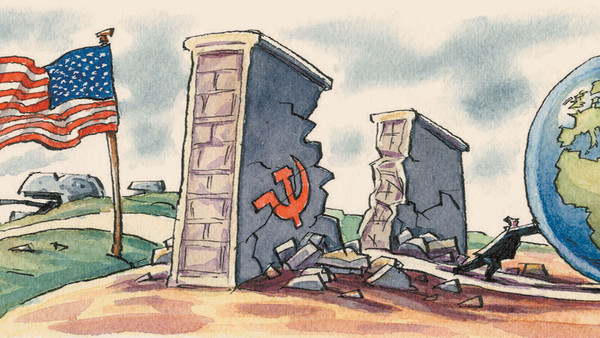
          US Flag and SU (FT6.11.14)
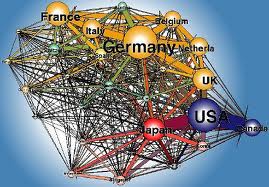
     The issues of globalization, the digital revolution, global institutions, finance and trade, economic integration and political division, and tension between cooperation and conflict are hallmarks of the 21st century. Martin Wolfe has in his own brilliant manner laid them out in a recent article in the Financial Times and  put forth his view of their interaction. The following are some quotes from his recent piece:
“The salient characteristic of the past quarter of a century is globalization. Driven on by the worldwide acceptance of the market economy and turbocharged by the digital revolution, humanity has created an economy that is more highly integrated than in 1913 ….”
“Moreover, this has happened not under empire but under the aegis of global institutions, both public (such as the International Monetary Fund, the World Trade Organization and the EU) and private (transnational companies).”
 “Trade has proved more robust than finance, but even it ceased to rise relative to world output between 2005 and 2012. It is not yet clear how deep-seated this slowdown in globalization will prove.”
“The tension between economic integration and political division remain the Achilles heel of any globally integrated economy.”
“This tension between co-operation and conflict is permanent.”
     I would posit two additional items as being particularly salient in defining this era:  the changing role of governments and the rise of social media. In many ways these change the calculus of national interests and promote sub-national and non-governmental actors in the global system. As someone once said the future isn’t what it used to be.
                  …..”Three Events that Shaped our World.” Financial Times (June 11, 2014)
 

Posted in Global Trade Relations | Tagged , , , , , | Leave a comment

Financial Sanctions & Foreign Policy — Growing Complexity in Policy & Law.

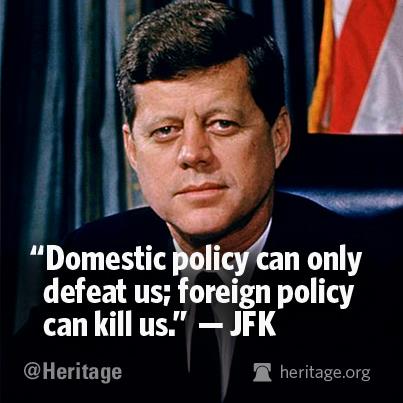
Kennedy and For. Policy


     The inter-relationship of  sanctions policy, trade policy, foreign policy, and presidential leadership values have become even more important recently. To me this represents a maturing of U.S. foreign policy in an increasingly complex global environment. Today foreign policy is much more than diplomatic history and some political discussion. A renewed focus on core national interests and non-military aspects are welcomed.

    Foreign policy and foreign affairs today encompasses a wide variety of sub-topics meshing domestic with foreign and political with economic, finance, tax and the law. A multidisciplinary approach to studying and practicing in this area is absolutely essential. The financial aspect of foreign policy is becoming so much more important today.

     Here are some recent developments.


…. Financial sanctions on foreign banks for violating U.S. trade sanctions have increased. Raises issues in TPP trade negotiations. Not unexpected. Newer developing linkage between sanctions policy and trade policy. “BNP Paribas and Financial Sanctions.” New York Times (June 4, 2014).

…. Financial sanctions & foreign policy — new weapon. More connected a targeted country is to the global economy, more effective the sanctions. “Financial Weapons from Treasury’s War Room.” New York Times (June 4, 2014).

…. Financial sanctions & foreign policy — The Office of Terrorism & Financial Intelligence (Treasury Dept.) is playing a big role in formulation of U.S. foreign policy. Increasingly more important than military action. “Obama Presses Use of Financial Weapons.” New York Times (June 2, 2014).

…. Whose values? Obama’s values are clear. Use force only to protect critical national interests. This allows the U.S. greater freedom of action in formulating foreign policy and addressing a greater numbers of countries. “”Obama’s Values-Free Foreign Policy.” Washington Post (June 1, 2014).

…. Obama’s legacy ought to include tax reform concerning American multinationals. It’s long overdue. It would be good policy and law. “U.S. Companies Fleeing the U.S. Tax Code.” Washington Post (May 31, 2014).

…. Foreign policy leadership means knowing when to say ‘no’ to useless foreign adventures. “Obama’s Leadership is Right for Today.” Washington Post (May 30, 2014).


Posted in Global Trade Relations | Tagged , , , , , , , | Leave a comment

Commercial Cyberespionage, U.S. Foreign Policy, Criminal Prosecutions — What Next for U.S. – China Trade Relations?

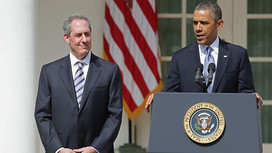
Froman and Obama (FT 2013)
     China cyberespionage for commercial gain has taken front-and-center in U.S. trade policy. It raises issues of national security, trade policy, criminal prosecutions, WTO litigation, commercial competitiveness, U.S. foreign policy, among a host of other related ones. A recent WTO trade case brought by the U.S. against China further highlights the U.S. – China tensions this week. Here is some additional information.


…. To what extent are recent indictments by USDOJ an attempt to deflect criticism of U.S. cyber actions against China? To what extent will U.S. forms face blowback in China? American Businesses in China Feel Heat of Cyber Disputes.” New York Times (May 31, 2014).
….. Obama’s foreign policy has shown to be more realistic and national-interest oriented. Less moralistic. “Obama’s Foreign Policy.” Financial Times (May 26, 2014).
….. The new Obama policy concerning commercial cyber espionage involves both diplomacy and criminal prosecution. I would suggest two additional global actions: filing a trade case against China in the WTO addressing commercial cyber espionage and calling an international conference to draft a convention on cyber espionage generally. These are realistic moves that can be taken quickly. Their success would test U.S. diplomacy. “Indictment of Chinese Hackers Part of Broad U.S. Strategy.” Washington Post (May 23, 2014).
….. Another split decision in a new U.S. – China WTO case just decided. Concerns China’s antidumping and countervailing duties on various U.S. auto imports into China.  Somewhat expected and in line with prior cases. “WTO Issues Panel Report on Imports of Autos into China.”  WTO News (May 23, 2014).
….  So China intrudes into the computer systems of U.S. firms and the U.S. intrudes into those of China. Why exactly does it matter what the intent is? Does it matter if it’s “economic espionage”  or “commercial espionage”? Global rules need to be developed to regulate such actions. That would be in the national interest of both states. Let’s start with real diplomatic negotiations between China and the U.S. Sounds like the wild west right now. “Espionage Indictments Against China.” New York Times (May 21,2014).
….. Blurred Lines — Spying for national security or corporate competitiveness? National economic advantage or firm advantage? Spying on trade negotiations, foreign economic and corporate officials. How really different is NSA and Chinese cyberespionage? What are the legal rules? What’s the best public policy? How do we get some sort of international understanding and global governance concerning commercial cyber espionage? “Fine Line on U.S. Spying on Companies.” New York Times (May 20, 2014).


Posted in Global Trade Relations | Tagged , , , , , | Leave a comment

Understanding the Broad Range of Global Developments — Is There Some Coherence?

     Globe and Question (FT 5.5.14)
     An unusual broad range of articles have appeared recently discussing global trade, foreign policy and domestic politics. They continue to evidence the great variety of topics in global affairs that are so inter-related.  They leave one struggling to make sense of them in some coherent way as to understanding cross-border transactions in today’s global economy. They involve federal-state relations, U.S. – EU relations, the WTO, Russia, China, global taxation, state incentives, economic development, business competitiveness,  Obama’s foreign policy, the OECD, and more. Here’s my take on them.
     This anti-economic development article misses the point. State incentives to attract foreign business is a rationale decision. It is good public policy. It is a rationale choice to support economic development. State incentives are not necessarily subsidies. They are often tied to metrics which must be met to keep those payments — such as to number of new jobs created. Pointing to the WTO and OECD rules adds nothing to this debate. Those rules refer primarily to export subsidies. That is simply not the case here. State incentives in Virginia have clearly led to new businesses, to higher employment, and to improved welfare of Virginians. How to End State Subsidies.” New York Times (May 10, 2014). 
     Governor trade missions are essential to attracting new trade and investment to Virginia. Really essential for job creation. “Virginia Trade Mission with New Governor to Asia.” Richmond Times-Dispatch (May 10, 2014).
      Russia filed a new case in the WTO against the EU concerning its restrictions in the energy sector & involving import restrictions on natural gas. This could prove to be a huge case given current geopolitical issues. “Russia Files Dispute Against EU.” WTO News (April 30, 2014).
     This OECD tax convention is aimed at sharing information to limit multinational tax evasion. Switzerland just announced its intention to sign this agreement. This could prove to be a turning point in the traditional Swiss resistance to sharing such information. Global taxation is a highly politicized issue in today’s global trade relations. “Convention on Mutual Administrative Assistance in Tax Matters.” OECD website.
     The recent New York Times editorial is correct that President Obama is doing a better foreign-policy job than his critics say. He has run into a more chaotic world than his predecessors. This is because of continued globalization and multipolar dynamics. The New York Times is incorrect to argue that the United States alone can do much more or that he can do a much better job. Can you imagine if the U.S. actually got involved in war zones or potential ones from Syria, Ukraine, central Africa, the East China Sea ….. The first aspect of national security today is a strong U.S. economy and society. This should be our priority. Much will follow from that. “President Obama and the World.” New York Times.” (May 3, 2014).
     I agree that tax avoidance by multinationals has become a full-fledged corporate strategy (scam?). But the solution of doing away with all corporate taxation (domestic and foreign) is laughable. It only further accentuates gross inequality. We need more realistic policy proposals. We need better U.S. legislation (and enforcement), better international cooperation, and better OECD proposals.  “End Corporate Taxation.” New York Times (May 2, 2014).
     Export growth is essential to economic development and job creation. But current export growth is still not enough. Greater government – private partnership in this area would be very helpful. Greater federal and state cooperation is critical. Public universities helping their states would also be of significant assistance. Leveraging their international assets such as their foreign students and international programs remains an untapped endeavor. “U.S. International Trade Deficit.” CNBC (May 6, 2014).
     The evolving multipolar economic world is the principal challenge to U.S. foreign policy as it confronts changes to global trade & international institutions. “Uncertainty, Not China, is Replacing U.S. Power.” Financial Times (May 4, 2014).
     I wonder if this was an intentional signal by China to Japan or an isolated maritime case stemming back to WW II? “Ship Seizure in China.” Asian Review (April 22, 2014). 
     Here’s another former foreign-policy appointee complaining about U.S. foreign policy. I wonder where he was during the last presidential administration when U.S. foreign policy was really chaotic. It’s a messy world and foreign policy mirrors that reality, unfortunately. Our first priority is to focus on the U.S. economy and society as central to our national security. The world is changing and the U.S. needs to act via multilateral arrangements and alliances not unilaterally. That is a prescription for real chaos in the 21st century. “A Foreign Policy Flirting with Chaos.” New York Times (April 29, 2014).
       The U.S. battle over the valuation of the Yuan is not legally correct. This article tells you why it makes no political, economic or business sense. “China Bashing Will Backfire.” CNBC (April 29, 2014).


Posted in Global Trade Relations | Tagged , , , , , , | Leave a comment

Newer Topics for Global Trade — Admiralty Law, Role of Cities, Wartime Claims.

Trade.Ships (5.10.11)

     The issue of Asian trade (TPP), President Obama’s trip to Asia, and recent maritime and admiralty developments continue to highlight issues confronting global trade and global politics today. Also the growing and critical role of cities, states and ports in global trade is exceedingly interesting. Here is some additional information:
…… Asian trade is crucial to global trade. But it’s the multilateral system under WTO rules that ensures global trade for all. Playing geopolitics with TPP to exclude China is not good U.S. policy. The U.S. needs to support more fully the multilateral system and not just regional ones. It should certainly not exclude major countries from regional ones for narrow political purposes.President Obama’s Asia Trip and Trade.” New York Times (April 24, 2014)
…… Today the challenge is to create virtual bridges between cities & states to the global economy to ensure economic development.Cities and the Global Economy.” Financial  Times (April 24, 2014).
…… Does this commercial / admiralty litigation in China portend new war claims by China against Japan? “The Chen’s Family Ship Comes in.” Financial Times (April 24, 2014).
…… Is admiralty law becoming more important in foreign policy and international finance? A private wartime shipping litigation in China against a Japanese shipping company is settled after a ship was seized under maritime law and an Argentine naval ship was seized and then released in order to force compensation from Argentina for its default on its sovereign debt. “Wartime Claim is Paid.” New York Times (April 24, 2014).
…… The Port of Virginia is of great importance to Virginia’s economic development. It also needs to be better coordinated with other state agencies to ensure the vital role of maritime traffic in fostering economic development and job creation in Virginia. “Reforming Port Authority.” The Pilot (April 23, 2014).


Posted in Global Trade Relations | Tagged , , , , , , | Leave a comment

Need to Get Trade Policy and Process Right …. Time is Running Out.

Free Trade Agreements


     The New York Times today in a lengthy editorial  criticizes the administration’s trade negotiations — both substance and process. It’s both correct and not so correct. Here’s my take.
….. Agree. The process is overly secretive. It’s reliance on industry advisory committees to the USTR is too exclusive in favor of large multinationals at the expense of public interest groups
….. Agree. If done correctly these new trade agreements (TPP and TTIP) would improve the global trading rules.
….. Agree. Need to ensure more benefits from global trade for workers here.
….. Agree. The main areas of  focus should be on enforceable environmental, intellectual property rights, and labor standards.
.. Disagree. The position that foreign investors should not be given standing to contest directly foreign government action is really wrong. (“Investor-State Dispute Resolution” clauses — ‘ISDR’.) The advances made over the last 50 years to allow such actions are historically significant. Procedures have been widely used to allow such actions including those of the World Bank (ICSID), bilateral investment treaties and the U.S. Foreign Sovereign Immunities Act. Investment and trade are deeply inter-related. Trade agreements need to be upgraded to recognize this essential fact today.
.. Disagree. The position that currency manipulation is the biggest culprit in global trade today is really a stretch. The rules of the WTO do not adders this issue. This is a particular currency and financial issue that should not be included in a trade agreement. The larger issues are technology and globalization.
     Time is running out for the administration. It has announced great plans but so far has delivered little as to developing new trading rules and trade agreements.The president needs to be aggressive and transparent to implement his trade policy. The buy-in by the Congress and the American people are essential. This would lead to good law and good trade policy.


…… “This Time, Get Global Trade Right.” New York Times (April 20, 2014).
Posted in Global Trade Relations | Tagged , , , , , , | Leave a comment

Russian Trade Sanctions and WTO Law — Now It’s Really Getting Interesting.

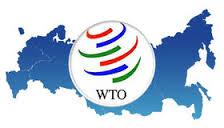
Russia and Wto Flags

Do U.S. trade sanctions imposed on Russia because of its annexation  Crimea violate WTO law?
The general question of trade sanctions for foreign policy or national security concerns and WTO law has never been litigated by the WTO. Are such sanctions consistent with or inconsistent with WTO obligations?
Article XXI of the GATT is dispositive of this issue. It allows sanctions for the protection of essential security interests, those taken in time of war or other emergency in international relations, or pursuance to obligations under the U.N. Charter.
So here are a few questions when applying trade sanctions for geopolitical reason.
Are U.S. trade sanctions imposed for the protection of essential U.S. security interests? Does this territorial dispute amount to a war or an emergency? Hasn’t the U.N. Security Council refused to take Article VII enforcement action?
My only point here is that the imposition of trade sanctions on Russia, as in many other cases, is a violation of WTO rules unless they fall within the security and related exceptions. The U.S. has trade sanctions on a long list of countries, from Belarus to Cuba to  Zimbabwe. They have have never been litigated before the WTO.
The Obama administration argues that Russian actions should be assessed in terms of the 21st century  rules of inter-state relations. But in addition to the rules contained in the U.N. Charter, treaties  and customary international law, WTO rules area also at the center of the 21st century global system.
WTO rules regulate trade and commerce. To the extent that those rules apply to state actions (trade sanctions) when relying on foreign policy or national security concerns is a critical issue. This has never been decided by the WTO dispute resolution system. Maybe it’s time for such legal clarification. The next question is of course the effectiveness of trade sanctions. That’s another question.
….. “Russia Threatens US with WTO Action Over Crimea Sanctions.” Financial Times (April 17, 2014).
Posted in Global Trade Relations | Tagged , , , , , , , , , | Leave a comment

Global Trade & Geopolitics Today — China, Cyberespionage, Sanctions, Bribery ……. Trade is More than Trade.

      Global Trade (8.6.13)
     Huge issues concerning global trade policy have emerged the last few weeks. They range from new economic sanctions, inequality and trade agreements,  foreign investment treaties, global bribery, new WTO panel decisions against China, multinational taxation, and cyberespionage for commercial gain. These issues further evidence the complexity and growing areas of connection concerning global trade especially as they relate to national security, and geopolitics.
  •  The Crimea crisis has raised the issue of whether or not economic sanctions have become more important in foreign policy and diplomacy given the increased globalization and inter-connectedness of the global system. More so since the 2008 Georgia crisis and the increased U.S. experience with the Iranian sanctions. “Crimea: Globalization and Economic Sanctions.Financial Times (March 4, 2014). The United States is planning to use its new energy (natural gas) production and exports as a trade weapon in its foreign policy and diplomacy aimed at Russia. “Energy and Diplomacy — U.S. & Putin (Crimea).New York Times (March 6, 2014). It is argued that sanctions against individuals are more like painless drone attacks (“Magnitsky” type of illusions) rather than more effective financial sanctions against major financial institutions (government and private). “Londongrad and Financial Sanctions.” Financial Times (March 6, 2014). 
  • This article by Joseph Stiglitz is a frontal assault on the TPP, trade agreements and globalization.  He equates recent trade agreements to those stemming from the Opium Wars, they contain noxious provisions, rely on the discredited theory of free trade, they reflect global inequality and promote the same within the U.S., and he rejects ‘trickle-down’ economics as a myth.  “On the Wrong Side of Globalization.” New York Times (March 17, 2014).
  • Investor-state provisions in trade agreements and investment treaties promote greater foreign direct investment. It takes governments out of the game of bringing actions on behalf of companies and allow private corporate actions. This reduces government friction and promotes the normalization and commercialization of FDI. In fact, this approach is a more modern approach to settling transnational disputes than the 19th century prohibition in international relations against giving ‘standing’ to private parties in international arbitration. That approach is dysfunctional and outdated. Trade and investment today are conducted by corporations and they should have a viable recourse over contract disputes often involving nationalization and bad state behavior. “Investor-State Treaties Promote the Law. Financial Times (March 26, 2014). 
  • U.S. DOJ bribery crackdown since 2007 has increased significantly but has had a slight decrease last year (2013). Global Bribery Crackdown Gains Steam.” Wall Street Journal (March 26, 2014).
  •  A WTO panel ruled against China in the Rare Earth Case brought by the United States and others. The United States argued that the Chinese export duties on rare earth materials were not justified under the “General Exception” of Article XX to protect health, they were not valid under Article XX conservation of resources, and China’s restrictions violated ‘trading rights.’  “WTO Issues Panel Reports on China’s Rare Earths Exports” WTO News (March 26, 2014). “U.S. Wins Victory in Rare Earths.” USTR News (March 26, 2014). “China’s Curbs on Metal Exports are Found to Violate Trade Laws.” New York Times (March 27, 2014).
  • A WTO panel gave a split decision to China’s complaint against the United States in applying its new 2012 legislation allowing a countervailing duty action on imports from non-market economies. It upheld the U.S. legislation but held against it for failure to investigate possible ‘double remedies’ arising out of related antidumping actions. “WTO Issues Panel Report on US Measures on Chinese Products.WTO  News (March 27, 2014). “U.S. Welcomes WTO’s Rejection.” USTR News (March 27, 2014).
  • In the last 13 years since 9/11 sanctions for domestic political and foreign policy reasons have exploded worldwide.Sanctions: War by Other Means.Financial Times (March 31, 2014).
  •  China’s trade policy is now not just to join the global trading system but to help write the rules for 21st century global commerce and trade. “China Craves Invitation to join Global Trade Club.Financial Times (April 3, 2014). China wants to be included in the new rule-making efforts for global commerce led by the U.S. The U.S. is taking the lead in the TPP, TTIP and Geneva Services negotiations. This explains the push by China for a new China- EU trade agreement. “Xi Urges Sino-EU Agreement on Trade.” Financial Times (April 2, 2014).
  • The issue of tax avoidance by U.S. multinationals has been highlighted again by Senate hearings concerning Caterpillar. “Switching Names to Save on Taxes.” New York Times (April 4, 2014). 
  • China wants to be included in the new rule-making efforts for global commerce led by the U.S. The U.S. is taking the lead in the TPP, TTIP and the Geneva Services negotiations. This explains the push by China for a new China –  EU trade agreement.China Courts EU on Bilateral Trade Agreements.” Financial Times (April 20, 2014). 
  • The proposed federal increase in spending on cyber technology by the Defense Dept. over the next five years is over $26 billion. We say this is only for national security and not commercial espionage. Don’t think the Chinese are buying this. They view economic and national security interests as the same. “U.S. Assures China on Cyberespionage Policy (Not for Commercial Gain).” New York Times (April 7, 2014).


Posted in Global Trade Relations | Tagged , , , | Leave a comment

Victims of Terrorism — Do They Deserve a Day in a U.S. Court? Of Course.

   Terrorism 2  
     Linde v. Arab Bank, a pending S. Ct. case,  is a multibillion dollar case. It’s an intricate one  involving terrorism, claims on behalf of terrorist victims, bank secrecy laws, tax evasion, foreign policy, diplomacy, and the role of the Executive branch in judicial decisions. It also has the potential of violating the rights of terrorist victims.
      Unfortunately, both the State Dept. and now perhaps the Obama administration are promoting arguments that might bar Americans injured in terrorist actions from following the money trail to impose liability. The State Dept. needs to get its priorities in order. Helping American terrorist victims should be the top priority and not some fuzzy diplomatic goal. Jordanian and Saudi banks have long been critical in supporting terrorist actions.
     What needs to be done is obvious. Let the federal courts impose costs on those supporting terrorism. Judicial sanctions can be more effective than merely words. This is not judicial intervention into the foreign policy process but judicial support of stated objectives.
     The Supreme Court needs to get this right. It needs to impose real sanctions on foreign financial institutions and not be blocked by foreign bank secrecy laws.
…………… “Terrorist Suit Against Bank Test Diplomacy and Bank Secrecy Laws.” New York Times (April 2, 2014).
Posted in Global Trade Relations | Tagged , , , | Leave a comment