More on Trade and National Security — Two Cases — Nippon Steel and TikTok — Really?

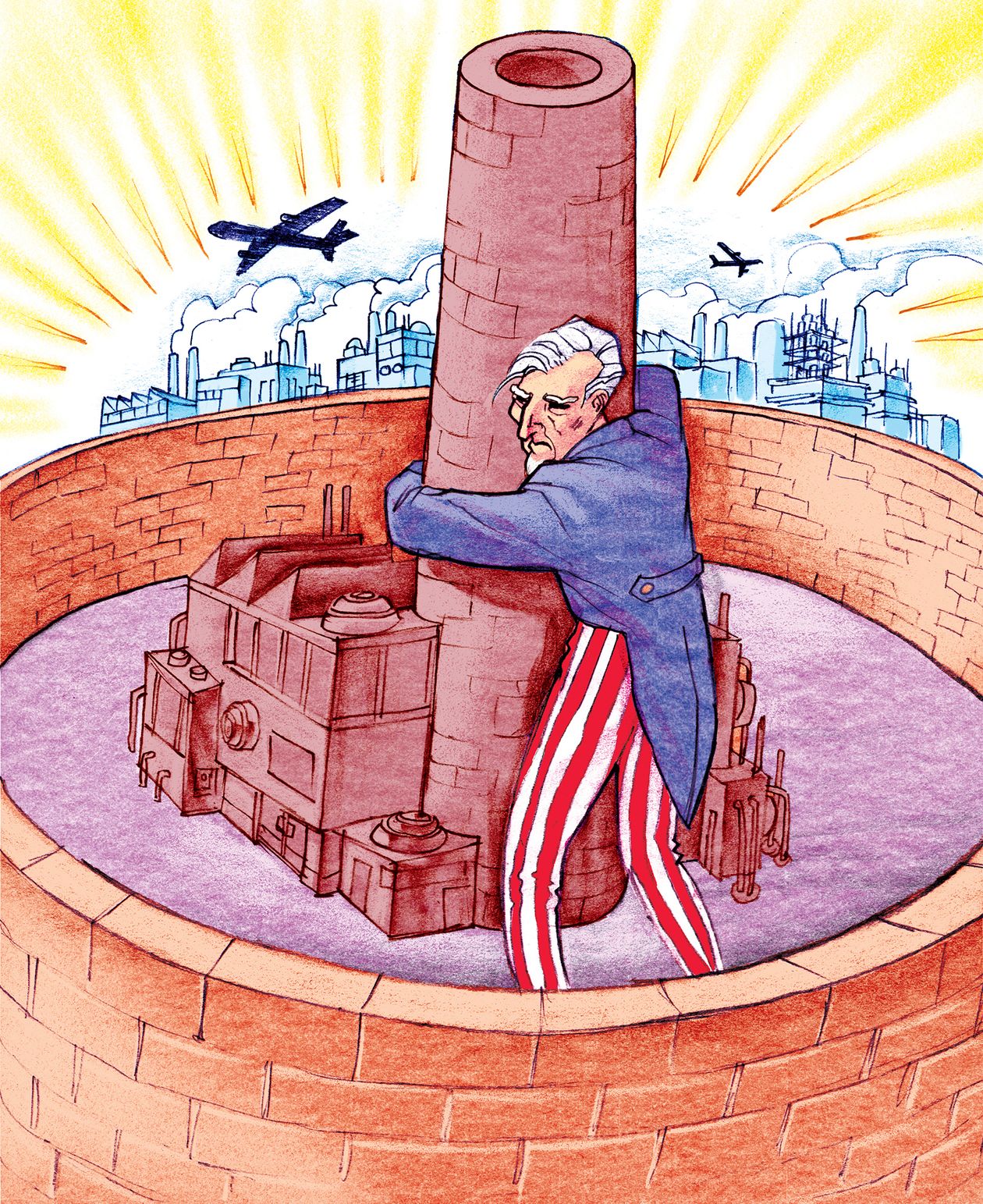
U.S. trade policy continues to rely upon ‘national security’ as a rationale for action. This is really questionable. Often decisions espousing national security reflect nothing more than domestic politics and protectionism. One such case (TikTok) is now before a federal court and the other case (Nippon Steel) is now on hold for more study by CFIUS.


“The Biden administration is granting a request by Japan’s Nippon Steel to resubmit its filing with the Committee on Foreign Investment in the United States for approval to purchase U.S. Steel …. CFIUS will use the additional time to review the deal so that it can better understand the full national security impact of the transaction, along with how it would impact critical supply chains …. The transaction has also become tangled with swing state politics, as U.S. Steel is based in Pennsylvania, which could help to determine the outcome of the November presidential election.” “Steel Deal Time Extended.” New York Times (Sept. 18, 2024).

TikTok on Monday pushed back against a law that would force the popular video app to sell to a non-Chinese owner or be banned, in what is shaping up to be a landmark case …. A panel of federal judges on Monday made pointed remarks that called TikTok’s legal arguments into question, in a landmark case that could determine whether the Chinese-owned video app survives in the country …. The hearing, before the U.S. Court of Appeals for the District of Columbia Circuit, lasted roughly two hours. Three judges asked probing questions of both TikTok and the government about an April law that forces ByteDance, the app’s owner, to sell TikTok to a non-Chinese company before Jan. 19 or face a ban in the United States …. American lawmakers and intelligence officials have argued that TikTok is a national security threat under ByteDance …. The concerns among lawmakers and intelligence officials are at odds with how the American public views TikTok. Only 32 percent of Americans support a ban of TikTok, down from 50 percent in March 2023, according to a recent survey from the Pew Research Center. “TikTok and Court Skepticism.” New York Times (Sept. 16, 2024).

“What’s truly inexplicable, though, is the likely rationale for the steel ban: national security. Perhaps in the 1980s, Japan could have been considered a strategic economic threat. It was fear of “Japan Inc.” that prompted Congress to authorize presidents to block prospective mergers on national security grounds, after vetting by the body currently reviewing Nippon Steel’s bid: the Committee on Foreign Investment in the United States, or CFIUS ….   Along with the hostile signal it would send other geopolitical allies interested in investing in U.S. industry, the lack of any plausible economic reason to block this sale leaves politics as the only explanation.” “Steel Trap (Editorial).” Washington Post (Sept. 12, 2024). 


The government justifies punitive action against Chinese-owned video-sharing app TikTok as crucial to “national security.” Simultaneously, however, the government claims that a Japanese steel corporation’s purchase of U.S. Steel would threaten “national security”: Federal officials feign alarm (this is too risible to be other than political theater) about a corporation from an allied nation …. Government will, as usual, say that its steadily enlarged control of our lives is for our own good. Regarding TikTok, the government says its control is to protect us from influences we cannot be trusted to properly assess. And, of course, to enhance “national security.” “The Tik Tox Case and National Security.” Washinton Post (Sept. 18, 2024).

“White House officials are signaling that President Joe Biden will not imminently move to block Nippon Steel’s bid to acquire U.S. Steel …. The proposed corporate acquisition has assumed outsize importance given its potential political impact on the 2024 election …. But in towns near Pittsburgh, many steelworkers and their neighbors were upset by word of the president’s apparent plan to kill the deal, which they see as the best chance for U.S. Steel’s outdated mills to survive …. If states routinely approved or rejected proposed investments by foreign companies on the basis of domestic political concerns, other countries would do the same to American businesses, said the U.S. Chamber of Commerce and the Global Business Alliance.” “Delaying US Steel Decision.” Washington Post (9.13.24).

Leave a comment

Does U.S. Need a New Trade Strategy — Not Protectionism but More Participation in the Global Economy?

Many scholars are now arguing that the U.S. must reject the protectionism of Trump, Biden and now Harris. They call for more participation in the global economy, fostering more imports and promoting worker training for this new century. I agree.

“Yet there is one issue on which the Democratic and Republican nominees are in sync: protectionism. Trump has proposed sweeping tariffs of 10–20 percent on the vast majority of goods. Harris has been more critical of across-the-board tariffs, but she would nonetheless employ targeted and strategic tariffs to support American workers, strengthen our economy, and hold our adversaries accountable …. According to Biden, Harris, and Trump, such restrictions protect American industries from foreign competition. They argue that tariffs can promote national security, foster economic growth, and restore blue-collar jobs, which, they claim, have disappeared because of import competition …. The United States, in other words, is fighting the last trade war. Its current policies are designed for a period that has long since passed, and they are not expanding the labor market. In fact, they may be suppressing employment. Trade with developing economies helps U.S. manufacturers hire more workers, largely by making it easier for these companies to import components …. Washington should, therefore, adopt a different strategy. Rather than pursuing protectionist policies, it should focus on reducing barriers and strengthening global economic ties. More important, it should prioritize finding ways to ensure that all Americans can benefit from globalization …. Tariffs have not resurrected American manufacturing. But they could suppress it. China contributes only 16.5 percent of total U.S. imports. The rest come from a combination of other countries …. Trade helps create American jobs is good news for both U.S. workers and workers abroad who produce goods exported to the country. It means that everyone gains when the United States engages in global commerce …. In fact, sweeping tariffs could make the United States less secure. If Washington applies broad and indiscriminate protectionist measures, countries might respond in kind …. Instead of withdrawing from the global economy, Washington should prioritize equipping its workforce with the skills needed to succeed in an increasingly interconnected world …. Reactionary protectionism, by contrast, offers only temporary relief to struggling regions and industries. To build a resilient economy, Washington should instead pass more workforce and skills development measures like those found in the CHIPS and Science act.”  “The Wrong Trade War.” Foreign Affairs (Sept. 2024).

Tagged , , , , , | Leave a comment

Nippon Steel – US Steel Merger — National Security Rationale — Is this Too Much?

     The Nippon Steel – US Steel Merger saga is coming to an end soon. To me, it will end up in litigation. But with the president’s blocking the merger. This seems to me again that the use of national security as a rationale for economic and trade policy will have gone too far. But courts are simply not inclined to stop this trend.


The Committee on Foreign Investment in the United States (CFIUS) recently informed both companies that it believes the deal would harm U.S. national security. Both Nippon Steel and U.S. Steel hotly contest that finding and have suggested a willingness to fight an eventual presidential verdict ….The parties will challenge it. They will go to court and once you go into court, then all of the stuff that has been confidential and that is not going to make [the government] look good, will be out there for the whole world to see …. The administration’s handling of Nippon Steel’s bid has been unusual enough to invite legal action, according to several CFIUS specialists …. The U.S. Chamber of Commerce called the president’s remarks “inappropriate and counterproductive,” accusing Biden of politicizing the CFIUS process …. The committee typically develops what it calls a “risk-based analysis” of any transaction, weighing the national security threats and vulnerabilities it poses. The analysis, which includes intelligence community input and information from the parties, serves as the basis for a formal recommendation to the president …. By appearing to prejudge the case the president may have opened the committee to significant legal risk …. In the wake of a June Supreme Court ruling that overturned the “Chevron doctrine,” courts also are less inclined to defer to government agencies. If a judge finds the committee’s national security arguments unreasonable, it could result in a decision that would curtail the committee’s powers …. Under the 1950 Defense Production Act, which established CFIUS, presidential decisions in cases such as this one are not subject to judicial review. Judges, however, may scrutinize the process that the committee follows to ensure that it protects the parties’ constitutional rights to due process …. The committee has yet to deliver its final recommendation to the White House.” “Nippon Steel – US Steel and CFIUS – Legal Challenge Ahead.” Washington Post (Sept. 11, 2024).

Tagged | Leave a comment

Presidential Debate & Tariffs — Trump Goes Further.

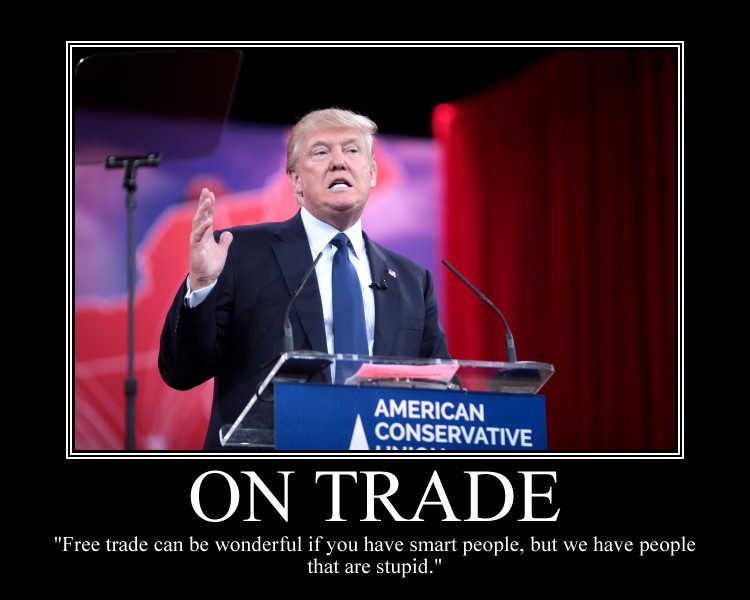
The first question of ‘The Presidential Debate’ was as to tariffs. No surprise here. Tariffs, once an obscure topic even in international trade classes, is now a leading political issue this campaign season — greatly fostered by Trump. His proposals are for increased tariffs on our allies and even more greatly on China. Who he accuses of eating our lunch and stealing our jobs.


“It has been more than five years since former President Donald J. Trump called himself a “Tariff Man,” but since then, his enthusiasm for tariffs seems only to have grown …. Tariffs could actually backfire on the U.S. economy, by inviting retaliation from foreign governments and raising costs for consumers. Economic research indicates that the cost of tariffs tends to be borne by American businesses and households, rather than foreign companies …. The tariffs Mr. Trump has promised to impose if re-elected dwarf those previous levies. He has floated a blanket tariff of 10 percent to 20 percent on nearly all imports and of 60 percent or more on Chinese goods, as well as a plan to match the tariffs other countries impose on U.S. products on a reciprocal basis ….  Led by Mr. Trump, more Republicans have recently embraced tariffs as a potential source of revenue to finance tax cuts …. Economists have emphasized that tariffs have other drawbacks. The World Trade Organization said that tariffs tended to place the largest burden on low-income households, which spend a greater proportion of their income on traded goods, as well as women and smaller companies, which may be less able to pay the higher costs.” “Trump Embraces Tariffs.” New York Times (Sept/ 11, 2024)


Tagged , , , , | Leave a comment

Deindustrialization and National Security — Two Primary Aspects of the Trade Debate Today — Looking Also at Taxes and Tariffs.

   It has now become more accepted in U.S. trade debate today that trade agreements since 1945 have been a major cause of deindustralization in the United States. This has been accepted by both political parties — to various degrees. In the current presidential election the role of these international agreements, as supported by the corporate, high-tech and the investment world, have now become critical to that debate. Even though these international agreement, global trade and tariffs have often been overlooked historically. This general trade issue today, along with the rise of importance of national security, are the two primary defining aspects of the trade debate today in the U.S. — especially during this presidential election season. Within this debate is, of course, the issue of tariffs and taxes as well as protectionism and isolationism.

“Deindustrialization has diminished the wealth, power and health of working-class Americans arguably more than any other single culprit …. The passage of NAFTA remains one of the most consequential events in recent American political and economic history …. NAFTA has roots in a long-running battle between two visions of trade policy: one that emphasizes the unfettered movement of capital and goods, often at the expense of jobs and wages; another that prioritizes labor and environmental concerns over growth and profits. After World War II, policymakers from around the world, including the United States, proposed creating the International Trade Organization to promote and regulate trade.  Its charter was never ratified ….  Instead, in 1947, the United States signed on to another international agreement: the General Agreement on Tariffs and Trade, which eliminated many trade restrictions but included no enforceable labor standards. This vision of free trade became a cornerstone of neoliberal economics …. NAFTA, which was heavily influenced by hundreds of corporate lobbyists, was negotiated and signed by George H.W. Bush …. Clinton said he believed the agreement would foster an export boom and create a million jobs in the first five years …. The passage of NAFTA — along with other Clinton-era measures like the repeal of Glass-Steagall, a Depression-era law that regulated banks, and the granting of permanent most-favored-nation status for China, which allowed China to enter the World Trade Organization and ultimately cost the United States nearly four million jobs — signaled the Democratic Party’s move away from its working-class, New Deal roots …. Perhaps nothing is more symbolic of Trump’s failed promise to bring back manufacturing jobs than the deal he made in 2018 with Foxconn, a Taiwanese manufacturer of iPhones and other Apple products, to build a campus near Milwaukee …. In 2019, during her presidential campaign, Kamala Harris, then a senator, said she would have opposed NAFTA. The following year, Harris was one of 10 senators to vote against the United States-Mexico-Canada Agreement. When her running mate, Gov. Tim Walz of Minnesota, was in Congress, he voted against giving President Obama fast-track authority for the Trans-Pacific Partnership.” “The Nafta Effect and Tariffs.” New York Times (Sept. 8, 2024)

Mounting protectionism threatens to unwind 30 years of progress in closing income gaps between poor and rich countries, the World Trade Organization has warned …. Research from the Peterson Institute estimates that Trump’s proposed tariffs will cost the average US household $1,700 a year, with poorer households facing an even higher burden ….The increase in the cost of living for the poorest households was 52 per cent higher than for the richest households, according to a study cited by the WTO. We need open trade but we also need complementary policies …. If you want to help workers, you need to make sure that you have the domestic policies in place that help them move towards opportunity.” “WTO and Protectionism Warning.” Financial Times (Sept. 10, 2024)

“Even beyond the election year ritual of lionising the traditional industries of Midwestern swing states, both Democrats and Republicans have become increasingly intrigued by nationalist economic policy, arguing that trade policy should prioritise domestic industrial production and manufacturing jobs …. Such policy instincts are often rooted in misdiagnosis. The jobs lost due to the infamous decade-long “China shock” were far less than a typical quarter of US job losses, and the manufacturing share of employment started its downward trajectory nearly half a century before China joined the World Trade Organization …. Trade disruption matters, but it is far from clear that it is a dominant force.  Still, if US policymakers are truly concerned with offshoring, they have a potentially efficient tool at their disposal: the tax code …. The US tax code puts a heavy thumb on the scale in favour of foreign corporate activity. For a US multinational, foreign income is often taxed either not at all or at a rate that is half that of the US. …. Instead of moving towards a more level playing field between domestic and foreign operations — by increasing the low tax rates paid by large multinational companies — tariffs introduce new distortions, moving production towards less efficient firms and away from exporters that have met the test of world markets …. A future administration should respond to economic discontent in constructive and forward-looking ways, strengthening US fundamentals and building a fairer tax system. In contrast, levying trade restrictions does more harm than good.”  “International Taxe Reform or More Tariffs.” Financial Times (Sept. 10, 2024)

Leave a comment

Law, National Security & Tariffs: Congress has Exclusive Authority over International Trade — But Much has been Delegated — That’s the Problem.

     The issue of U.S. legislation and tariffs is technical and complex. However, it is clear that it is the Congress that has the exclusive authority to regulate international trade — but much authority has been delegated to the president. The issue of national security in trade policy formulation has become the premier issue in trade law today. Combined with the President’s authority in foreign affairs presidential action over international trade has become a lot more complex in recent history. Global rules are still important.

                                                  ……………………………………………………..

“The US Constitution says very plainly that Congress, not the president, has the authority to impose tariffs. It is there in black and white. Article 1, Section 8: “The Congress shall have Power To lay and collect Taxes, Duties, …To regulate Commerce with foreign Nations.” Congress has not delegated the authority to set the level of tariffs and, what’s more, it is unlikely that it could, under our Constitution, do so. It can delegate selectively, not abdicate its role completely …. Trump and the public became accustomed to him doing what he wanted to do with tariffs during his time in office. In early 2017, on his first day of business after his inauguration, he withdrew the United States from the Trans-Pacific Partnership, a trade and tariff agreement with 11 other countries. But that was different. The Congress had not yet approved making the United States a party to that agreement. Later Trump imposed additional tariffs on Chinese imports making the average tariff on goods from China entering the United States over 19 percent compared with imports from other sources averaging 3 percent. He also imposed additional high tariffs on imports of steel and aluminum from all sources. All of Trump’s tariffs, however, as well as those imposed later by President Joseph R. Biden Jr., were put into place under what was claimed to be a delegation of tariff authority to the president from the Congress. Presidents do not have the power to set those tariffs independently …. For his steel and aluminum tariffs, Trump claimed he was authorized to act as the articles in question, steel and aluminum, his administration questionably found, were “being imported into the United States in such quantities or under such circumstances as to threaten to impair the national security.” This authority was granted by Section 232 of the Trade Expansion Act of 1962. And presidents are granted a lot of leeway in making national security determinations …. For Trump’s China tariffs and Biden’s selective tariffs on Chinese electric vehicles, chips, and the like, the authority cited was retaliatory. The president is authorized to impose retaliatory tariffs when “an act, policy, or practice of a foreign country … violates, or is inconsistent with, the provisions of, or otherwise denies benefits to the United States under, any trade agreement, or … is unjustifiable and burdens or restricts United States commerce,” under Section 301 of the Trade Act of 1974. Again, while this was an unprecedentedly wide use of retaliatory authority, a degree of discretion would be allowed a president in administering the law …. Can a broader action be taken under US law? Yes, in an emergency. President Richard M. Nixon put a temporary 10 percent import surcharge (an additional 10 percent tariff) on all imports in 1971. He declared a national emergency, citing a balance of payments crisis (the government was running out of gold to support the gold-backed dollar at the time), and used the Trading with the Enemy Act—a WWI emergency authority created by Congress, to impose this tariff. It lasted four months while new international monetary arrangements were worked out. The courts upheld his use of this authority. However, the courts rejected an alternative claim of authority, to temporarily terminate all trade agreements as needed to impose the tariff. That, the courts said, went too far …. There is authority under Section 122 of the Trade Act of 1974 in such cases: “Whenever fundamental international payments problems require special import measures to restrict imports—(1) to deal with large and serious United States balance-of-payments deficits, (2) to prevent an imminent and significant depreciation of the dollar in foreign exchange markets,” the president is authorized to impose additional tariffs of up to 15 percent or import quotas for up to 150 days …. Is there any other authority Trump could invoke? The International Economic Emergency Powers Act confers extraordinary authority to the president to block all transactions including imports. The Act says, “Any authority granted to the President by … this title may be exercised to deal with any unusual and extraordinary threat … if the President declares a national emergency with respect to such threat.” “Trump’s Tariffs 2.0 and U.S. Trade Law.” Petersen Institute for International Economics (Sept. 2024).

“Over the past decade, there has been a much greater willingness to use tariffs as part of industrial and trade policy. There has also been a parallel emphasis on employing subsidies and other forms of state intervention to boost investment in key sectors.  This process is being turbocharged by the way that security issues are becoming entrenched in US government thinking about large segments of the economy, from manufacturing to new technologies. The growing intersection of economic policy and national security has many roots …. Retaining and restoring American manufacturing competitiveness has come to be seen as a defining geopolitical challenge …. concerns become fused in a way that is unrecognizable from the more free market approach that took hold at the end of the cold war …. The role of national security in trade and investment policy and strategy is rising everywhere. There are changes in the way that people are approaching the question of trade policy, international economic policy and that’s true in market economies the world over ….  The US appears set on a strategy driven by a combination of China-related security considerations and economic nationalism that will further shake up relations with partners in Europe and the Indo-Pacific …. It is hard to argue that Trump was an “aberration” on US trade policy. “There is a deeper trend under way in the US towards protectionism, and it will continue no matter who wins the election in November.”  National Security and Trade Policy.” Financial Times (Sept. 4, 2024)/

“Global trade now faces its biggest challenge yet, the great-power rivalry between the US and China …. Please use the sharing tools found via the share button at the top or side of articles …. As the US-China rivalry intensifies, existing systems of governance are coming under intense strain. Can governments still work together to enforce rules that prevent the system from fragmenting? Or are they actually accelerating it by creating standalone trading blocs? The short answer: probably neither. Multilateralism is weak. The US is undermining the WTO by citing a national security loophole to break rules at will. The EU won a case against Indonesia over its nickel export ban, but the WTO’s dysfunctional dispute settlement system has delayed compliance. But this does not mean regional or geopolitical trading blocs will start setting the rules of trade instead.” “Globalization – Survive?” Financial Times (Sept. 6, 2024)


Leave a comment

Trump – Vance Tariff Proposals — Fail Basic Economics.

The proposals by Trump and Vance concerning tariffs fail the most basic economics test …….

“First, let’s get this straight: Trump is flat wrong to claim that the entire tariff is paid by a foreign country. And Vance is wrong to suggest there’s a debate among pointy-headed experts about whether tariffs increase prices ….There’s no controversy. Open any introductory economics textbook and you’ll find a standard supply-and-demand graph that shows how prices rise when a tariff is imposed on imported products …. Economists agree that tariffs — essentially a tax on domestic consumption — are paid by importers, such as U.S. companies, which in turn pass on most or all of the costs to consumers or producers who may use imported materials in their products …. In other words, tariffs cause prices for consumers to increase — but the amount is not always clear or it may be spread through the economy in ways that are not readily apparent. Companies adapt to the new business environment and adjust accordingly …. Trump’s assertion that tariffs are only a “tax on a foreign country” and “doesn’t affect our country” is, of course, ridiculous. Vance tries to muddy the waters by claiming there is a dispute among economists when, in fact, as we have shown, there is no dispute.” “Trump and Vance Tariffs.” Washington Post (Sept. 1, 2024).

“Trump 2.0 is poised to be much more radical and disruptive. The consequences of a harder US line on economic policymaking will be felt globally …. In Trump 2.0, unfair trade practices, especially with China but also with some of America’s closest allies and partners, need to be stamped out and the power of the US market should be regarded as a weapon to re-level the playing field. Import laws should reflect US priorities and subsidies are to be encouraged. Finally, then, trade will be forced back into “balance”. “Even Further from Free Trade.” Hinrich (Sept 3, 2024).

“In an era of shifting global trade dynamics and geopolitical uncertainties, U.S. importers and corporations face complex decisions regarding their manufacturing strategies. The ongoing trade tensions between the United States and China, coupled with the potential for tariffs regardless of election outcomes, have prompted many companies to reevaluate their reliance on Chinese manufacturing …. The long-term geopolitical outlook is an increasingly important factor in today’s volatile global environment. Companies must assess the political stability of potential locations and consider how changing geopolitical dynamics might affect their operations in different regions of the world in the long term …. In conclusion, successful implementation of any relocation strategy requires long term planning, a capable and experienced executive team, as well as continuous monitoring of the global economy and geopolitical events.” “Tariffs No Matter the Election Outcome.” Global Trade Magazine (Sept. 2024).

Leave a comment

Kamala Harris & Trade Policy — More Biden & Not Trump?

Kamal Harris’ trade policy in not clearly formulated nor stated yet. However, some elements are now coming into focus. Commentaries are just now beginning to appear after the Democratic convention. But both Democrats and Republicans are voicing support for tariffs and greater export controls.


“Having watched Joe Biden retain most of the tariffs he inherited, America’s trading partners have been fond of complaining the US president is “continuity Trump” and wondering whether Kamala Harris will be continuity Biden. The first epithet was never entirely fair: Trump’s focus was on closing trade deficits and gaining negotiating leverage, Biden’s mainly about industrial policy. Now Trump is threatening a massive and damaging escalation of trade protection, Harris only has to keep Biden’s policies in place, as she probably will, and she will look positively free-trade …. Biden’s watchword has been a “worker-centered trade policy”, though in practice that of course means protecting some workers (steel and aluminum, autos) at the expense of others. …. The consumer-focused critique is not new from this administration ….  Harris hasn’t repudiated the trade and industrial policy elements of Bidenomics, and is unlikely to. But the Democrats are at least charting a steady course that balances their desire to protect industries they deem strategic with the need to hold down economy-wide inflation ….  The idea that second-term Trump trade policy would resemble that of a Harris administration is rapidly receding.” “Harris and Tariffs.” Financial Times.” (August 23, 2024)

Trade protectionism and industrial policy inevitably lead to calls for more government intervention to mitigate the economic damage. Ms. Harris is trying to contrast her brand of protectionism with Mr. Trump’s by calling for “targeted” tariffs. But these, too, will spur foreign reprisals, and the ultimate targets will be U.S. businesses.” “Harley-Davidson Tariff Backfire.” Wall Street Journal (Augst 21, 2024).

Both Democrats and Republicans are expressing support for tariffs to protect American industry, reversing decades of trade thinking in Washington …. That view has largely fallen out of fashion in 2024. While Mr. Trump and Vice President Kamala Harris, the Democratic nominee, differ greatly in their campaign proposals, both of their parties are increasingly embracing tariffs as an essential tool in protecting American manufacturers from Chinese and other global competitors …. It has been a sharp reversal from previous decades, when most politicians fought to lower tariffs rather than raise them. But the loss of American manufacturing jobs as a result of globalization and China’s focus on churning out cheap exports have created a bipartisan backlash against more open trade. Given that Mr. Trump’s 2016 win capitalized on such sentiments, Democrats have been striving to avoid losing voters opposed to free trade …. On economic policy and trade issues, you have both major parties moving in the same direction …. Even if tariffs cause certain economic duress, they may still be a winning formula politically.” “Both Parties Embrace Tariffs.” New York Times (Aug. 28, 2024).

“Trump’s broad-brush tariffs frequently evoke comparisons with the destructive global trade war that the United States helped to initiate in the 1930s with the Smoot-Hawley tariffs passed by Congress …. Most economists, though, agree that the overall downsides outweigh the gains. Rounds of tit-for-tat tariffs would ultimately hurt every country by limiting trade, disrupting global supply chains, slowing growth and pushing up prices.” “Trump, Tariffs and Global Trade.” New York Times (8.29.24).

Leave a comment

Test Post for WordPress

This is a sample post created to test the basic formatting features of the WordPress CMS.

Subheading Level 2

You can use bold text, italic text, and combine both styles.

  1. Step one
  2. Step two
  3. Step three

This content is only for demonstration purposes. Feel free to edit or delete it.

Leave a comment

TRUMP AND TRADE 2.0 — Worse than Before?

    The following two items are from my previous book on Trump and Trade. It’s the Preface by Peter Watson the former Chairman of the U.S. International Trade Commission and my Introduction. I also include a recent blog of mine and an excellent review of Trump Trade 1.0. At this point, I leave it to the reader to decide if Trump’s proposals for trade in this reelection campaign are worse than his actual policies during his prior term. Clearly, his recent suggestion that 100% tariffs on various imports and for tariffs to replace income tax is not inspiring, to say the least.

………………………………………………………..

PREFACE The Honorable Peter S. Watson, LL.B., DCL To Stuart Malawer, TRUMP AND TRADE — POLITICS AND LAW (HeinOnline) (2020).

It is good news that Professor Stuart Malawer has selected and compiled the numerous articles that he has authored over the last four years of the Trump administration’s attack on the global trading system and his ferocious, unending attacks on the U.S. legal system and the rules-based international system and its institutions.

Professor Malawer and I share the experience of having earned both a law degree and a doctorate focusing on international law and trade. My professional experience includes serving on the National Security Council, as Chairman of the U.S. International Trade Commission, and as President of the Overseas Private Investment Corporation. Our professional and educational interests in global trade, international law, foreign policy, international investments, economic development, and national security overlap significantly.

Since the 1990s, I have collaborated with Dr. Malawer on a range of global activities. Most notably we have been colleagues at the Oxford Trade Program, a partnership between St. Peter’s College, Oxford, and George Mason University. As part of that program, we developed a week-long Geneva briefing: held at the World Trade Organization in Geneva, Switzerland. This was one of the first global trade programs for graduate, business, law, and trade students emphasizing the WTO, its dispute resolution system, and other international institutions.

I agree fully with Dr. Malawer’s conclusion: “Trump’s attacks on the existing international system have significantly diminished the standing of the United States in diplomatic relations with our friends and allies and has only emboldened others to take unilateral actions. Consequently, over the last four years, the United States has failed to formulate viable foreign policies and strategies to tackle the multitude of global problems confronting its national interests and security.”

If I were to summarize Professor Malawer’s contribution, it would be the following: he clearly understands inter-connected trade, law and public policy problems within an interdisciplinary construct. His rigorous assessment, reflecting an interest analysis approach to analyzing very complex issues. We all owe a debt of appreciation to Professor Malawer for his early and persistent examination of trade policies under the Trump administration. His discussion of challenges confronting the Biden administration is reasonable and pragmatic.”

…………………………………………………………………………………………………………………..

Prof. Stuart S. Malawer. J.D., Ph.D. INTRODUCTION to TRUMP & TRADE (HeinOnline) (2020).

Donald Trump and I are both from Queens, New York. In fact, we are about the same age and were almost neighbors, living less than two miles apart. I have followed his family and his business career since the 1960s. I watched the U.S. Department of Justice charge him in the 1970s for racial profiling in his family’s real estate rentals and observed his opposition in the 1980s to Japanese investment because it competed with his activities in the New York City real estate market. From the earliest days, Donald Trump abused the domestic legal system and lambasted international trade and foreign investment.

On his first day in office, Trump withdrew from the Trans-Pacific Partnership. He has continued to oppose global trade and cooperation with a growing intensity throughout his four years in office. Simply put, he has shown nothing but contempt and blame for trade and multilateral cooperation.

Trump’s continuous attacks on the World Trade Organization (WTO) and his recent withdrawal from the World Health Organization in the midst of the global pandemic are among his most egregious actions. From the outset of his administration, he imposed unilateral tariffs and trade sanctions that are legally questionable under U.S. and international law. He resorted to tariff wars and a broad range of other trade and investment threats against a large number of countries.

His default policy actions are to complain, reject and withdraw. He has complained about NAFTA, NATO, the European Union, the United Nations, the International Criminal Court, the International Court of Justice, and the WTO, among others. He has withdrawn from the Iranian nuclear deal, a bilateral agreement with Iran, UNESCO, the UN Human Rights Council, and the Open Skies Treaty. The Trump administration’s aggressive use and weaponization of treaty termination has never previously occurred. His foreign policy doctrine can very well be labelled “Rejection and Withdrawal.”

These actions or threatened actions concerning trade and treaty relations are consistent with Trump’s “America First” world view, which championed American isolationism in the 1930s. This policy from the ashes of an unfortunate era has only made the United States less safe today. It has placed the United States in opposition to other nations trying to confront global issues collectively.

Trump’s foreign policy and trade actions have not led to anything good. They have only hurt the U.S. economy, farmers, and workers. For example, his agricultural tax subsidies to offset export loses to farmers have proven gravely ineffective and his tariffs have not increased manufacturing jobs in the United States. Exports have been dramatically reduced. His use of export and investment controls have significantly hurt technology and telecommunication firms.  Global supply chains remain global and reshoring is not happening. His unending and ever-growing animosity toward China, supercharged by his claims relating to the origins of the global pandemic, has now become his principal 2020 reelection strategy. This continues in light of the racial unrest within the United States, which the president further heightened by his astounding militarized response.

This book is a compilation of my writings as an observer of Trump’s trade policies over the last four years (and a few earlier ones). These have appeared in various academic journals and on my blog “Global Trade Relations.” In particular, I focus on the legal aspects of Trump’s protectionist policies, which hearken back to the 1930s but in many ways are much worse than those policies. Donald Trump clings to the delusion that bilateral pressure will rebalance trade in favor of American industry. Trump’s trade actions raise the issues of constitutional law and the interrelationship of public international law and U.S. constitutional law as matters of paramount concern today. The Trump administration’s actions have also given rise to a new aggressive and proactive federalism to counteract erratic, incoherent, and failed policies (e.g., trade, immigration, climate control, and the COVID-19 pandemic).

If you think about it, the world of the 1930s was much less economically or politically interconnected. If the earlier protectionist, mercantilist and unilateral policies led to global economic chaos and then war, what can today’s actions lead to in a time of nuclear weapons and billions more people involved in global commerce?

Trump’s policies represent an aggressive attack on the post-World War II international order. Most notably, Trump’s attack on the judicial system of the WTO, as a derogation of U.S. sovereignty, is hugely baffling. The WTO’s dispute resolution system was an American initiative that reflected the core American belief in a rules-based global system and the American value of relying upon litigation to provide fair judicial determination of conflicts. Trump’s policies reflect his reliance on unilateral actions, raw power politics, the law of the jungle, bluster, and threats. This has only led to needless stress on the U.S. and global economies.

Trump’s attacks on the existing international system have significantly diminished the standing of the United States in diplomatic relations with our friends and allies and has only emboldened others to take unilateral actions. Consequently, over the last four years, the United States has failed to formulate viable foreign policies and strategies to tackle the multitude of global problems confronting its national interests and security.

In the run up to the fall 2020 presidential election, I offer this book as a primer on Trump’s trade policies and his ferocious and unending attacks on both the U.S. legal system and the rules-based international system and its institutions.

………………………………………………………….

My Blog …. July 23, 2024. “Trump and Toxic Trade Debate.”

The trade debate in the U.S. is now entering a new stage with the apparent nomination of Kamala Harris and J.D. Vance. So far, the trade debate in the U.S. has been particularly toxic, even though there were significant similarities between Biden and Trump. Vance is fervently a protectionist (as is Trump) and Harris and her yet named running mate — well, we don’t know. The public has become very skeptical of trade and its impact on the U.S. economy. The issue of economic warfare, trade sanctions, tariffs, export controls are now being raised again. Sanctions and tariffs are just not very effective and often cause more problems. But new data and candidates can change the terms of the debate and the formulation of newer and more beneficial trade policies, hopefully.

Donald Trump’s economic panacea is to impose over-the-top tariffs on all imports ….   If enacted, it would return our postmodern economy to that of the Gilded Age of the late 19th century, to economic policies favoring the wealthy over the poor and middle class, when tariffs were the main source of government revenue. That tariff-dominant era ended with the 16th Amendment to the U.S. Constitution in 1913, which facilitated the adoption of a graduated federal income tax. The income tax, not tariffs, has been the main source of federal revenue ever since, and for good reason. Tariffs are a tax on imports, the functional equivalent of a sales tax, imposing a proportionately bigger burden on those with modest incomes …. Following the Revolutionary War, the national government did indeed rely almost entirely on tariffs, as pushed by Treasury Secretary Alexander Hamilton to avoid distasteful excise taxes and encourage the new nation’s infant manufacturing sector. The Civil War quickly proved their inadequacy. To meet the resulting fiscal crisis, Abraham Lincoln persuaded Congress to pass the very first income tax in 1862, essentially a tax on only the very top earners …. That was phased out after the war, returning the United States to its reliance on tariffs and the chaos and class resentment they created …. The Democrats’ defeat after the war brought traditional Republicans with their high-tariffs philosophy back into power and they raised tariffs throughout the 1920s. That culminated in the infamous Smoot-Hawley Tariff Act of 1930, which was enacted in the misplaced belief that tariffs could protect American industries and farmers after the 1929 stock market crash. Instead, they fueled a catastrophic global trade war, strangled commerce, unleashed competitive currency devaluations and intensified a worldwide depression that contributed to the rise of Nazism and worldwide war …. The advent of President Franklin Roosevelt, a free-trader and Cordell Hull went on to become an eloquent postwar champion of international trade to save the world from another global crisis …. American politics have a way of flipping the policies of parties. In the modern era, beginning with President Ronald Reagan, it was Republicans who led the way to lower trade barriers as a boon to economic growth….  Trump is the first major Republican of the modern era to enact sweeping higher tariff barriers to protect American industries and farmers …. For his potential second term, Mr. Trump and his running mate, Senator JD Vance of Ohio, would bring the country back to its protectionist past at a time when large segments of the economy depend on trade and foreign investment, not to mention immigration for high-end tech jobs and low-end jobs in services and agriculture …. A case can be made for selective tariffs to protect national security and sensitive supply chains and encourage green technologiesThe Biden administration has pushed for these steps while keeping Trump’s tariffs largely in place, incurring many of the same costs. The long historical record demonstrates these are borne not by other countries, as Trump keeps insisting, but by American consumers and industries.” “Trump and Tariffs.” New York Times (July 28, 2024).

………………………………………………

Good recent review of Trump Trade Policy 1.0 ……………….

“President Trump’s first term in office was guided by trade. Many changes he and his team made, primarily using trade as a weapon in US foreign and strategic policies, remain in place even after he left the White House, and are now “hardwired” into Washington policymaking …. Trump represented a radical break with past US trade policy practices, but tapped deeply enough into prevailing domestic sentiment that many of his policies were continued under President Joe Biden and look set to continue regardless of who comes next into the White House …. From Trump’s first full day in office in January 2017, when he unilaterally withdrew the United States from the Trans-Pacific Partnership (TPP) agreement, US trade policy was largely driven from the Oval Office without much pushback from Congress …. He was able to resurrect domestic tools such as Section 301 on unfair trade practices or Section 232 on national security …. Again, many of these specific tools have continued in use by the Biden administration. Section 232 tariffs imposed on steel and aluminum are still in place, as are Section 301 tariffs against Chinese products. Biden announced new a Section 232 application for steel by proclamation on July 20, 2024. Section 301 tariffs have also been imposed on a new set of Chinese products in August 2024 …. An important third area of Trump’s original trade agenda was a significant reassessment of the purpose of trade policy. Tools like Section 301 or 232 were harnessed to achieve objectives stemming from a belief that the United States was engaged in an economic war, particularly with China …. Many of Trump’s actions were seen as radical departures from past US practices. His campaign slogan “Make America Great Again” was perhaps best expressed in his trade policy agenda, which put US national and security interests front and center, and weaponized access to the US domestic economy as a tool to achieve a range of broader goals. Although many had expected Biden to return to a more “normal” policy of working in concert with foreign countries in multilateral settings, Biden was content to leave a more muscular and unilateral set of trade policies in place, even expanding them in some cases. Trump’s unusual trade compass reset US trade policy and has already been more durable than anticipated.” “Trump’s Trade Policy.” Hinrich (August 2024).

Good review of Trump’s Trade 2.0 trade proposals …………….

“Trump doubled down on his commitment to new tariffs, pledging to implement “10 to 20 percent tariffs on countries that have been ripping us off for years” …. On the face of it, Trump is proposing a radical overhaul of U.S. tariff policy, going far beyond what he did during his first four years in the White House …. Starting in 2018, Trump imposed tariffs on about $380 billion of goods, mostly from China, according to the Tax Foundation …. The Biden administration kept most of those tariffs and added additional levies on roughly $18 billion of Chinese imports …. In the current election, however, Democrats haven’t indicated support for additional tariffs. …. Trump has suggested the tariffs could be set at 10%, with revenue being used to reduce the deficit or pay for new tax cuts …. Trump has indicated he would support tariffs of at least 60% on Chinese imports to reduce trade with the world’s second-largest economy …. Currently, the average effective tariff is around 1% on imports from countries excluding China and 11% on Chinese imports …. From a practical perspective, it is easy for a president to raise tariffs …. He or she can unilaterally raise tariffs on specific imports for a range of reasons, including if a country violates U.S. trade laws …. Many are skeptical that existing law would allow him to implement an across-the-board 10% tariff without the support of Congress.  “Trump’s Tariff Proposals.” Wall Street Journal (Aug. 18, 2024).

Vance just mirrors Trump on tariffs ……………………

Sen. J.D. Vance defended Trump’s tariff policy, saying it penalizes importers who undercut American workers, including with “slave labor,” not consumers …. Mr. Vance defended the tariffs, saying “what it really does is it penalizes importers from bringing goods outside the country, into the country.” “Vance and Tariffs.” Wash. Times (August 26, 2024).

Leave a comment