The De Minimis Exception (that provide no tariffs on imports less than $800 sent directly to individuals) has been terminated by the Trump administration for goods imported from China and Hong Kong. (This revocation has been somewhat lessened as part of the subsequent U.S.-China truce and would be revoked by the new House budget bill.) Such imports from China will now be subject to either 30% of their value or a flat fee of $25 that will increase to $50 on June 1st. Trump’s rationale, in part, is to better control Fentanyl imports. This development is another unfortunate trade and tariff step in Trump’s tariff war with China and broad challenge to the global trading system. This new rule applies also to trans-shipped Chinese products through third countries and a promise to extend this termination to other countries directly. Trump’s minimum 145% tariff on Chinese imports, of course, is a much larger problem.
The De Minimis Exception was enacted by the Hoover administration in the 1930’s as part of the Tariff Act of 1930. Also known as the disastrous Smoot-Hawley legislation that spurred on the Great Depression and global protectionism. However, this exception, very interestingly, was intended to give the Secretary of the Treasury, in fact, some authority to reduce the harshness of the newer, higher U.S. tariffs. Needless to say, this new Trump action is contrary to that intention to reduce trade flows and is a serious blow to trade.
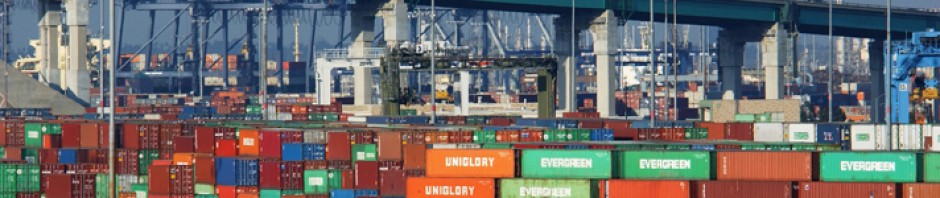
This newer action by Trump will restrict consumer and small business commerce, increase inflation, harm U.S. consumers (especially low-income ones) and small businesses. It has already hurt supply chains in the United States, global container shipping and ports in the United States. Significant impact on the U.S. economy is already being felt. Companies, merchants and consumers are already reacting. The next round of economic and trade data, which always lags real-time actual practice, will clearly disclose this. Very, very unfortunate protectionism.
Unfortunately, some Republicans increasingly support generally these restrictive trade actions — away from free trade and their traditional positions. But courts (over 100 trade cases have been filed against the administration) and even the Senate have now indicated a growing negative reaction to the Trump tariff policies. Both have begun to question the Trump administration’s use of obscure laws, both trade and others (including the Congressional Review Act to overturn administrative regulation by simple majority vote) and self-serving interpretations of delegated trade authority (such as national emergency findings under IEEPA and national security under Section 232[B] of the Trade Expansion Act).
Both the courts and the congress hold an increasing promise of success in reigning in historically destructive local and international policies of the Trump administration.
By the way, this new Trump attack on global trade patterns opens new opportunities for criminal activity and rejects many of the benefits and strategies of newer Internet e-commerce platforms (Shein, Temu, Amazon). This will do nothing to increase domestic U.S. production of cheap textiles. No new investment will occur in the textile industry in North Carolina, Virginia or Mississippi. That industry has been dead in the U.S. for many, many decades. The workers and plants have moved on, literally.
Just an aside. My father was the CEO of an apparel manufacturer in New York City for decades, employing mostly immigrants, and it was a non- union shop. Cheapest wages possible. Nevertheless, factory jobs started leaving 1n the early 1970s to Mississippi and other southern state. Later that decade most of the jobs went to China under long-term supply contracts. My father’s jobs for hundreds of workers disappeared. Again, these jobs are not coming back.
The future of the U.S. economy is in innovation, technology, services and global trade. We need thoughtful policy and not policy by grievance and threats. That leading to nothing to protectionism, isolationism and abrogation of the rules-based trading system championed by the United States throughout the post-Cold War era — that brought great prosperity to the United States and many countries.
Of course, the rules-based system that the United States championed since World War Two has been destroyed by the Trump administration. It needs to reenergize that system and to recommit to the rules of trade enacted by Congress and those of the global trading system.
“The Trump administration officially eliminated a loophole that had allowed American shoppers to buy cheap goods from China without paying tariffs …. The loophole, called the de minimis rule, allowed products up to $800 to avoid tariffs and other red tape as long as they were shipped directly to U.S. consumers or small businesses …. U.S. Customs and Border Protection processed a billion such packages in 2023, the average value of which was $54 …. More than half of all de minimis shipments by value contained textile and apparel products … But opponents of ending the exemption complained that the move would significantly raise prices for American consumers, hurt small companies that had built their businesses around the loophole and slow the flow of trade between the countries …. The Trump administration has also promised to eliminate the loophole for shipments from other countries …. The de minimis exception was created in the 1930s …. Congress raised the threshold for de minimis packages to $5 in 1978 and $200 in 1993, and then to $800 in 2016 …. Current rules appear to create a discrepancy that allows goods moved through the Post Office to be subject to lower tariffs than goods moved using private carriers …. Goods that come into the United States from China via private carriers like DHL or FedEx will be subject to tariffs of at least 145 percent ….. The United States, for now, still offers the de minimis exception for countries other than China. Goods made in China are not supposed to qualify for de minimis, even if they are routed through another country.” “Chinese Tariff Loophole Closed (“De Minimis Exception”). New York Times (5.3.25).
About Stuart Malawer
Distinguished Service Professor of Law & International Trade at George Mason University (Schar School of Public Policy).
This entry was posted in Uncategorized and tagged
China,
economy,
politics,
tariffs,
trump. Bookmark the
permalink.



 Stuart Malawer
 U.S. LAW & GLOBAL TRADE RELATIONS.
You must be logged in to post a comment.