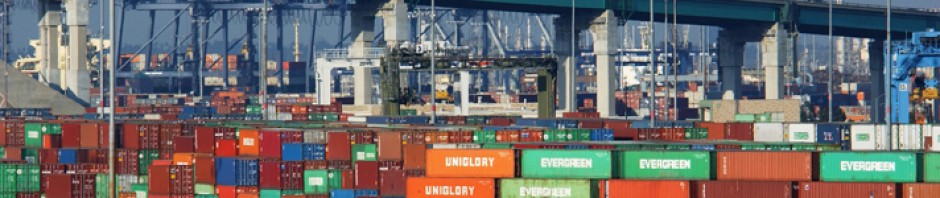

Recent developments in the last few weeks leading up to Trump 2.0 indicate strongly that a new era in trade policy is being cemented. Biden’s recent extension of export controls on exports to China concerning technology, his blocking of the Nippon-U.S. Steel merger, and the withdrawal of U.S. corporate support for stable China trade and investment relations indicate clearly that the Trump administration will be able to rely upon these actions in extending even greater confrontational policies toward China and globally — promoting U.S. protectionism and isolationism.
” For more than a decade, the United States has been throwing sand in the gears of world trade. During his first term as president, Trump took the country out of the Trans-Pacific Partnership, emasculated the World Trade Organization’s dispute settlement mechanism, and slapped tariffs on imports from friends and foes …. At the end of his presidency, Biden has decided to block a Japanese company’s acquisition of U.S. Steel …. And now Trump 2.0 is promising tariffs on everybody …. The rest of the world doesn’t want to play ball, however. As the United States walls itself off from the global economy, other countries are instead trying to further entwine economically …. But its protectionism is spurring other countries to join together, to guarantee access to markets. “U.S. Protective Trade Policies (Protectionism) and Isolationism.” Washington Post (January 10, 2025).
“On Dec. 2, the United States announced a new round of export controls on advanced semiconductors to China, and more restrictions are expected soon …. China, of course, never bought the “small yard, high fence” idea. It does not accept the premise that national security technology controls are distinct from broader economic competition between the two powers, and it could see the wide-ranging implications of these supposedly narrow restrictions. The Biden administration’s attempts at reassurance did not dissuade China from responding with retaliatory measures, including this month’s announcement that China would block the export of certain critical minerals to the United States. Trump, for his part, does not seek to separate economic and security competition and has shown little interest in minimizing disruption or cooperating with allies. His administration is poised to severely curtail trade and investment with China and pressure allies to do the same …. Will Trump’s more confrontational approach work better? His team will need to tackle the same challenges that the Biden administration faced.” “Small Yard, High Fences.” New York Times (Dec. 31, 2024).
“Now, as Trump prepares for his second administration, American companies have largely gone silent about the importance of the U.S.-China relationship. That is because American businesses no longer see China as the land of opportunity. The promise of China’s market has faded as its once-booming economy hits trouble …. Washington has also made it harder for American companies to do business in China via both policies and the political atmosphere …. U.S. companies that have spent a lot of time and money in building businesses in China are no longer inclined to defend those investments with public lobbying campaigns in Washington.” “U.S. Corporations Backing Away from Supporting China.” New York Times (January 2, 2025).
“Biden blocked the sale of U.S. Steel to Japan’s Nippon Steel, fulfilling his pledge to keep the storied steelmaker domestically owned. Biden’s decision comes after the Committee on Foreign Investment in the U.S spent months reviewing the $14.1 billion deal for potential national-security risks. the White House required the companies to abandon the deal within 30 days unless Cfius agrees to extend the timeline …. Biden’s rejection of the deal is the latest sign of the U.S. government’s tilt toward protectionist policies to boost homegrown businesses …. Trump levied tariffs on steel imports in 2018 during his first term and has pledged to use tariffs aggressively again in his next administration. Biden expanded requirements for made-in-America metal on government-funded projects and viewed himself as an advocate for blue-collar workers and unions …. On Dec. 23, Cfius members notified the president that it had deadlocked over whether to recommend the deal. That left the decision up to Biden, who months ago said he was against foreign ownership of the Pittsburgh-based company.” “Biden Stops Nippon-U.S. Steel Merger.” Wall Street Journal (Jan. 3, 2025).
“Navarro concluded that with China in the WTO it was now impossible to create the type of level playing field that Ricardo had wanted, because Beijing had rigged the system. America, the piggy bank, will continue to be plundered by a trade deficit that transfers more than half a trillion dollars of American wealth a year into foreign hands . . . [through] industrial espionage, rampant cheating, intellectual property theft, forced technology transfer, state capitalism and currency misalignments …. Several key themes emerge. One, there is a widespread view in the Maga movement, including senior levels of President Trump’s circle, that neoliberal economics has failed and Ricardian economics is no longer relevant. We are in a populist nationalist fight. A second key theme is profound hostility to China, to a point where some Trumpian are reluctant to even see Beijing buy many Treasuries. A third is that if trade flows are reimagined, finance might also need to be, to protect American interests; the so-called Bretton Woods system created by western allies in 1944 to shape global finance might have to be rethought …. “Meganomics and Trump.” Financial Times (1.4.25).
“The US-China trade war is set to return with even greater intensity, likely overshadowing the first iteration …. The World Trade Organization’s dispute settlement system has been paralyzed since 2019 due to the US blocking appointments to its Appellate Body (AB). Despite pledges at the WTO’s 12th Ministerial Conference in 2023 to restore a “fully and well-functioning” system by 2024, progress on restoring the system remains elusive, with ambiguity surrounding the AB’s fate …. As the largest free trade agreement in the world, the Comprehensive and Progressive Agreement for Trans-Pacific Partnership (CPTPP) set a “gold standard” for trade deals from its inception, ironically nurtured and established by the US itself before Trump pulled the US out of its membership. On 16 September 2021, China formally applied to join the CPTPP …. As 2025 unfolds, the global trade system faces significant disruptions from the intensification of the US-China trade war to ongoing reform debates within the WTO and regional trade agreements like the CPTPP.” “Trade Policy 2025.” Hinrich (Jan. 7, 2025).
“Trade-minded people in Asia need to pay particularly close attention to Trump’s pledge to fundamentally reverse the US’ traditional Asia-facing economic openness, manifested in the team of personalities the president-elect has assembled to manage his foreign policy. Some are neo-conservatives who want to devote more US resources to the projection of American power and take additional steps to constrain the rise of China. But others – including Donald Trump himself – lean isolationist and transactional, and apply “America First” principles when evaluating the question of “what’s in it for the United States?” Donald Trump’s transactional attitude extends into the trade and investment policy realm, reflecting a deep sense of national grievance about America’s trade deficits and dependence on manufactured imports. Trump firmly believes that America’s current external economic situation is “unfair,” and needs to be rectified.“ “American Trade Policy and Asia.” Hinrich (Jan. 7, 2025).


 Stuart Malawer
 U.S. LAW & GLOBAL TRADE RELATIONS.
You must be logged in to post a comment.