

As an immediate result of Trump’s election, the future of trade practice, and trade negotiations is that they are expanding and are going in newer directions. This involves both tariffs and nontariff issues. These are multifaceted and represents a break from the “old order” (pre-Trump).
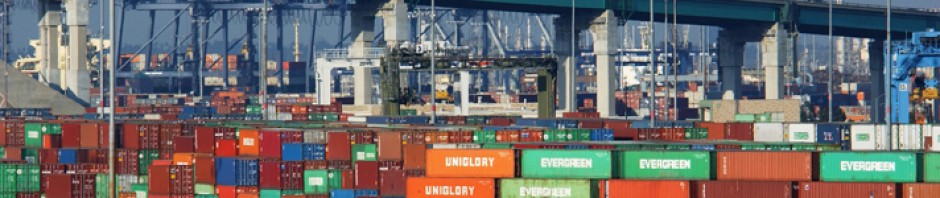
Newer concerns involve a broad range of non-tariff issues relating to national security, foreign policy, international alliances, economic groupings (regional and inter-regional), economic development, international relations and geopolitics. This amounts to a return to a sort of mercantilism. There is a broad rejection of the WTO and its dispute resolution system and almost all rule of trade. Such as arbitration provisions in treaties known as ‘Investor-State Dispute Settlement (ISDS). There is a growing possibility that the linkage of national security and global commerce will form the basis of a new industrial policy. For example, focusing on rebuilding the U.S. shipping industry.
Lawyering and lobbying in Washington, D.C., will be on a whole new level — involving many interest groups and toxic debates. This will be exploding.
“Washington lawyers and accountants are gearing up for a fee bonanza as companies prepare for tariffs, export controls and the possibility of trade wars under Donald Trump …. Trade was becoming an increasingly attractive specialty …. Lawyers say companies are seeking help navigating the thicket of national security laws, tariff exemptions and product classifications that make the difference between a company escaping punitive levies ….
Some companies are exploring ways to sidestep potential tariffs …. chance to apply to be “excluded” from having tariffs mechanisms for minimizing tariffs. Other mechanisms include bonded warehouses, secure facilities where imports can be stored before triggering tariffs, or duty drawback programs, through which tariffs can eventually be refunded if goods are subsequently exported.” “Law Firms and Tariff Practice.” Financial Times (12.10.24).
“Even if Trump persists with tariffs on traditional goods, he needs a nontariff trade agenda that promotes digital commerce and data flows while capitalizing on America’s technological edge …. Digital trade includes the cross-border transfer of goods and services, such as software, streaming entertainment, e-commerce orders and consulting expertise … In general, the digital MCUSA chapter promotes interoperability. It recognizes electronic signatures and encourages eliminating paperwork for cross-border commerce, adding consumer protections, limiting unsolicited communications, and protecting individual privacy rights.” “Trade Means More than Tariffs.” Wall Street Journal (December 10, 2024).
“Biden is seeking to erode investor-state dispute settlement (ISDS) protections under U.S. trade agreements with Colombia, Mexico and Canada as it leaves town. Most U.S. trade agreements include independent tribunals to arbitrate disputes between foreign governments and investors. The goal is to provide an impartial forum for foreign investors to challenge hostile government actions. Investors are entitled to monetary damages if they prevail. The U.S. has never lost a case, but a political right-left axis wants to weaken the protections. Robert Lighthizer, Trump’s first-term trade representative, negotiated limitations on the international tribunals in the revised U.S. trade pact with Mexico and Canada. He and his allies on the left say businesses would build more factories in the U.S. if there were fewer legal protections for overseas investments. But this opens the door to leftwing governments that want to nationalize U.S. investments and harm U.S. shareholders.” “Investor-State Dispute Settlement (ISDS) & Biden , Wall Street Journal (December 13, 2024).
“With Trump’s election, the postwar economic order is poised to change for good. It will be replaced by a quasimodern mercantilist system. The term “mercantilism,” popularized in the 18th century, was used to describe economic policies of colonial powers that focused on managing the economy to build up state power …. China’s emergence as an economically powerful strategic competitor to the U.S. worries many in the free world. It has raised concerns about supply-chain dependencies, the lack of robust manufacturing, and an ailing defense industrial base. The political and social consequences of lost domestic manufacturing jobs are leading policymakers to second-guess whether cheaper consumer goods and a more market-efficient allocation of capital are worth it. Over the past eight years, the Trump and Biden administrations have chipped away at the WTO order—putting tariffs on Chinese imports, using export controls to limit China’s access to advanced semiconductors, and pushing industrial policies like the Inflation Reduction Act and the Chips Act. With China and the U.S. now in the mercantilist camp, pressure is growing for Europe to follow. The Continent is torn between its commitment to WTO principles and the need to respond to competitive threats.” “Mercantilism.” Wall Street Journal (December 13, 2024).
“The world is more diverse and interwoven than ever before — economically, culturally, ethnically, generationally. This is largely the result of the postwar explosion in cross-border flows of goods and money, people and information. For much of that period, the benefits of globalisation were taken for granted and garnered widespread popular and political support. Those days are gone. The question now being asked is whether increased economic openness and connection are a source of fragility rather than flourishing, economically and societally. This is a key point of departure between progressives (who emphasize the benefits) and populists (who emphasize the fragility). Both have a point. ” “How to Get to the We Society.” Financial Times (December 14, 2024).
“Throughout the Biden administration (and the Trump administration before it), the US treated appeals to national security as a kind of get-out-of-jail-free card, enabling it to break trade rules at will. The use of the World Trade Organization’s Article XXI loophole had generally been regarded as being a matter for the country invoking it, but that only held as long as there was a norm of voluntary restraint. After Trump started using it willy-nilly — and especially for his Section 232 tariffs on steel and aluminum (aluminum, whatever) — the WTO dispute settlement system made rulings against it, which only hardened US disdain …. “Trade Secrets: National Security and Trade Loophole.” Financial Times (December 16, 2024).
“Trump may, in fact, bring his own kind of industrial policy to a second term, one focused particularly on the intersection of security and commerce. This week, we’ll get the first glimpse of what such a policy might look like, with the introduction of the bipartisan Ships for America Act.” “Trump’s Industrial Policy.” Financial Times (December 16, 2024).


 Stuart Malawer
 U.S. LAW & GLOBAL TRADE RELATIONS.
You must be logged in to post a comment.