
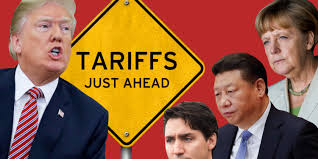
Many scholars are now arguing that the U.S. must reject the protectionism of Trump, Biden and now Harris. They call for more participation in the global economy, fostering more imports and promoting worker training for this new century. I agree.
“Yet there is one issue on which the Democratic and Republican nominees are in sync: protectionism. Trump has proposed sweeping tariffs of 10–20 percent on the vast majority of goods. Harris has been more critical of across-the-board tariffs, but she would nonetheless employ targeted and strategic tariffs to support American workers, strengthen our economy, and hold our adversaries accountable …. According to Biden, Harris, and Trump, such restrictions protect American industries from foreign competition. They argue that tariffs can promote national security, foster economic growth, and restore blue-collar jobs, which, they claim, have disappeared because of import competition …. The United States, in other words, is fighting the last trade war. Its current policies are designed for a period that has long since passed, and they are not expanding the labor market. In fact, they may be suppressing employment. Trade with developing economies helps U.S. manufacturers hire more workers, largely by making it easier for these companies to import components …. Washington should, therefore, adopt a different strategy. Rather than pursuing protectionist policies, it should focus on reducing barriers and strengthening global economic ties. More important, it should prioritize finding ways to ensure that all Americans can benefit from globalization …. Tariffs have not resurrected American manufacturing. But they could suppress it. China contributes only 16.5 percent of total U.S. imports. The rest come from a combination of other countries …. Trade helps create American jobs is good news for both U.S. workers and workers abroad who produce goods exported to the country. It means that everyone gains when the United States engages in global commerce …. In fact, sweeping tariffs could make the United States less secure. If Washington applies broad and indiscriminate protectionist measures, countries might respond in kind …. Instead of withdrawing from the global economy, Washington should prioritize equipping its workforce with the skills needed to succeed in an increasingly interconnected world …. Reactionary protectionism, by contrast, offers only temporary relief to struggling regions and industries. To build a resilient economy, Washington should instead pass more workforce and skills development measures like those found in the CHIPS and Science act.” “The Wrong Trade War.” Foreign Affairs (Sept. 2024).


 Stuart Malawer
 U.S. LAW & GLOBAL TRADE RELATIONS.
You must be logged in to post a comment.