
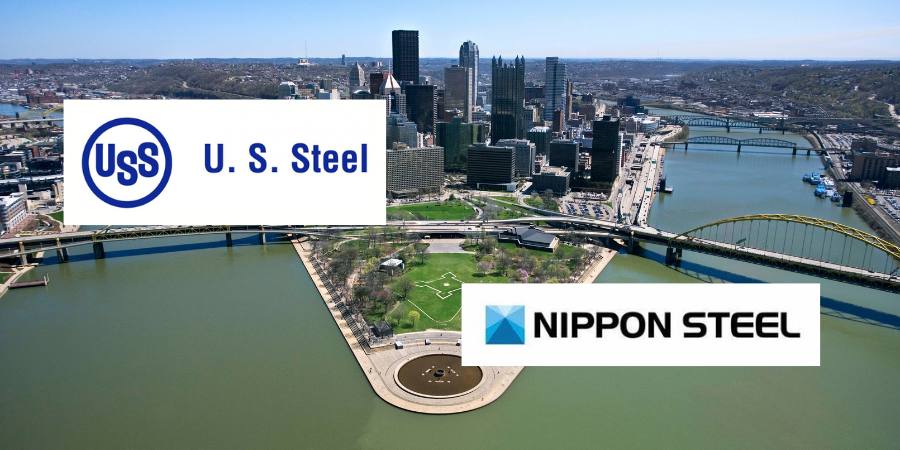
The Nippon Steel – US Steel Merger saga is coming to an end soon. To me, it will end up in litigation. But with the president’s blocking the merger. This seems to me again that the use of national security as a rationale for economic and trade policy will have gone too far. But courts are simply not inclined to stop this trend.
“The Committee on Foreign Investment in the United States (CFIUS) recently informed both companies that it believes the deal would harm U.S. national security. Both Nippon Steel and U.S. Steel hotly contest that finding and have suggested a willingness to fight an eventual presidential verdict ….The parties will challenge it. They will go to court and once you go into court, then all of the stuff that has been confidential and that is not going to make [the government] look good, will be out there for the whole world to see …. The administration’s handling of Nippon Steel’s bid has been unusual enough to invite legal action, according to several CFIUS specialists …. The U.S. Chamber of Commerce called the president’s remarks “inappropriate and counterproductive,” accusing Biden of politicizing the CFIUS process …. The committee typically develops what it calls a “risk-based analysis” of any transaction, weighing the national security threats and vulnerabilities it poses. The analysis, which includes intelligence community input and information from the parties, serves as the basis for a formal recommendation to the president …. By appearing to prejudge the case the president may have opened the committee to significant legal risk …. In the wake of a June Supreme Court ruling that overturned the “Chevron doctrine,” courts also are less inclined to defer to government agencies. If a judge finds the committee’s national security arguments unreasonable, it could result in a decision that would curtail the committee’s powers …. Under the 1950 Defense Production Act, which established CFIUS, presidential decisions in cases such as this one are not subject to judicial review. Judges, however, may scrutinize the process that the committee follows to ensure that it protects the parties’ constitutional rights to due process …. The committee has yet to deliver its final recommendation to the White House.” “Nippon Steel – US Steel and CFIUS – Legal Challenge Ahead.” Washington Post (Sept. 11, 2024).


 Stuart Malawer
 U.S. LAW & GLOBAL TRADE RELATIONS.
You must be logged in to post a comment.