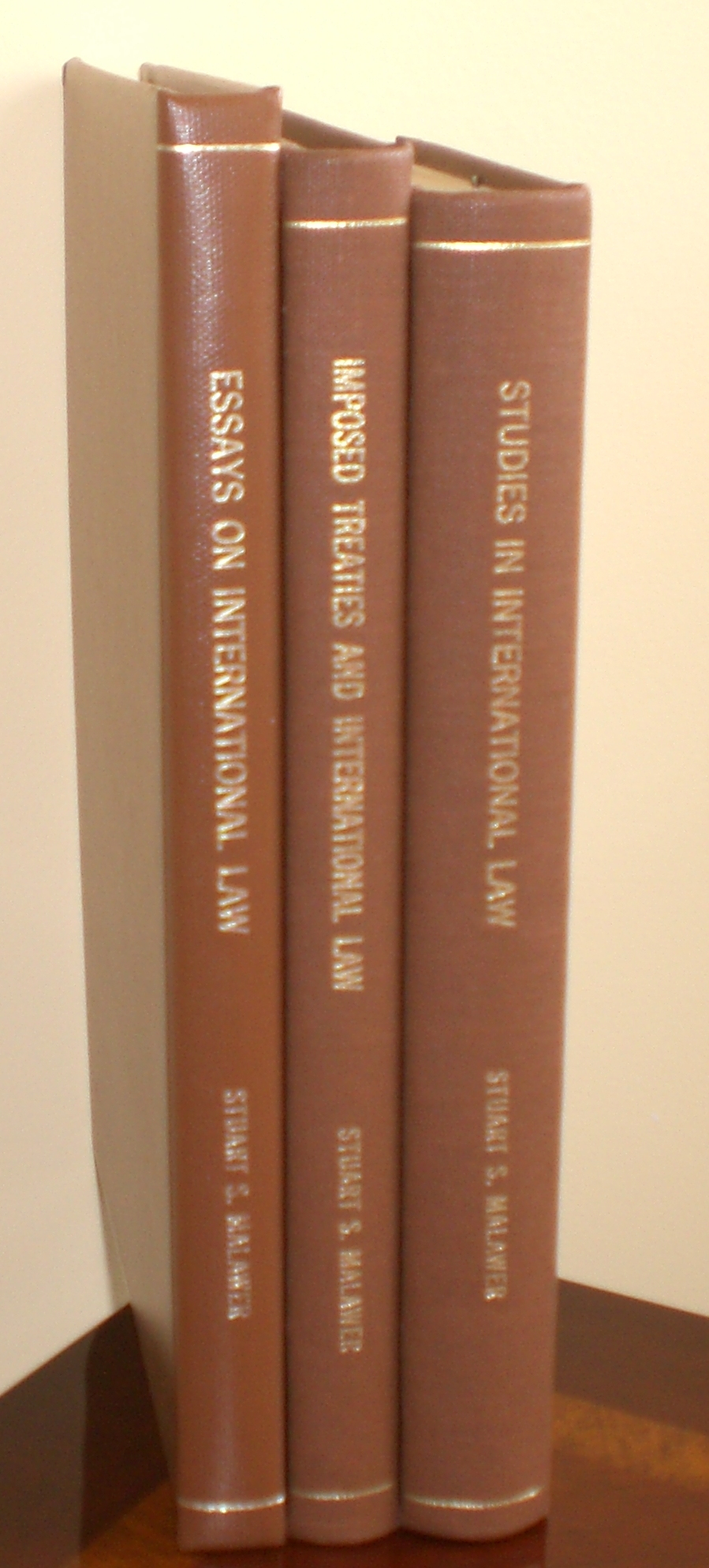
Stuart S. Malawer — Three International Law Books (Hein & Co.)
Trade policy today is central to foreign policy. It is also crucial to domestic policy. The U.S. Constitution gave the job of regulating trade exclusively to Congress under Article 1, Section 8, Clause 3. But this was late in the 18th century, when trade was barely more than setting customs duties. Not of great popular concern. The Constitution gave great powers to the President in foreign affairs and they grew greatly over the next two centuries. This is the problem. In the 21st century trade has emerged as one of the most important foreign policy and domestic policy issues. Yet, the structural context of dealing with it is dated. What needs to be done? Once trade was considered a bipartisan concern or even nonpartisan. We need to turn back to this attitude. Doesn’t seem very likely.



 Stuart Malawer
 U.S. LAW & GLOBAL TRADE RELATIONS.
You must be logged in to post a comment.